Privacy run, open entrance
If you like a tall privacy run with a shorter picket entrance, mark the transition on the layout. Compare the top profile, post caps and view through the gate from both sides before settling on the combination.
Choose cedar when the natural grain and the details of a wood fence are part of what you want to enjoy. Decide the board pattern and how you want the wood to age before choosing a finish.
No drawing is required to request an estimate. See our project photos ↓
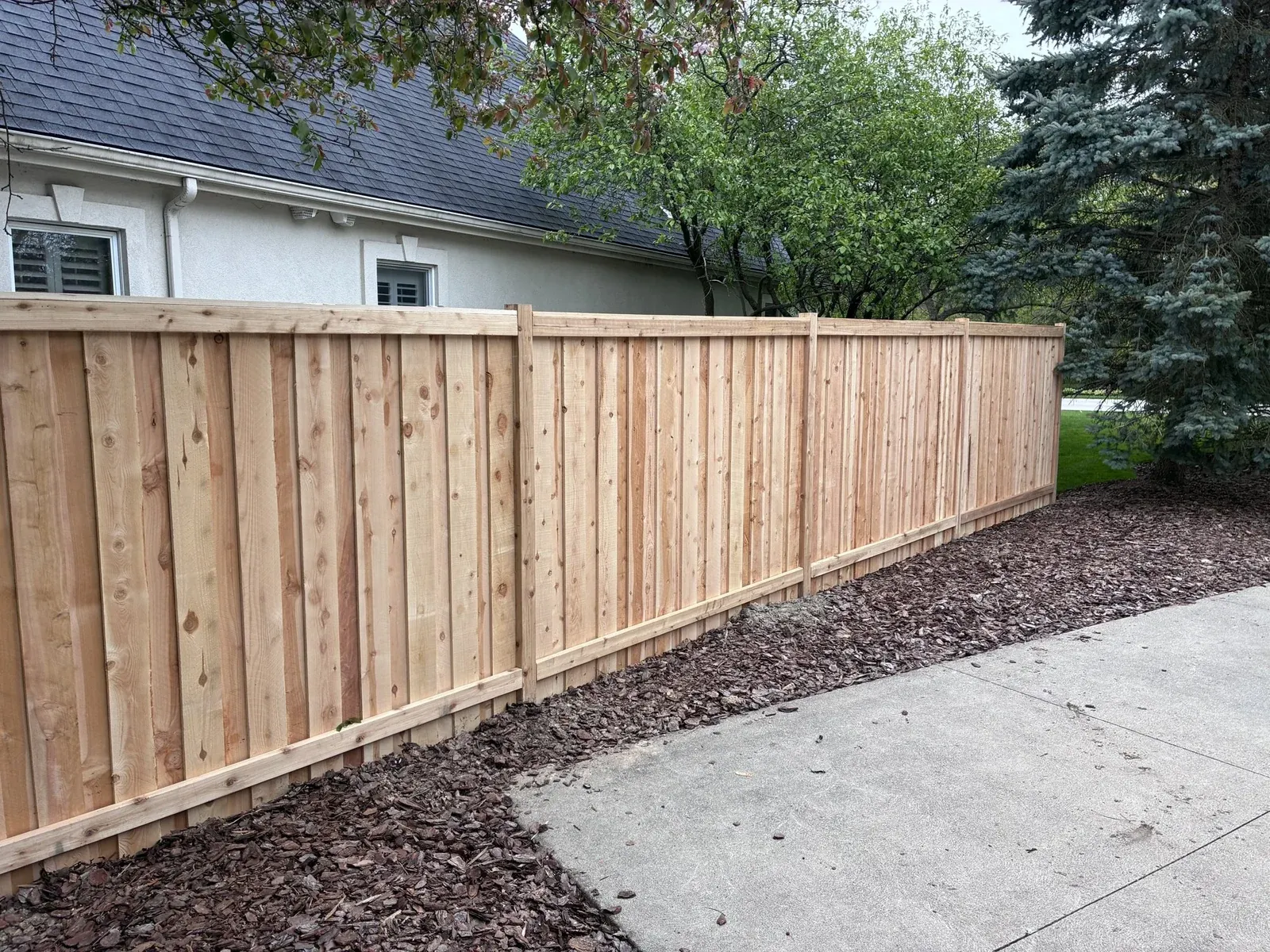
Compare privacy panels, lattice tops, open pickets and gate details from our own installations.
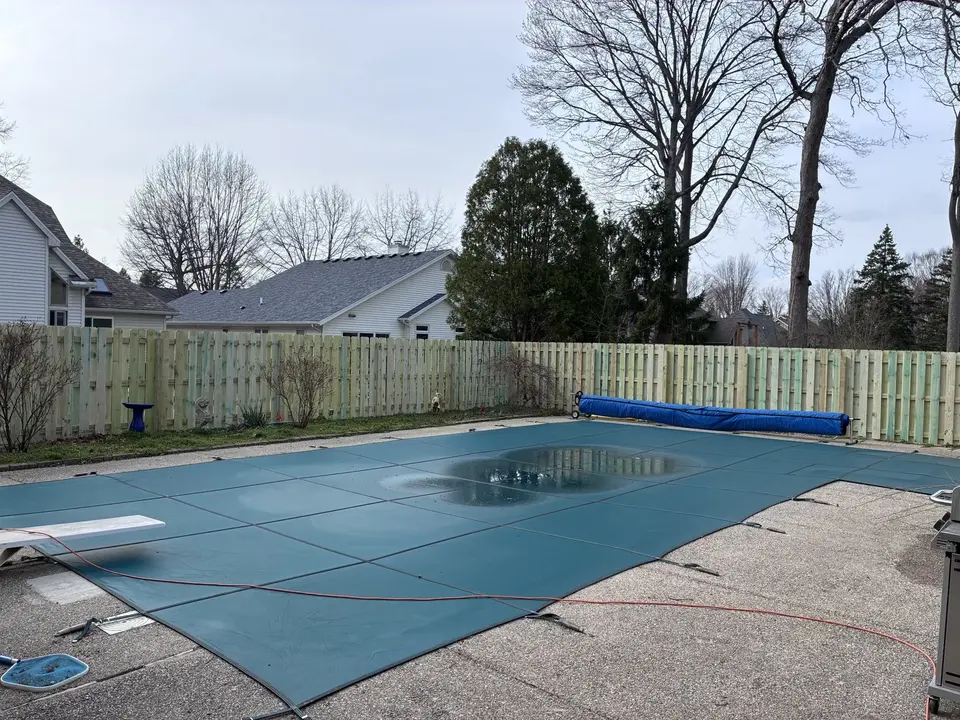
All fence installation photos in this collection show our own work.
Cedar attribution follows the supplied project folders and original website labels; the photographs show the visible wood-fence design.
42 project photographs. Select a photo to explore the details.
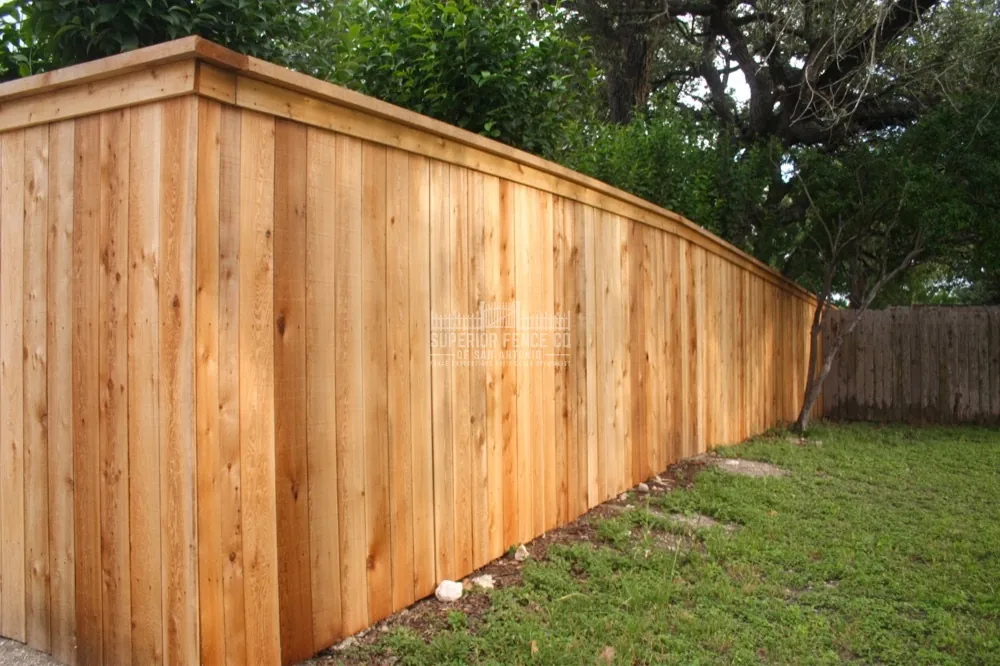
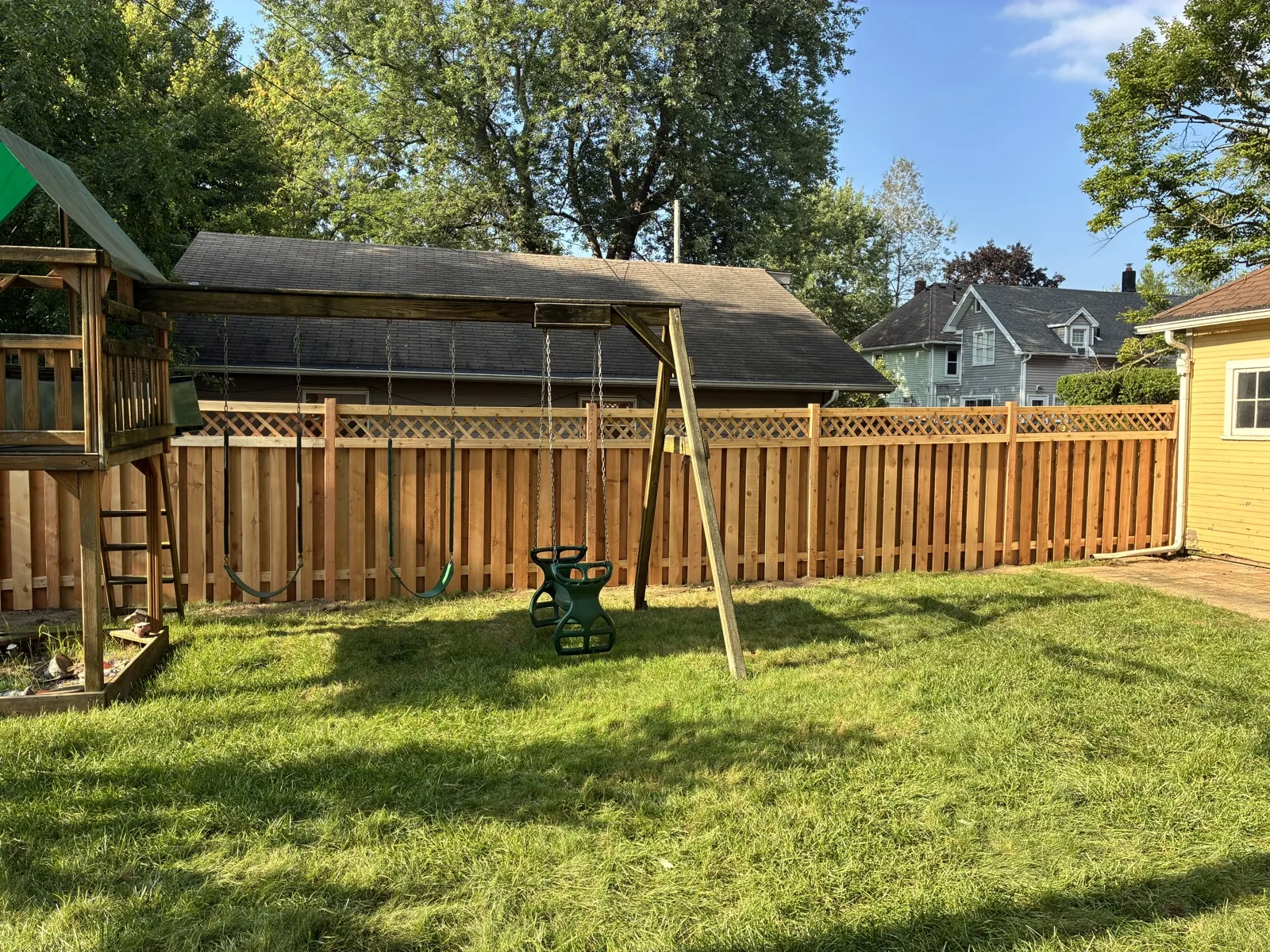
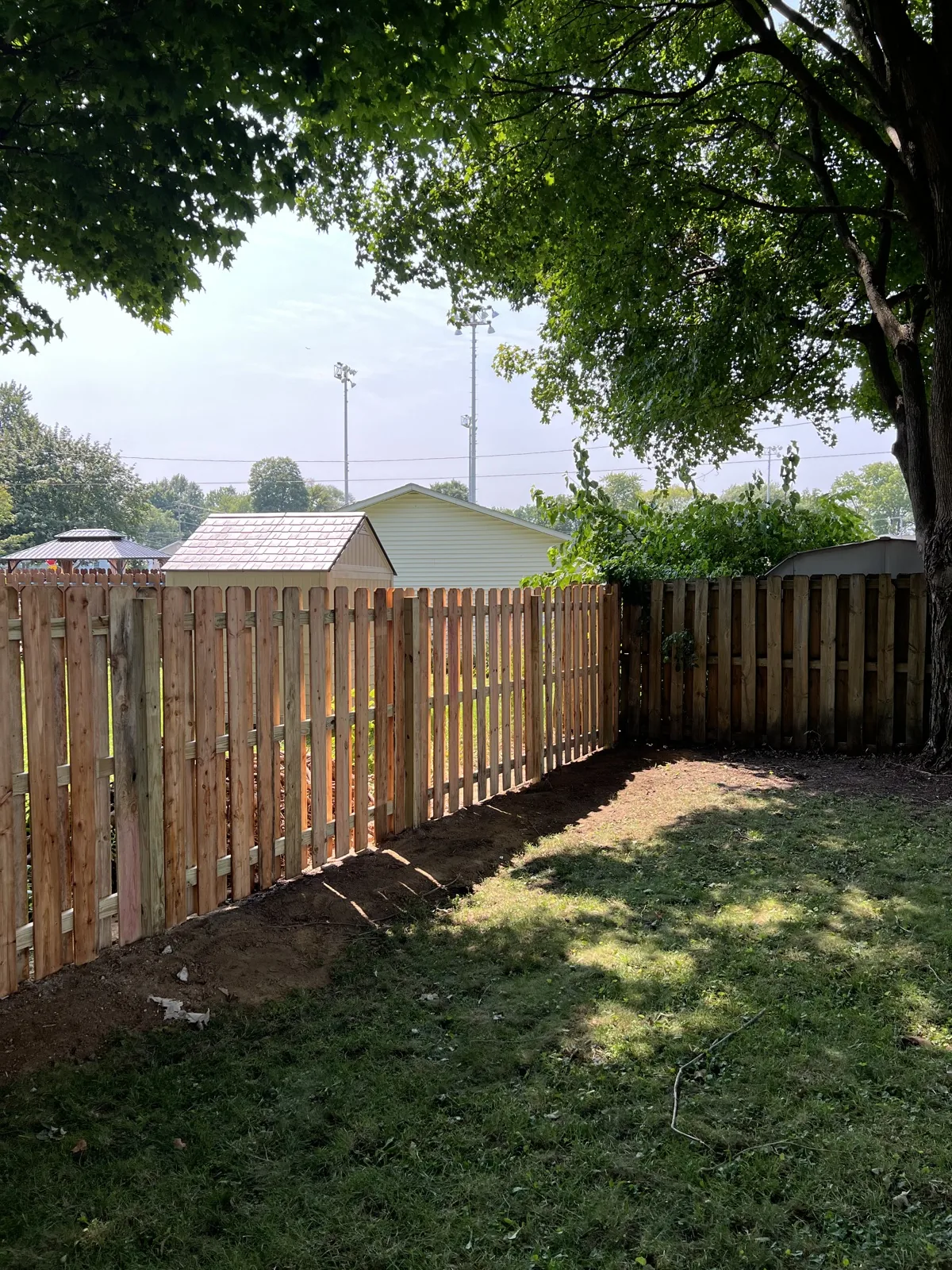
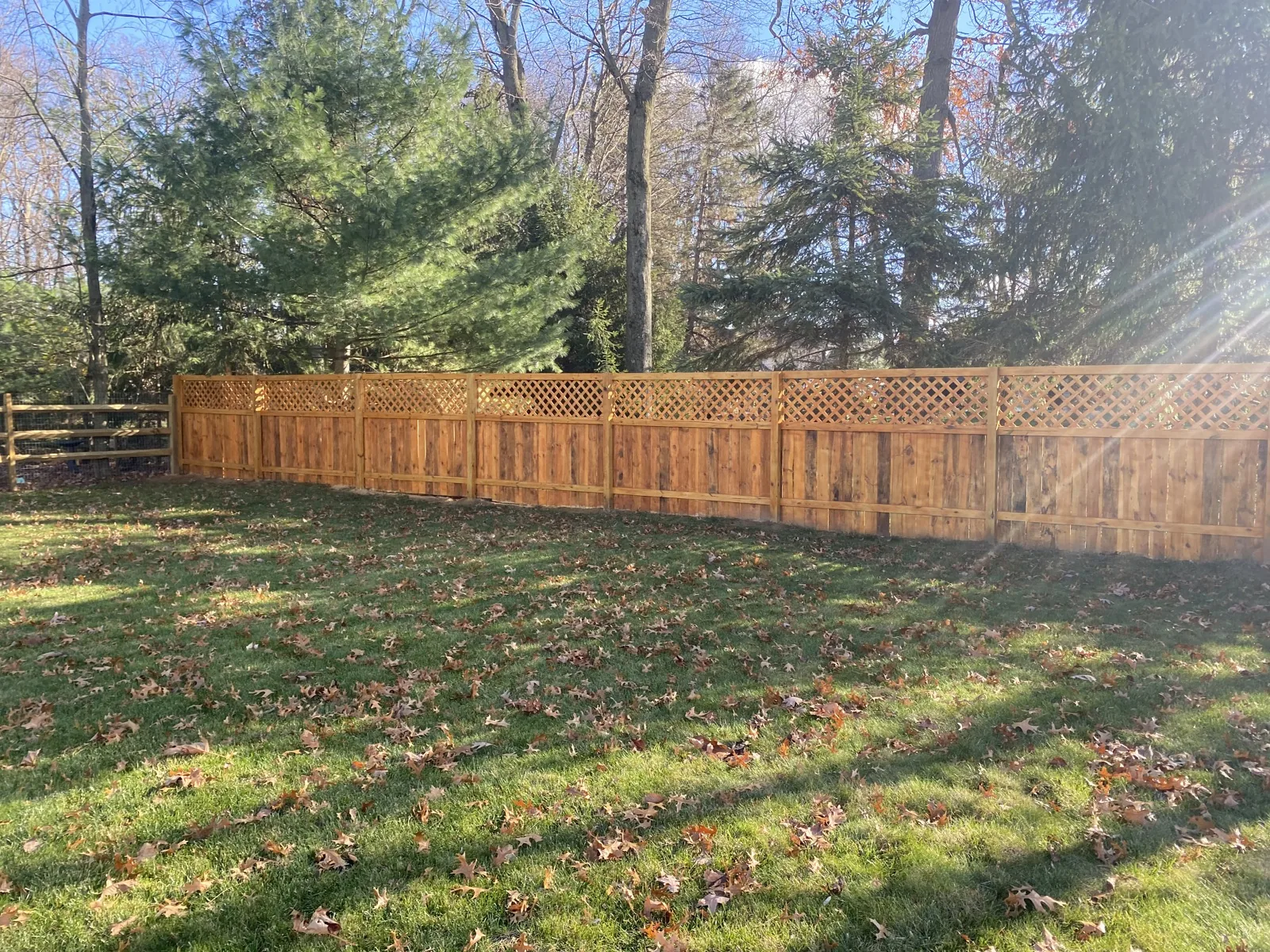
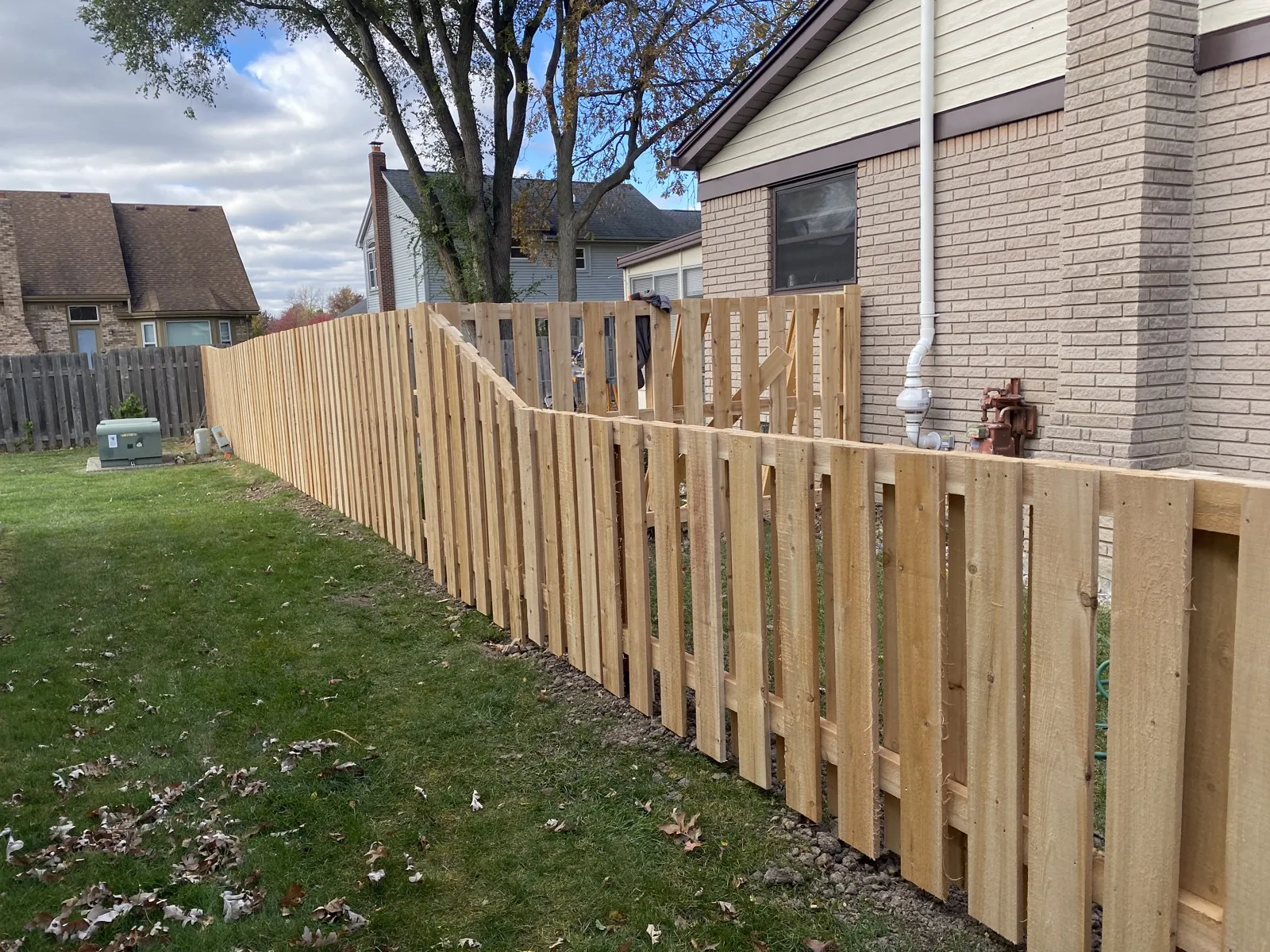
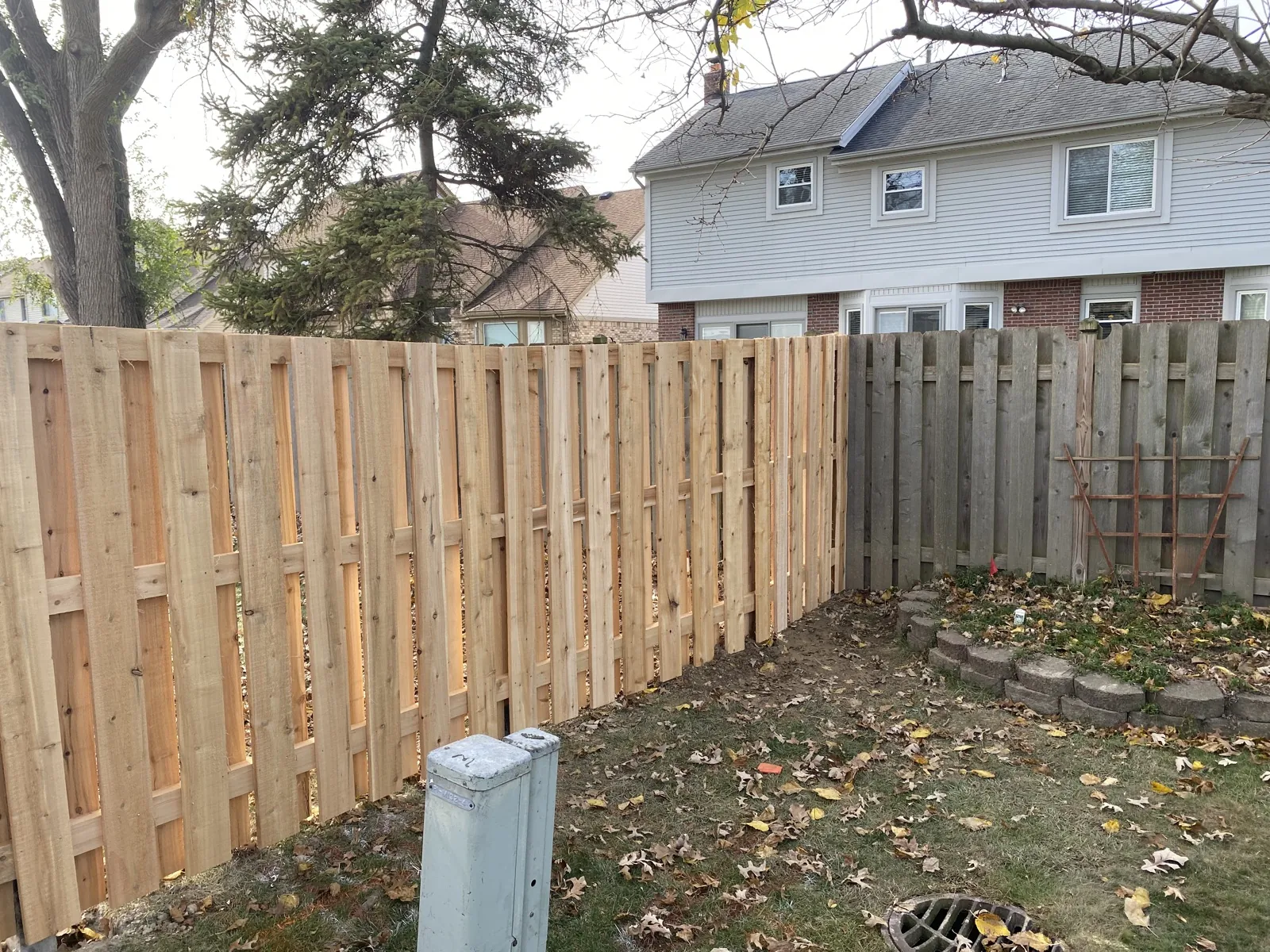
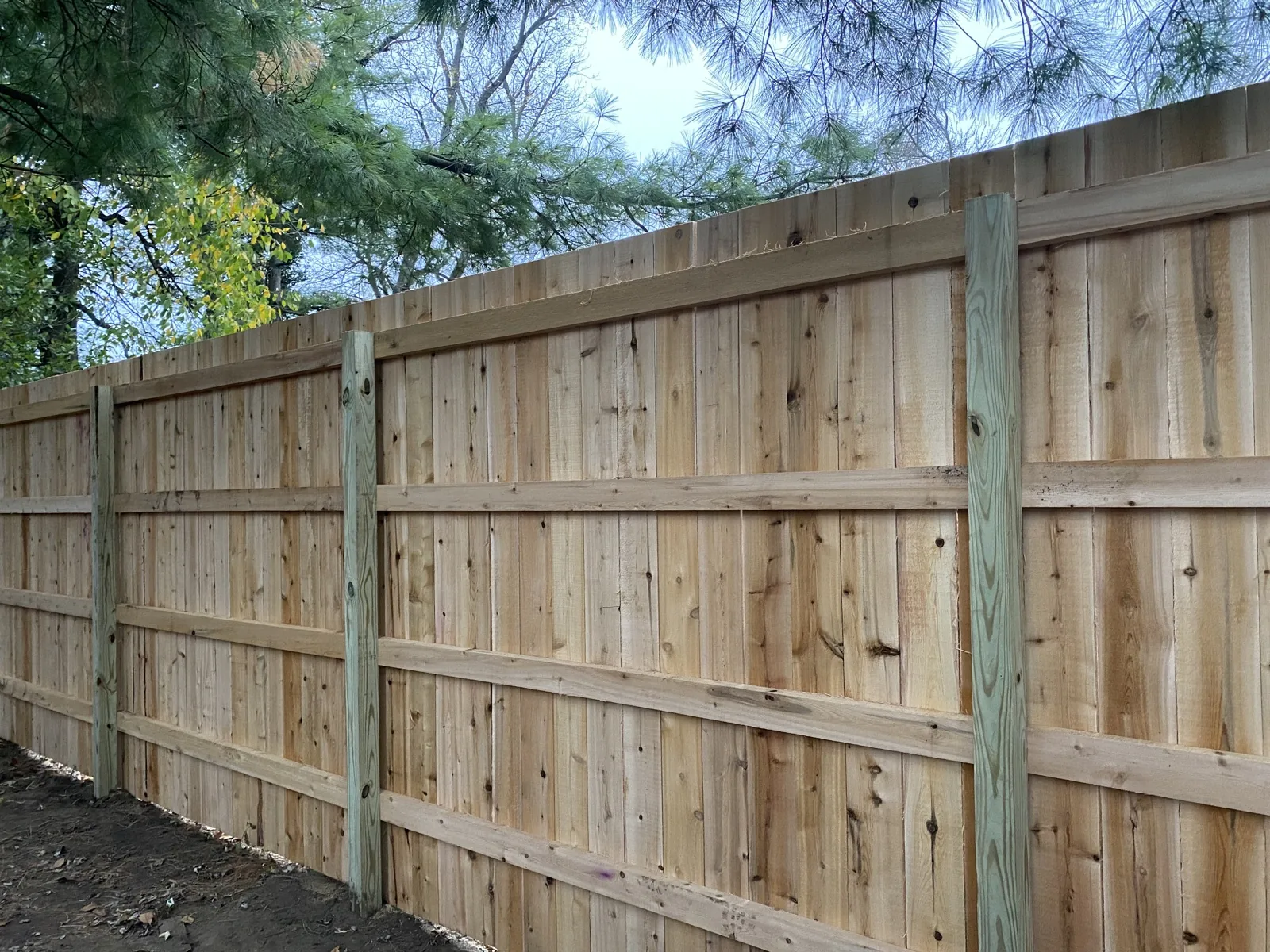
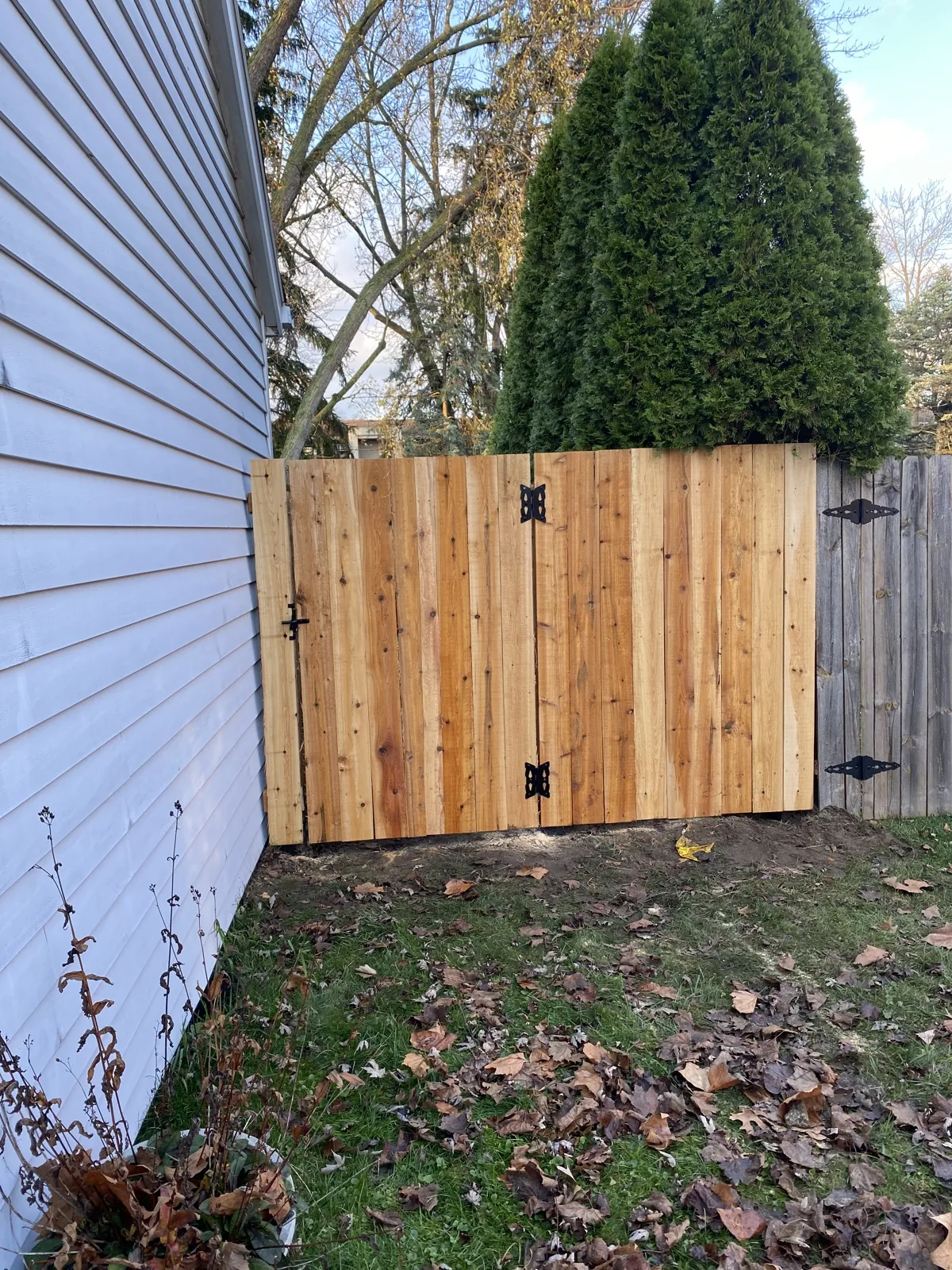
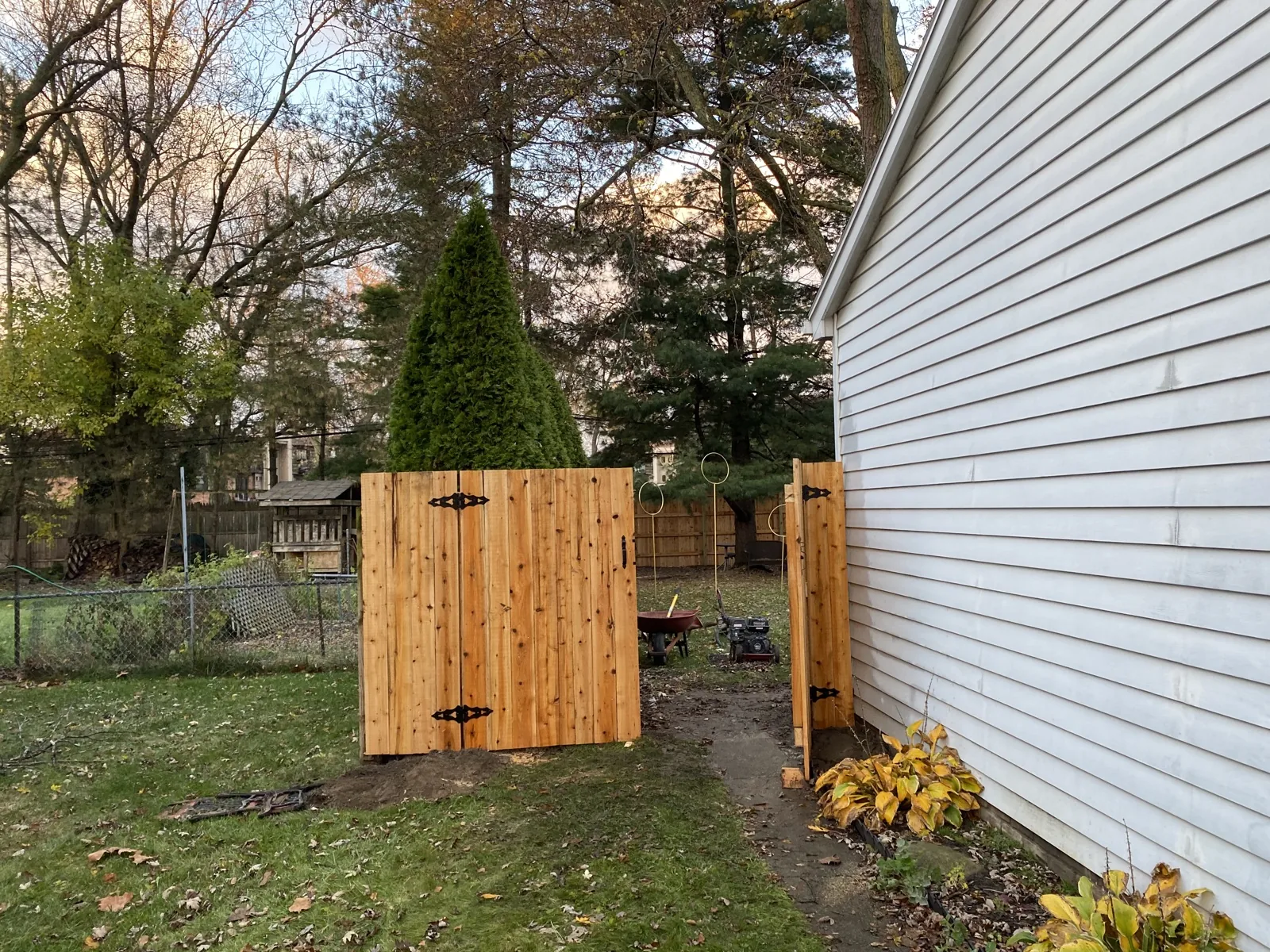
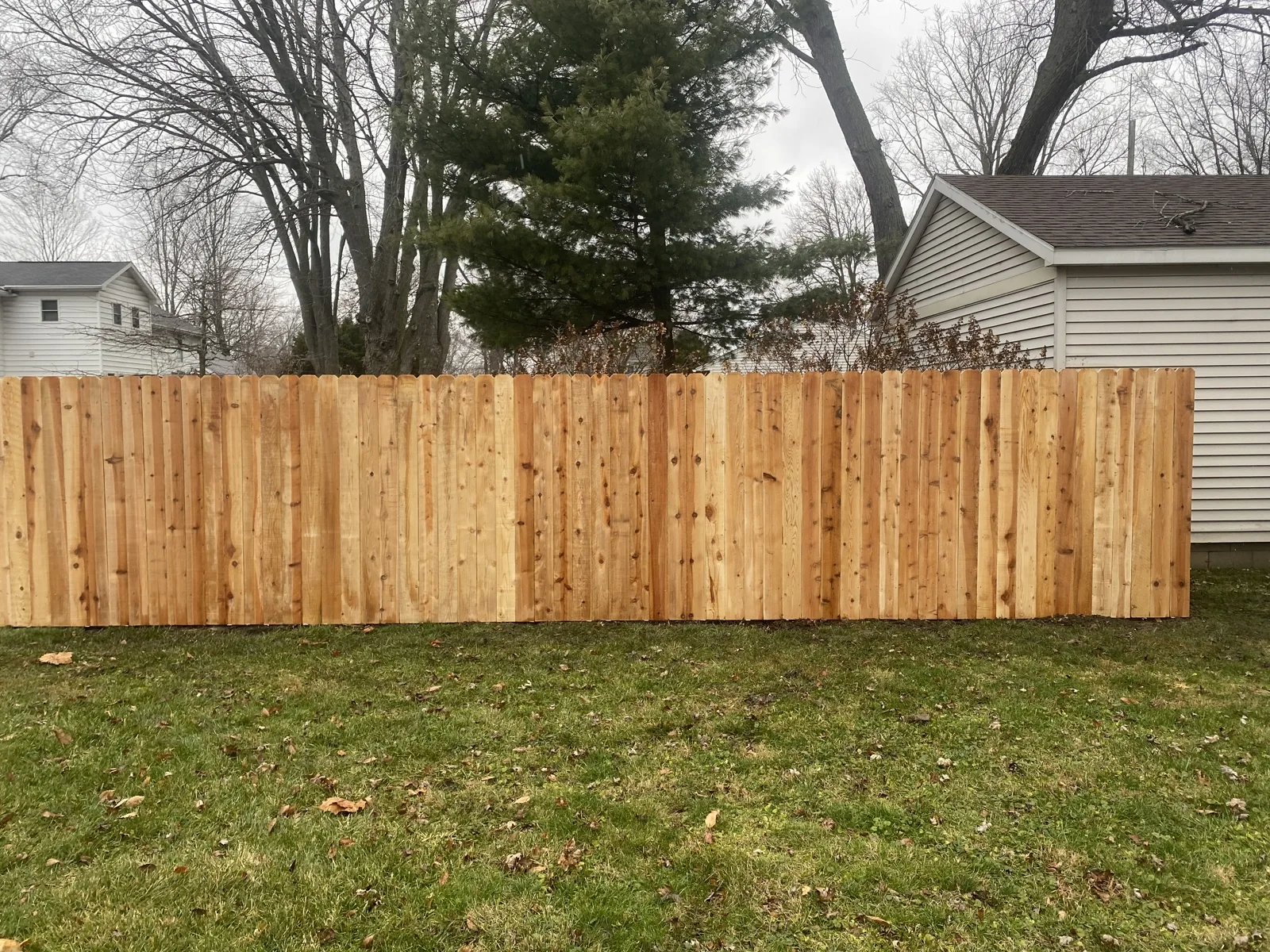
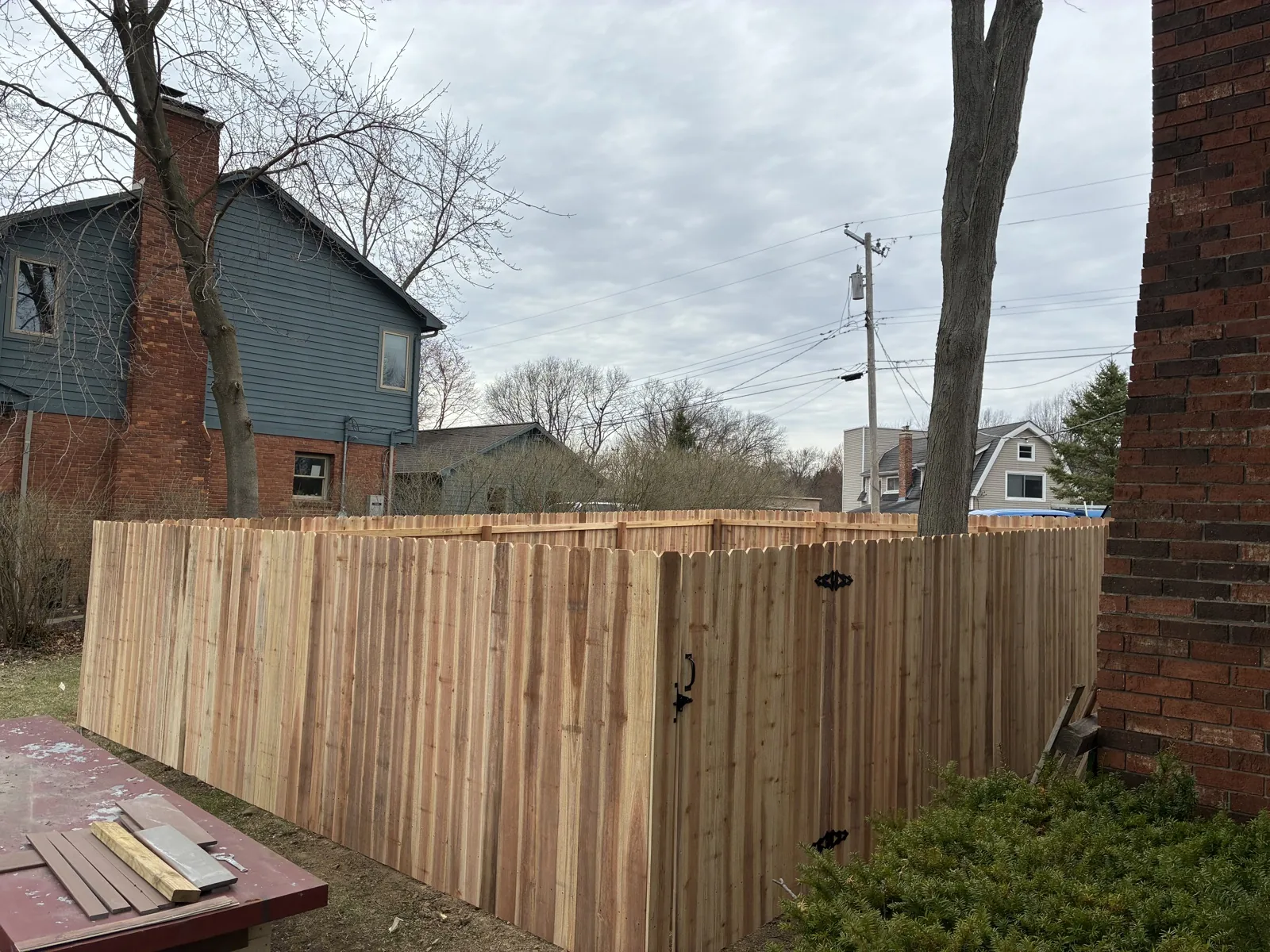
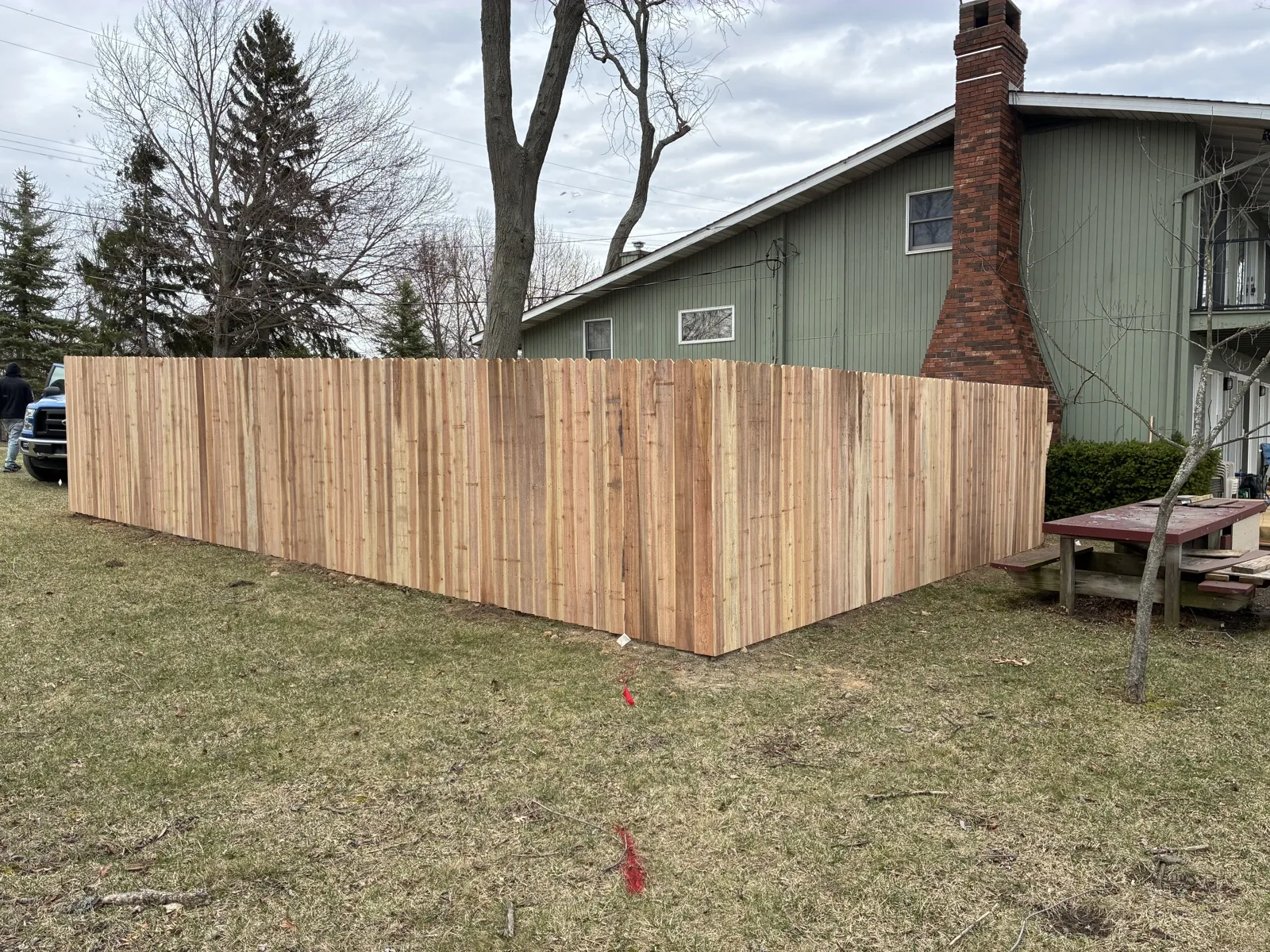
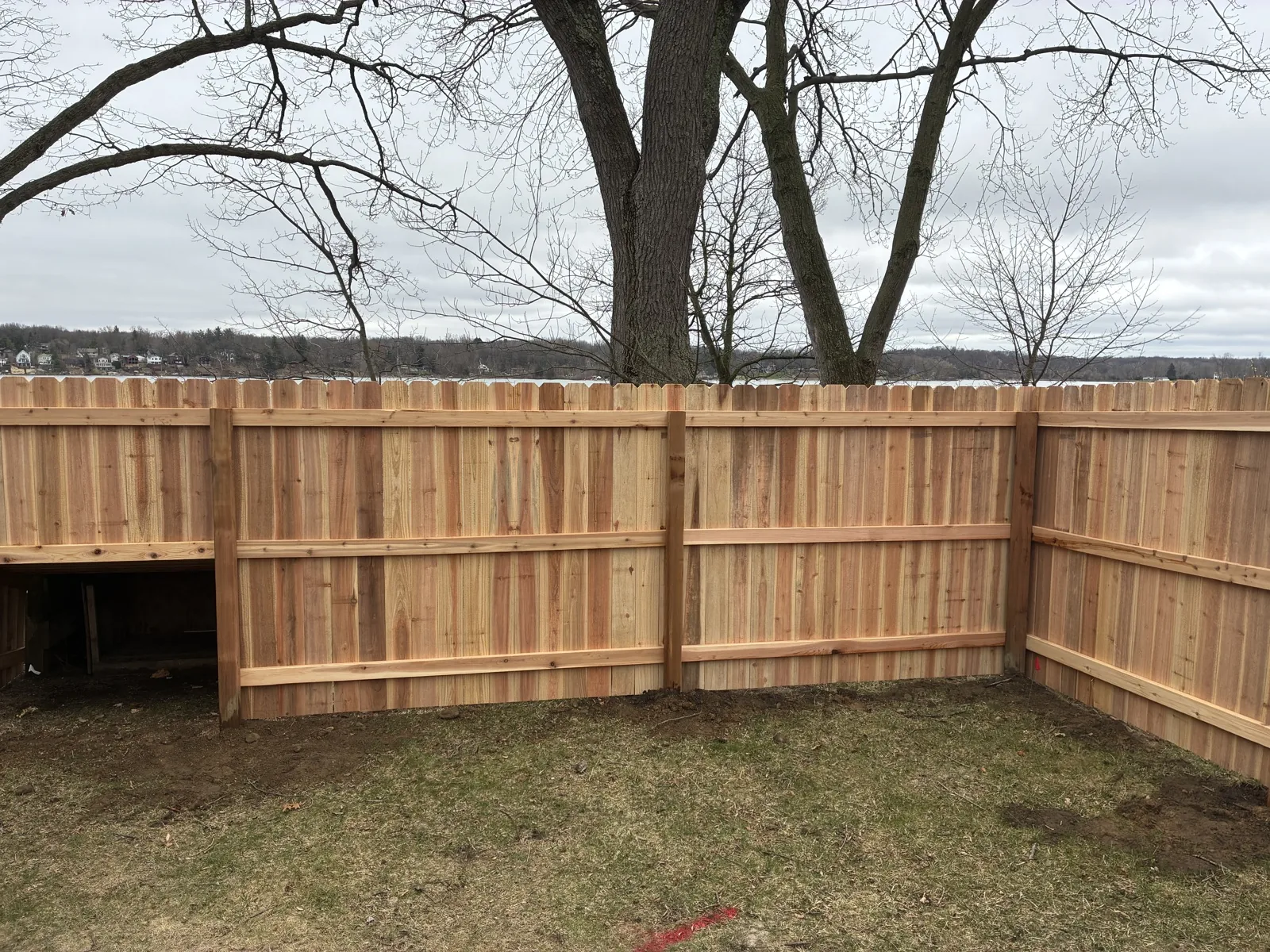
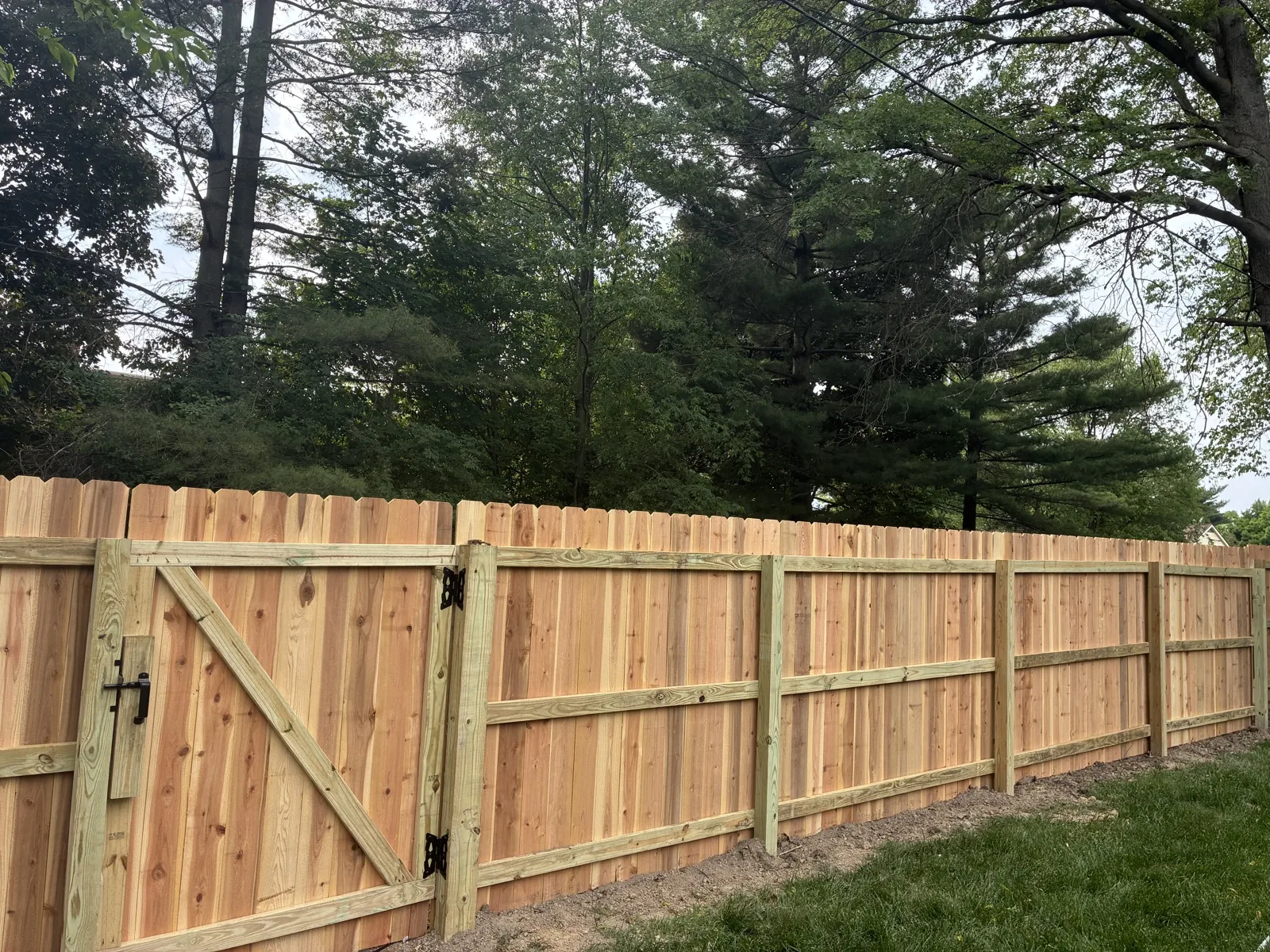
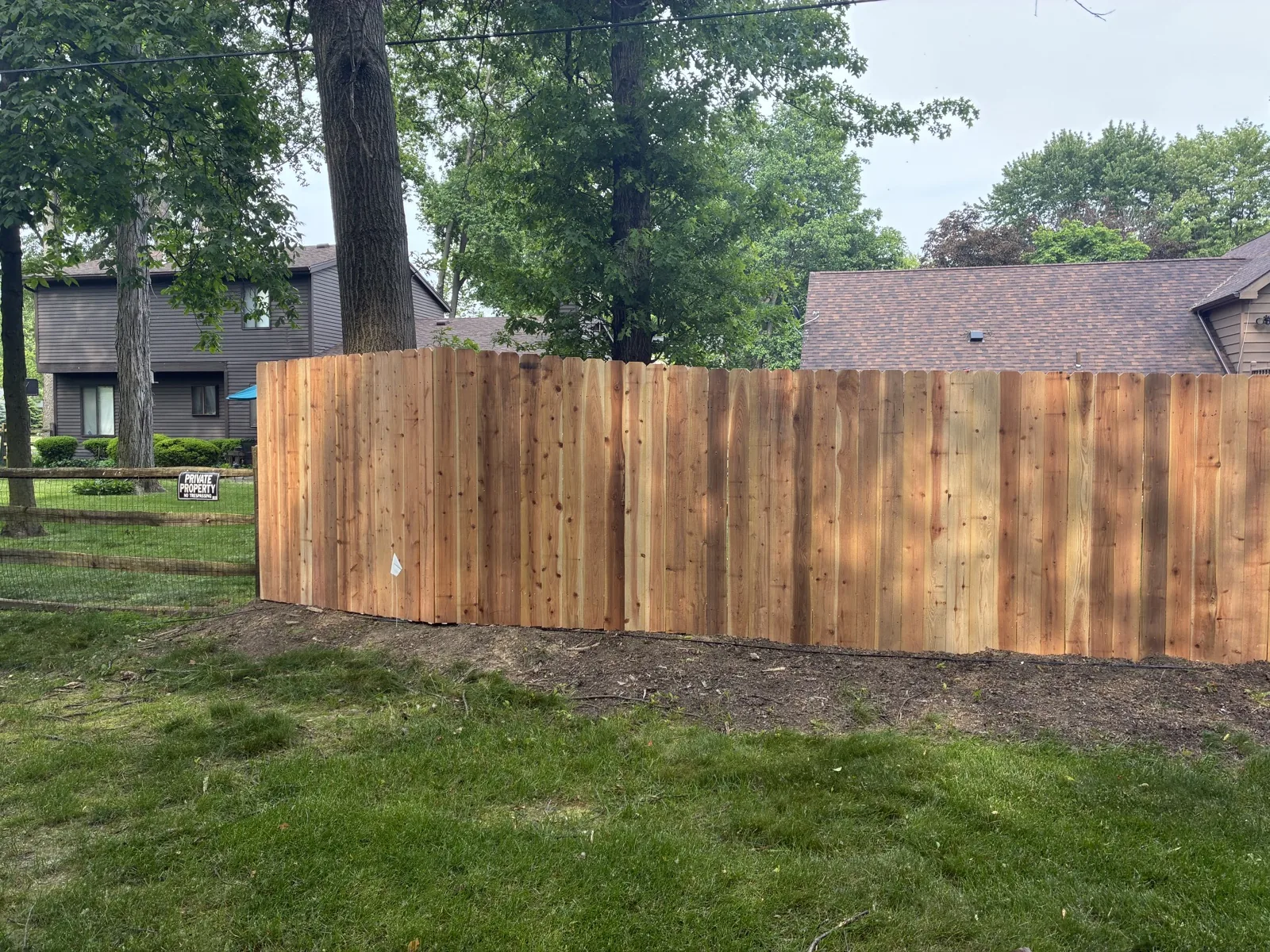
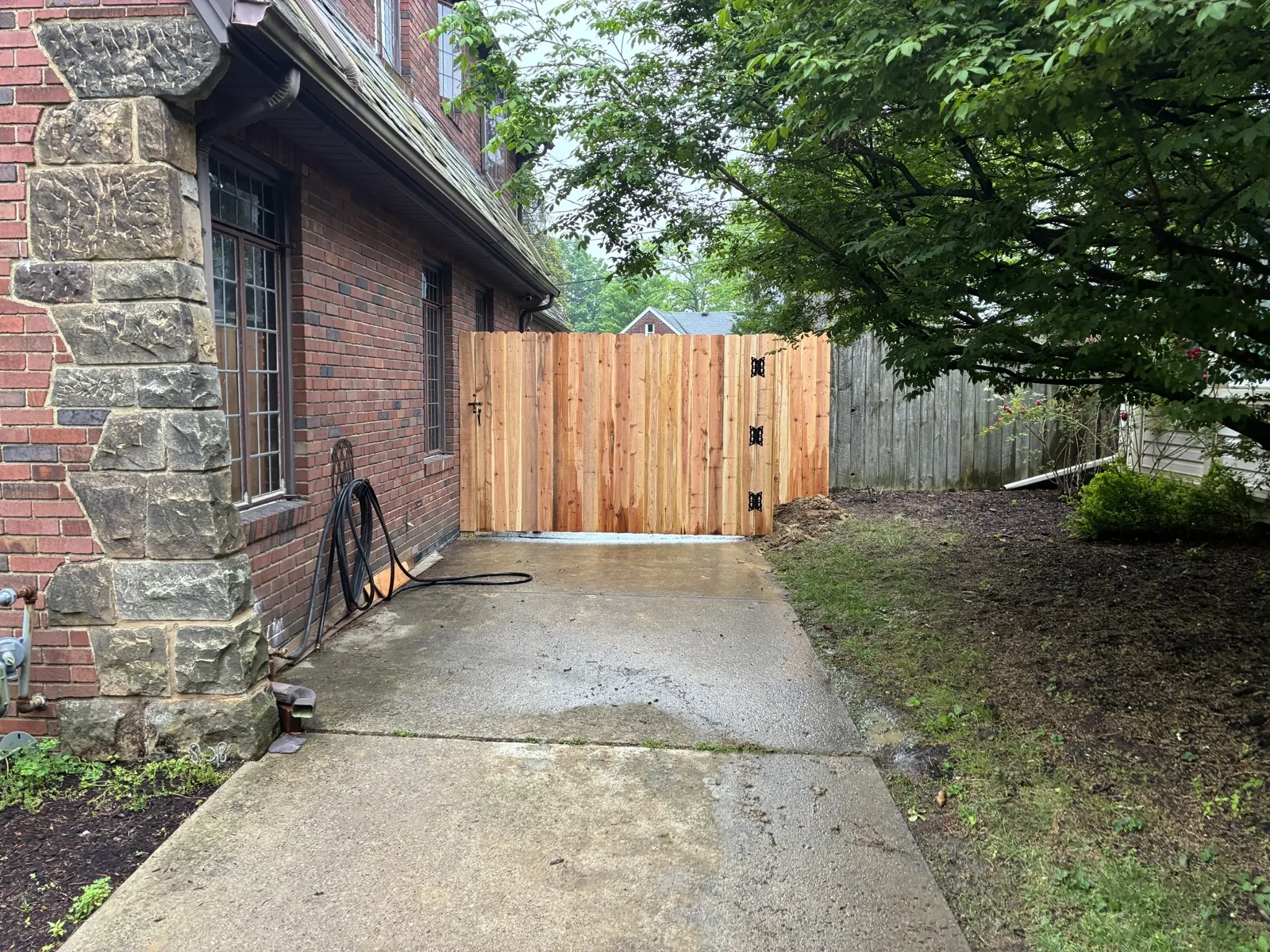
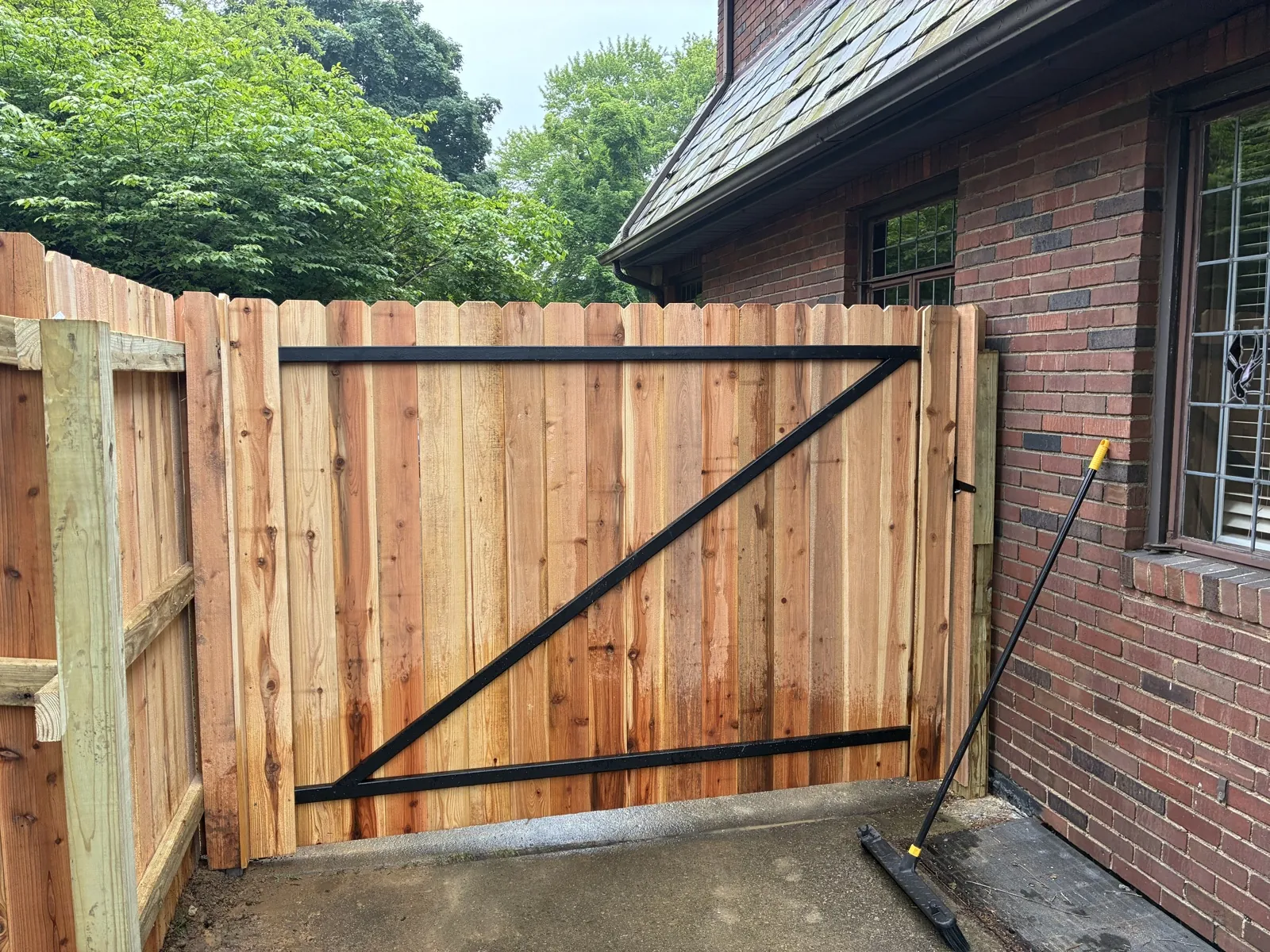
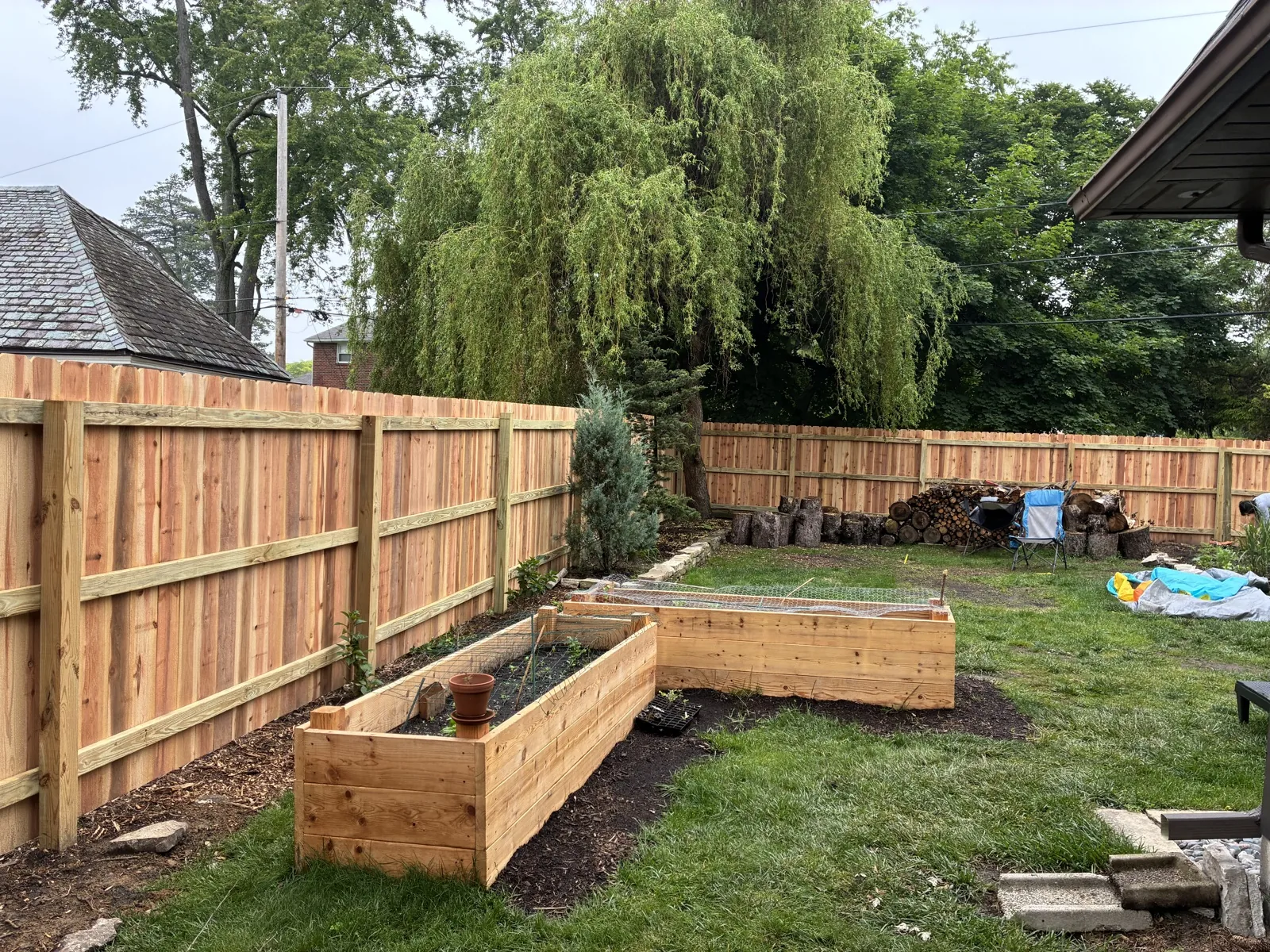
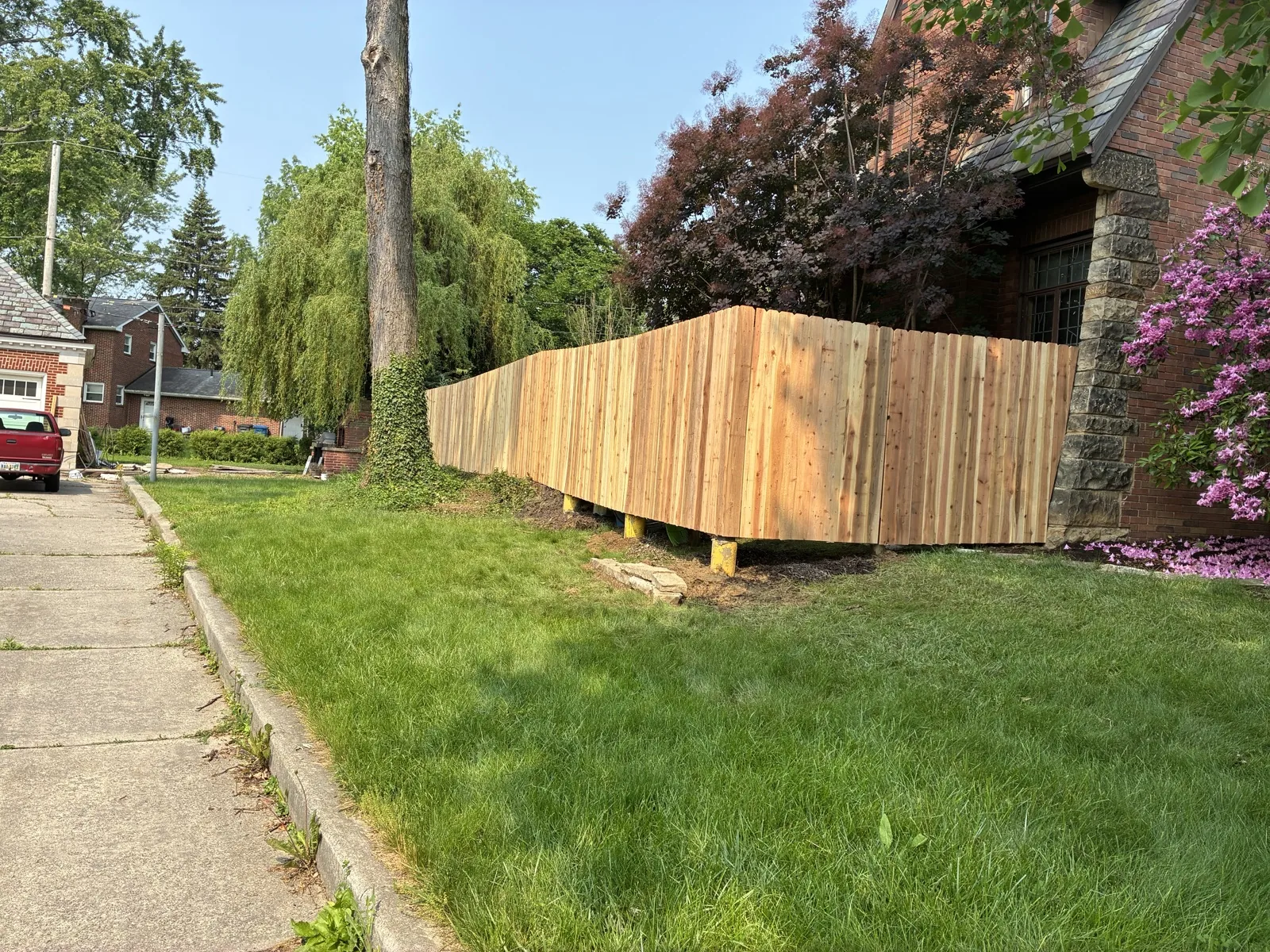
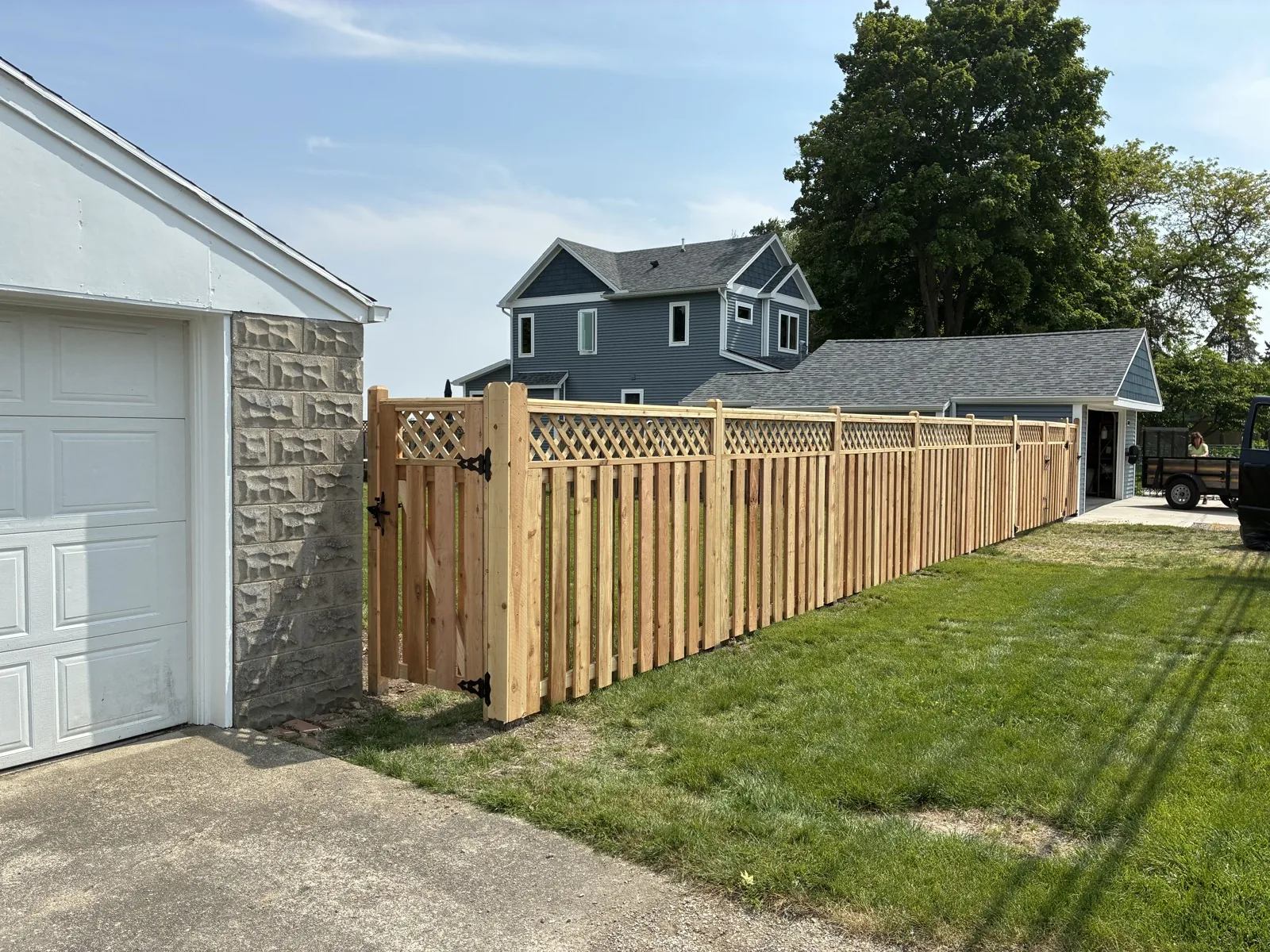
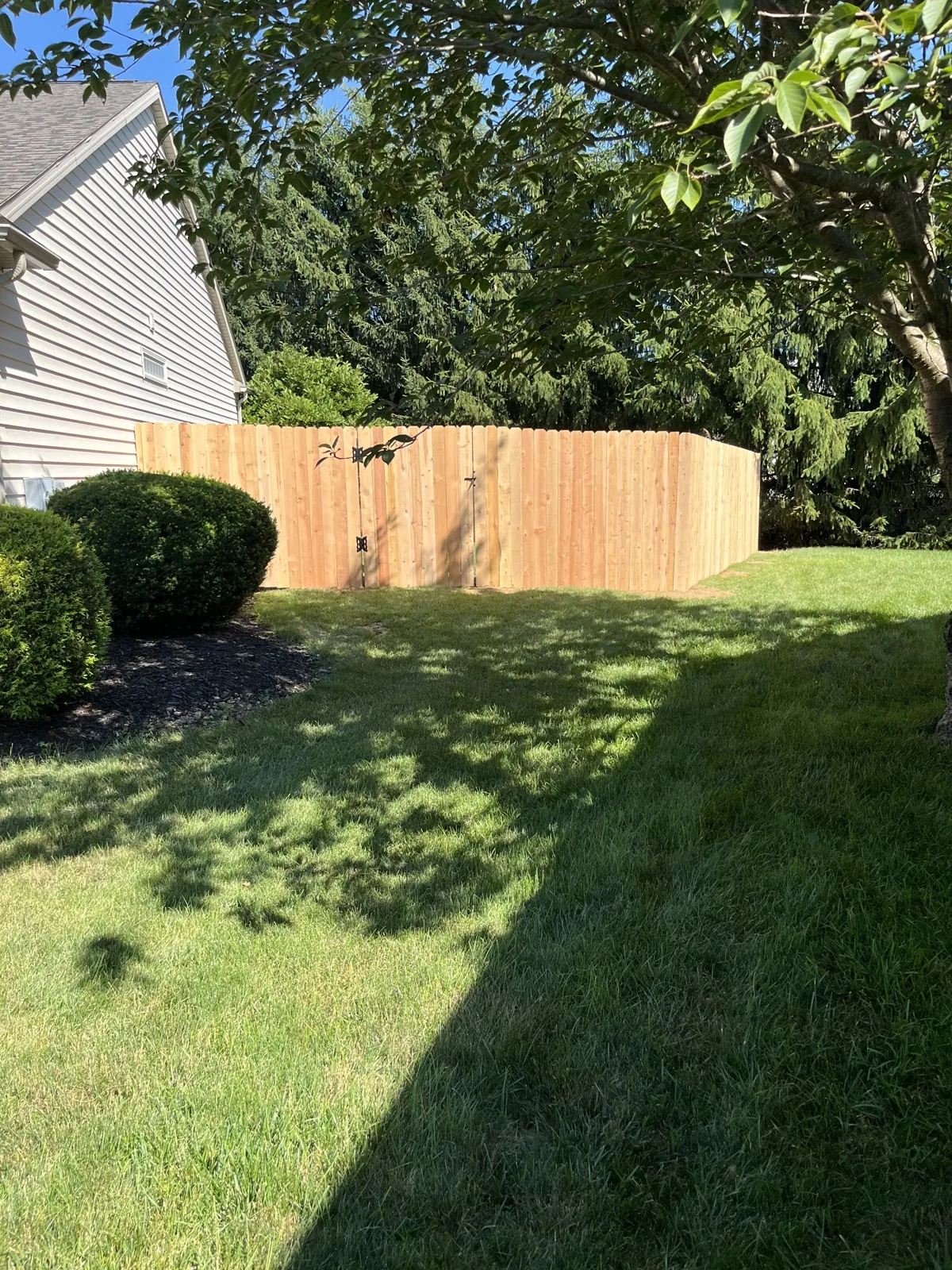
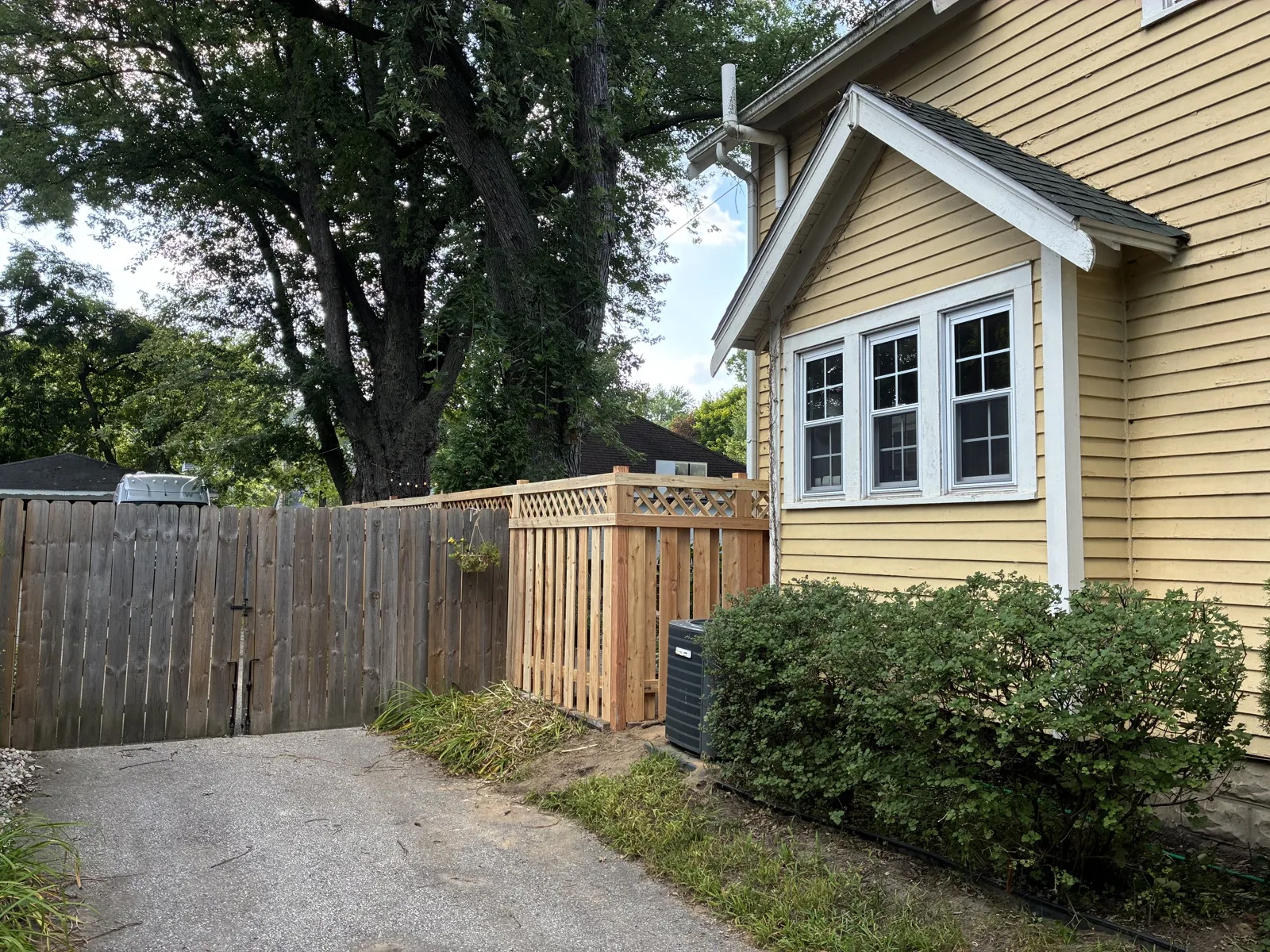
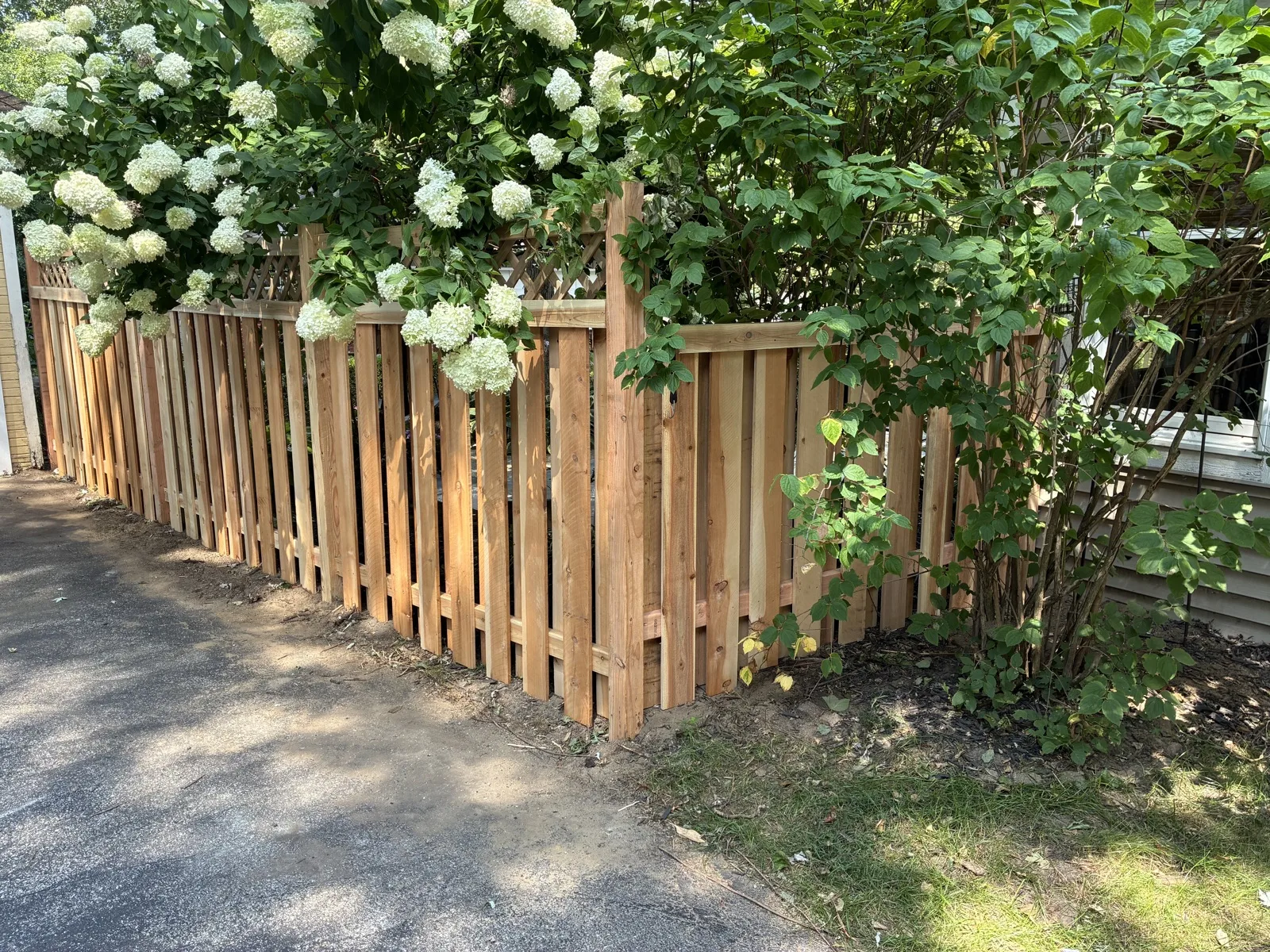
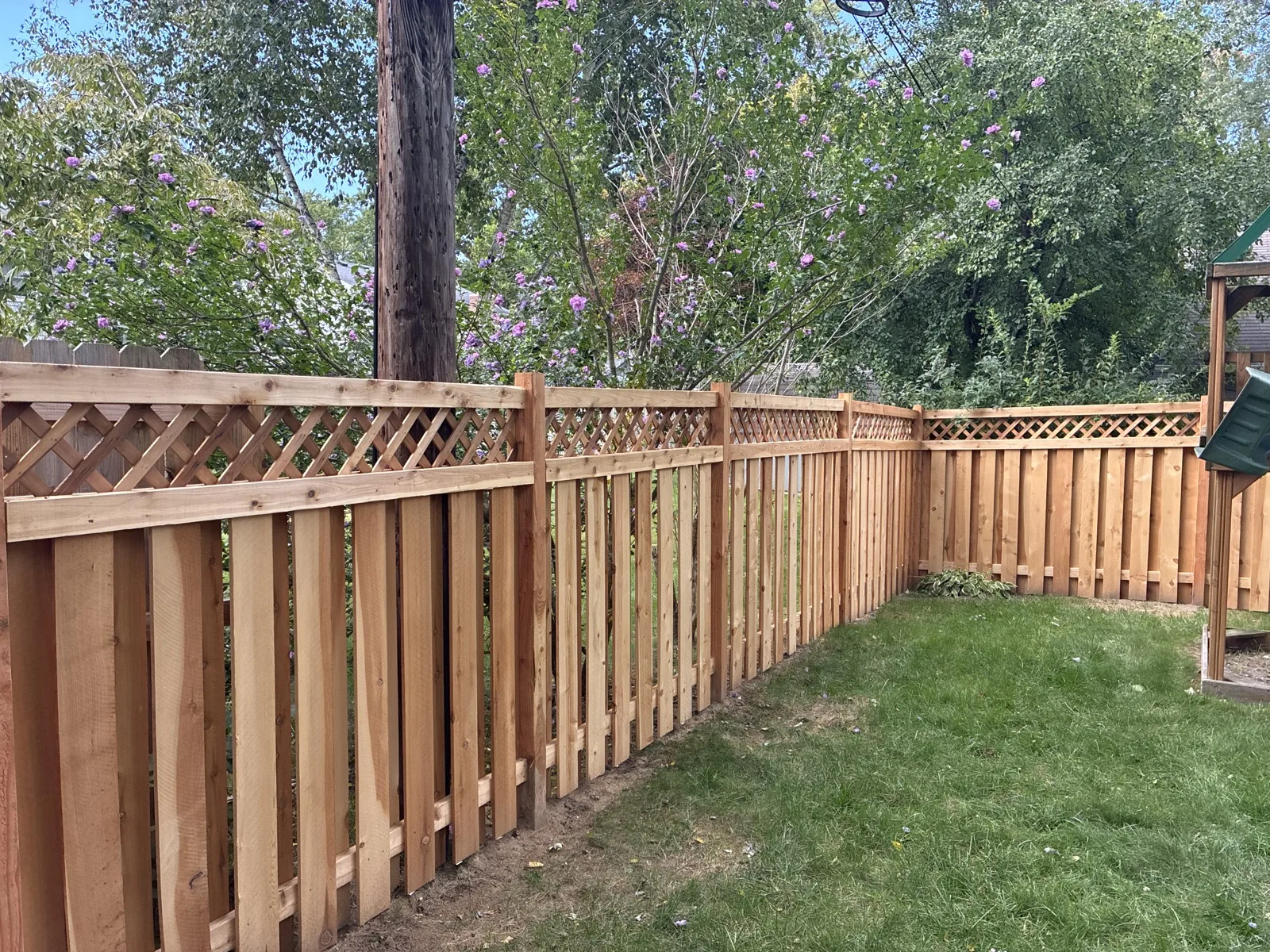
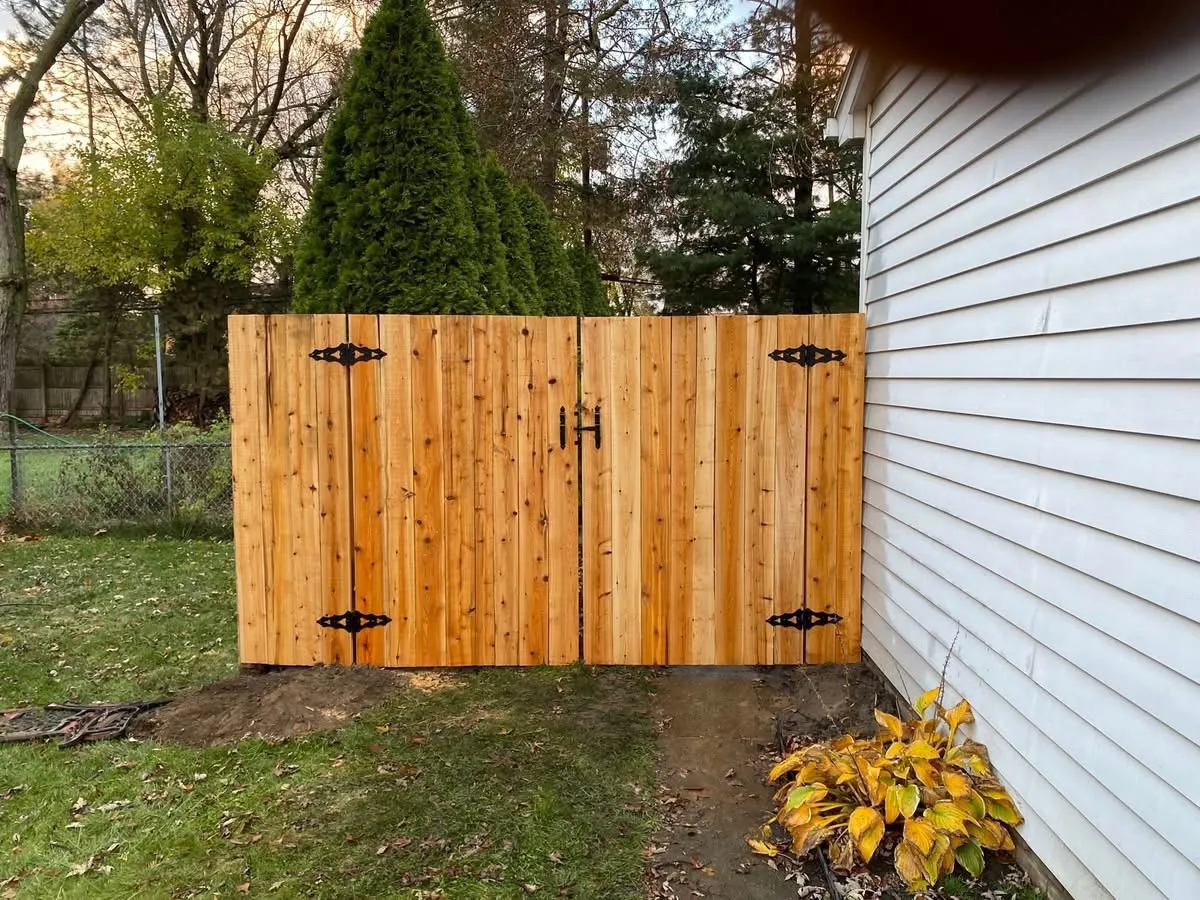
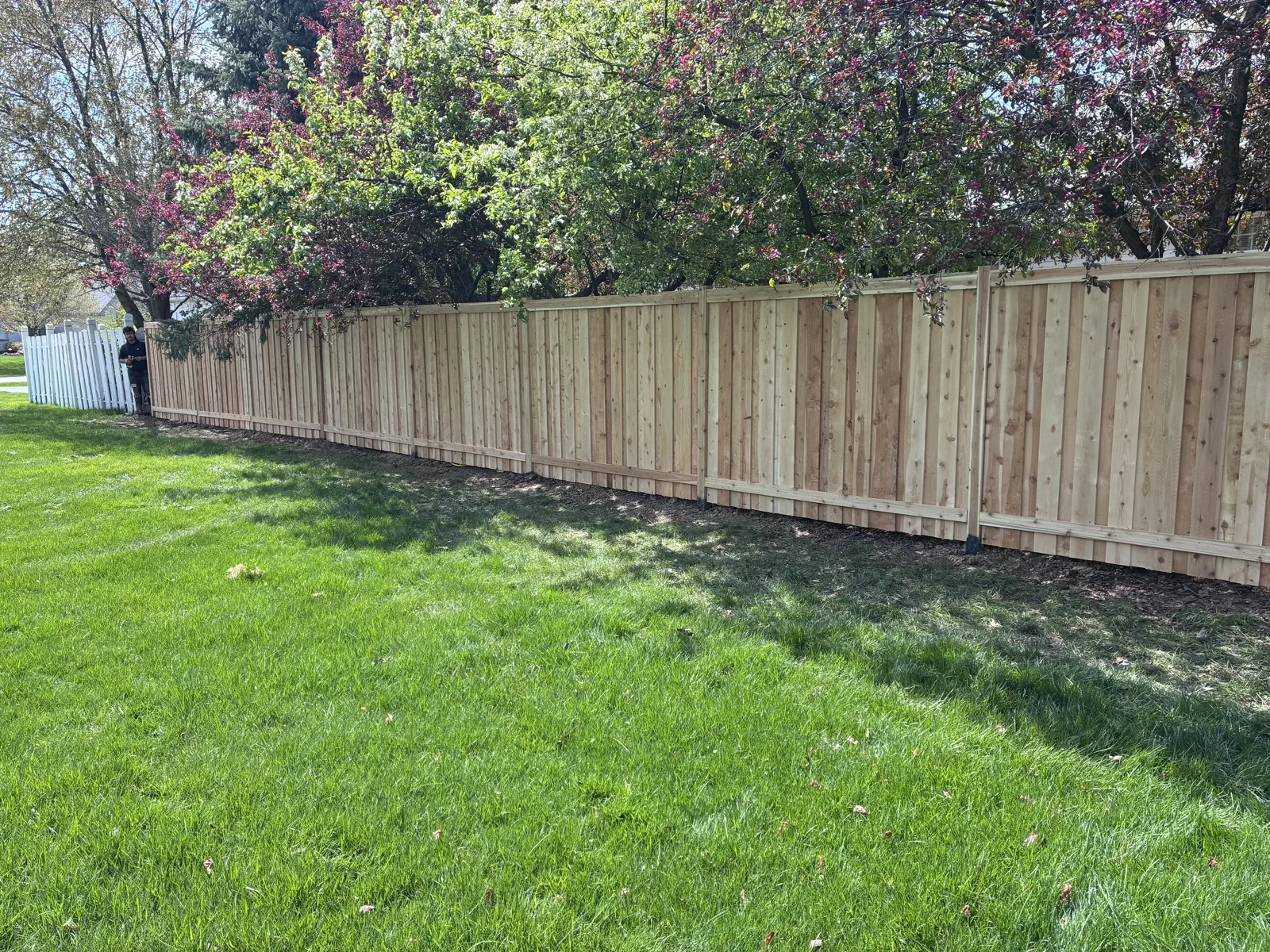
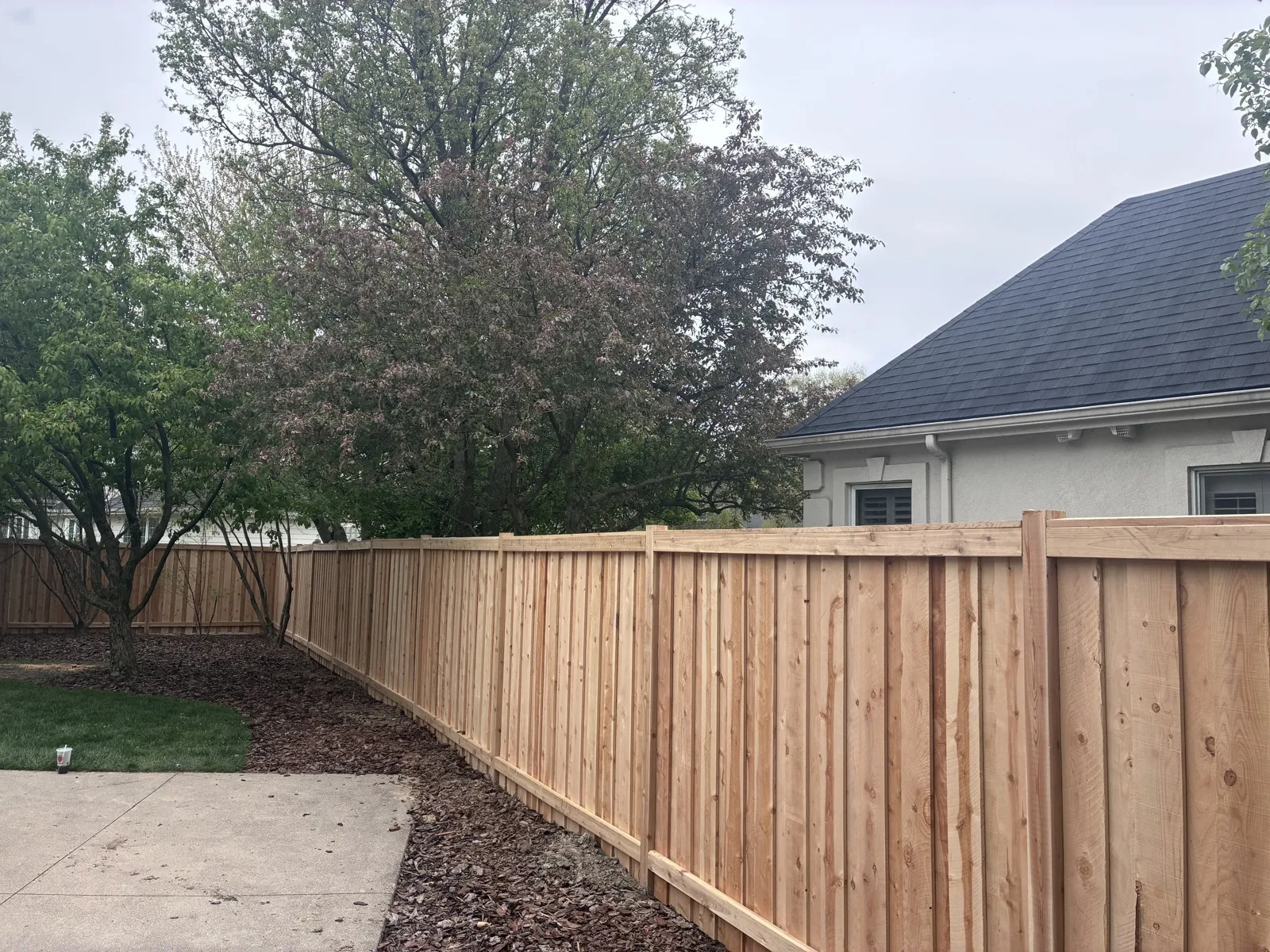
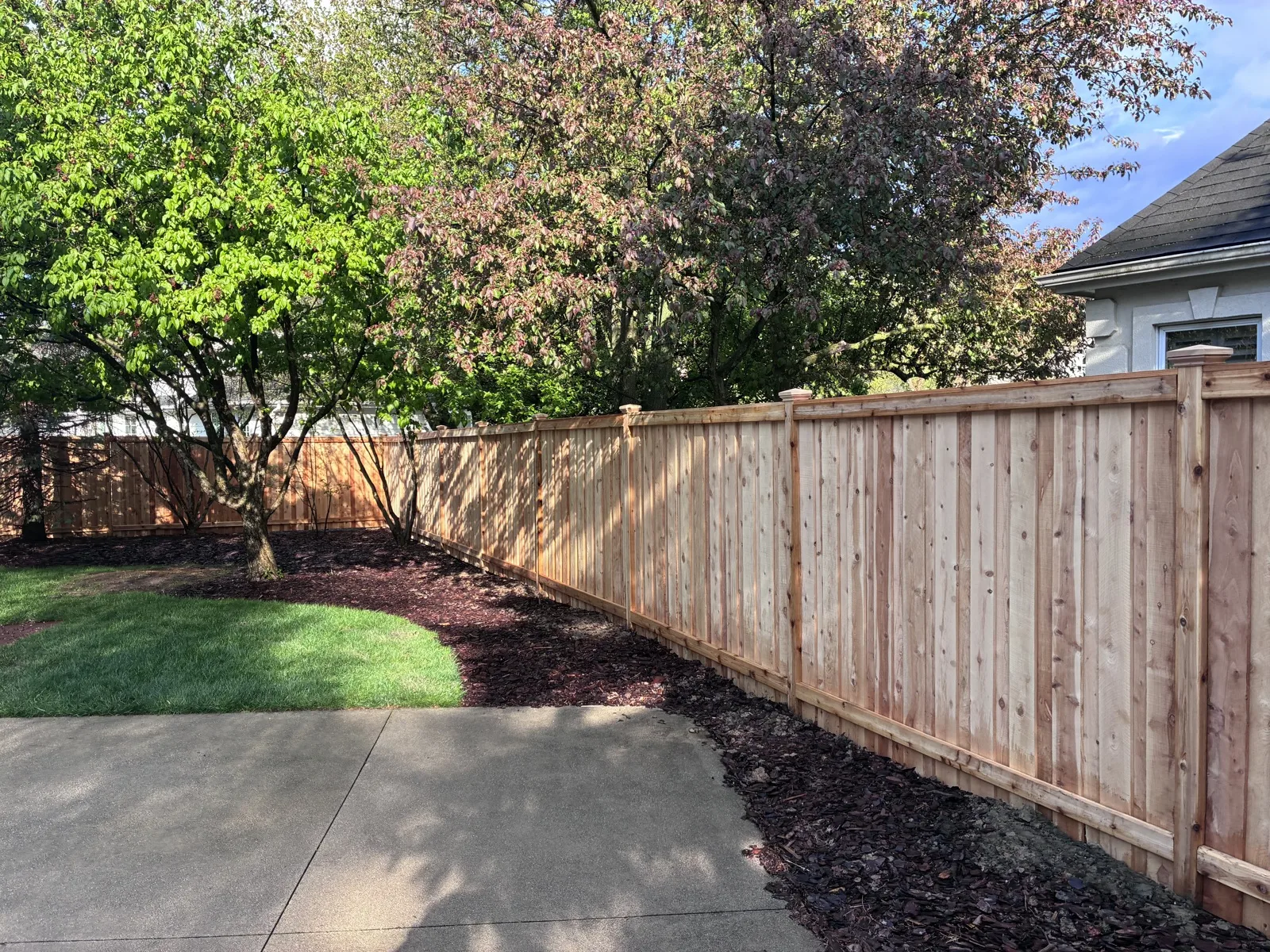
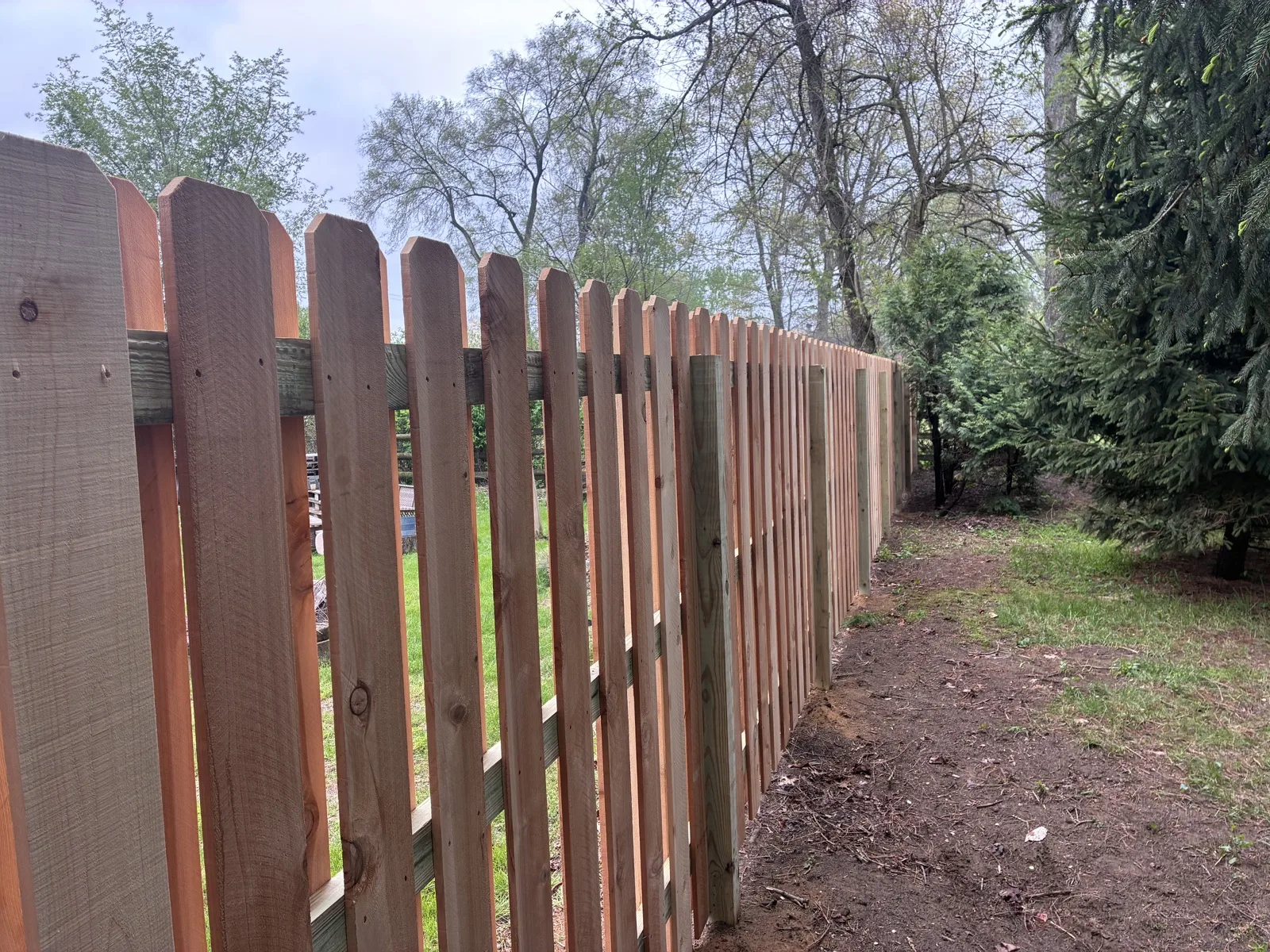
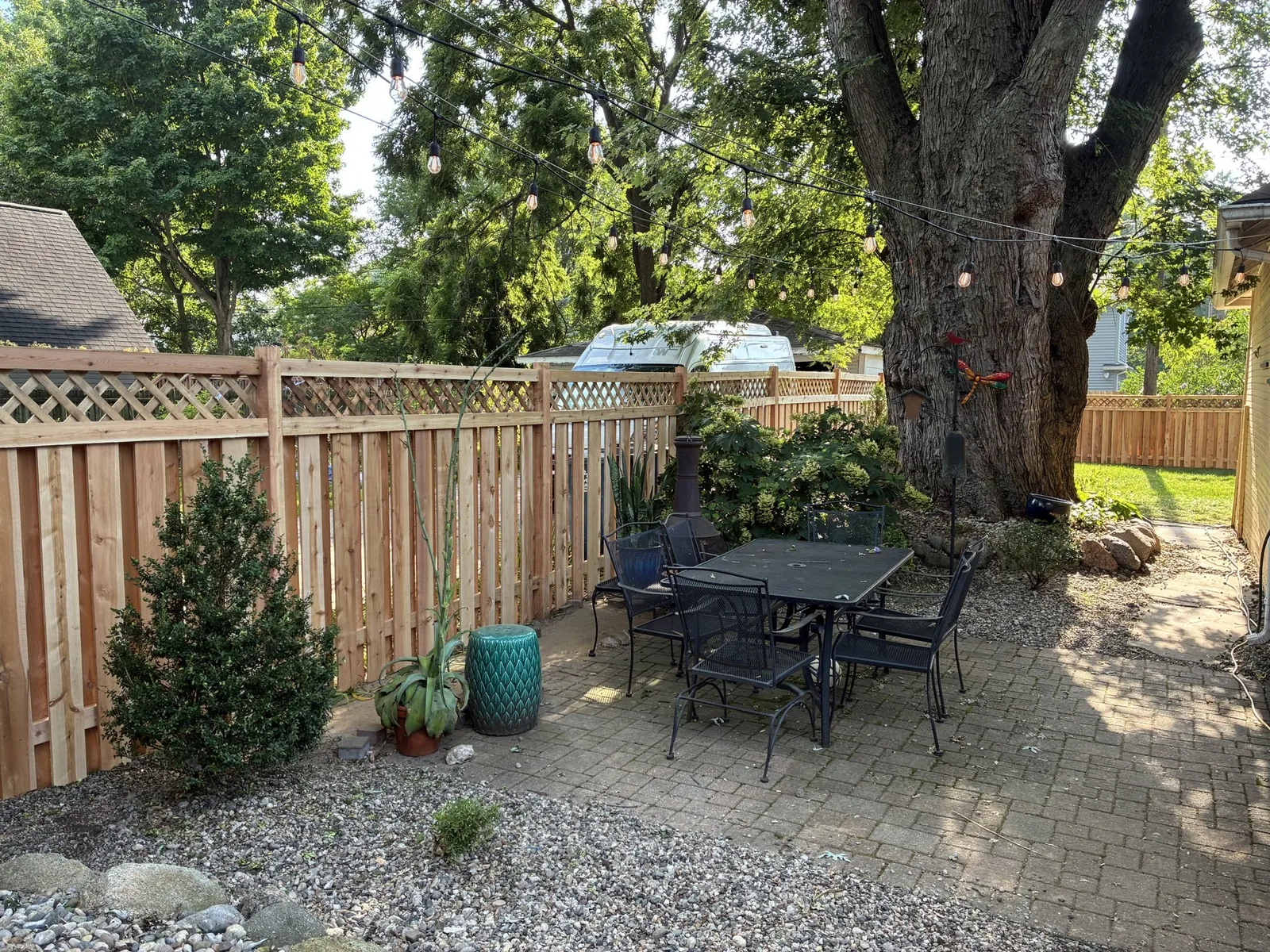
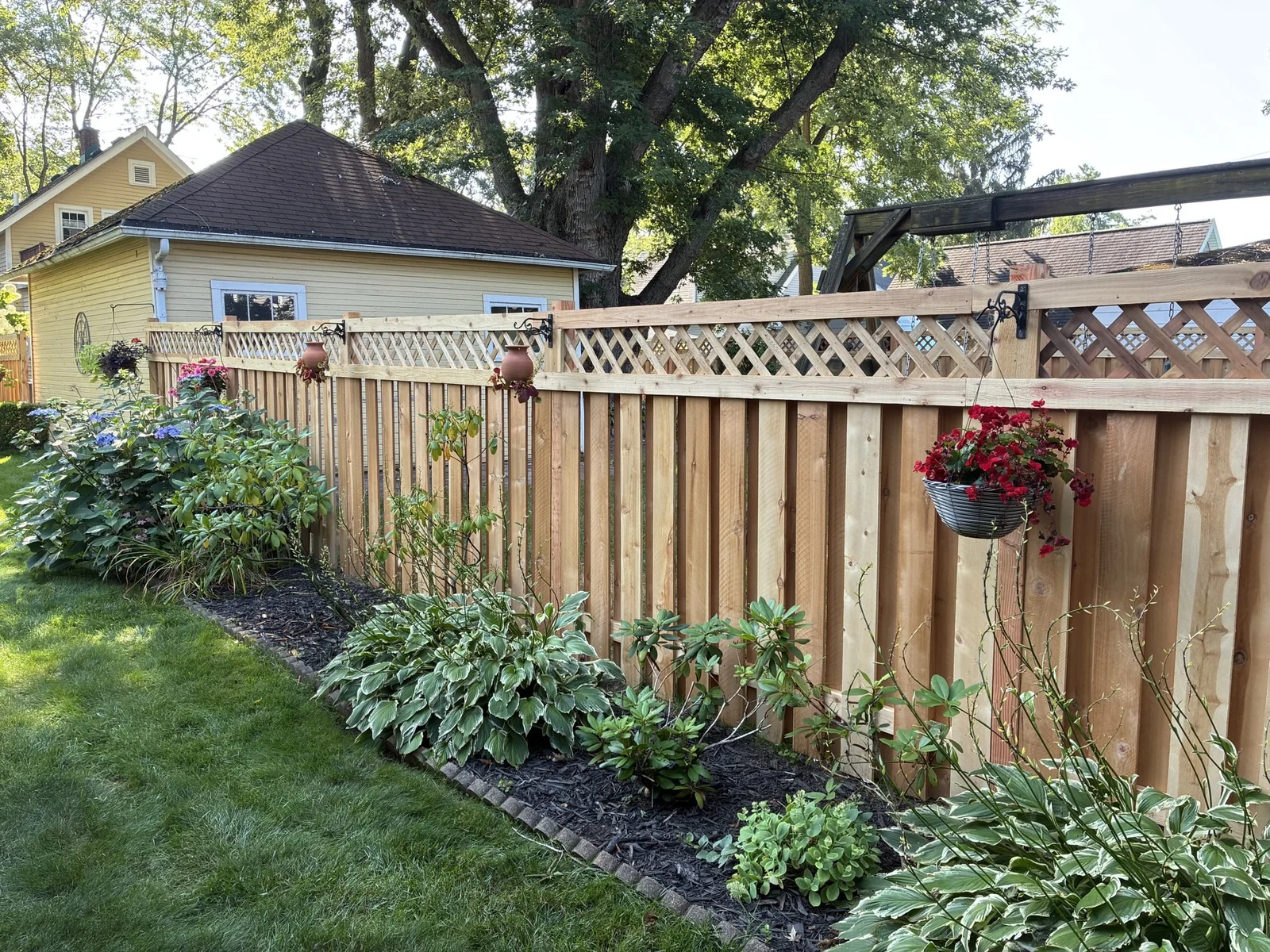
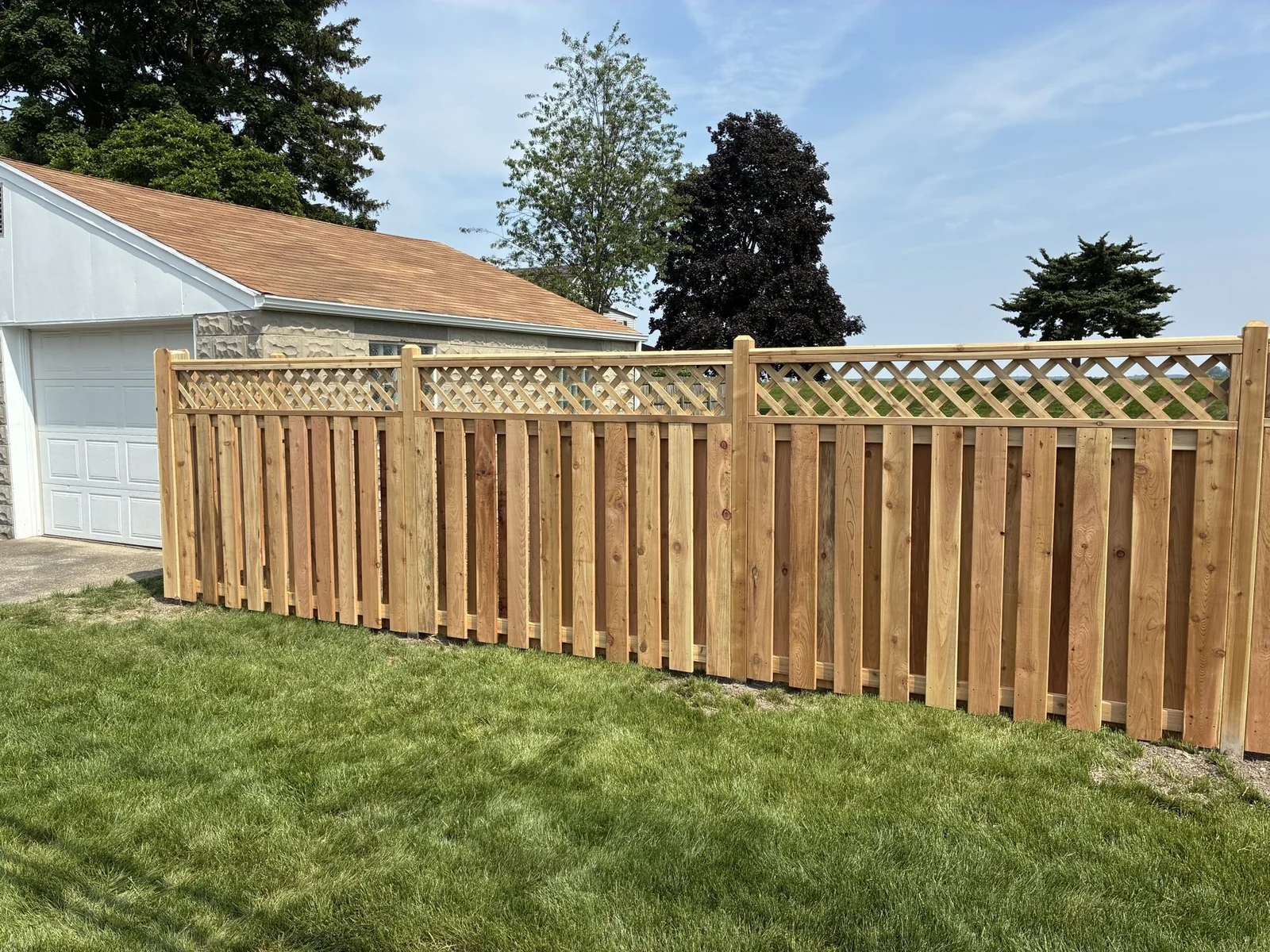
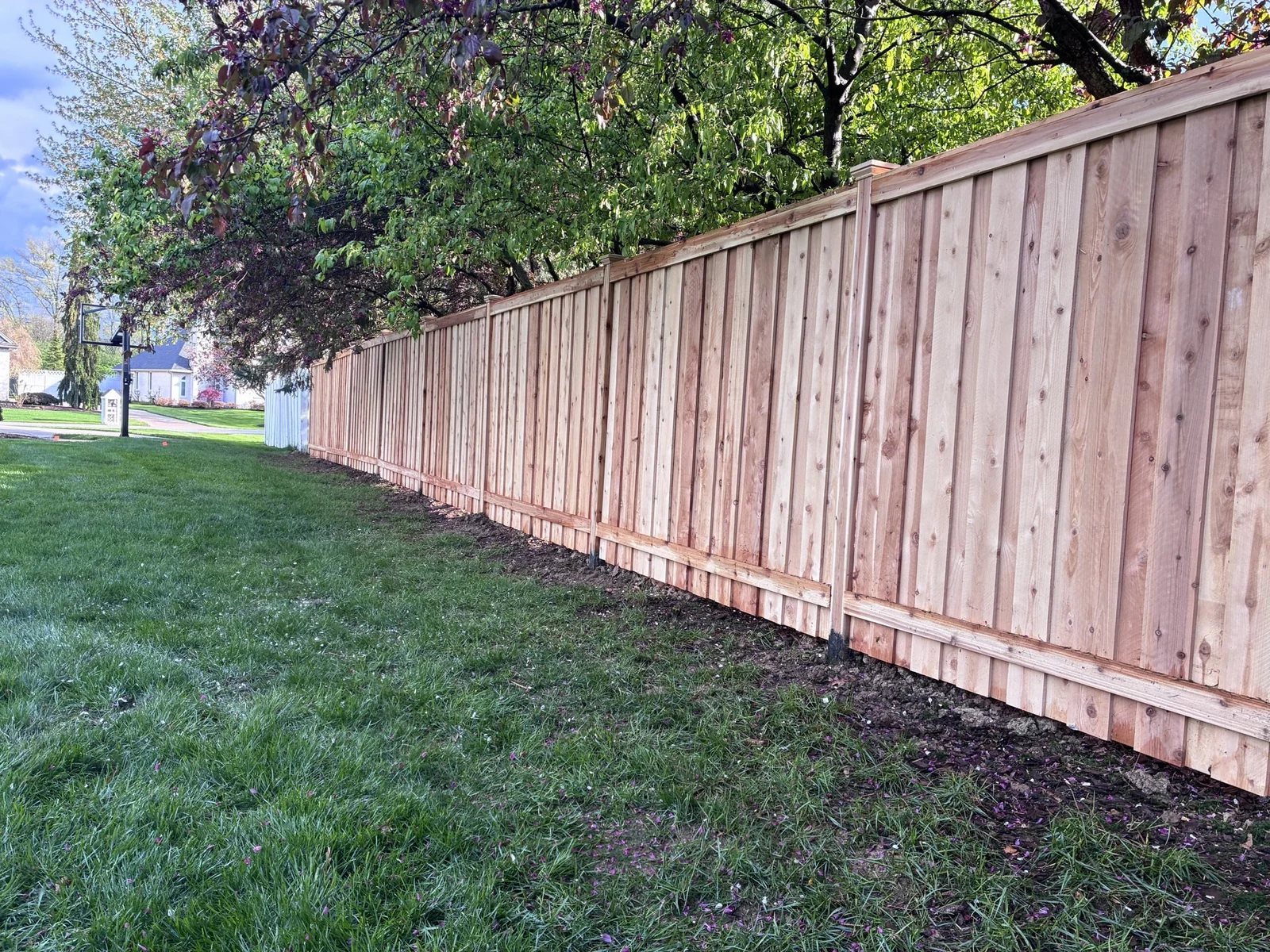
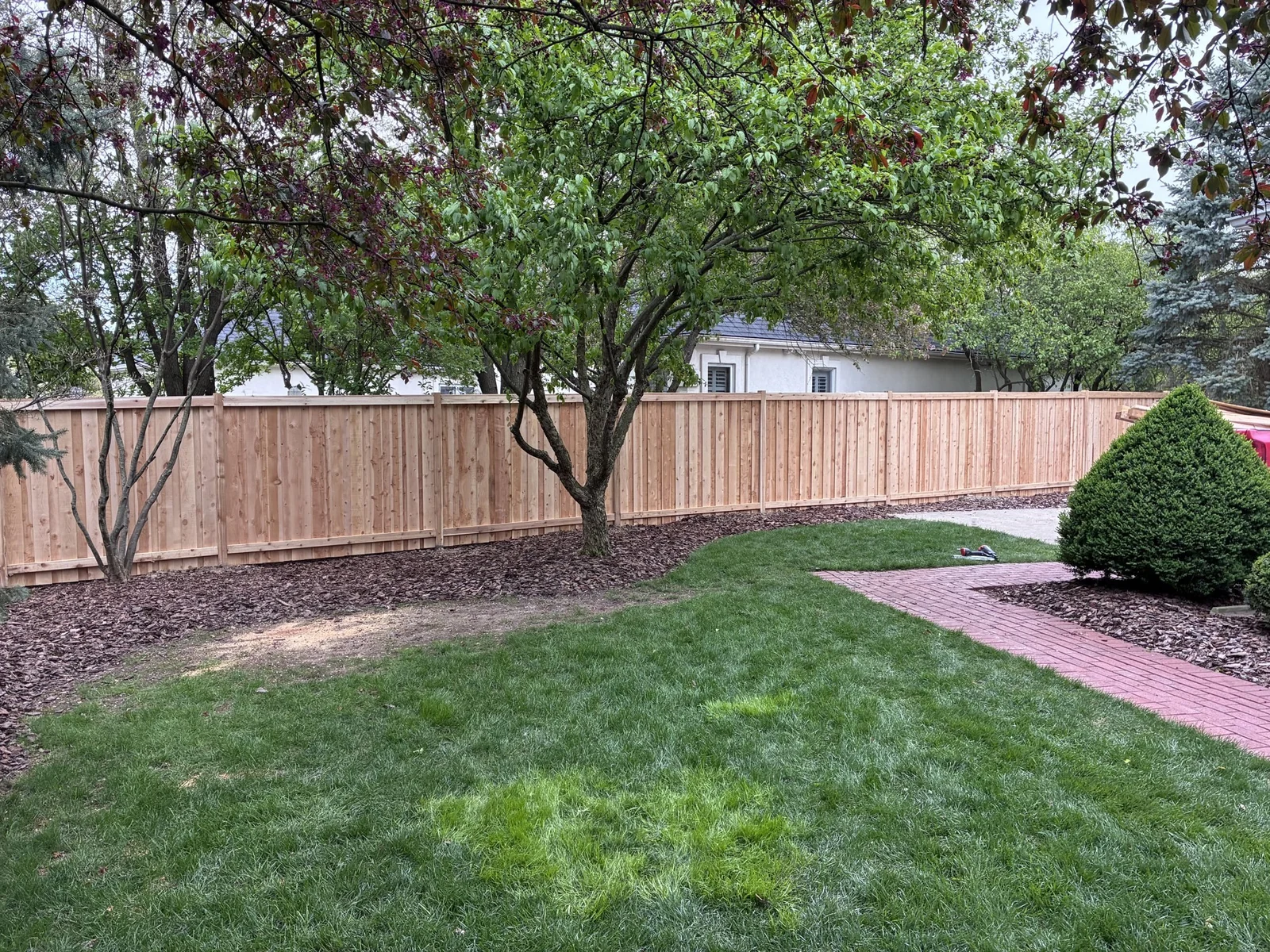
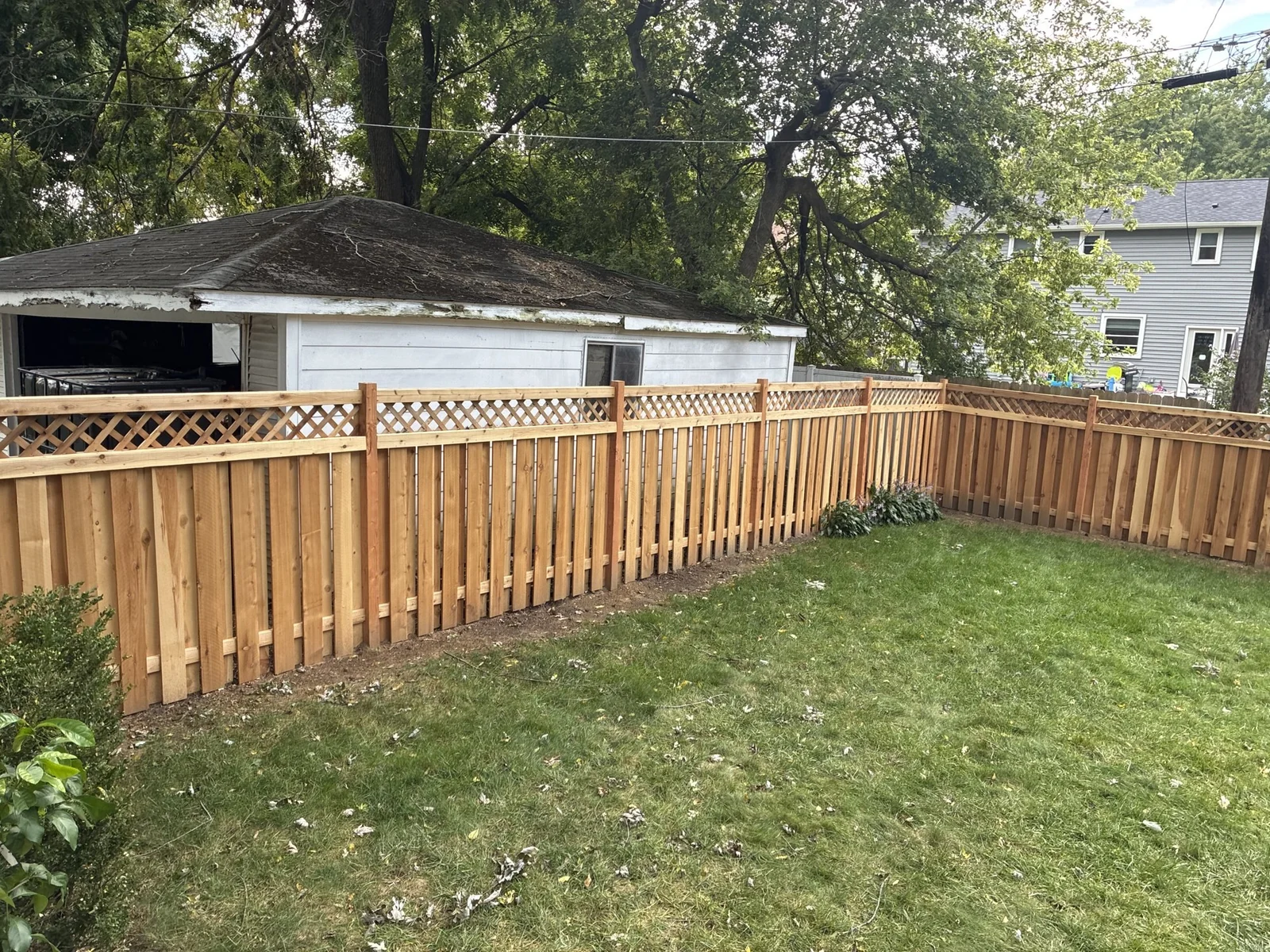
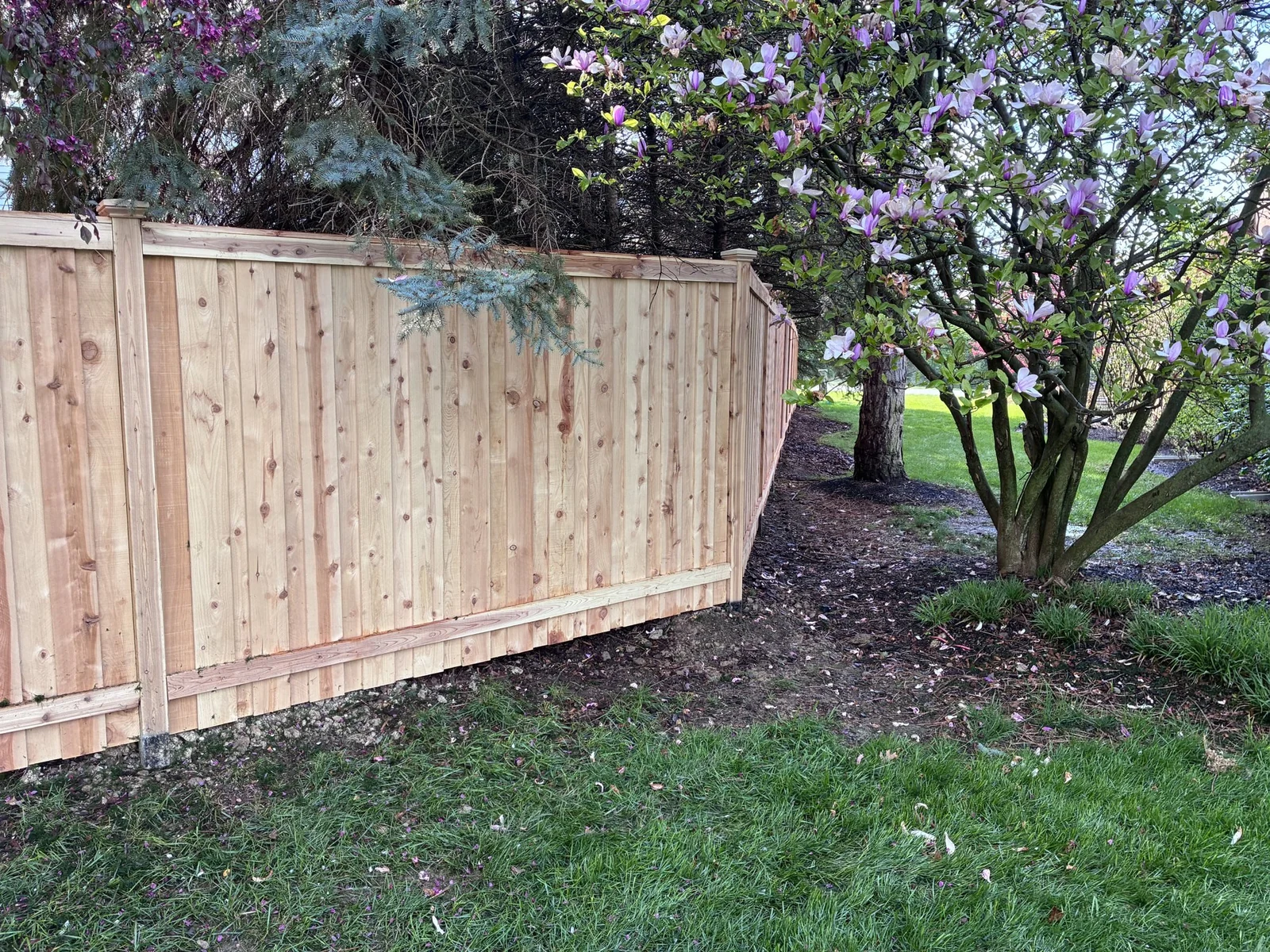
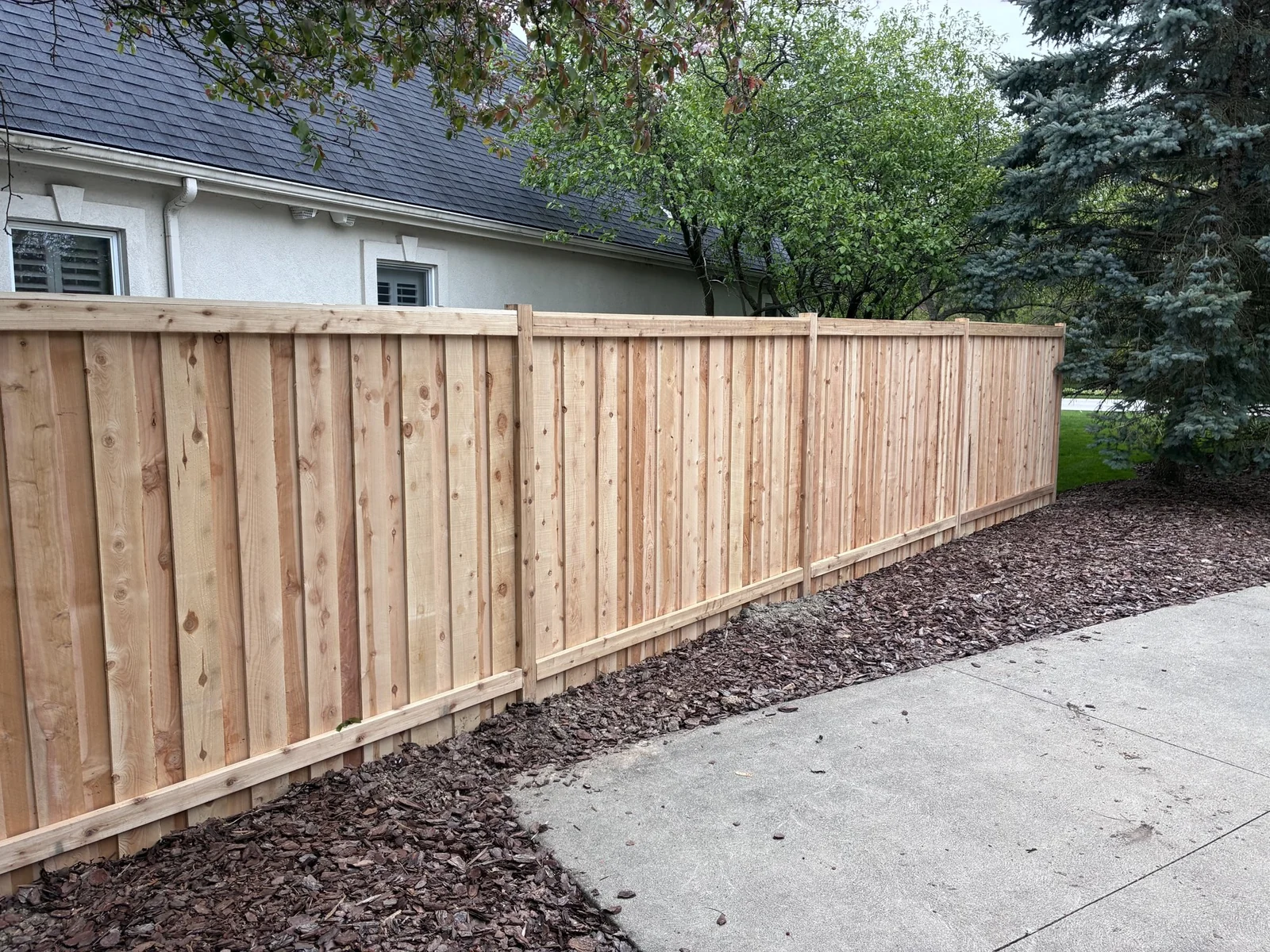
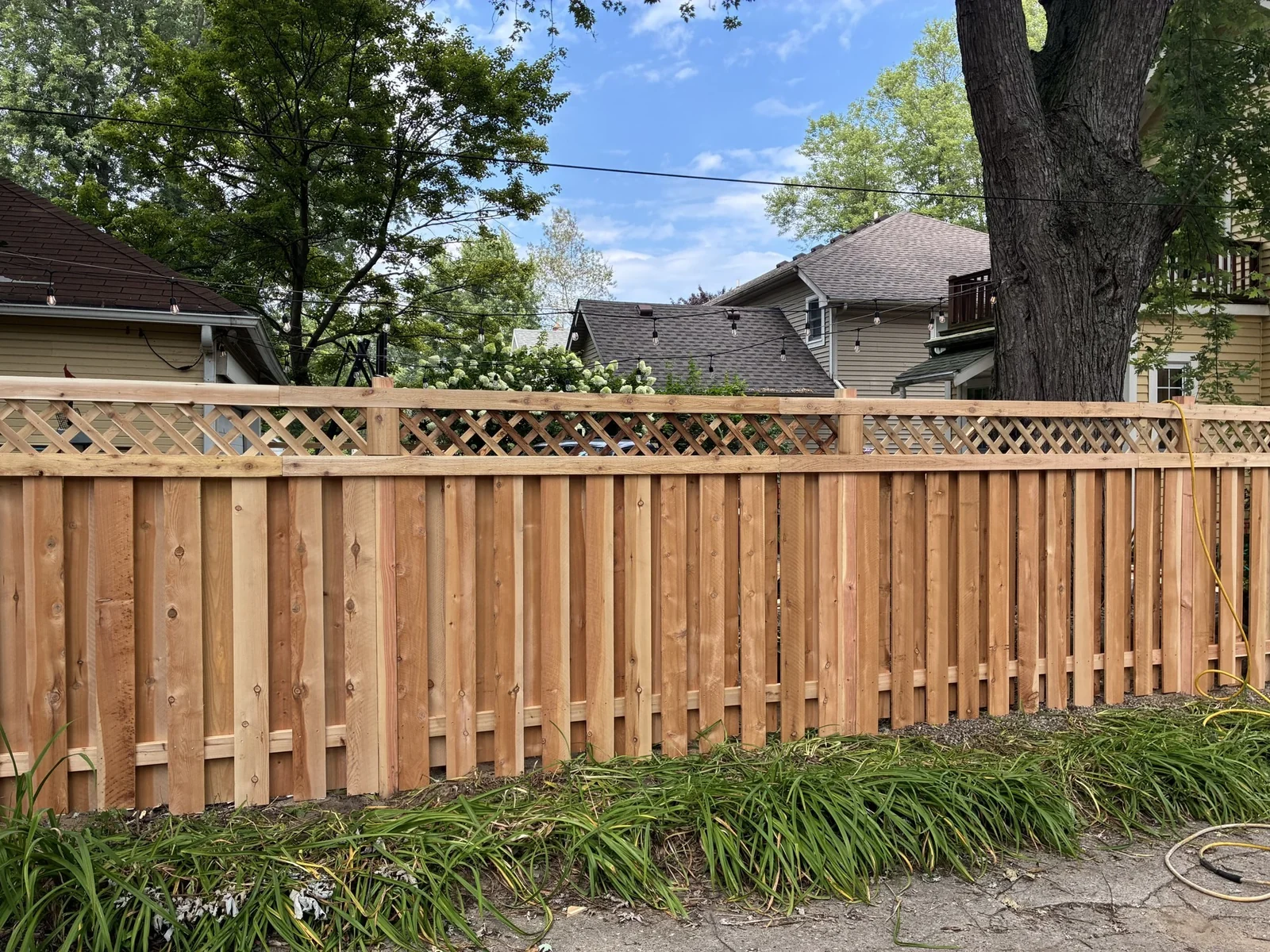
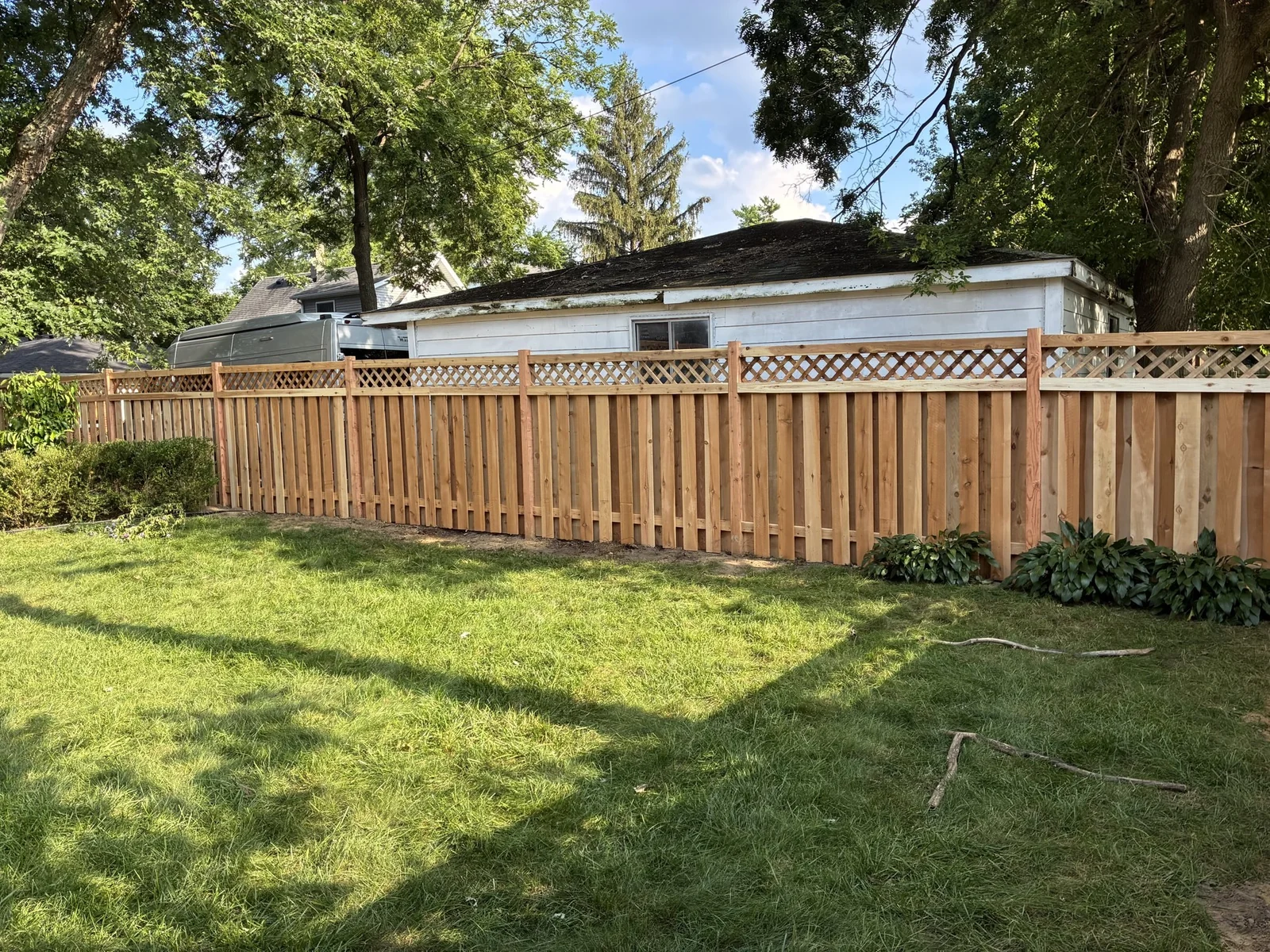
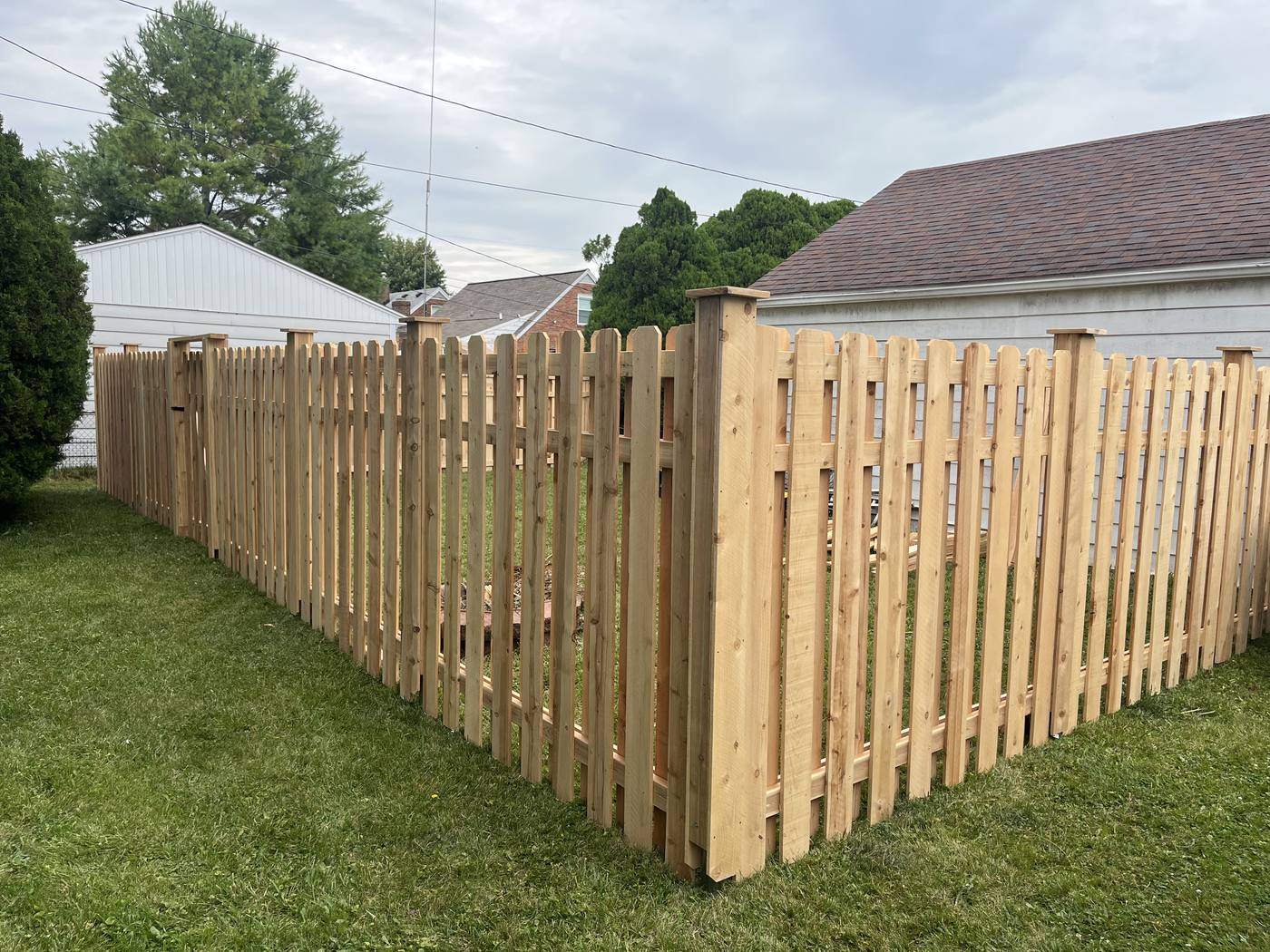
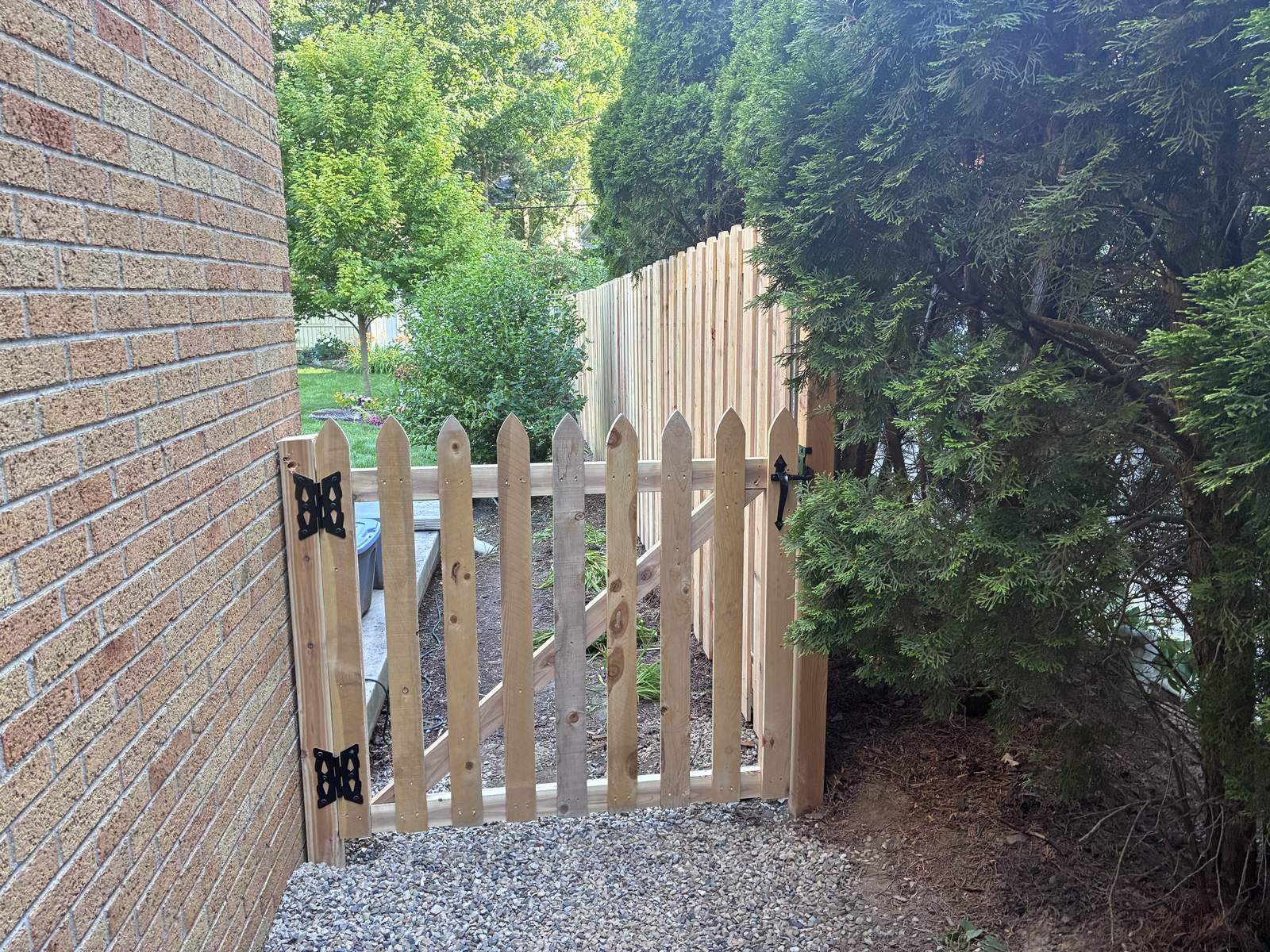
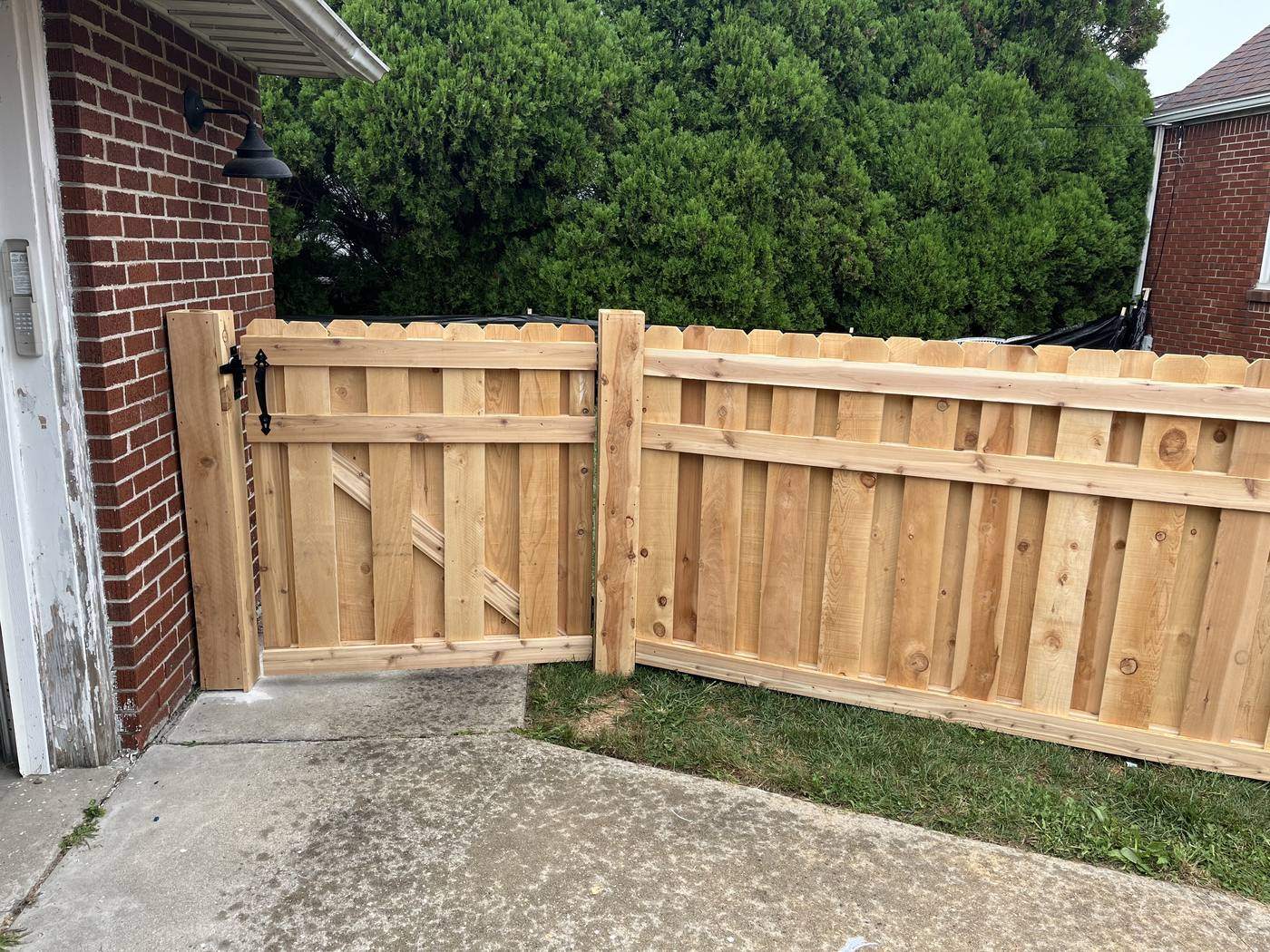
A favorite panel is a good starting point. The corners, gates and changes in height complete the design.
If you like a tall privacy run with a shorter picket entrance, mark the transition on the layout. Compare the top profile, post caps and view through the gate from both sides before settling on the combination.
Choose the side that presents the pickets or boards, then review where the rails, brace, latch and hinges will appear. A front-facing inspiration photo may leave those useful details out; the gate photos above show another view.
Western red cedar has natural resistance to decay and insects. That is a species property, not a promise that every cedar component or installation lasts the same way. Ask which lumber is proposed for boards, rails and posts.
Unfinished western red cedar weathers toward silver-gray. A finish can retain or change its appearance, but exposure and surface preparation affect the result. Decide whether weathering is welcome before treating color change as a defect.
A semi-transparent stain leaves more wood character visible. Solid-color stains and paint hide more of the wood's natural color. Compare the look of the actual finish, not just a small color name on a chart.
Cedar can develop dark staining where incompatible iron contacts the wood. Fastener compatibility is worth including in the specification, especially when a clean, natural finish is part of the design.
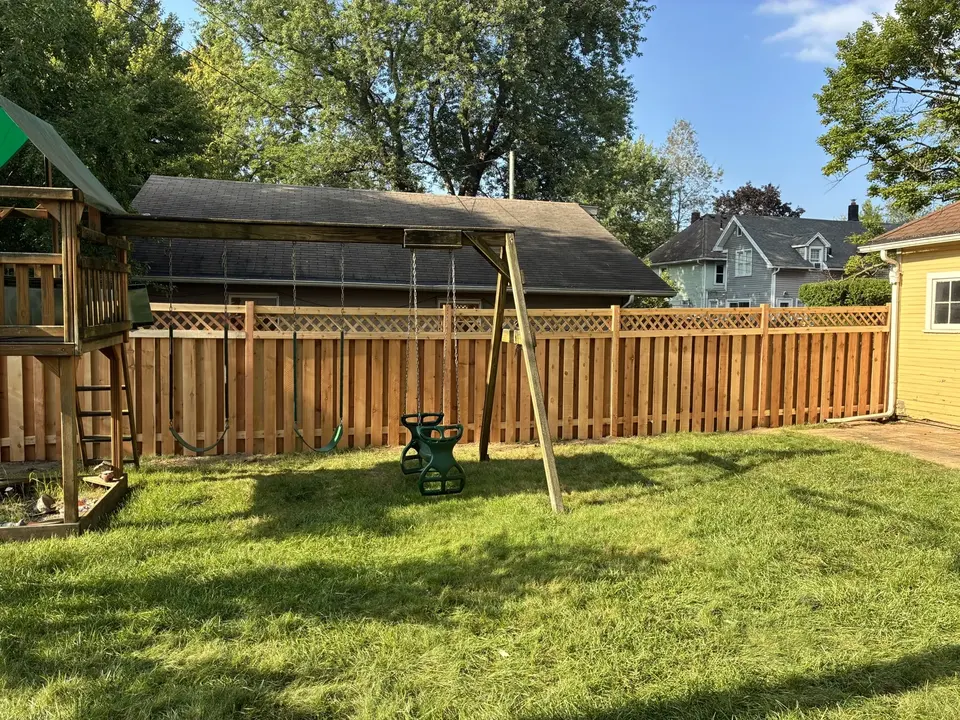
Lattice or an open top adds detail while leaving sightlines through that part of the fence. Check the view from seated eye level and from the neighboring side before choosing how much of the panel is open.
A ballpark is a planning range. The final quote depends on measurements, gates, removal, site conditions and the written installation scope.
Discuss the whole board and both fence faces when specifying a finish. Western Red Cedar Lumber Association guidance favors coating all surfaces before installation where practical; an installed fence may have less-accessible faces. State what the finishing scope actually includes.
A semi-transparent stain can change the tone while allowing grain to show. More opaque coatings conceal more of the original appearance. Check a sample and follow the selected product's preparation and application directions.
No. Surface weathering and structural condition are different questions. Ask for the posts, rails, fasteners and boards to be assessed separately before choosing between cleaning, refinishing, repair or replacement.
These references explain material behavior and planning considerations. Product examples do not identify the brand in our photos or promise a particular specification. Your proposal and applicable local requirements determine the project details.
Style library
The drawings come from our printed brochure. The 3D models are the same ones that draw your quote.
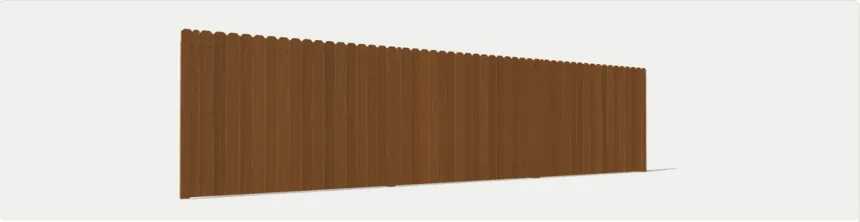
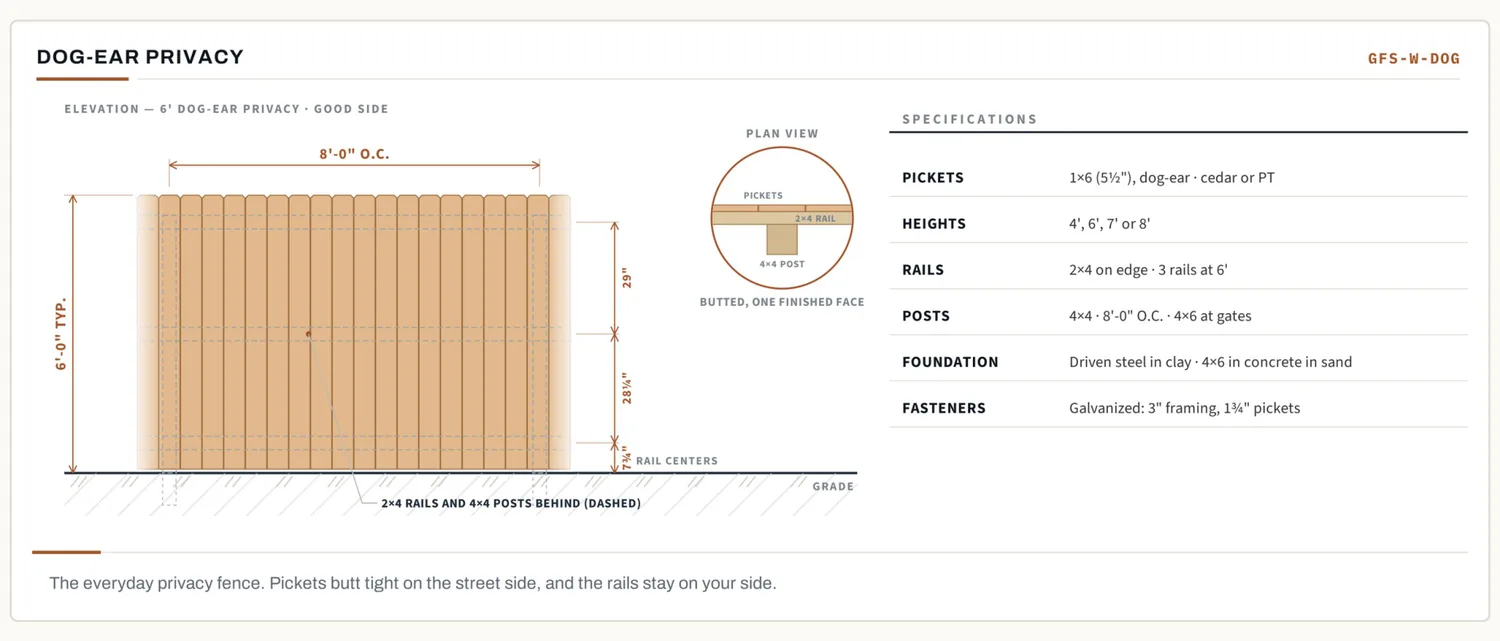
The everyday privacy fence. 1×6 dog-ear pickets butt tight on the street side, and the rails stay on your side. Built 4, 6, 7 or 8 ft tall in cedar or pressure-treated, with three 2×4 rails at 6 ft.
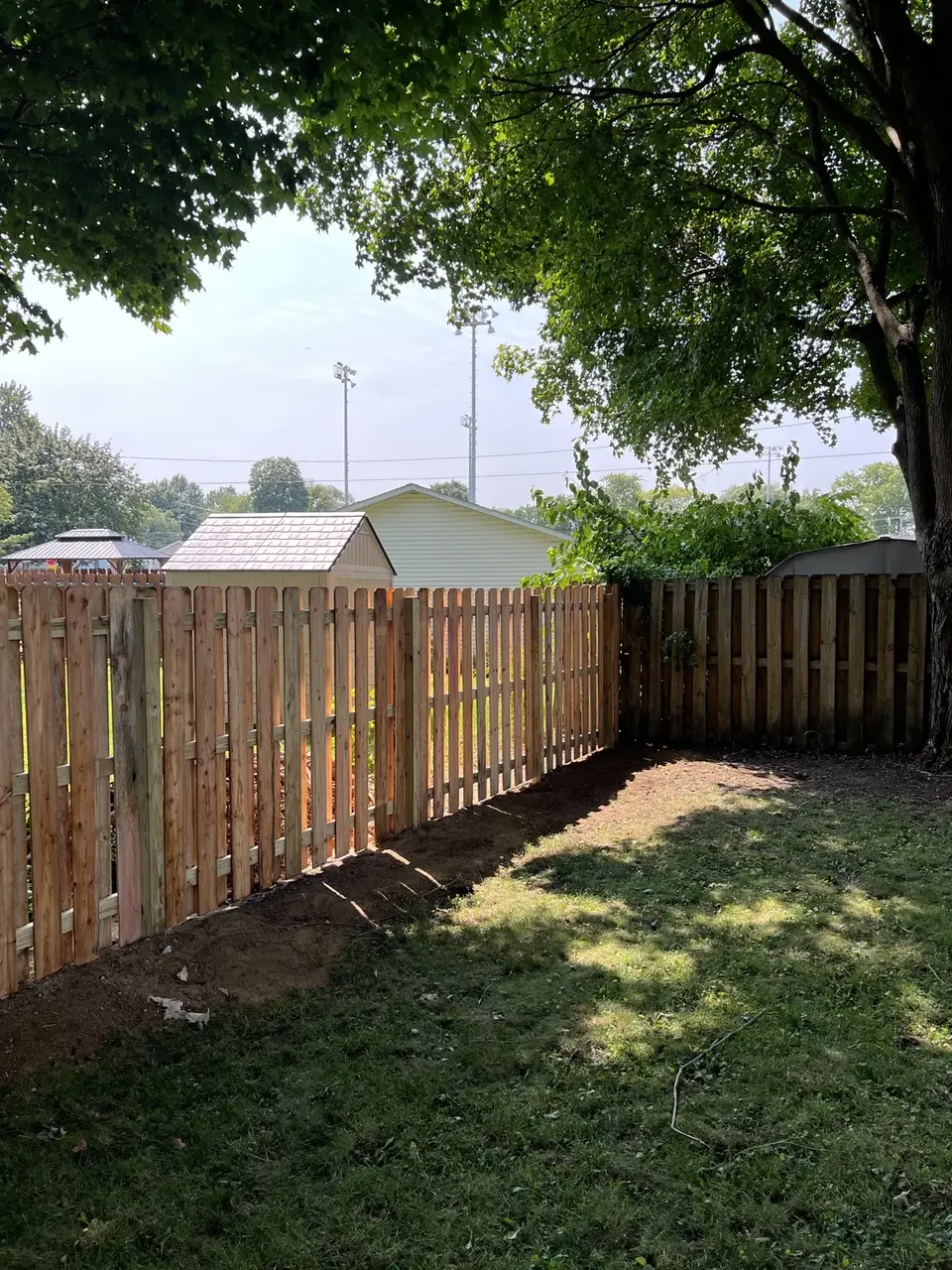
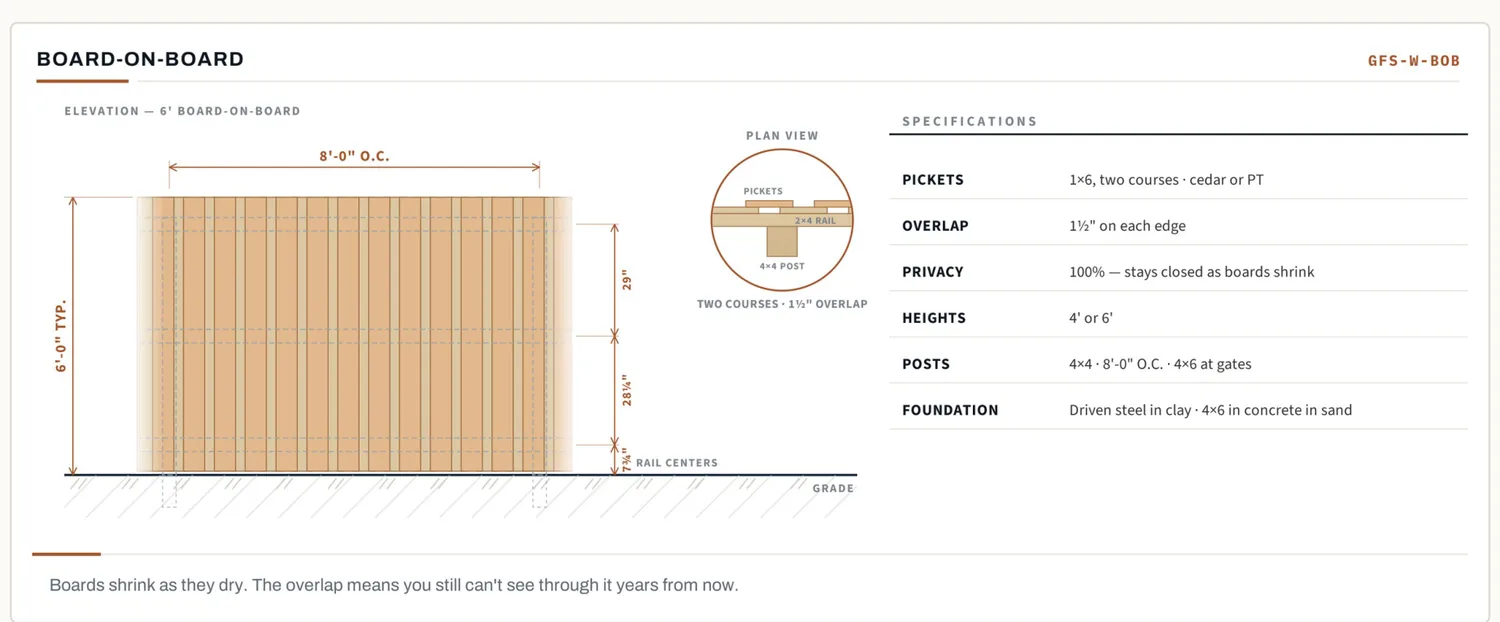
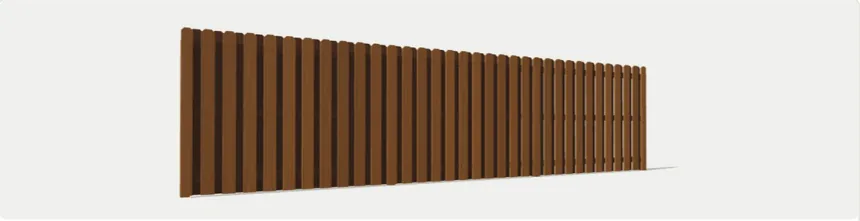
Two courses of 1×6 boards overlap 1½ in. on each edge. Boards shrink as they dry, and the overlap means you still can't see through it years from now. Built at 4 or 6 ft.
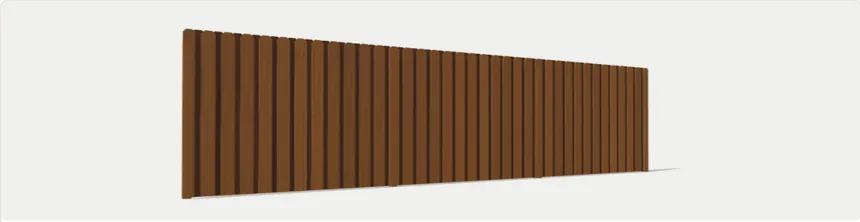
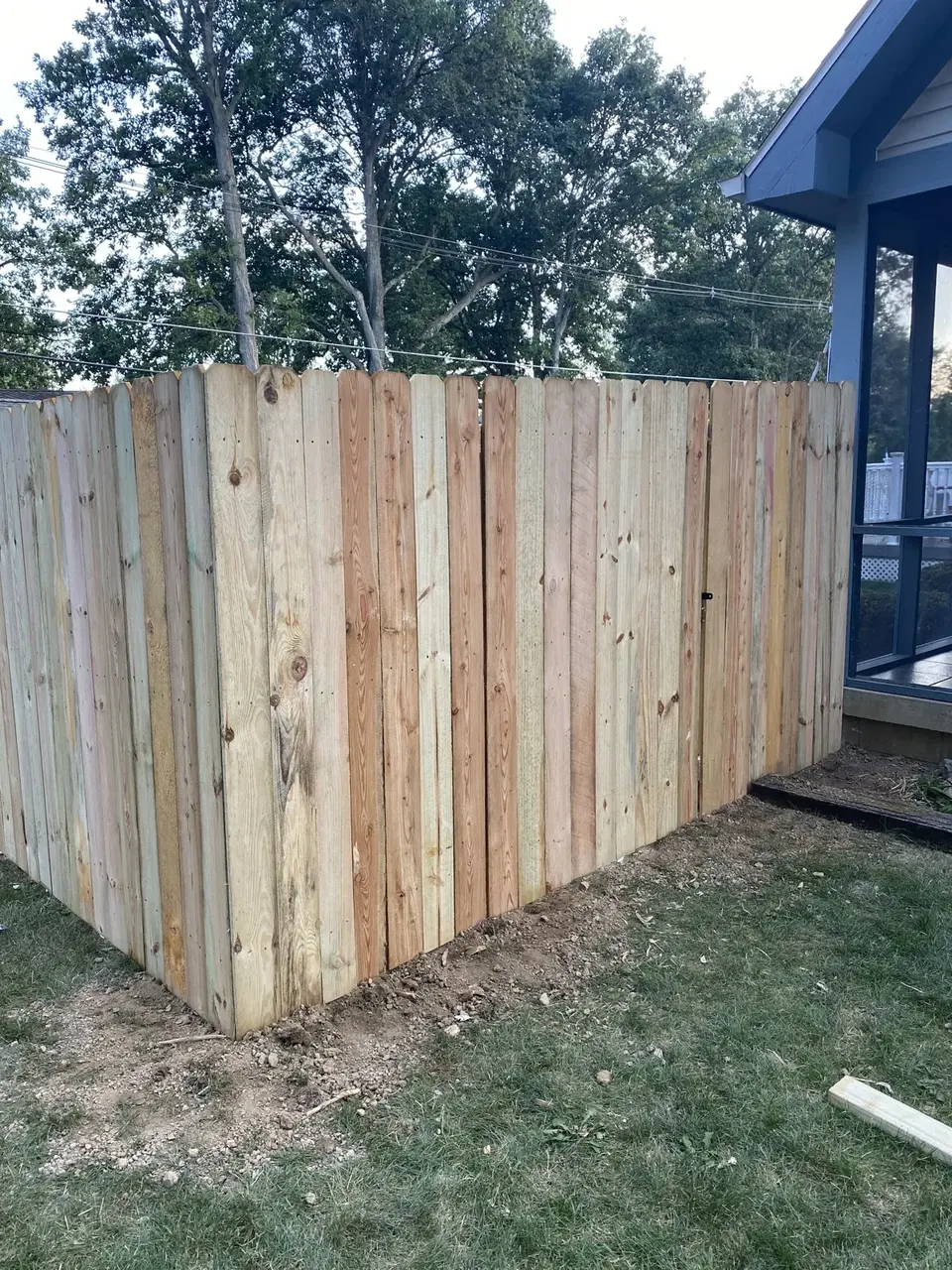
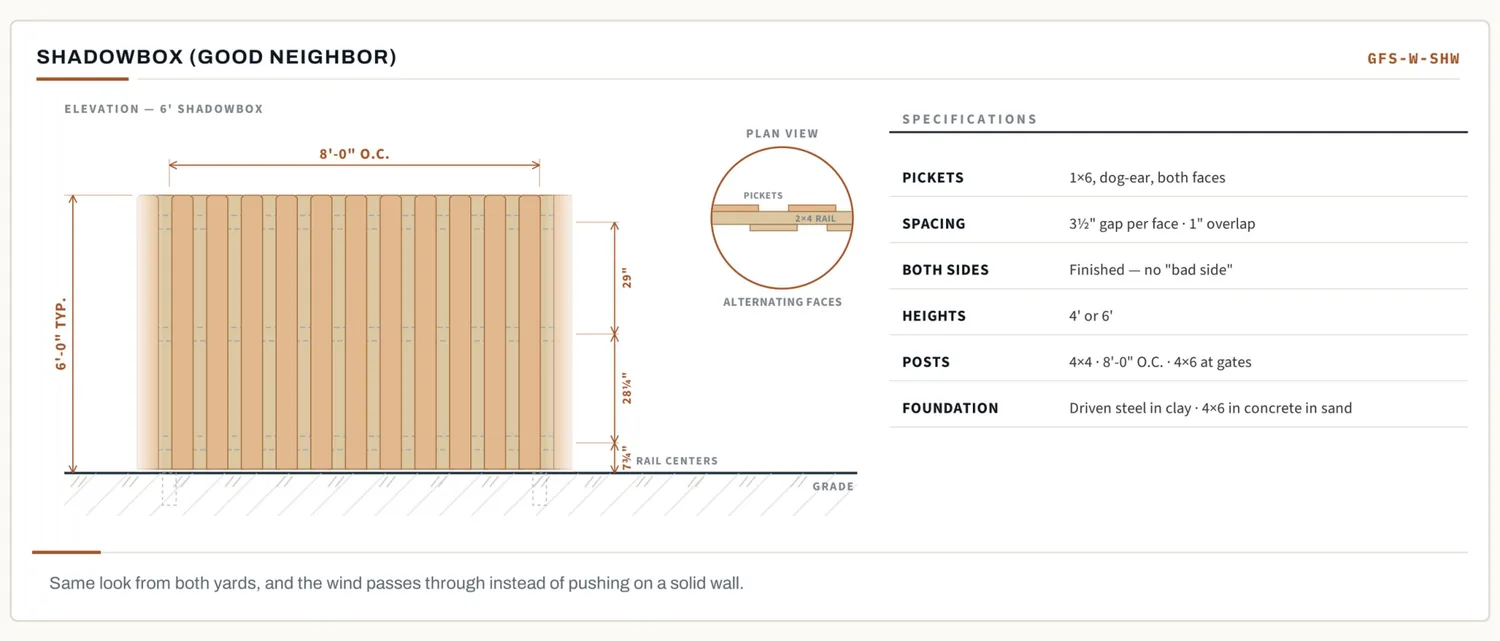
Dog-ear pickets alternate on both faces, with a 3½ in. gap per face and a 1 in. overlap. It looks the same from both yards, and the wind passes through instead of pushing on a solid wall. Built at 4 or 6 ft.
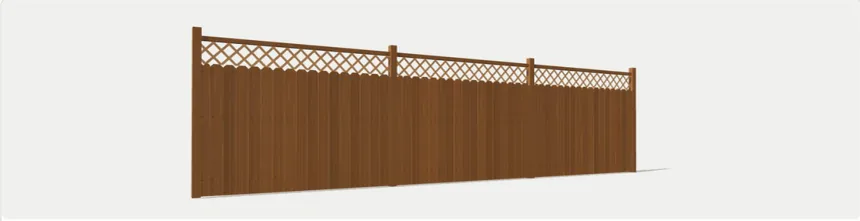
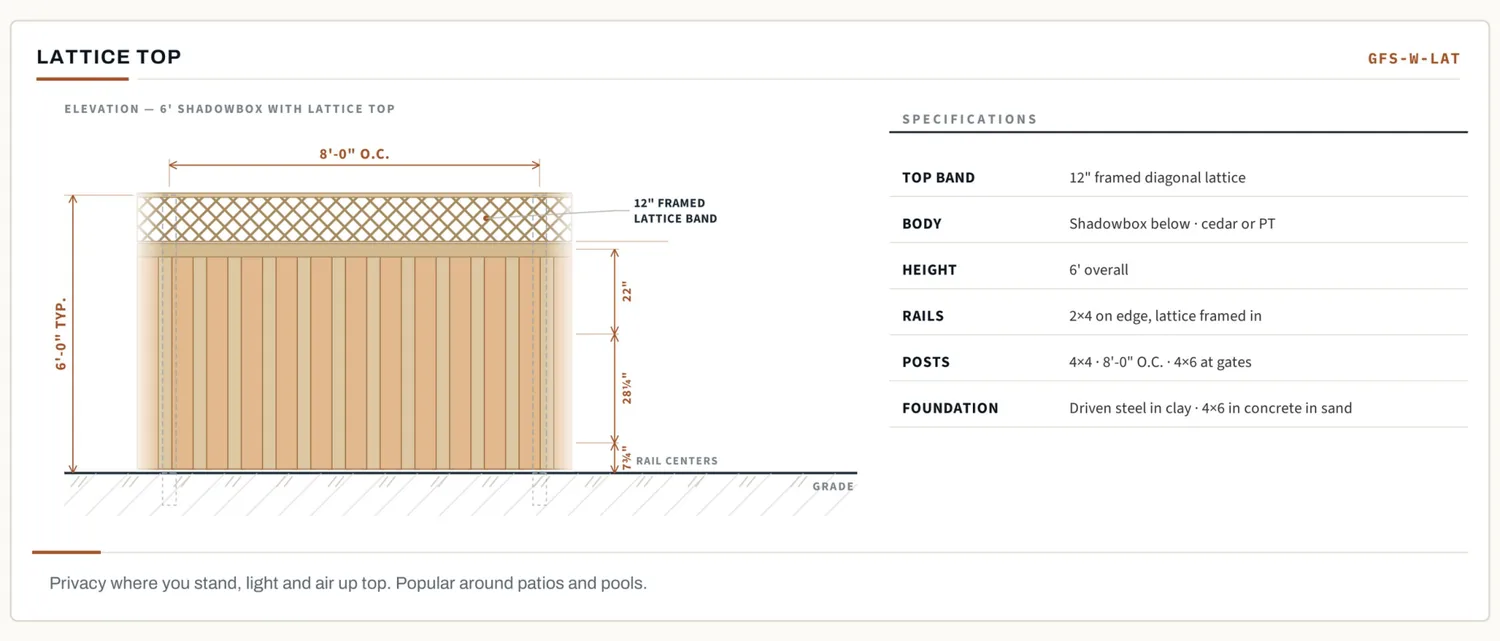
A 12 in. framed diagonal lattice band over a shadowbox body, 6 ft overall. Privacy where you stand, light and air up top.
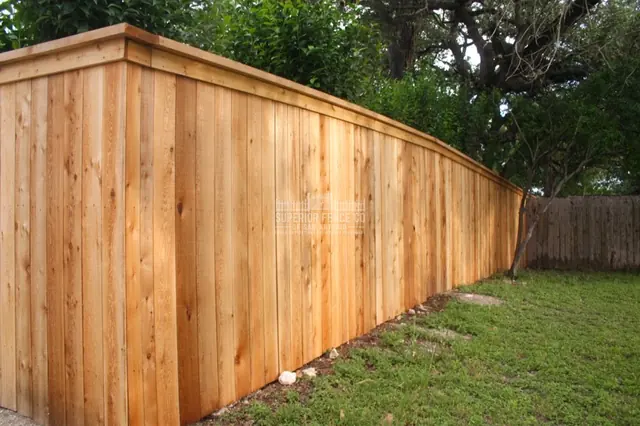
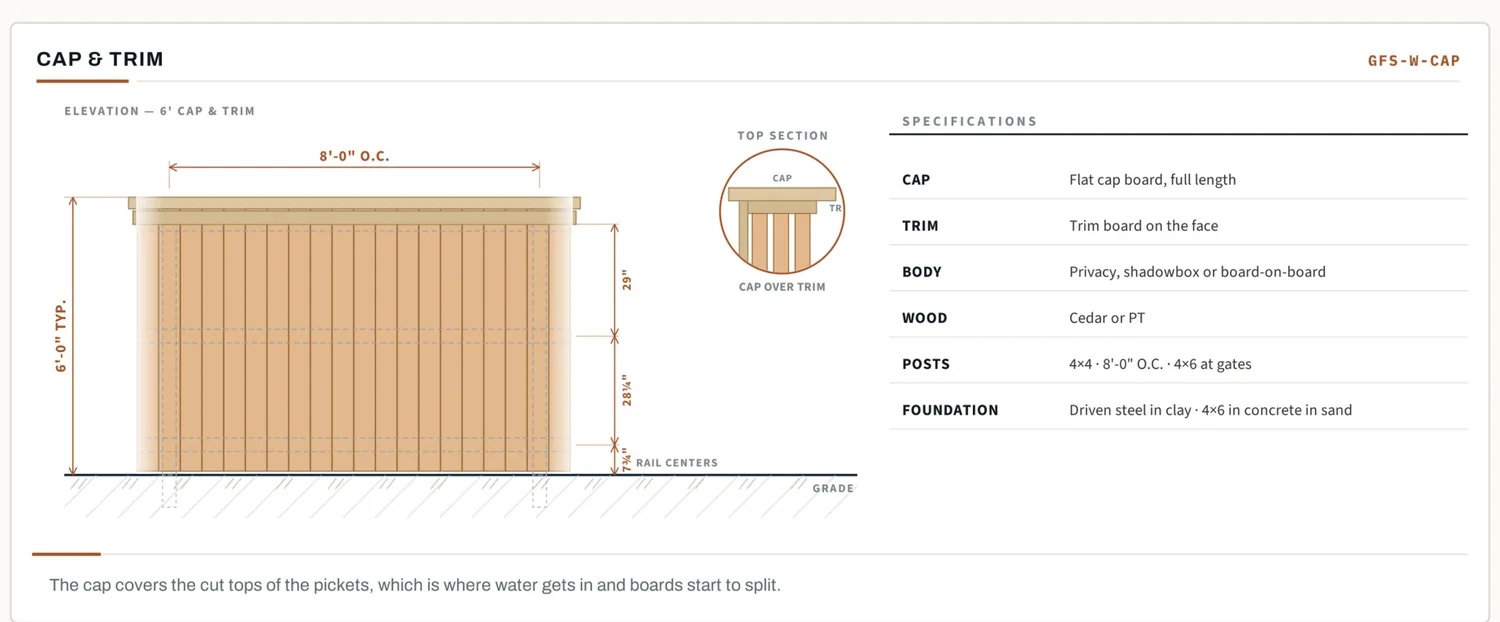
A flat cap board runs the full length over a trim board on the face. The cap covers the cut tops of the pickets, which is where water gets in and boards start to split. It goes on privacy, shadowbox or board-on-board.
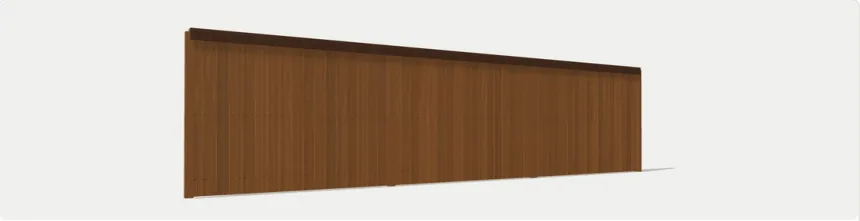
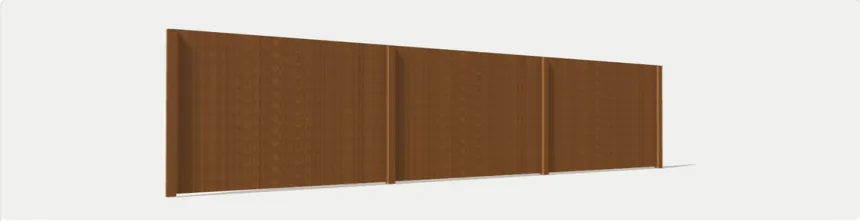
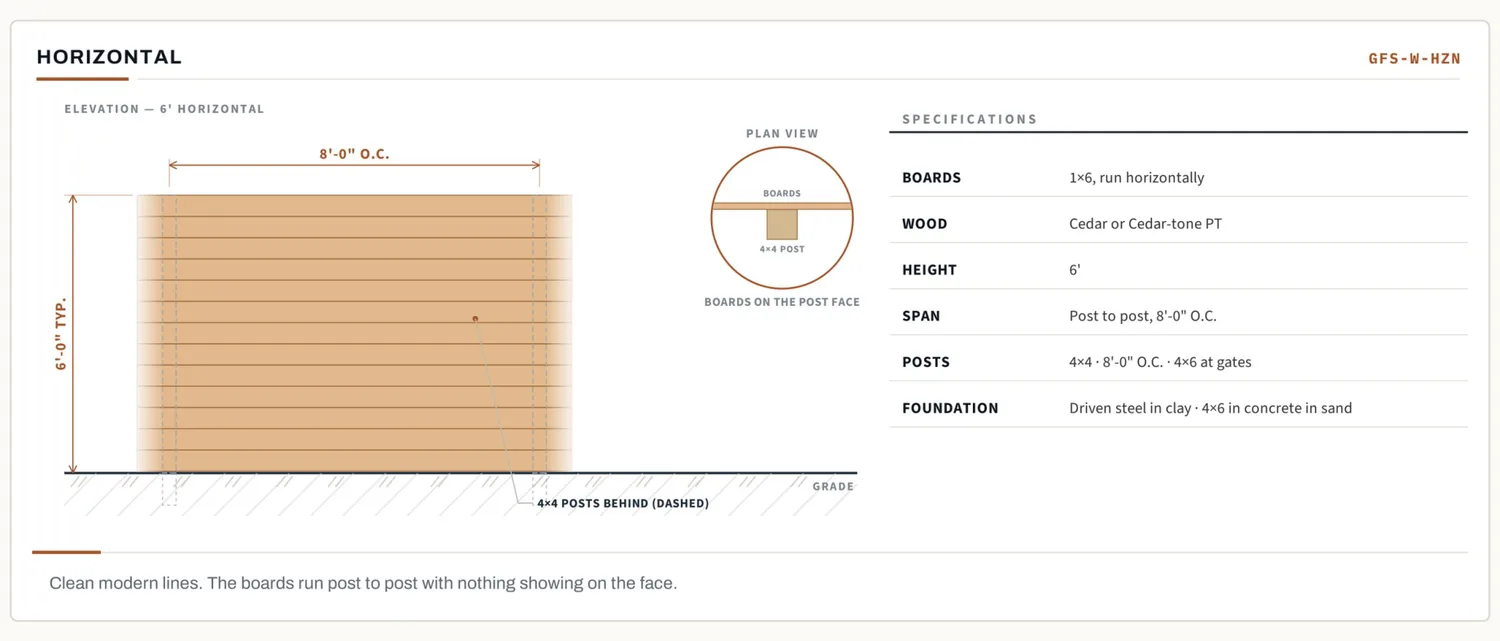
1×6 boards run level from post to post, with nothing showing on the face. Clean modern lines at 6 ft, in cedar or cedar-tone pressure-treated.
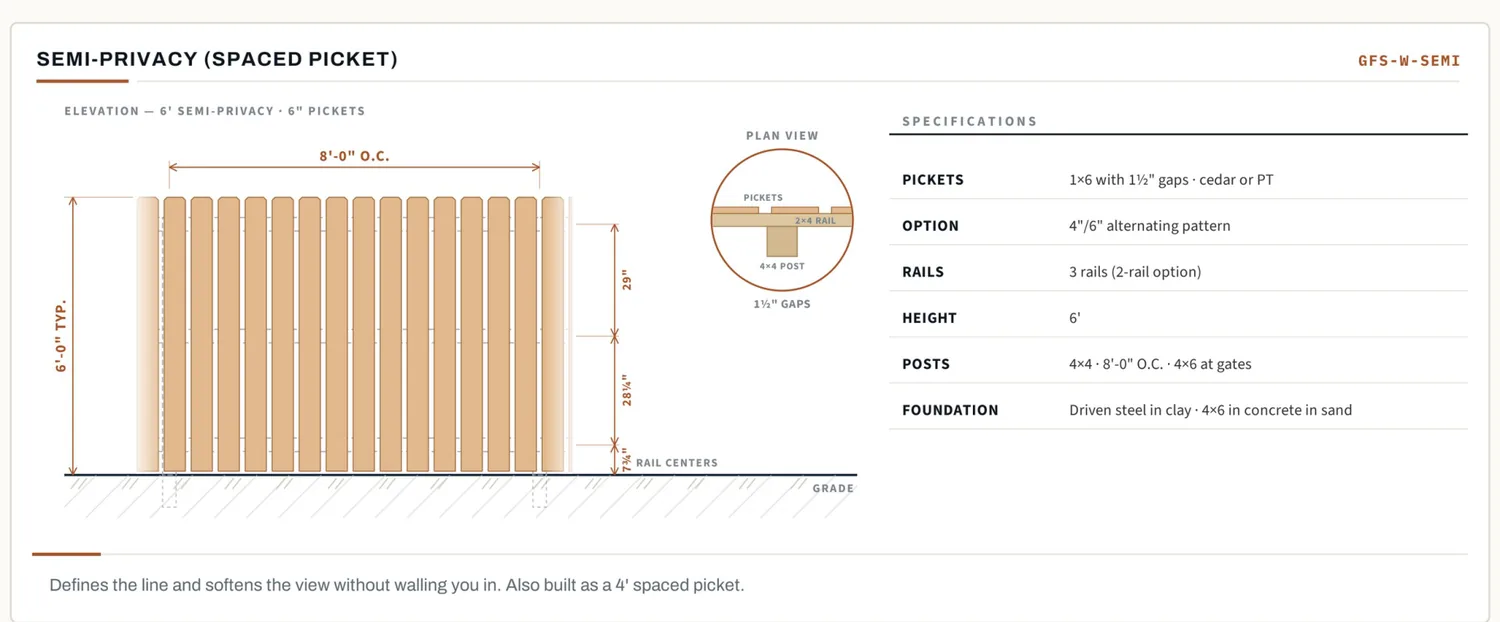
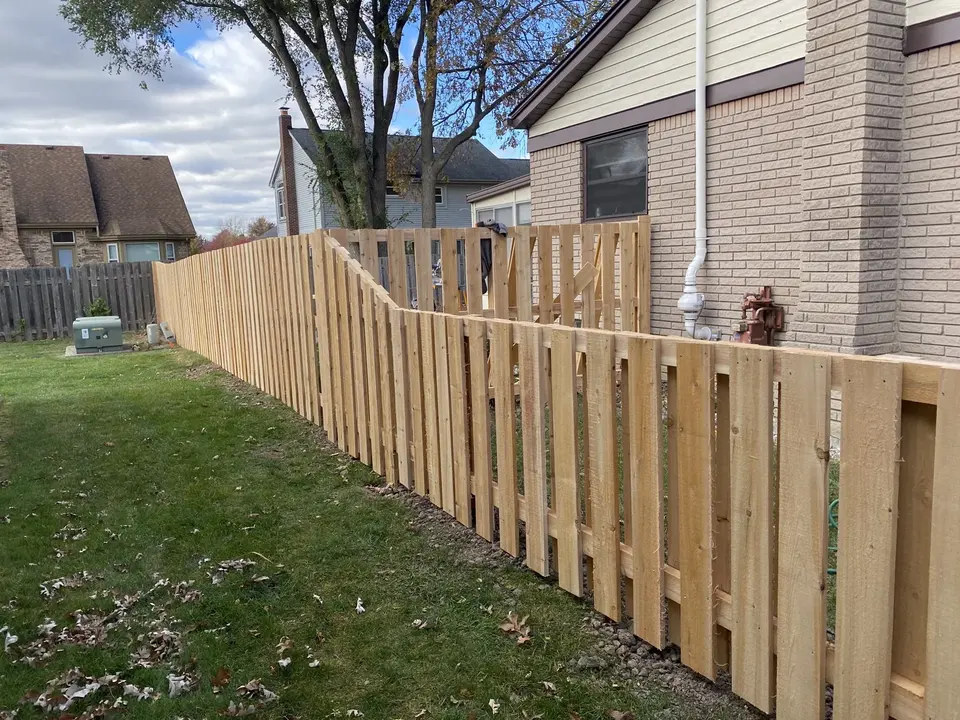
1×6 pickets with 1½ in. gaps at 6 ft. It defines the line and softens the view without walling you in. Also built as a 4 ft spaced picket for front yards and gardens.
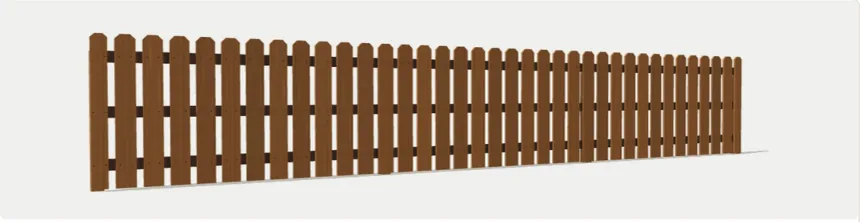
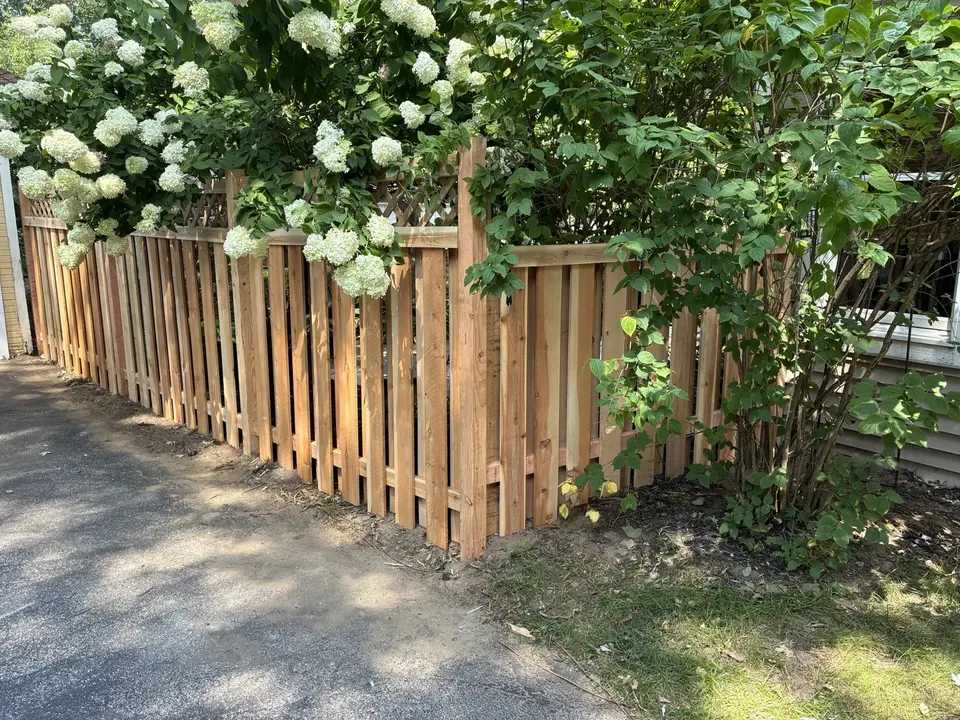
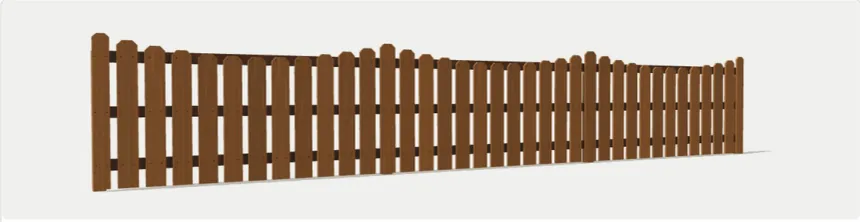
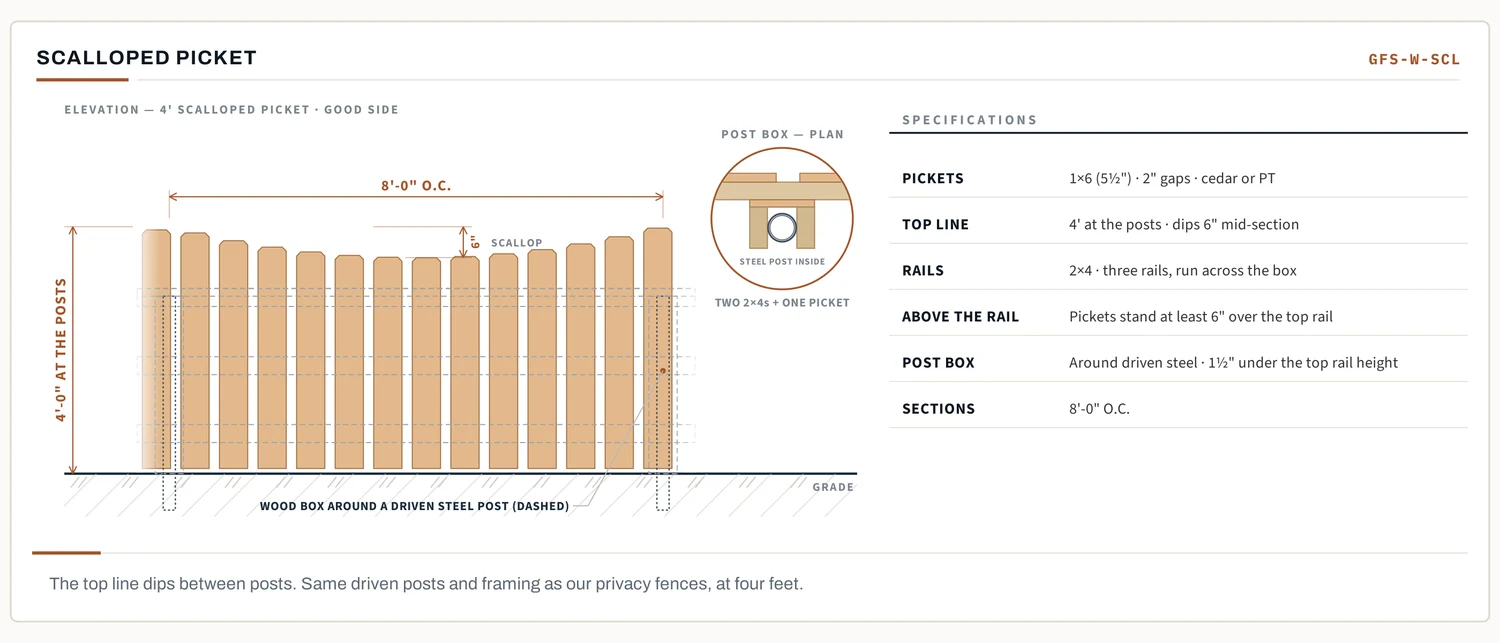
The top line dips between the posts. A classic front-yard look, built at 4 ft.
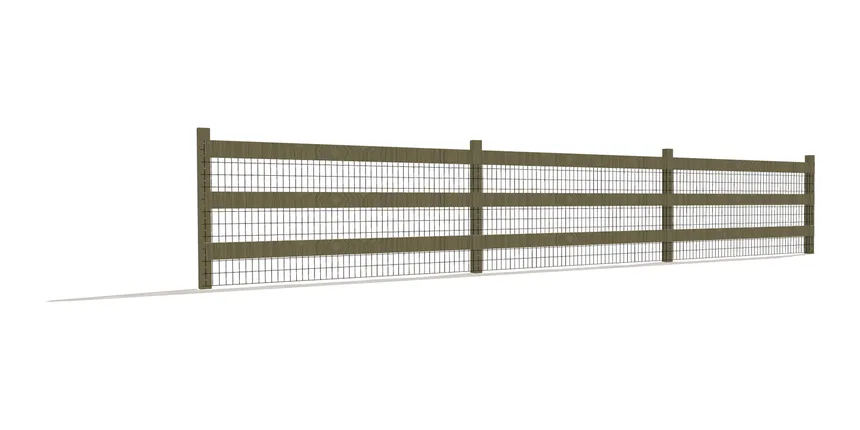
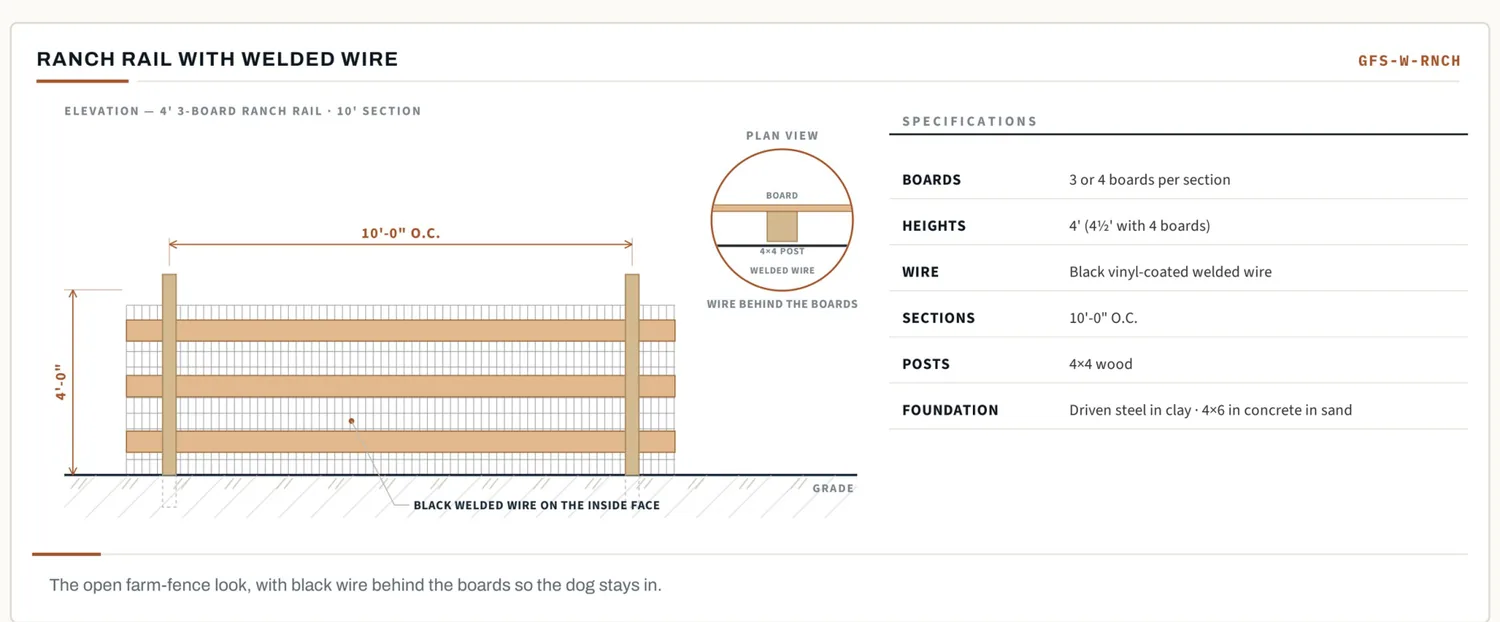
Three or four boards per 10 ft section at 4 ft, or 4½ ft with four boards. Black vinyl-coated welded wire goes behind the boards, so you get the open farm-fence look and the dog stays in.
Build spec
Same specs as our printed brochure. Your written proposal lists the exact materials for your yard.
Review the proposed fence line and gates with our team, then use your project portal to keep the saved plan, project details and communication together. Site-plan property-line references help with planning; they do not replace a boundary survey.
Cedar privacy fencing
“Nick installed a 6ft cedar privacy fence for me. Work was completed on time with excellent quality.”
The installation crew
“Our fence looks terrific! The crew was super professional and polite, all of them!”
Cleanup
“Very friendly, great work even with all the curveball that came up. Cleaned up mess.”