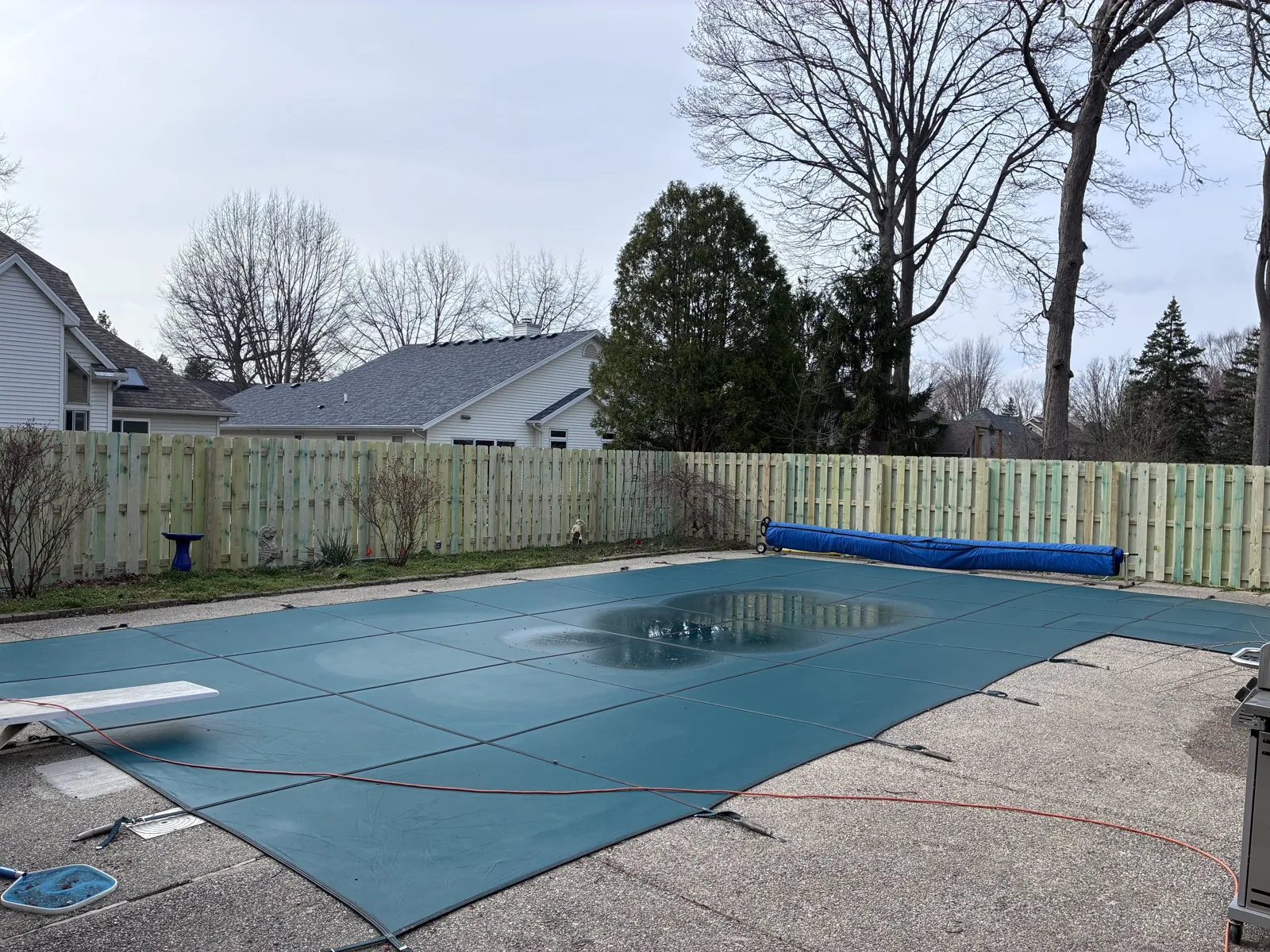
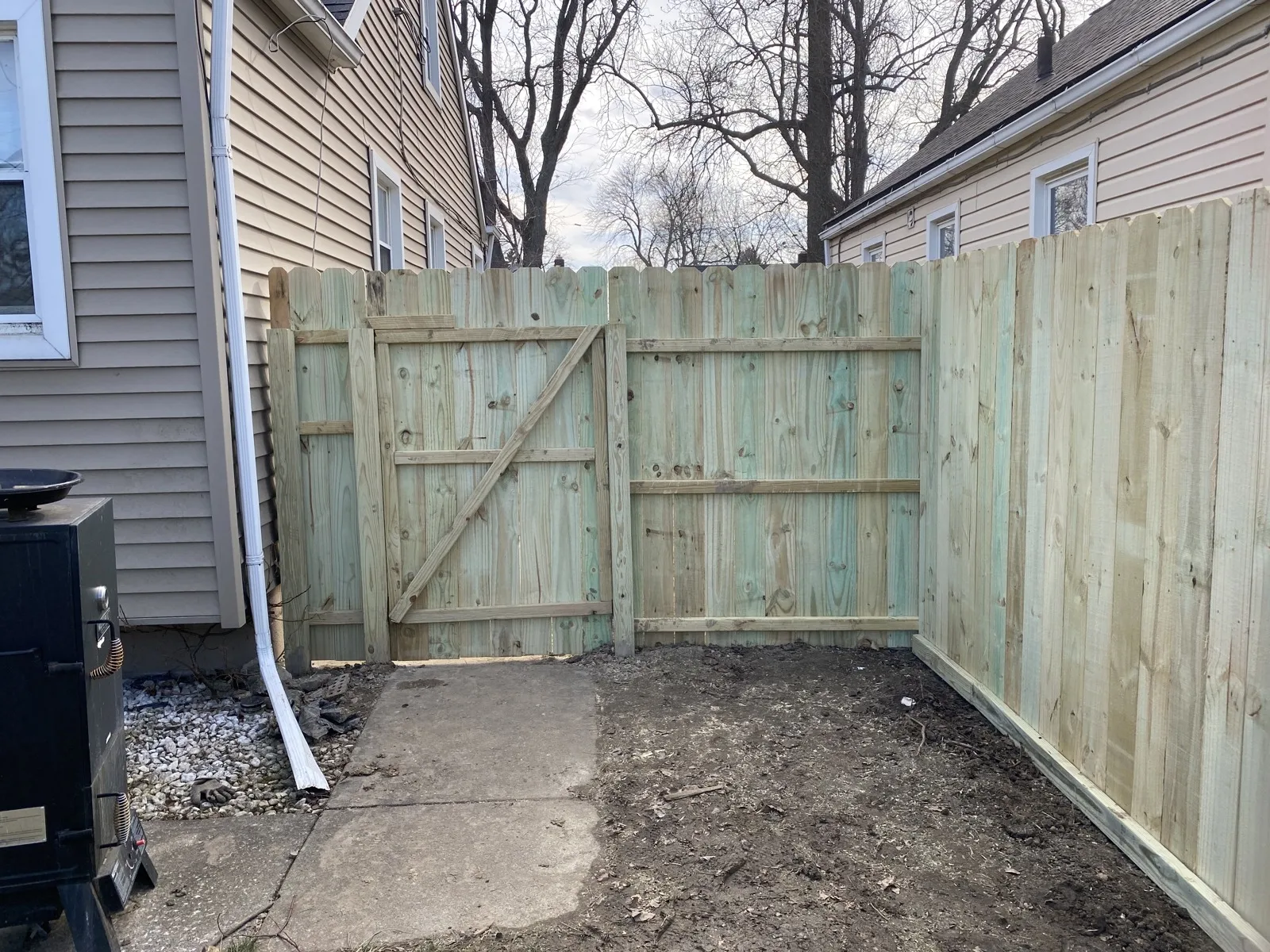
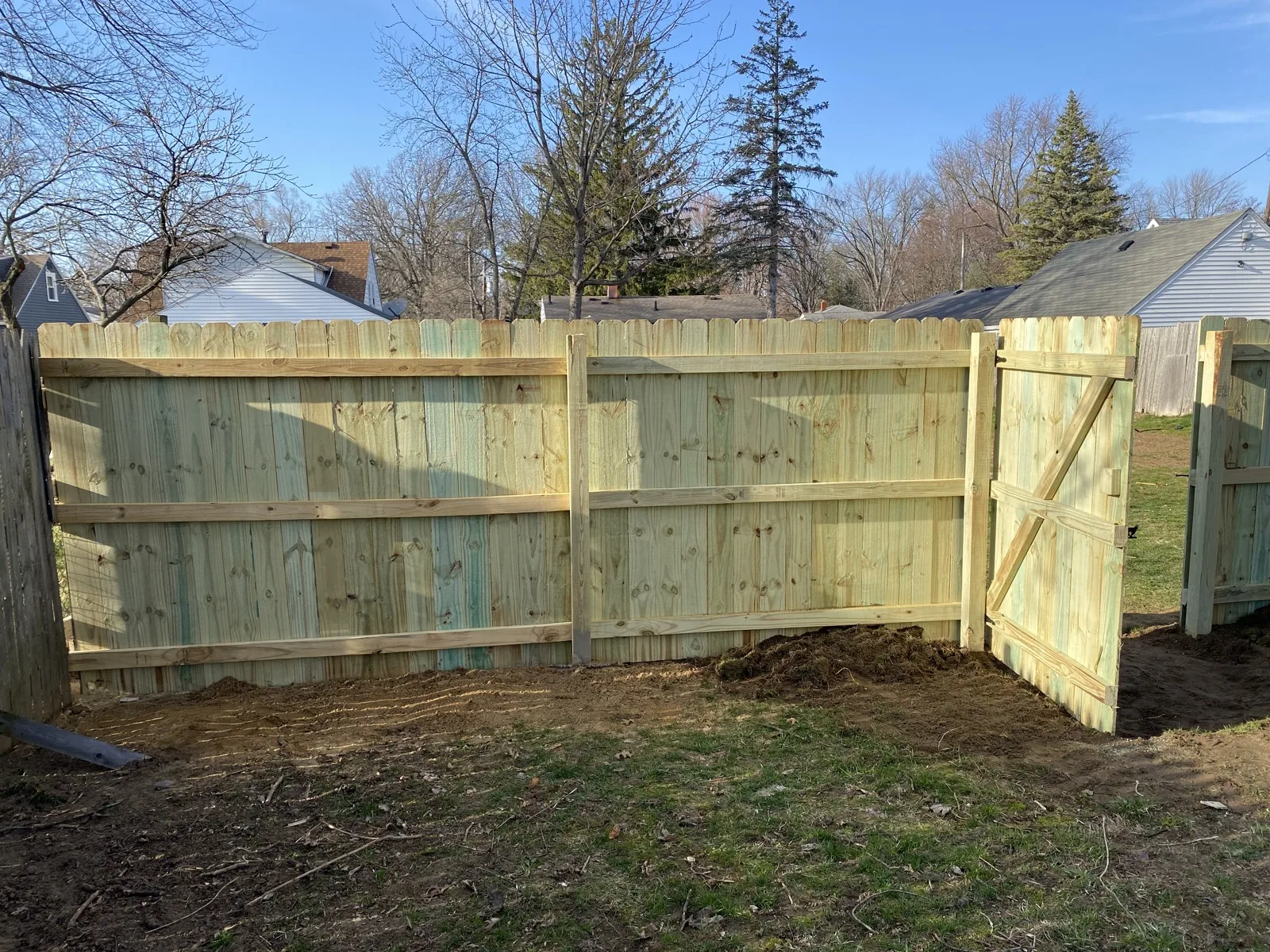
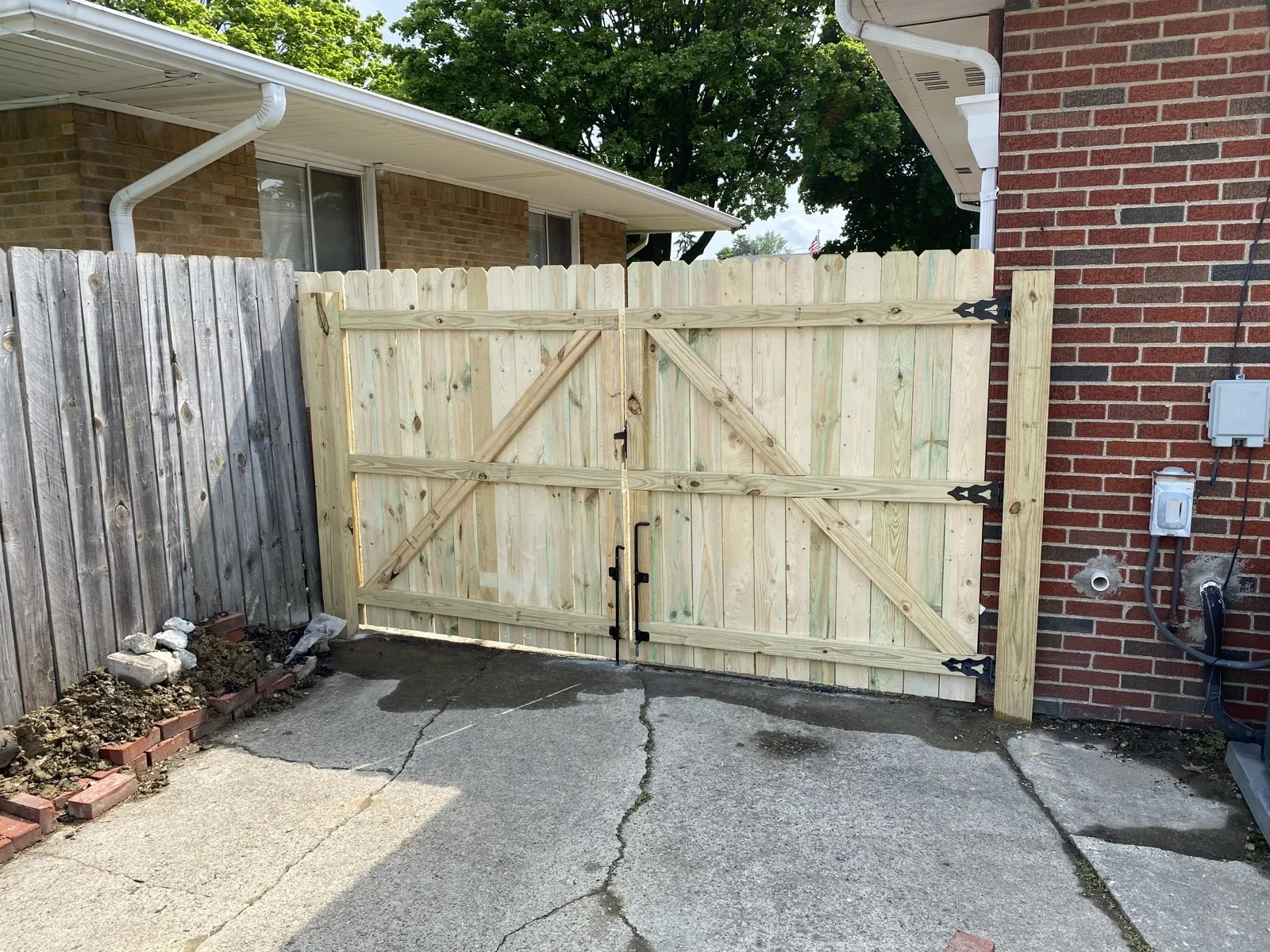
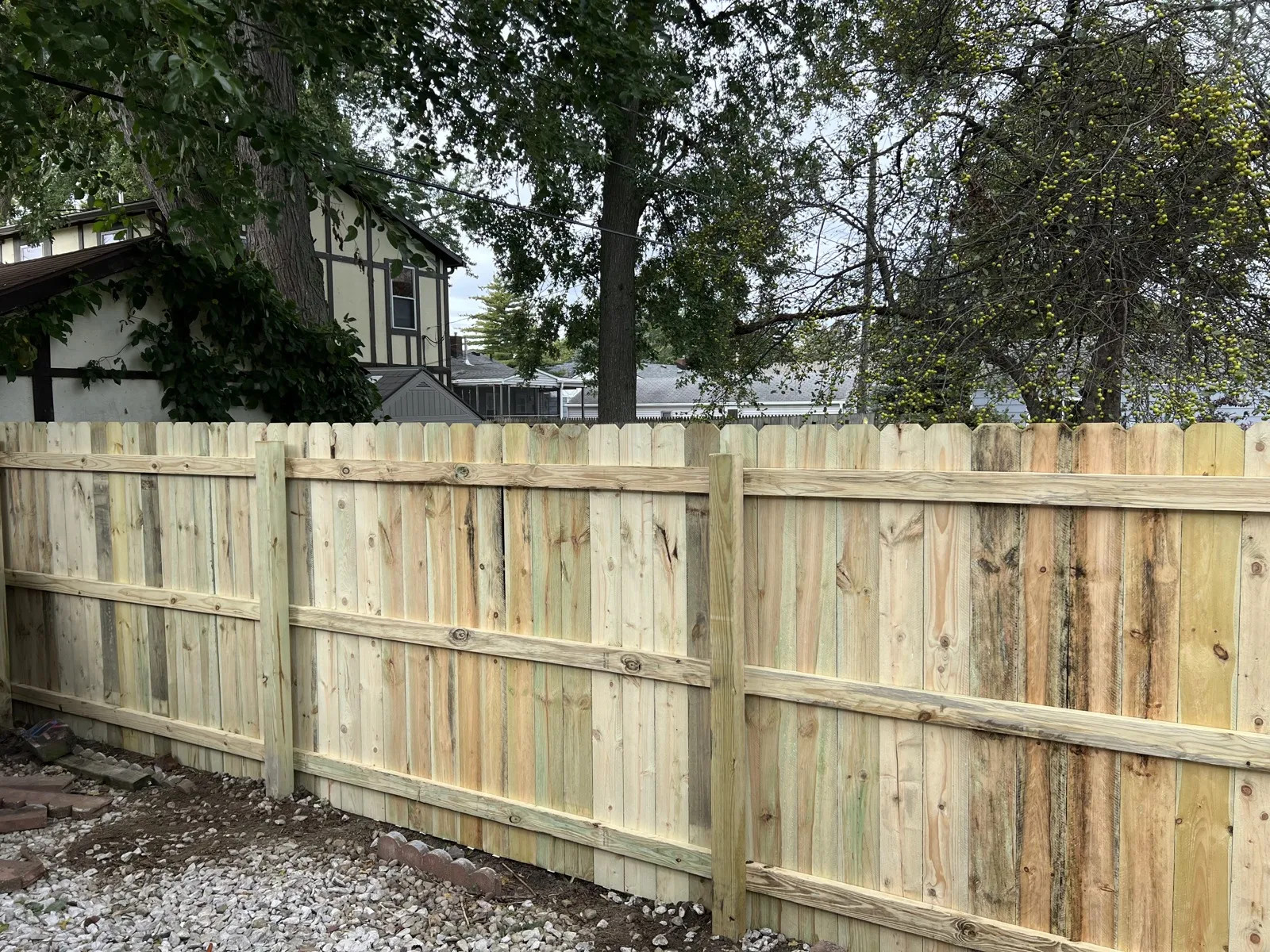
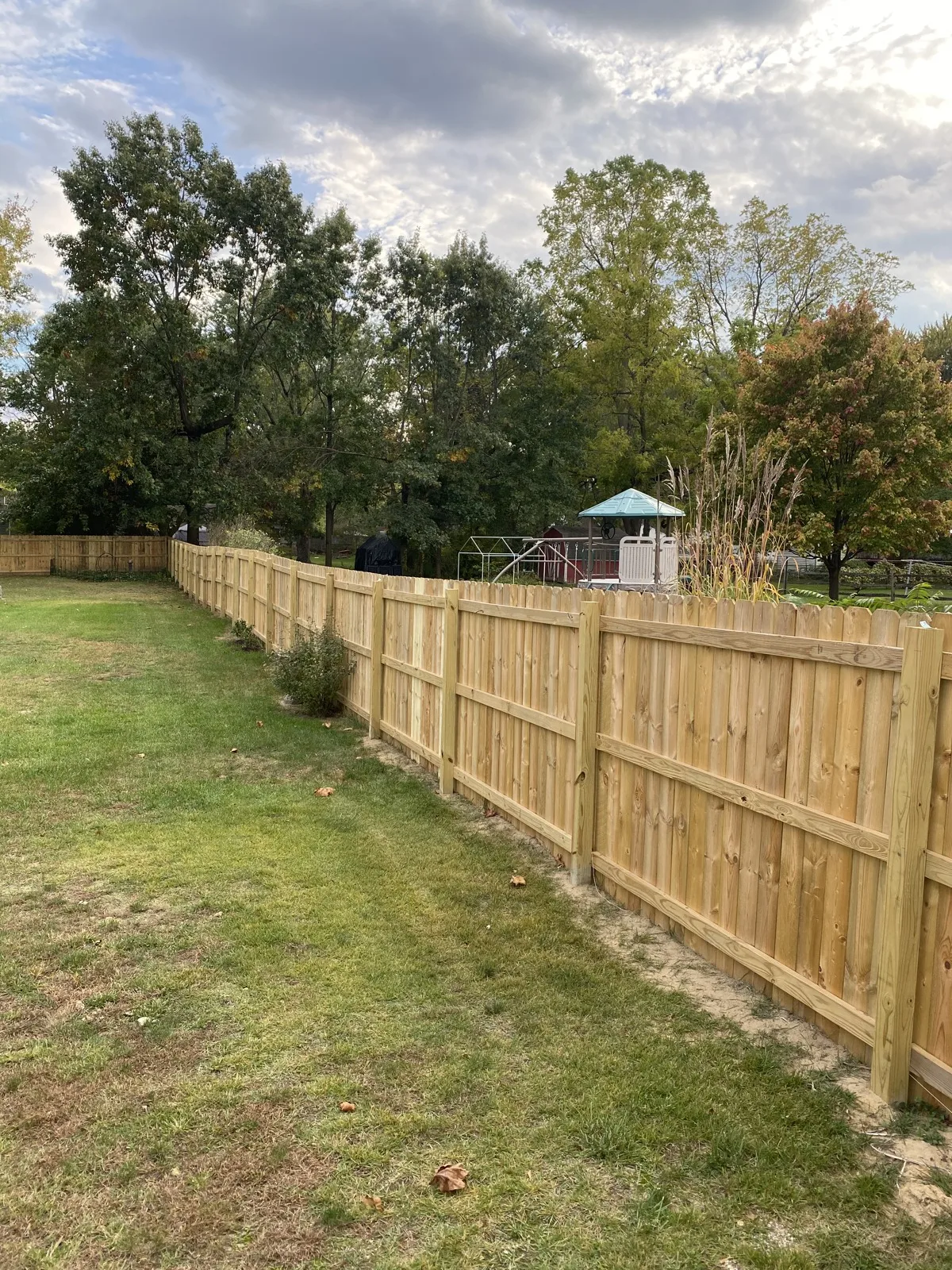
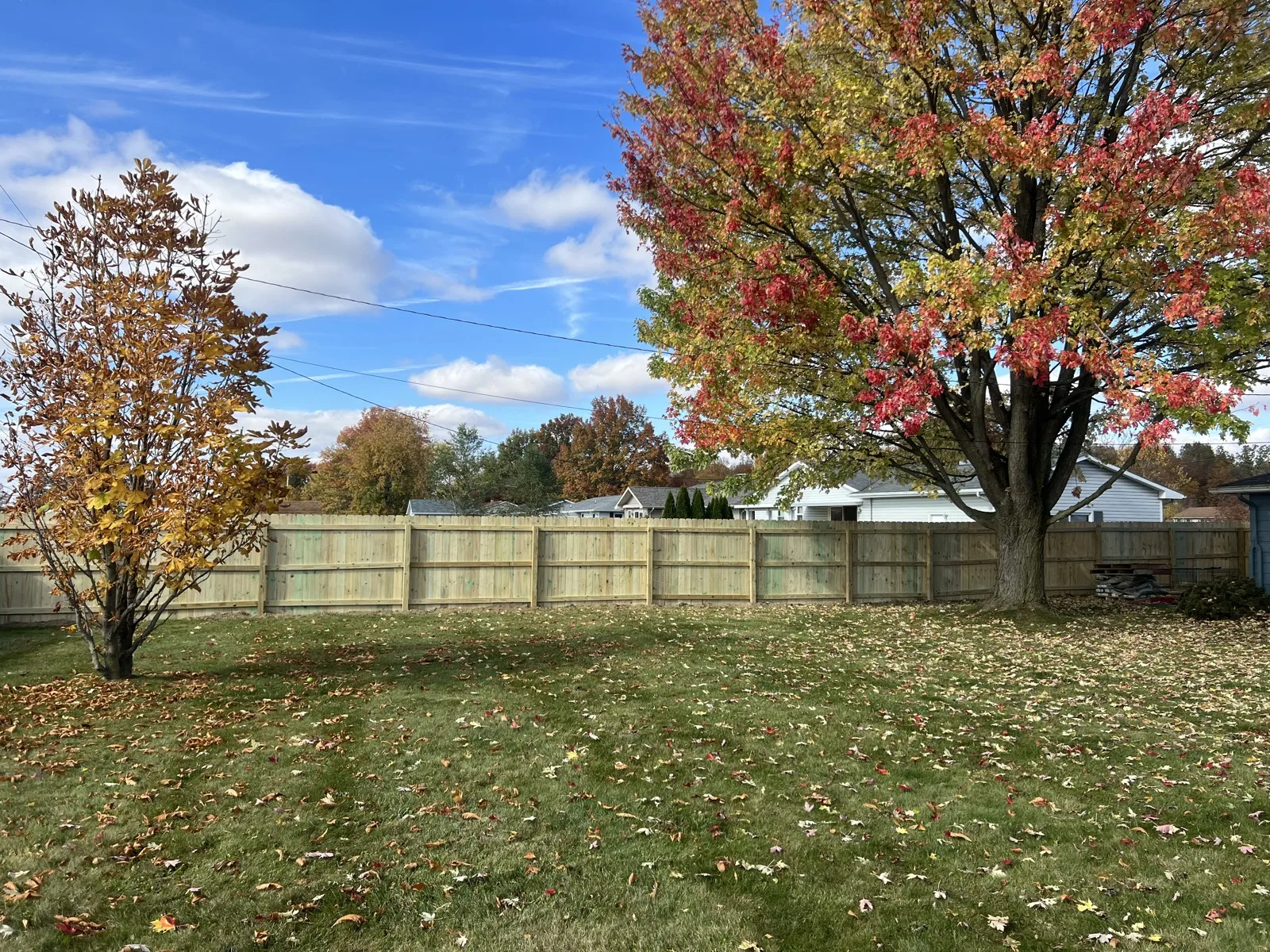
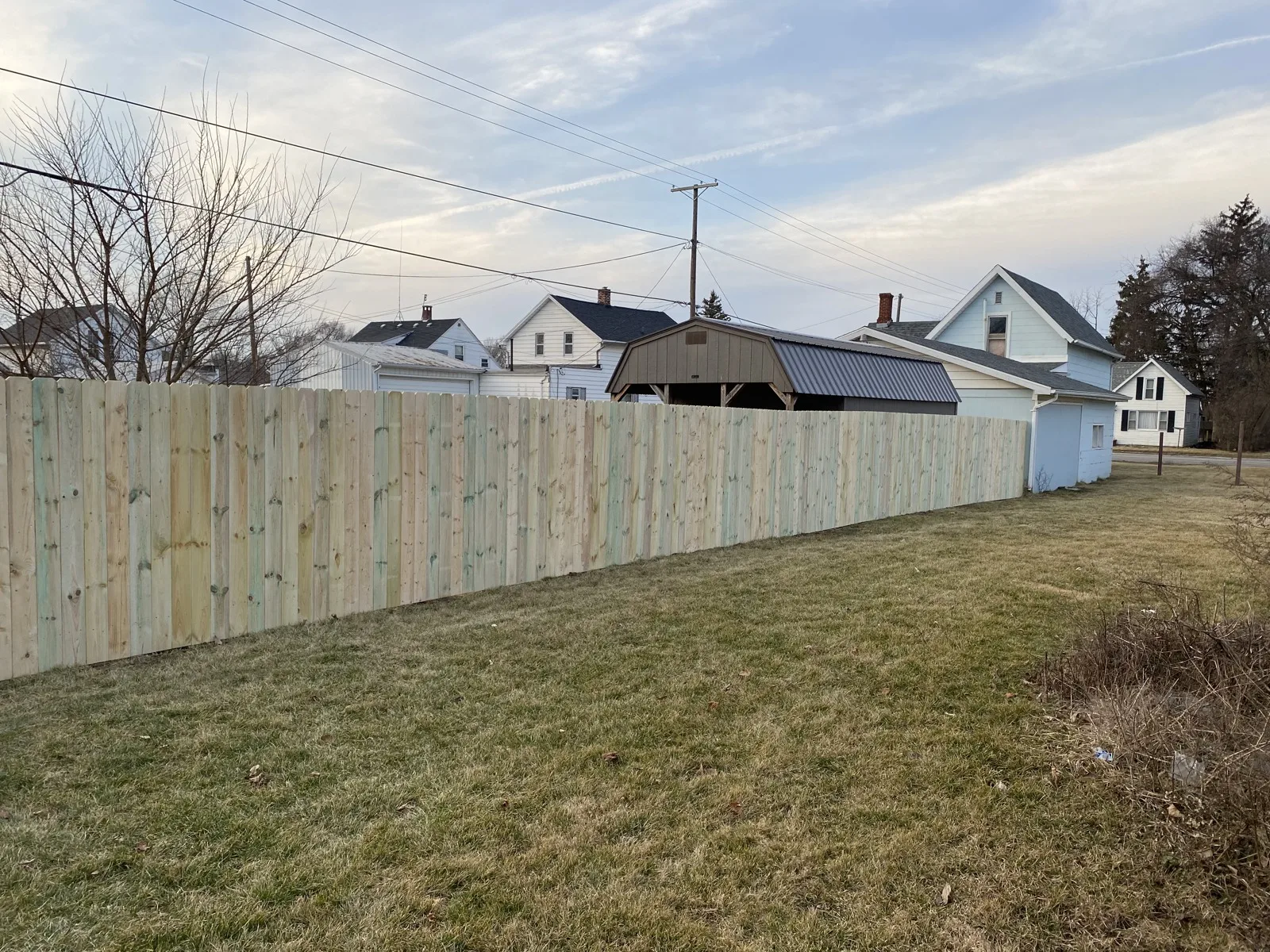
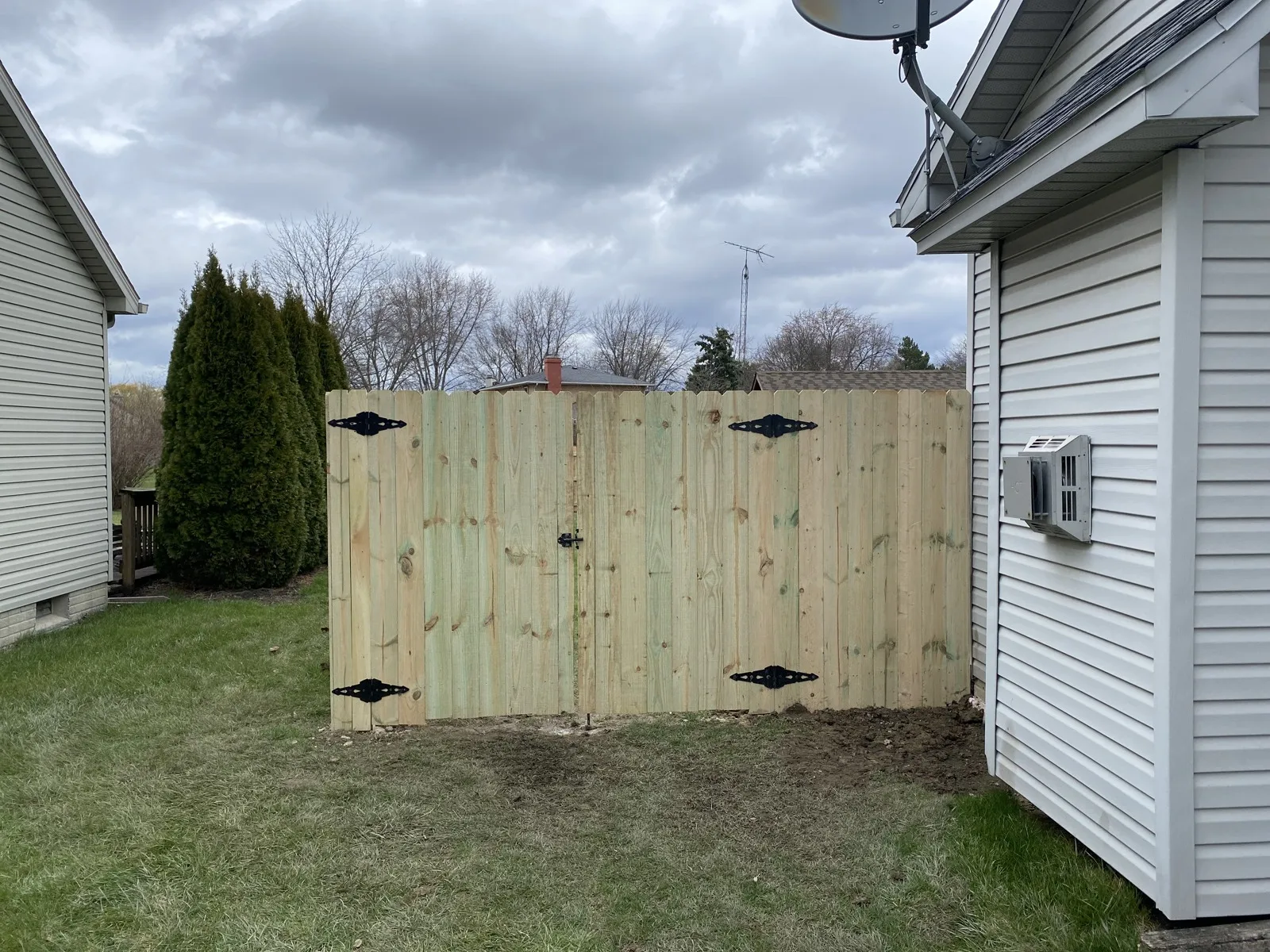
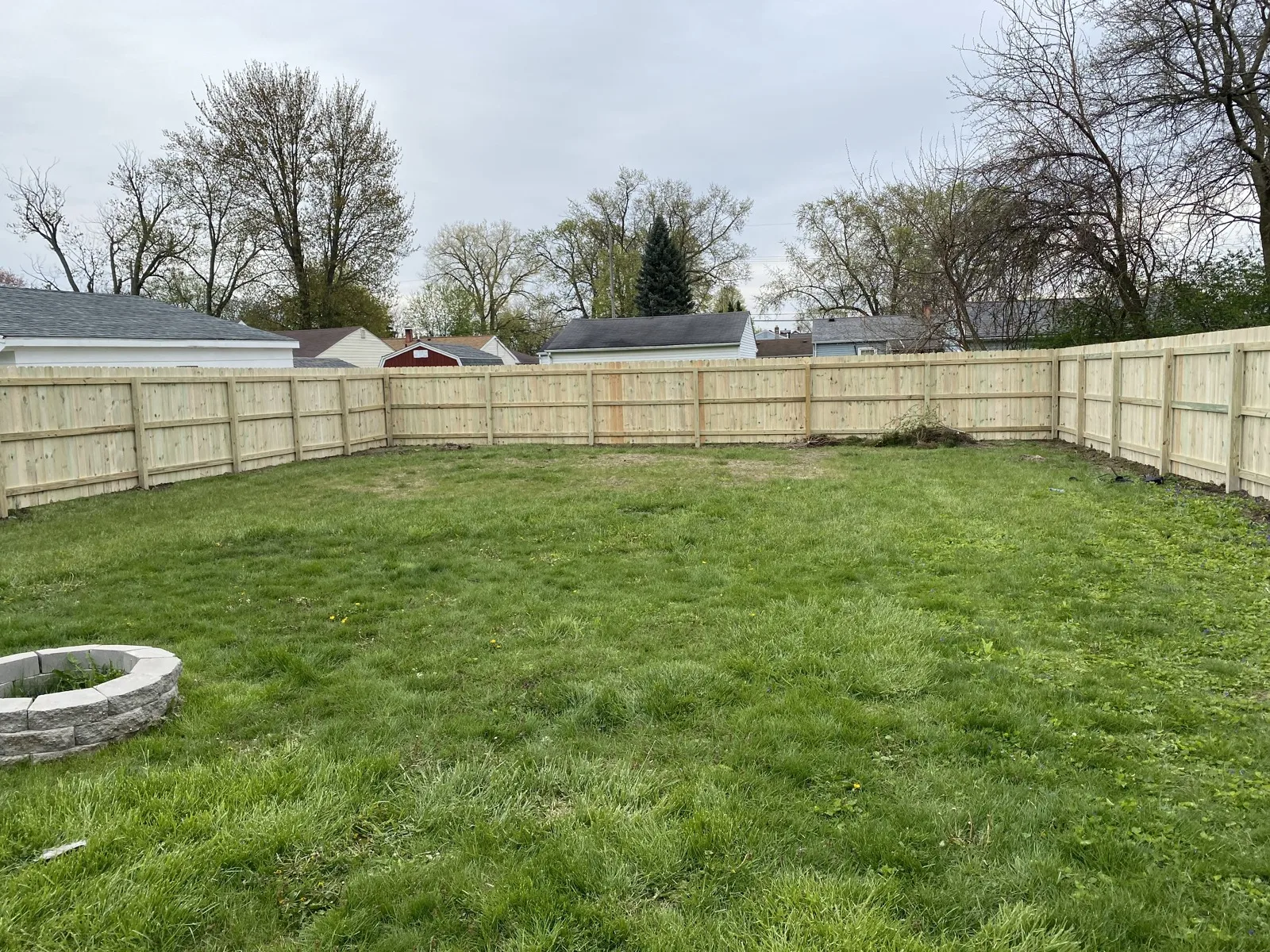
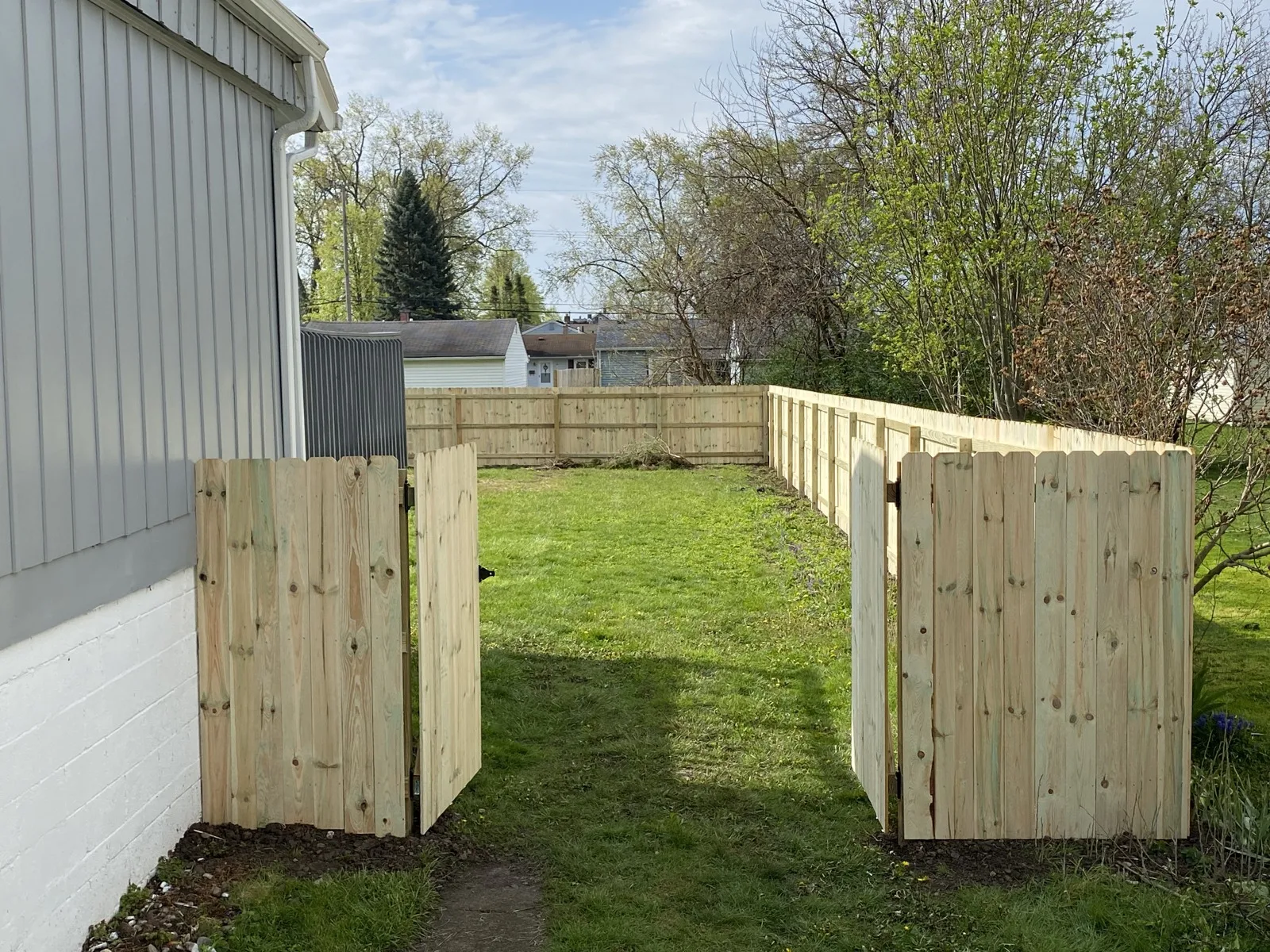
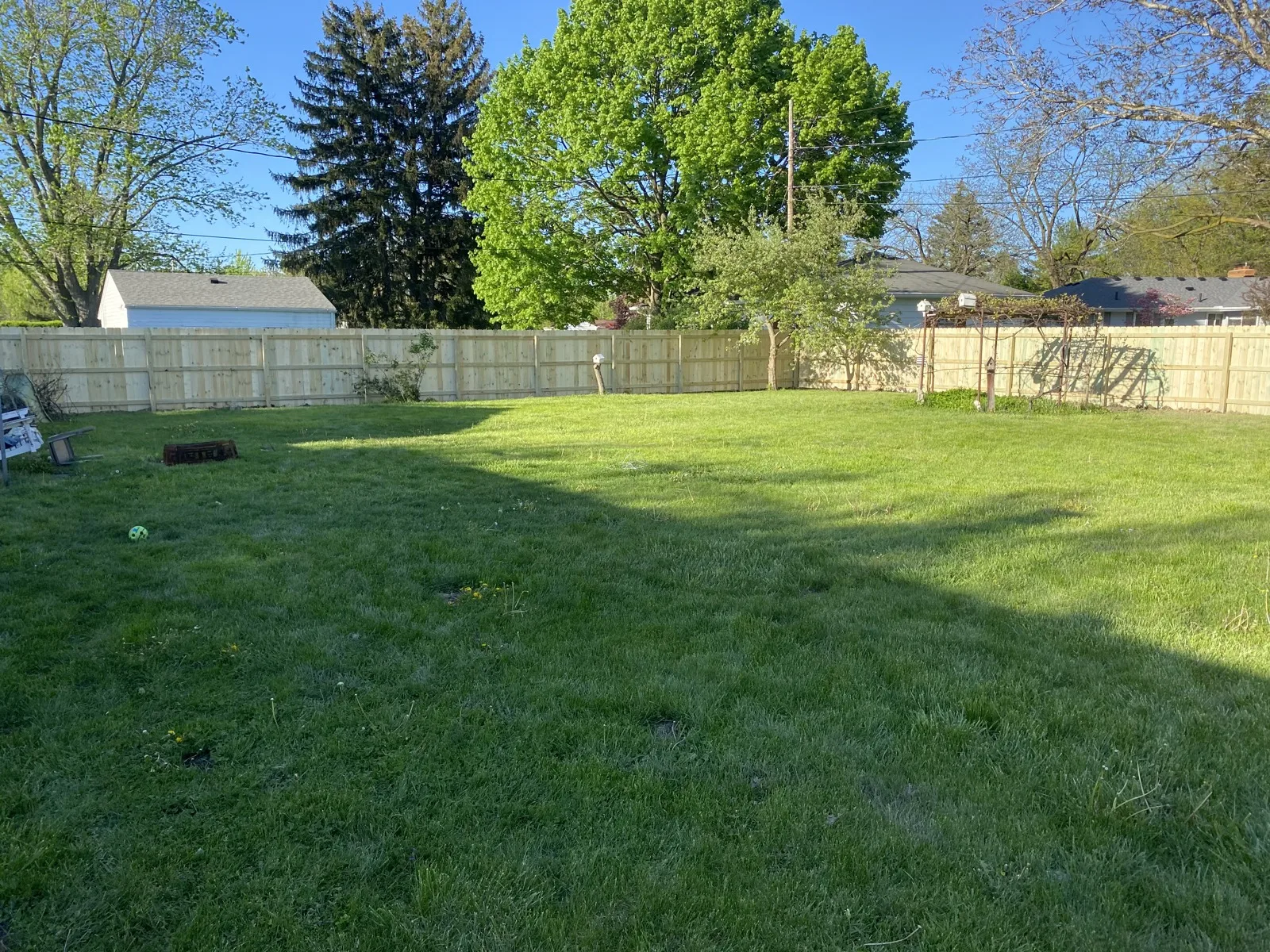
Pressure-treated wood lets you compare familiar privacy layouts while keeping the lumber, treatment and finish clearly specified. The board pattern controls sightlines; treatment choice and moisture behavior are separate decisions.
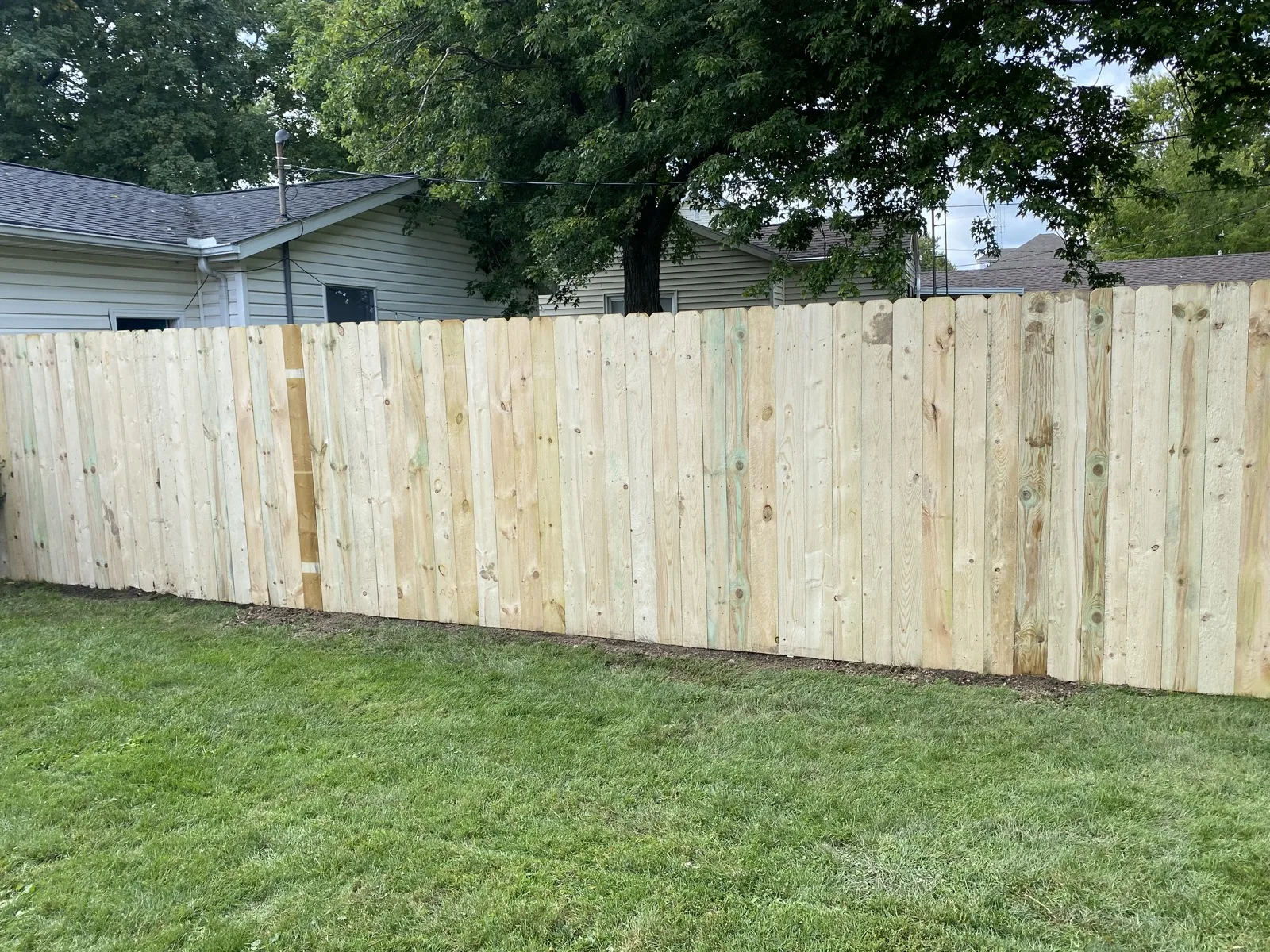
Butted boards can develop gaps as wet lumber dries; overlap changes the sightline.
upkeep
Inspect wood and hardware; plan coating care if a finished color matters.
access
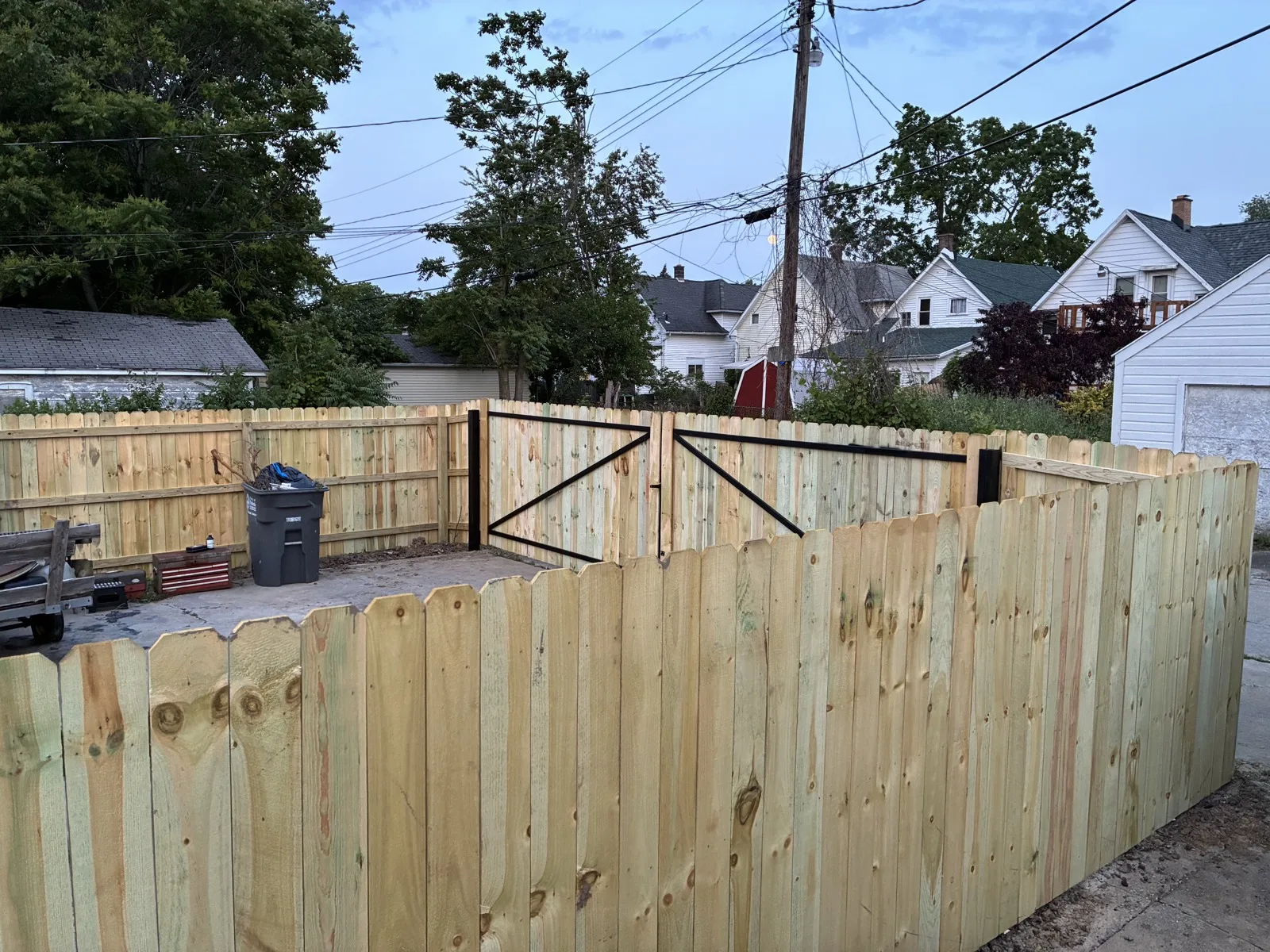
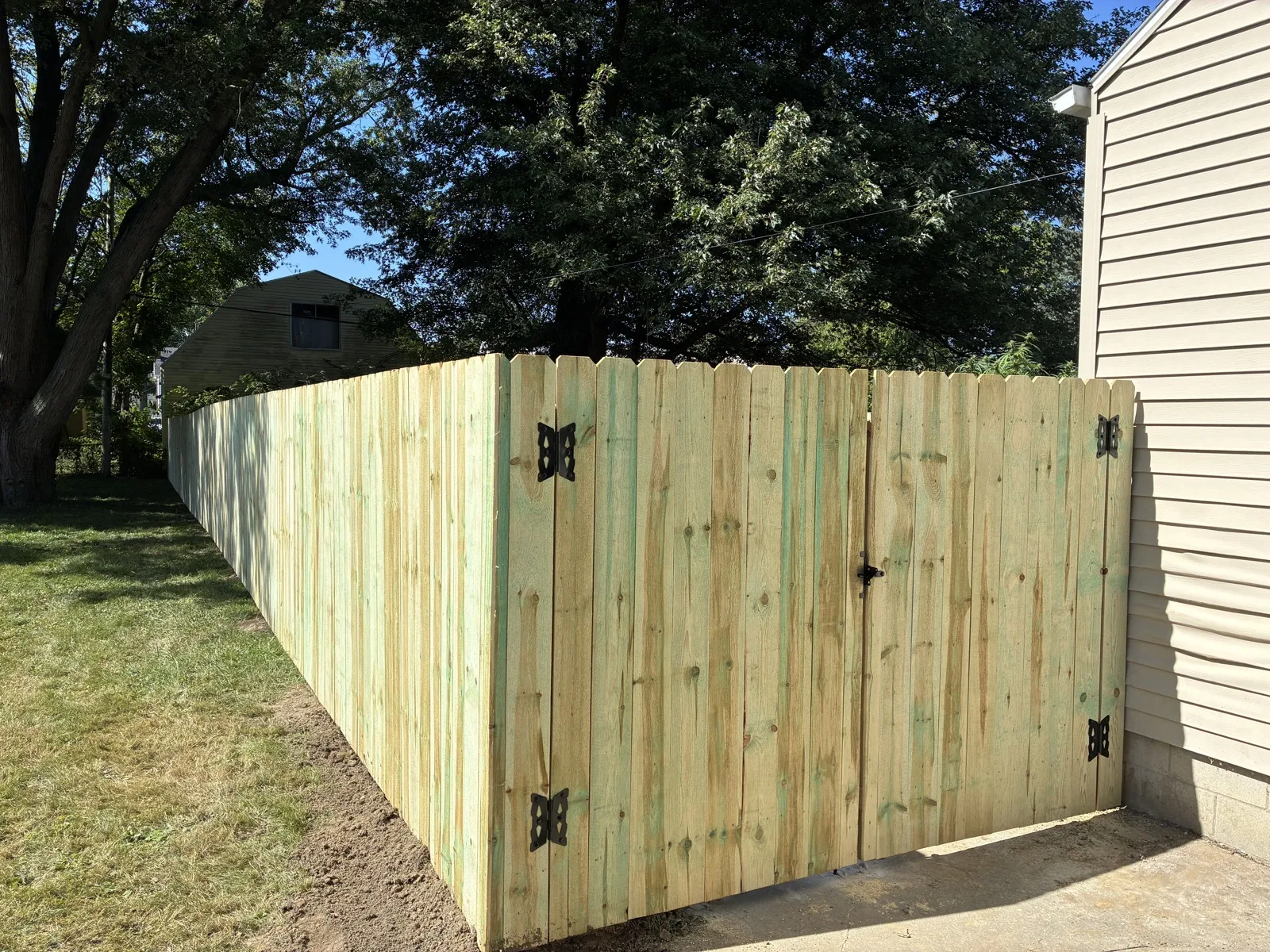
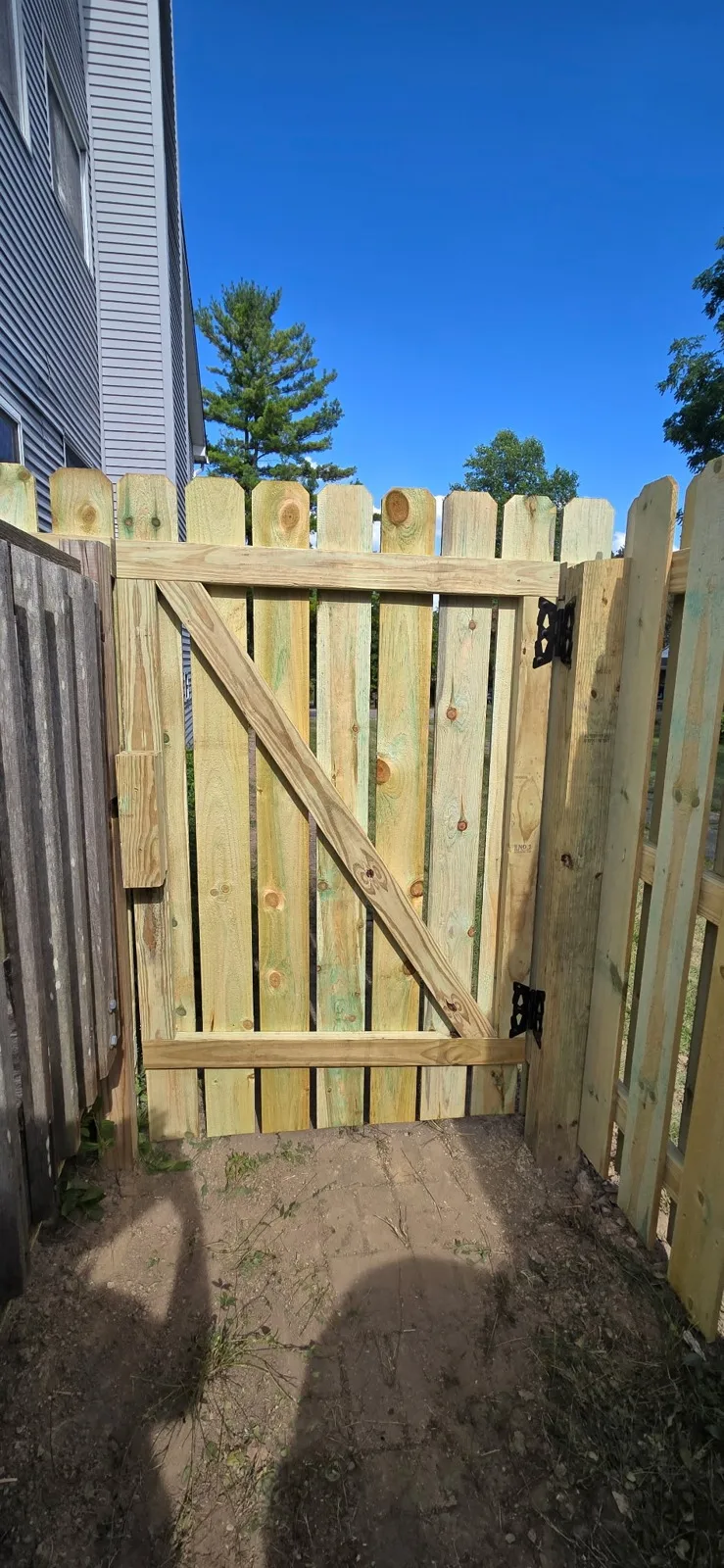
Price gate framing and hardware along with the boards.
grade
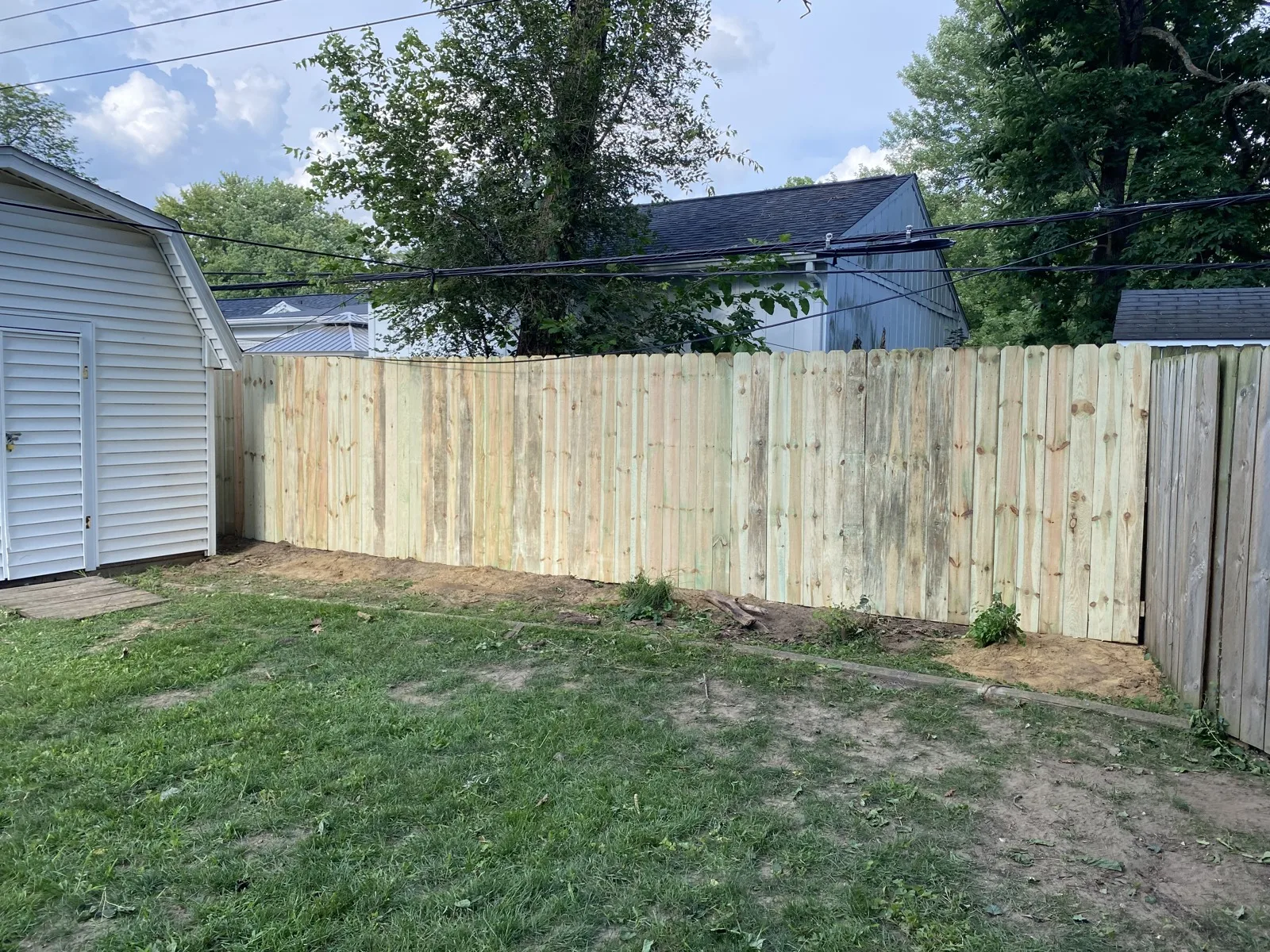
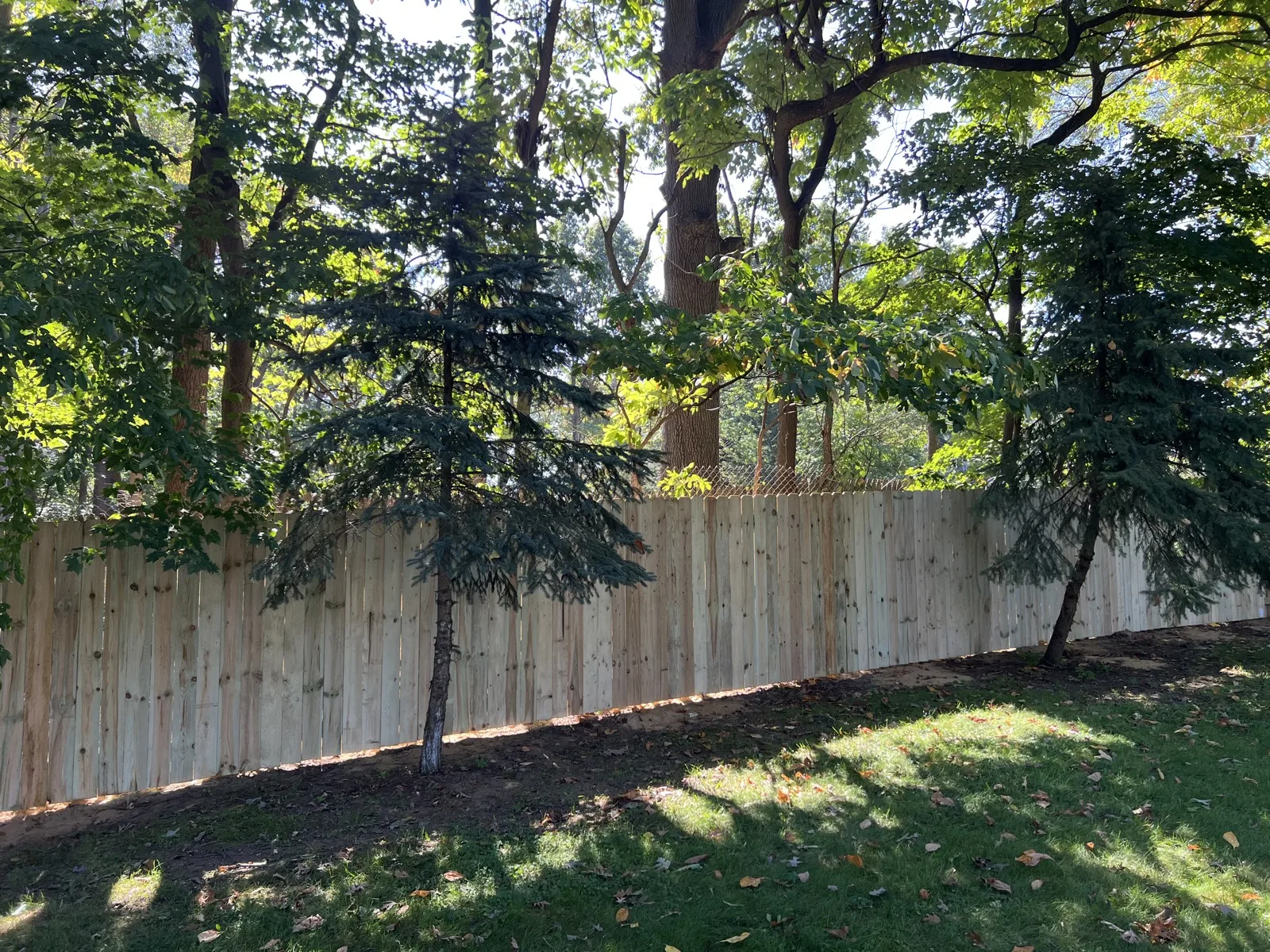
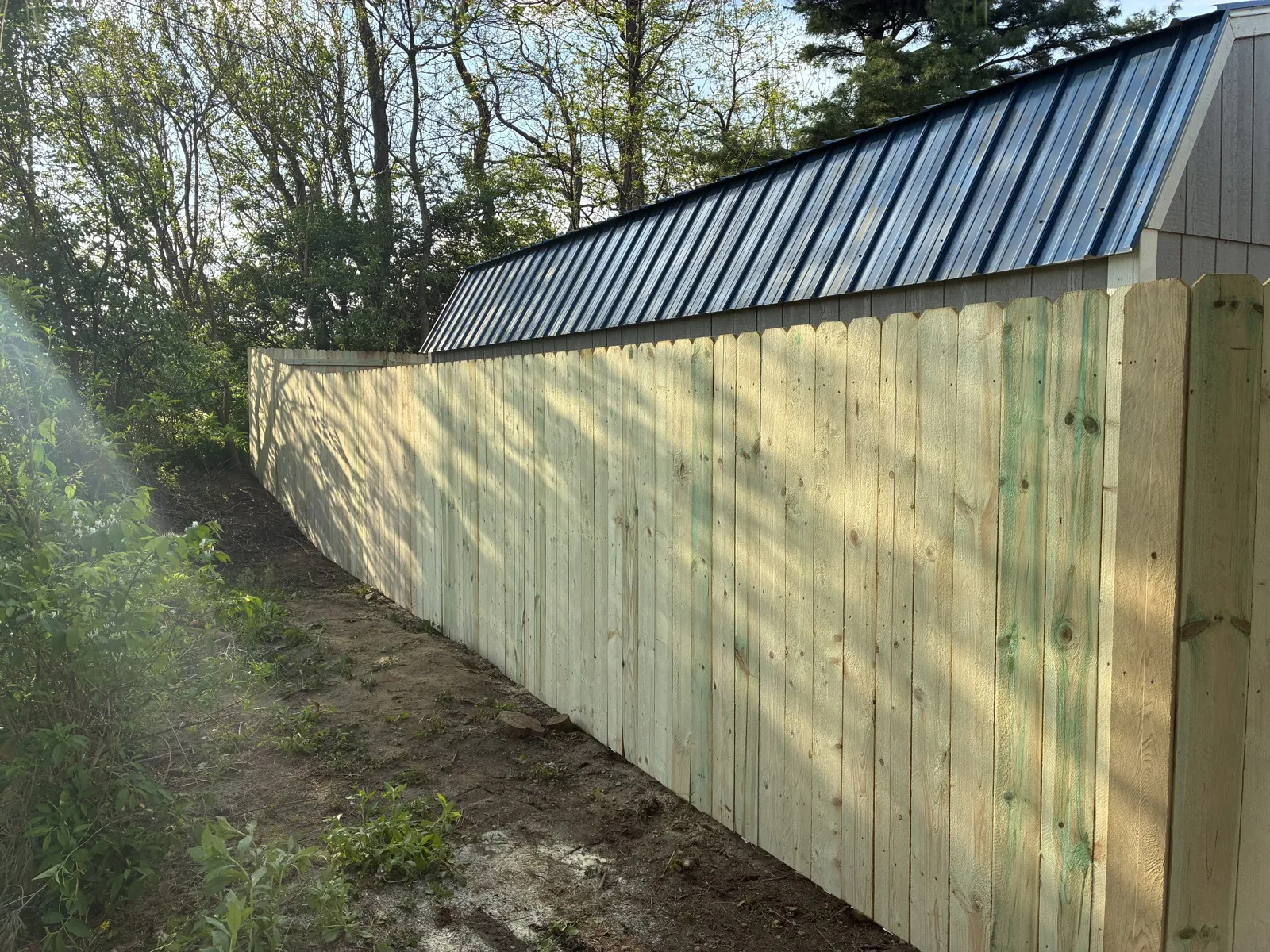
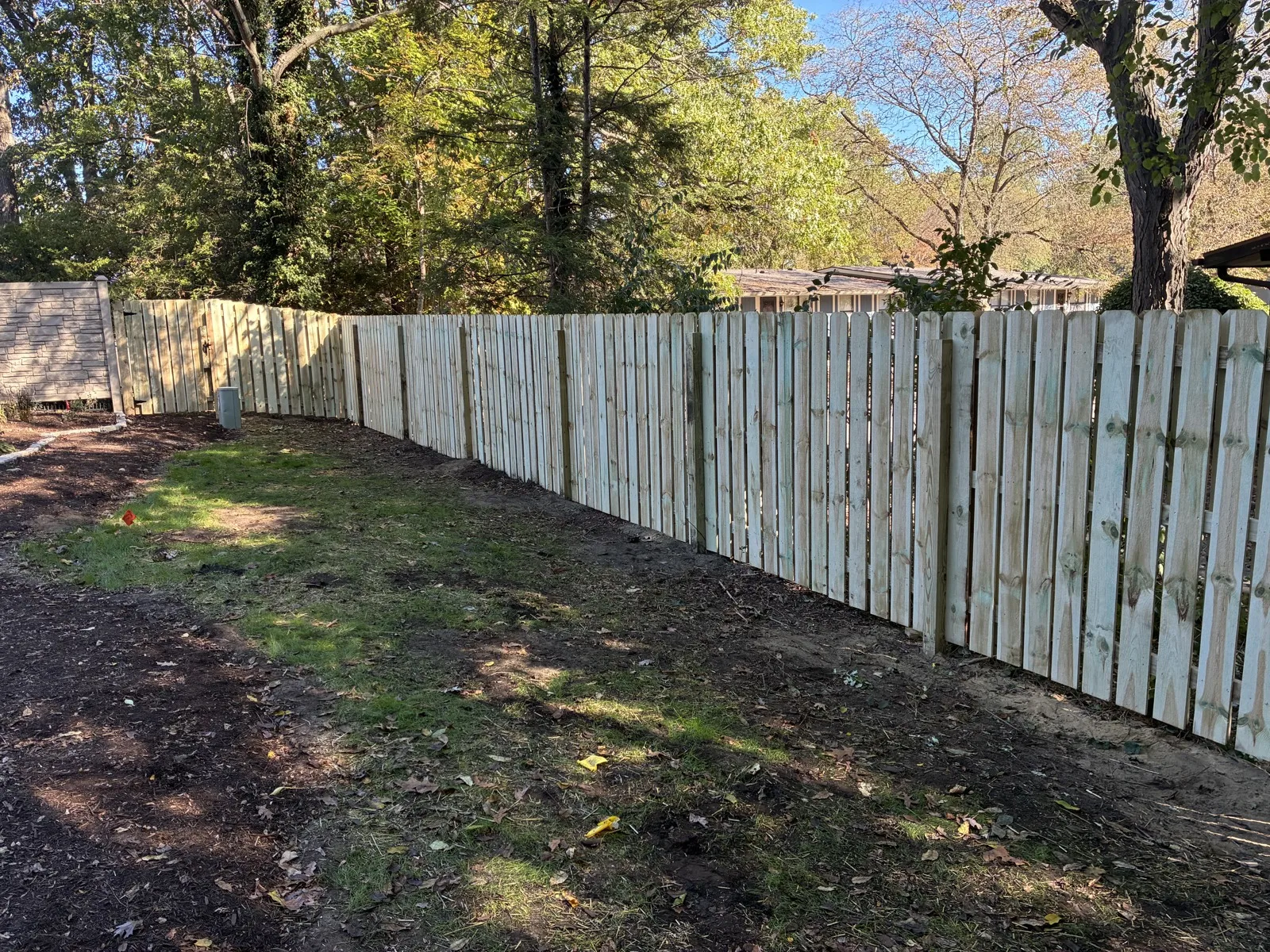
Discuss sloped runs and the bottom gap before fixing the board layout.
Make it your own
A clean finish. A little more detail.
Add cap and trim to your wood fence for a more finished architectural look. A flat cap defines the top edge; horizontal face trim adds a clean line below it. Choose the detail with your privacy or shadowbox style, then confirm materials, sides and price in your proposal.
Choose the appearance and the structure
Decorative cap and trim is an appearance option. A flat reinforcing rail in a steel-post wood fence is part of the construction system. We will show which details are included so the finished look, post system and rail layout are clear.
Explore the King Plus wood-box method we use: a picket and two vertical 2×4s surround the steel support.
Parts are simplified and not to scale. Fastening, clearances and dimensions follow the project detail. Read Mr. Fence’s system overview.
Assembled
The wood box creates the visible post finish. The driven steel carries the ground-contact support.
Separate the parts
The picket and two vertical 2×4s form a U-shaped box. The parts are separated here so you can see their relationship to the steel.
Reveal the steel
Wood finish and rails remain serviceable components. Steel avoids wood rot at the support base, but its coating, connections and condition still need attention.
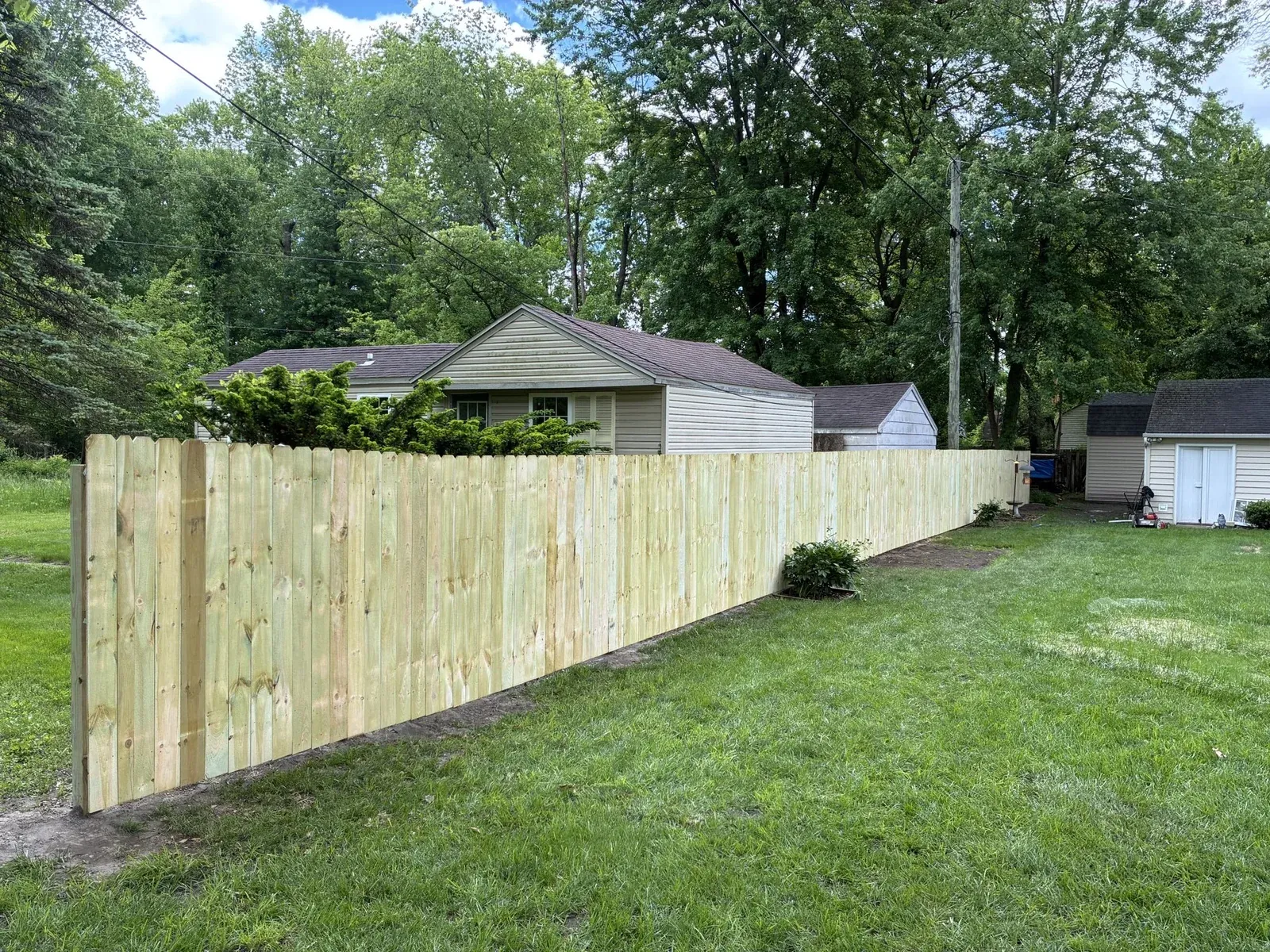
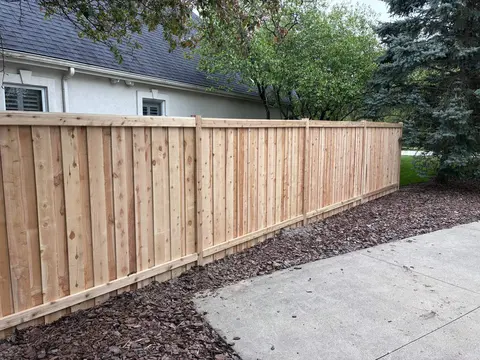
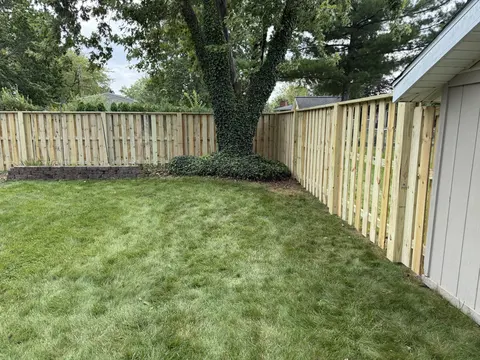
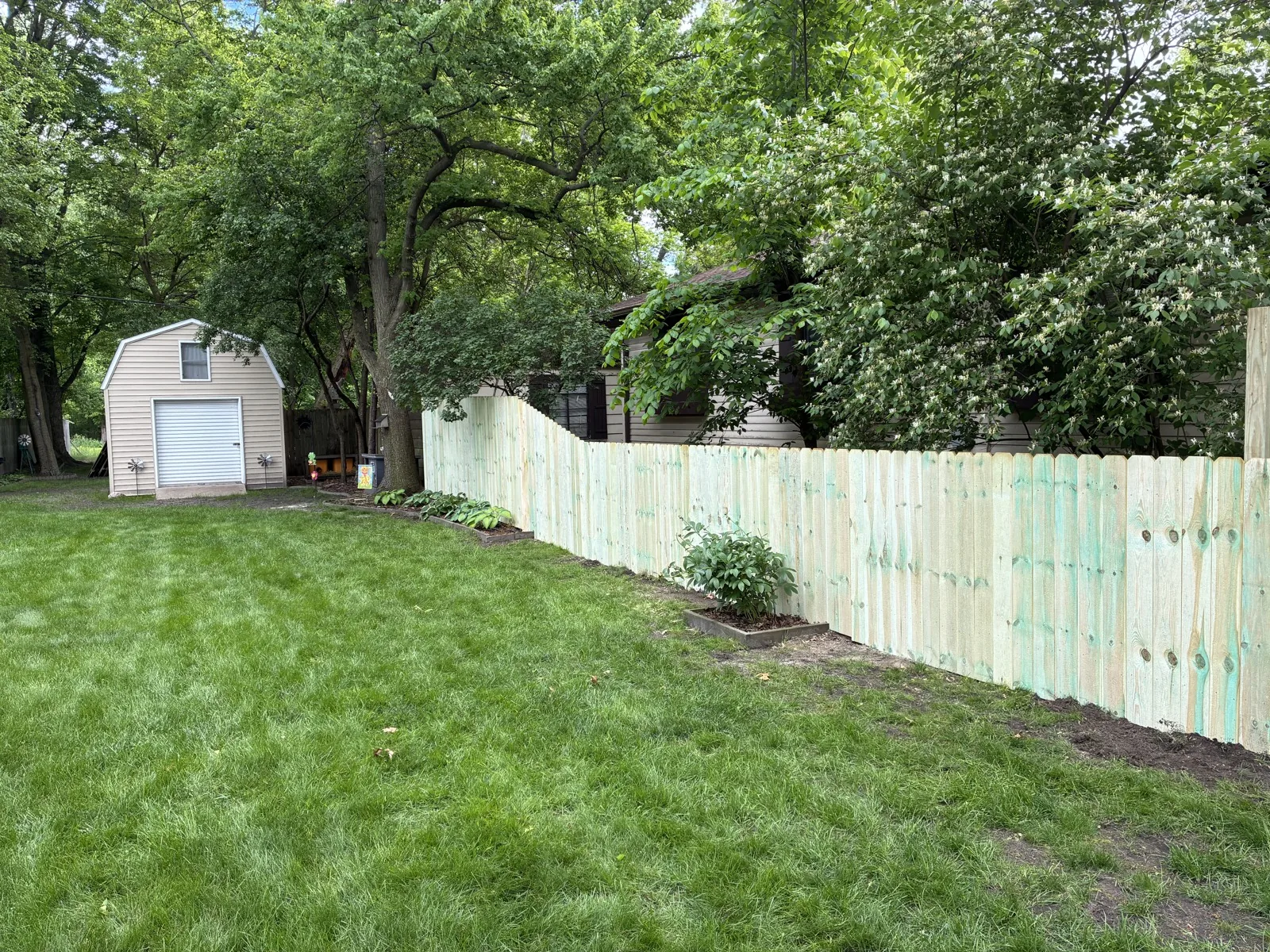
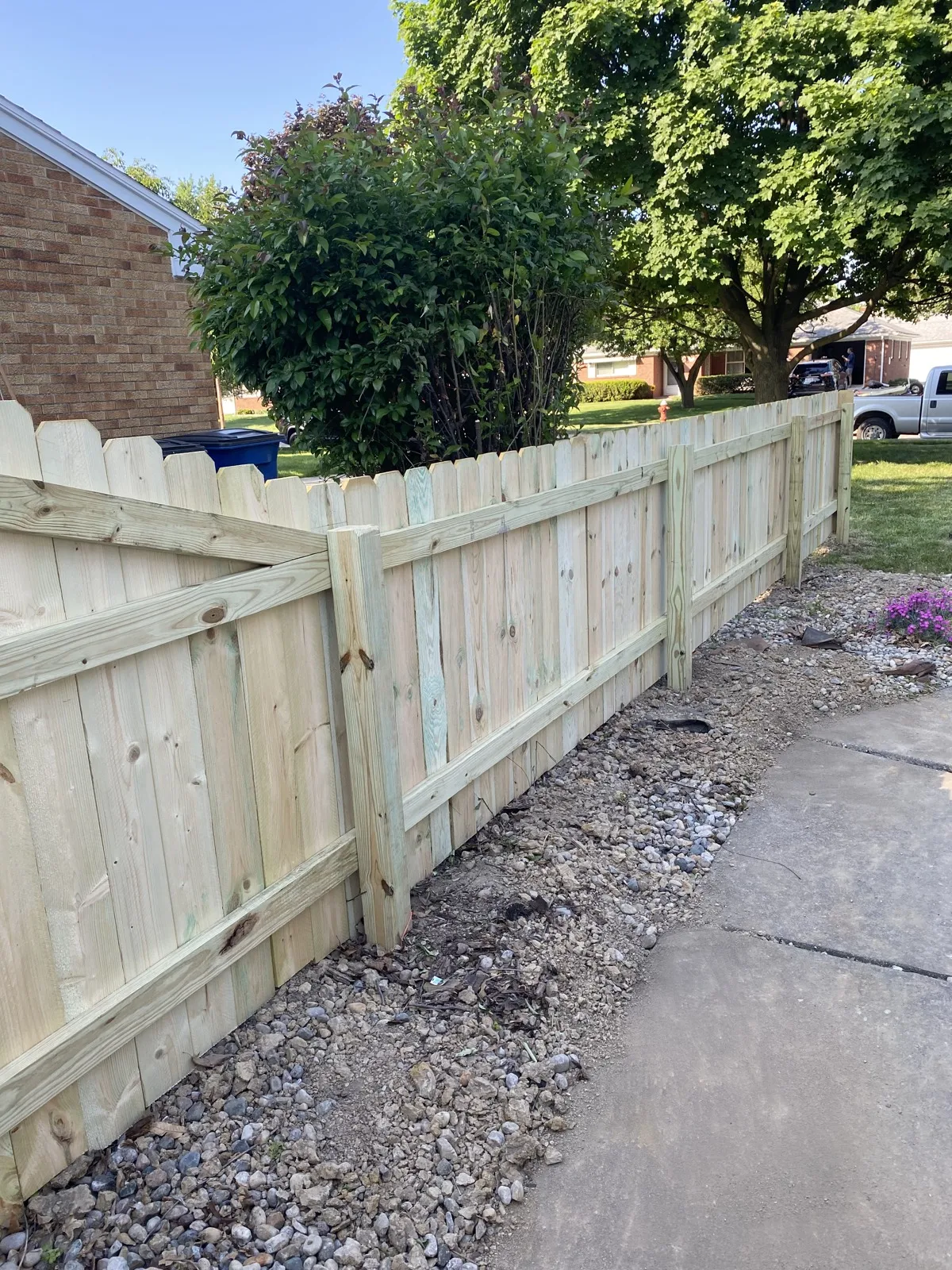
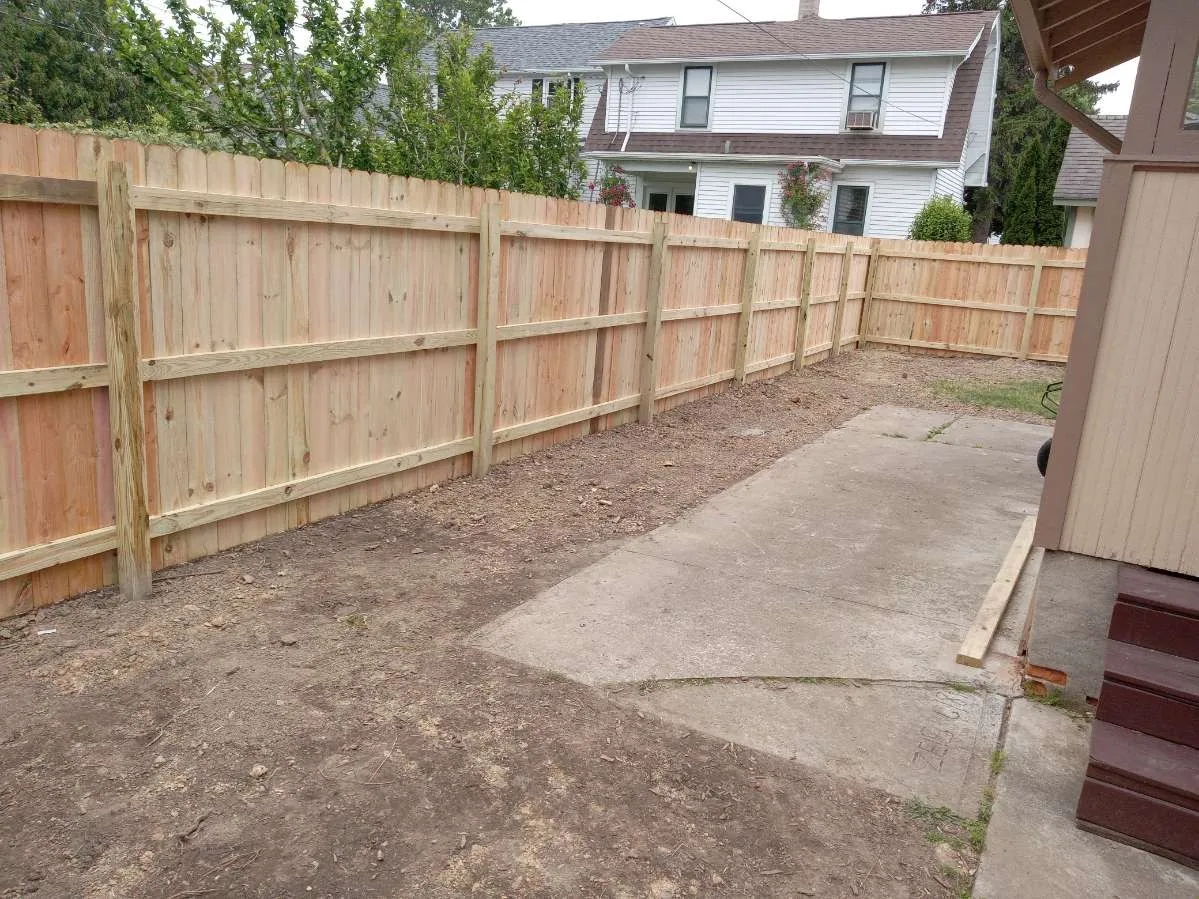
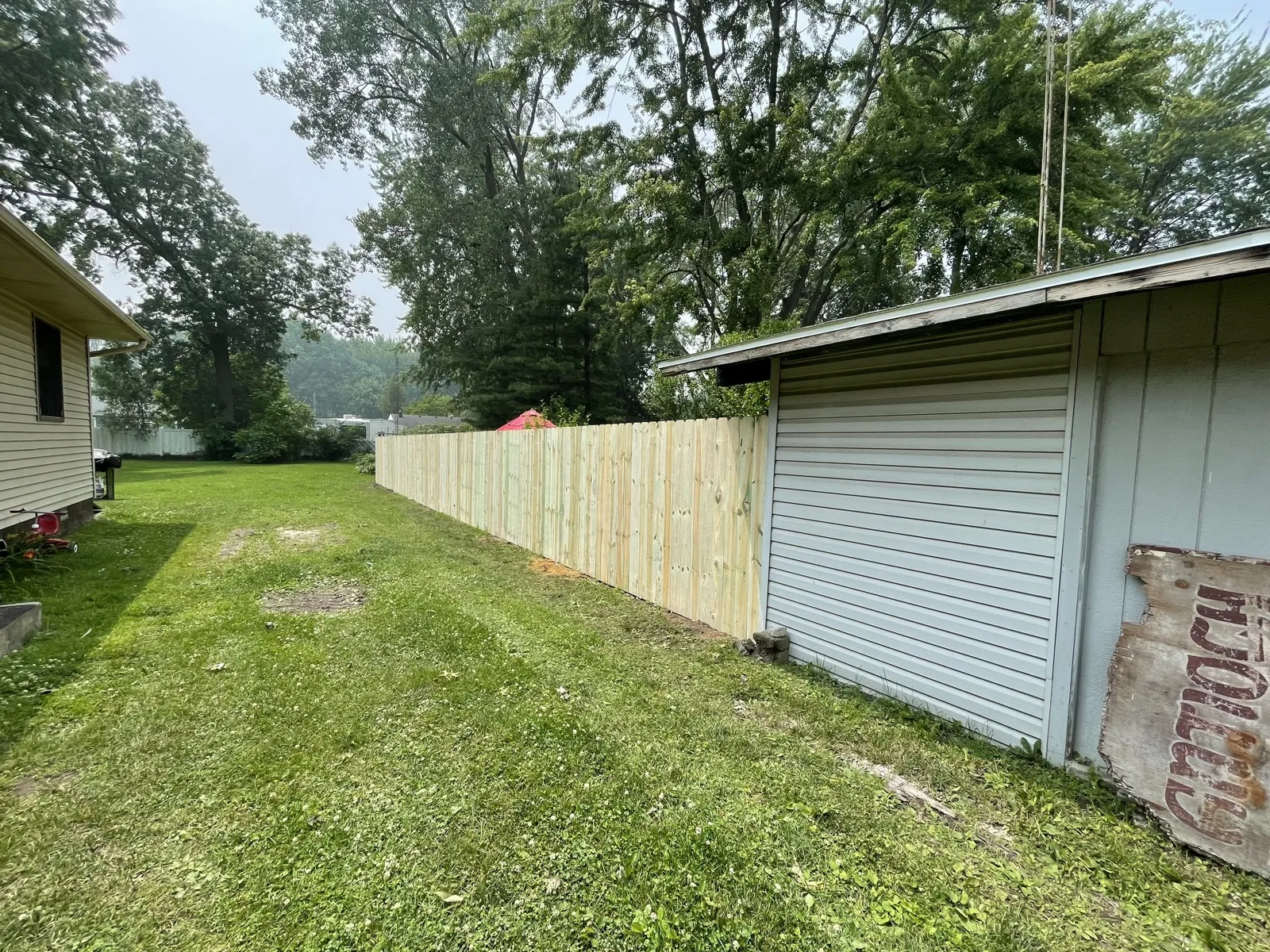
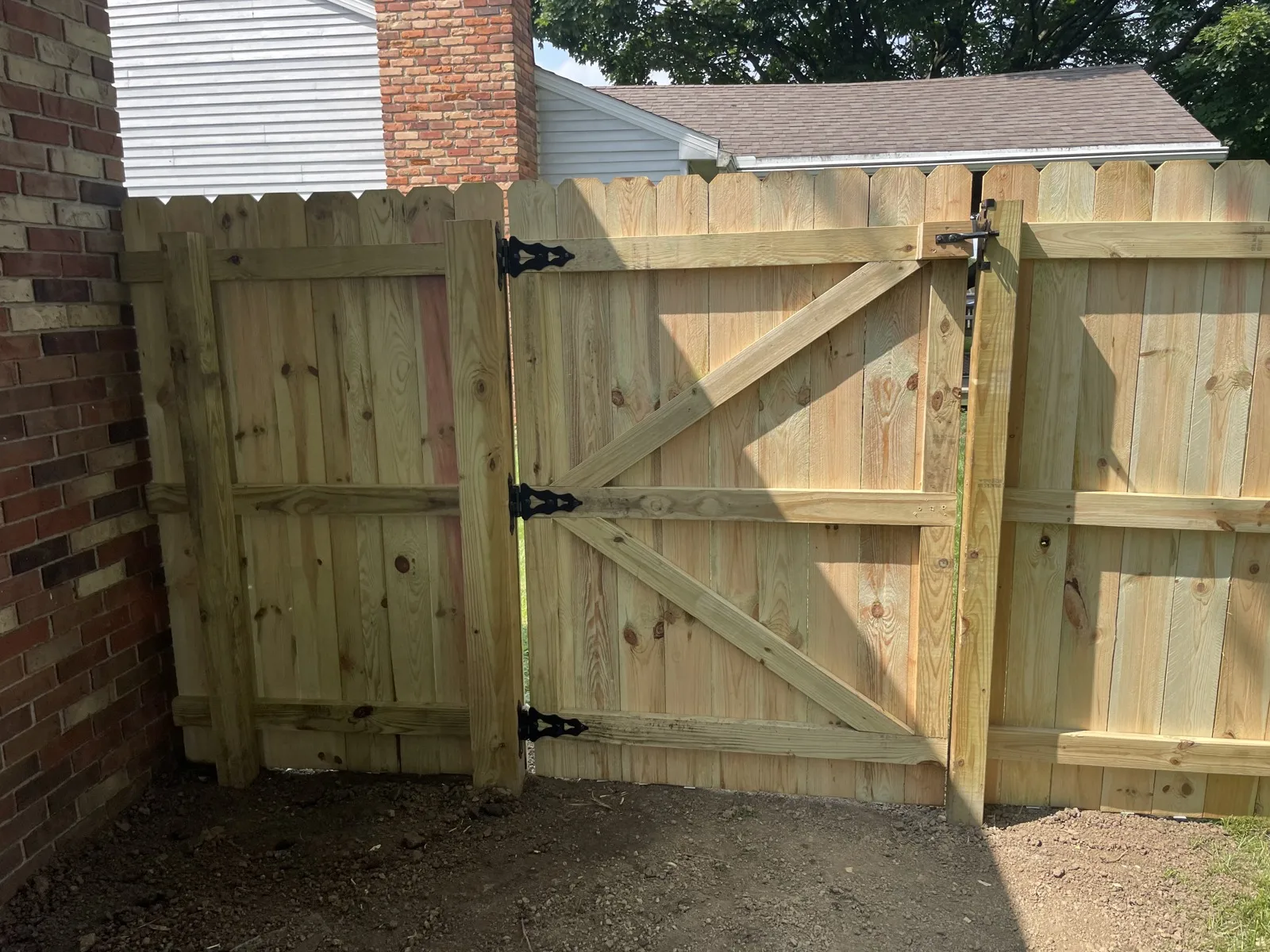
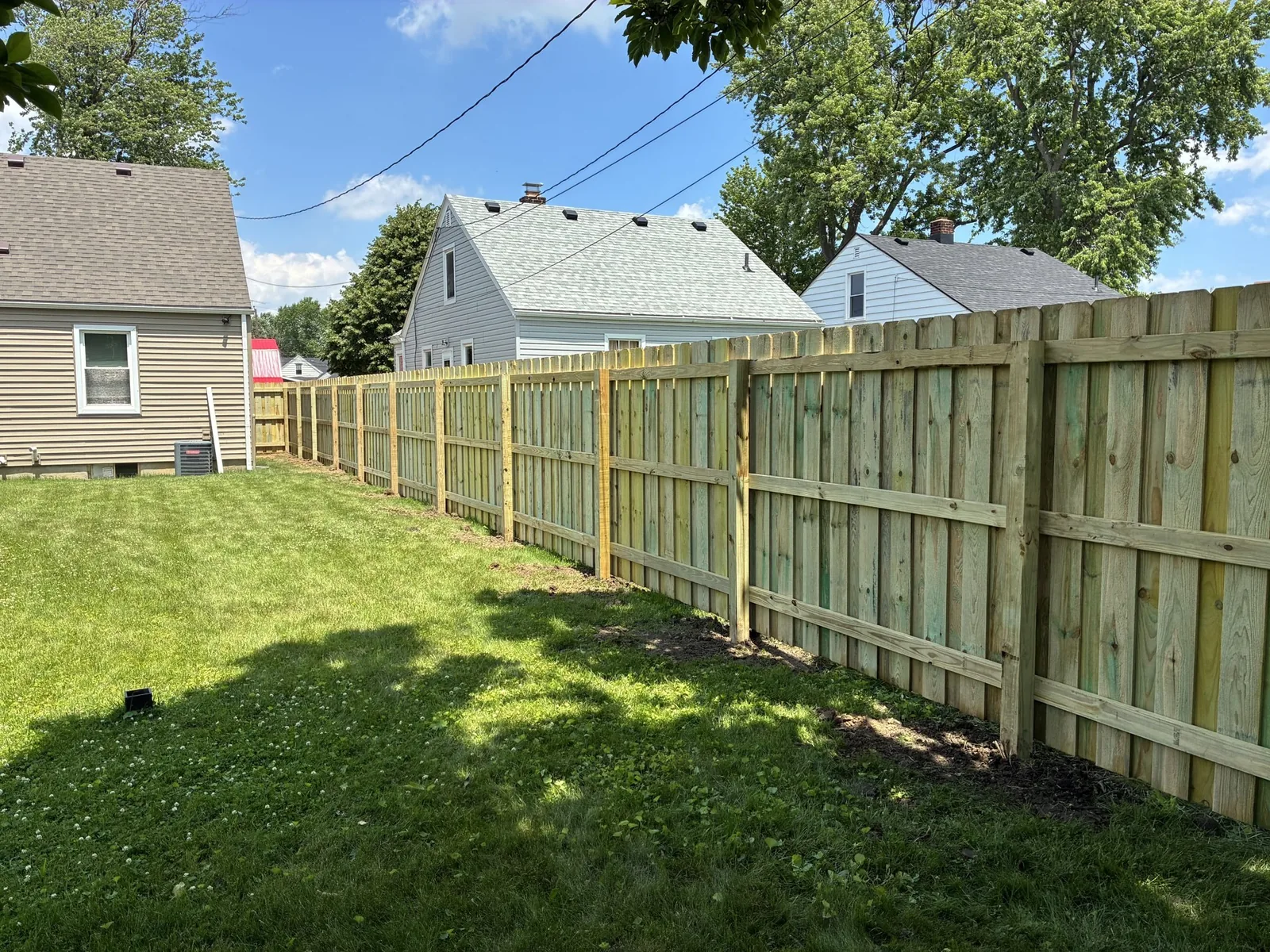
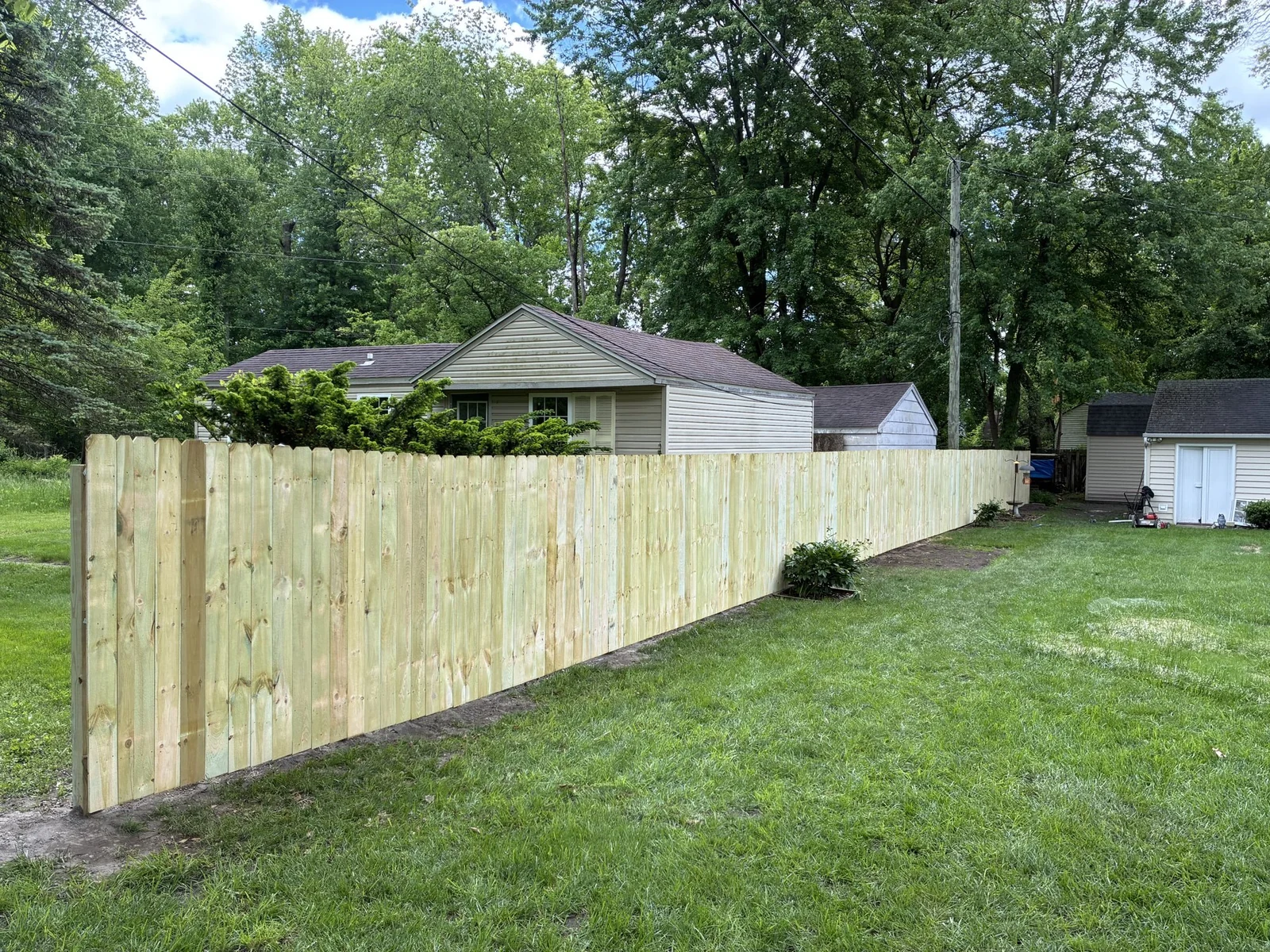
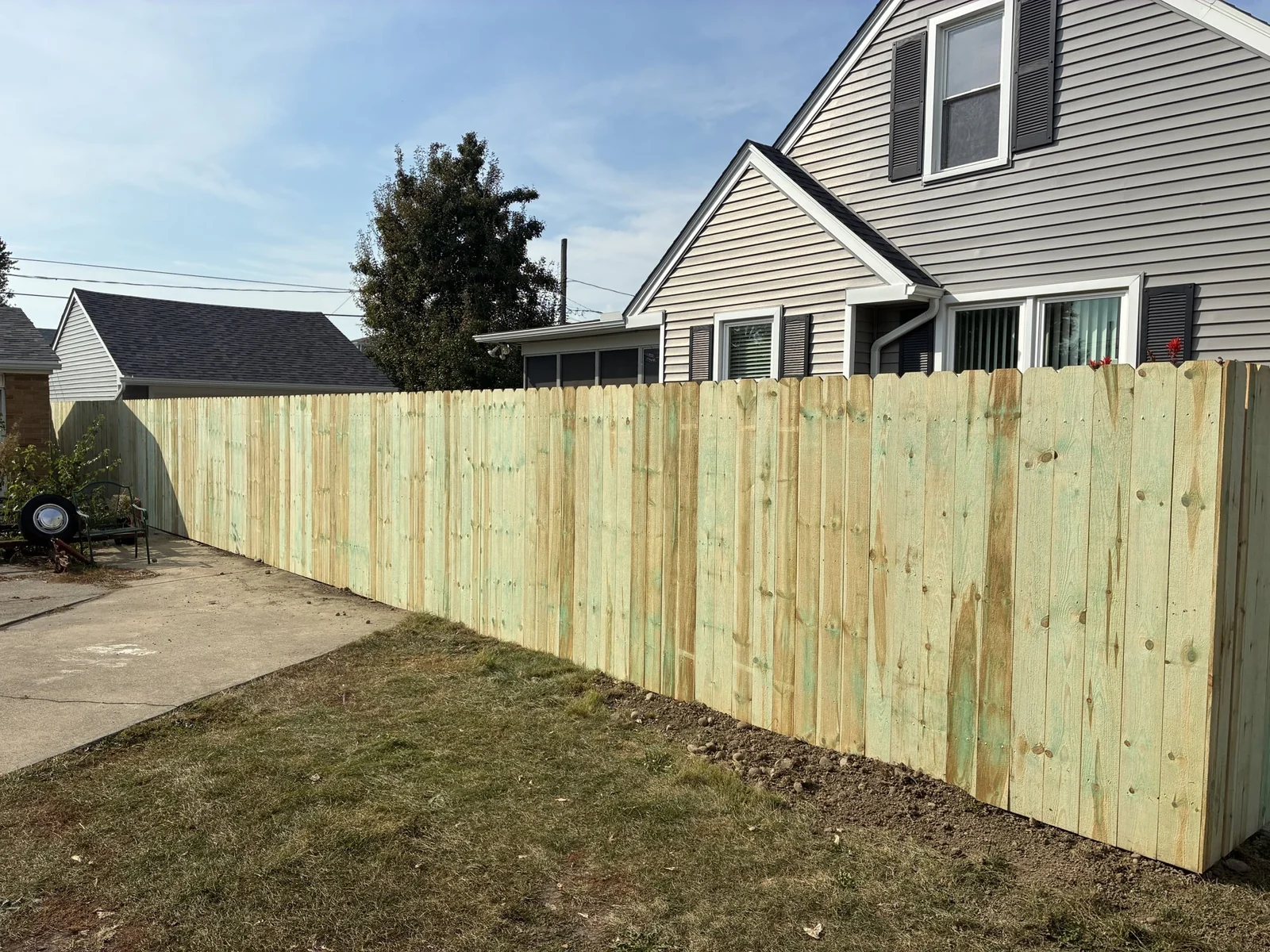
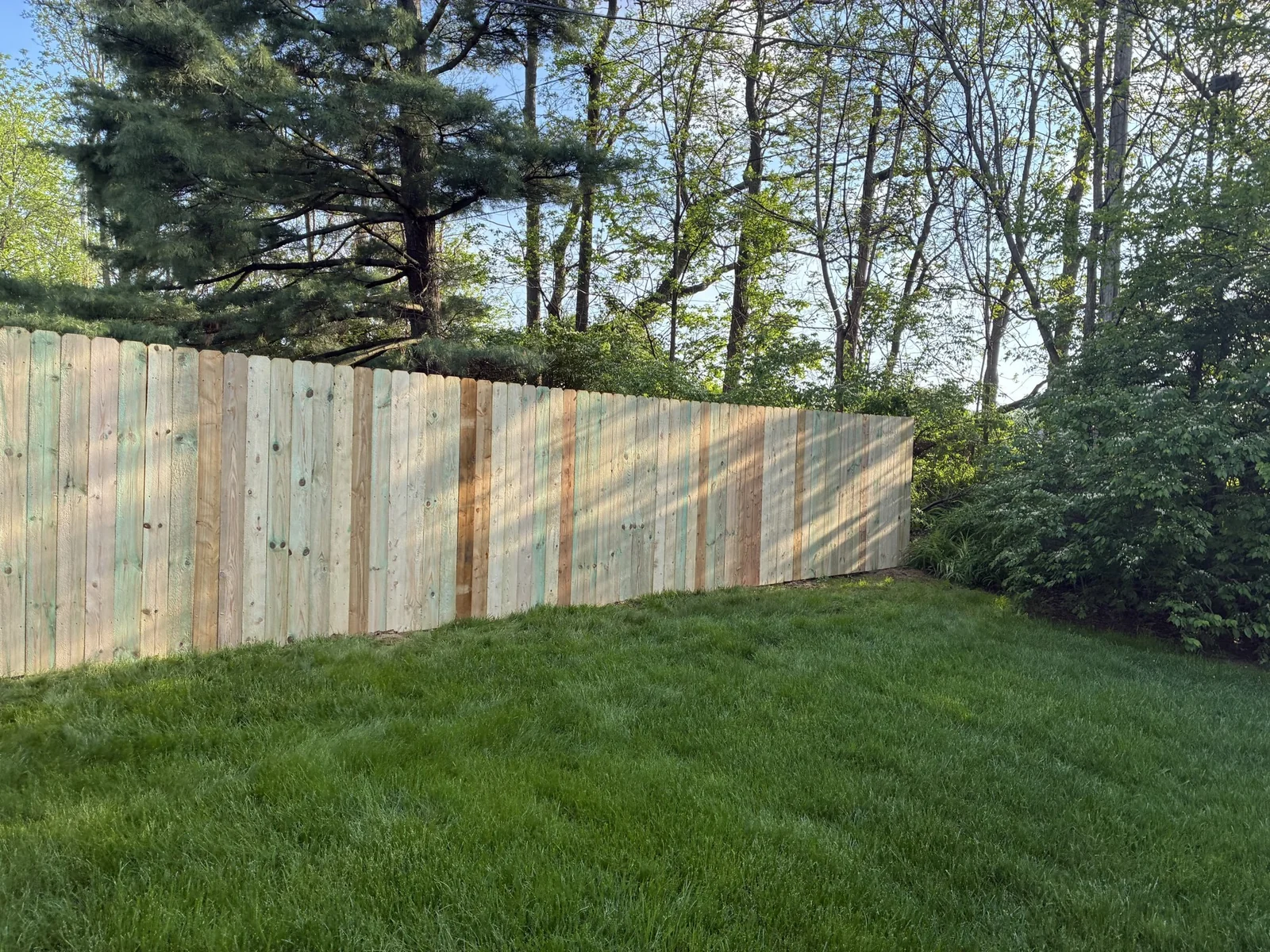
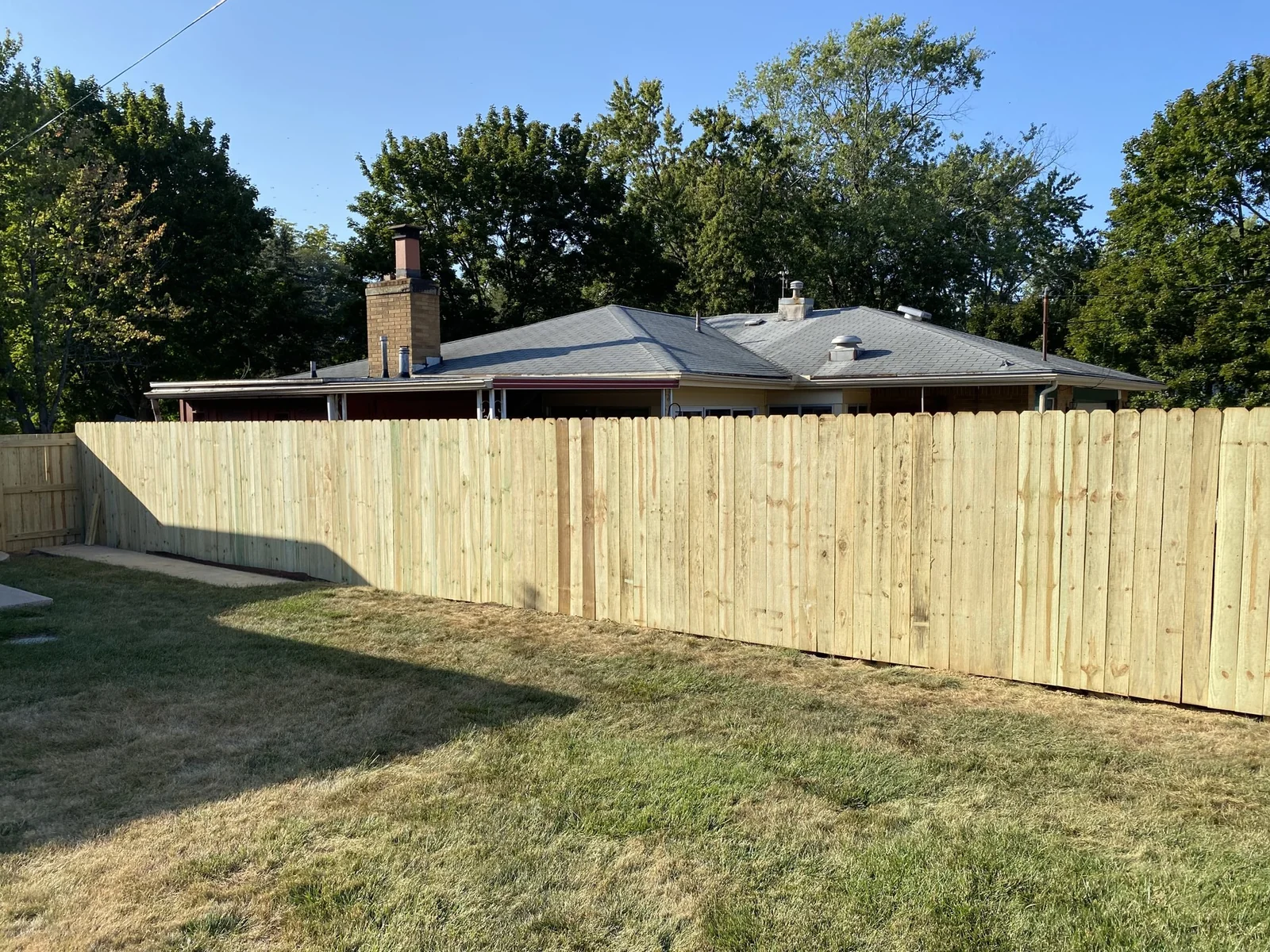
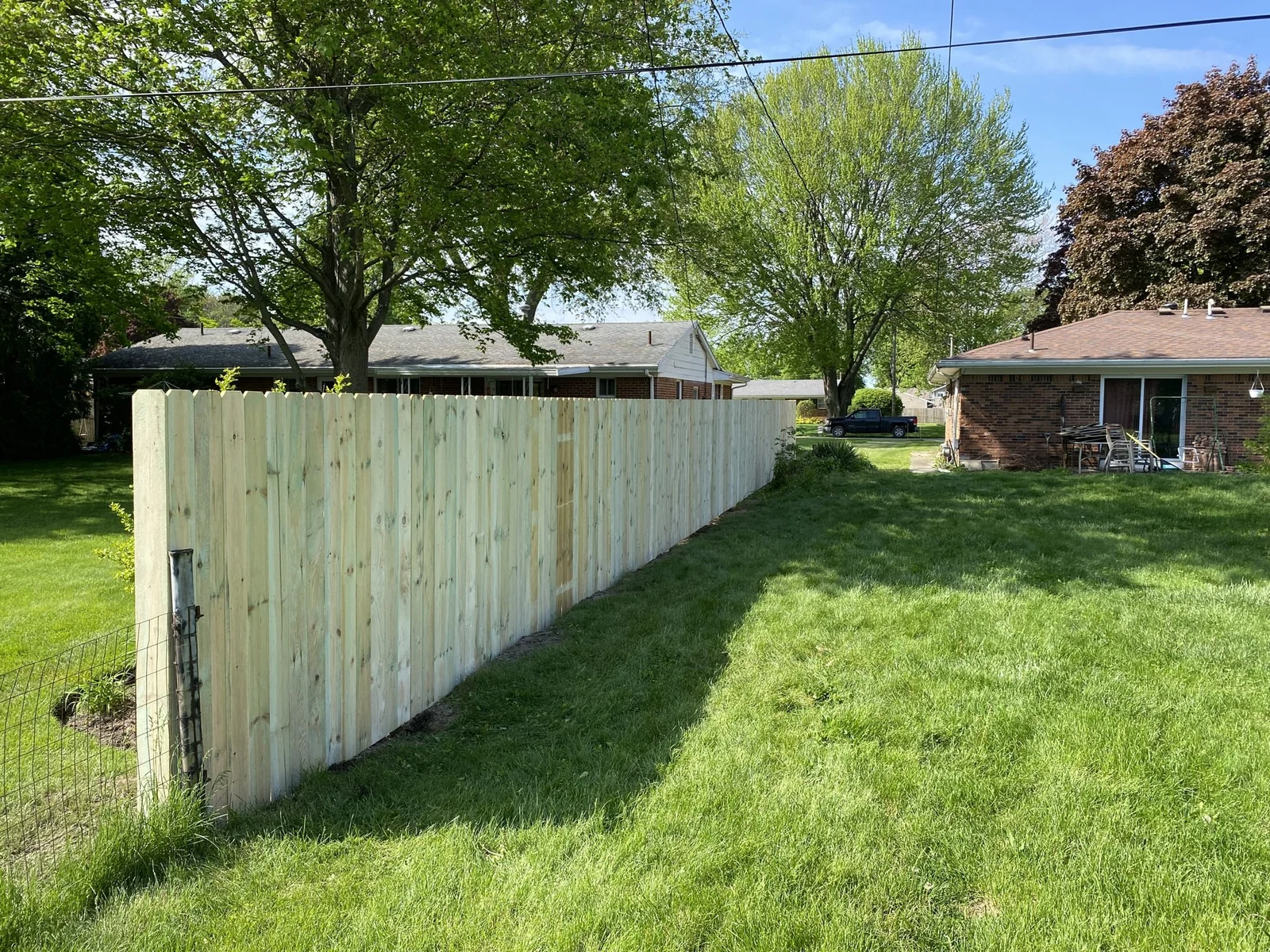
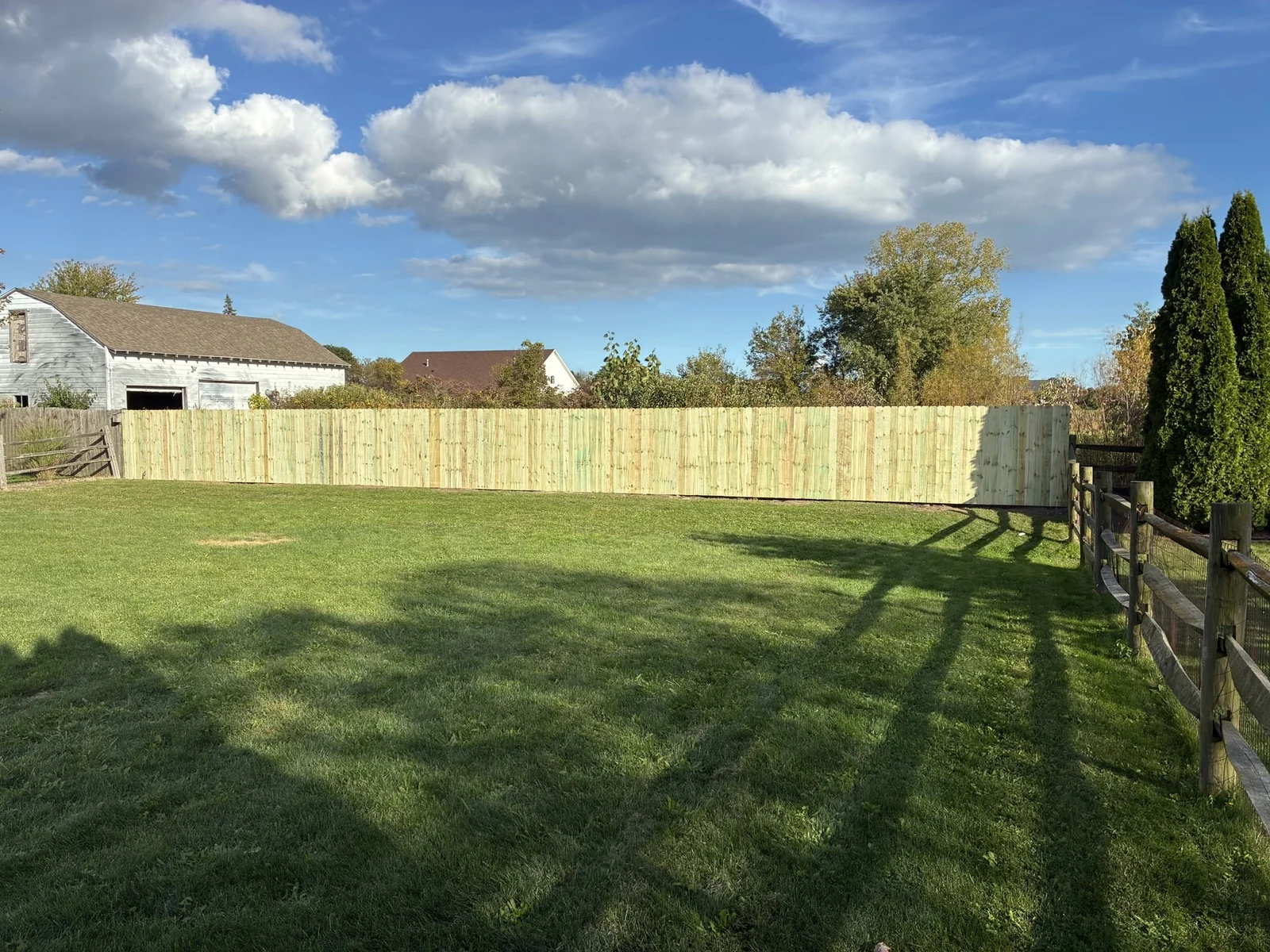
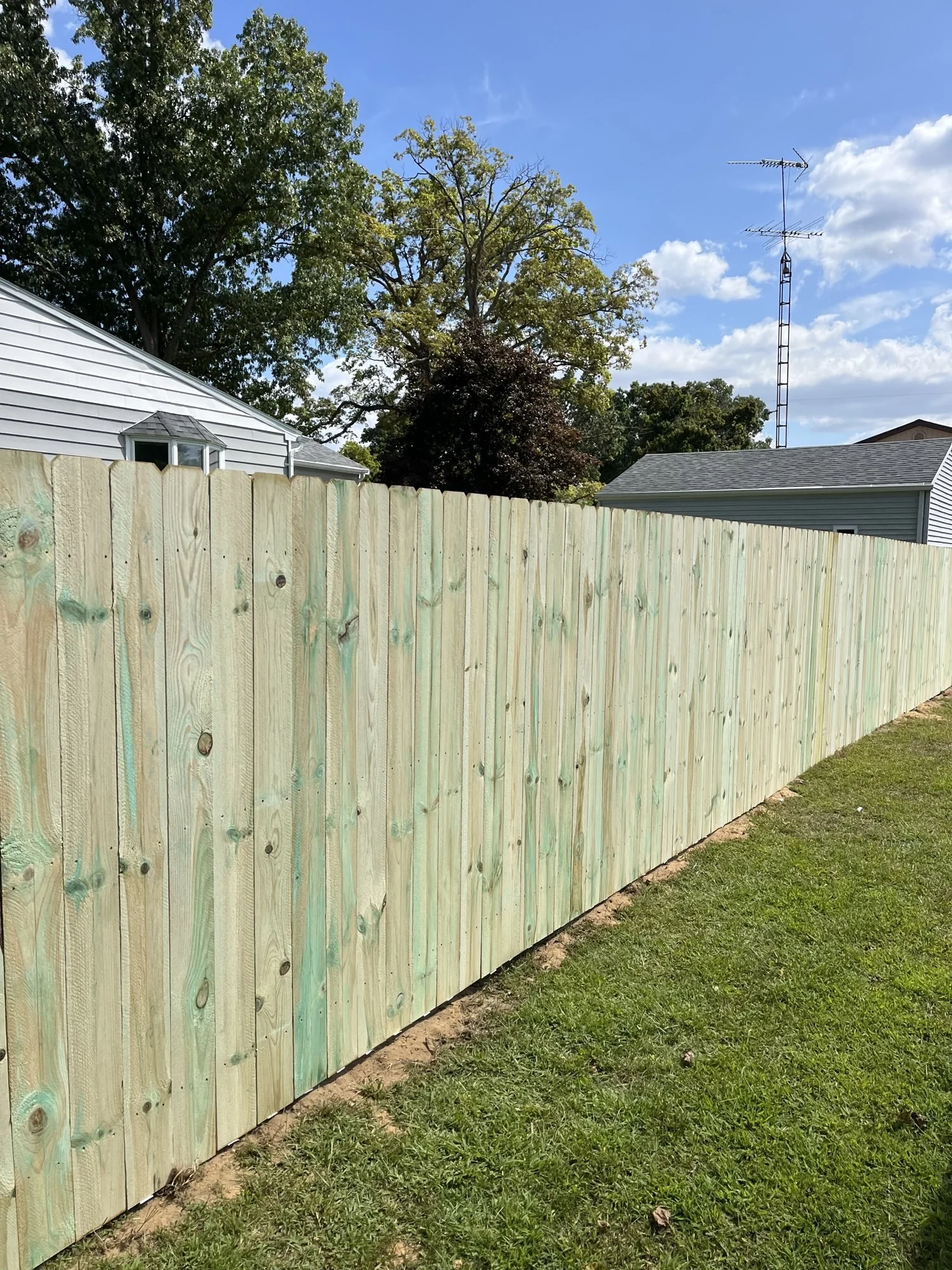
Explore our wood privacy, board-on-board and shadowbox fence photographs.
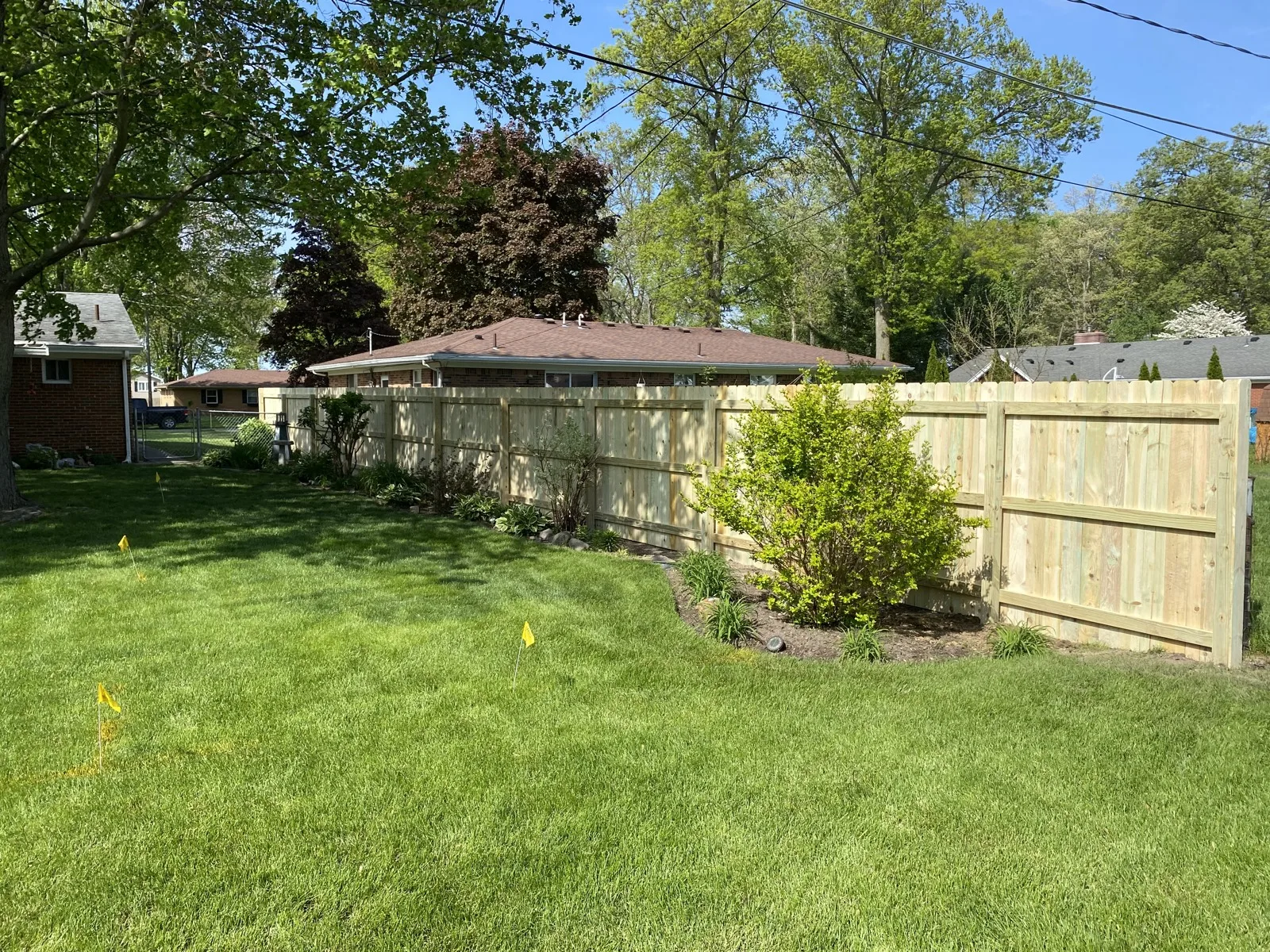
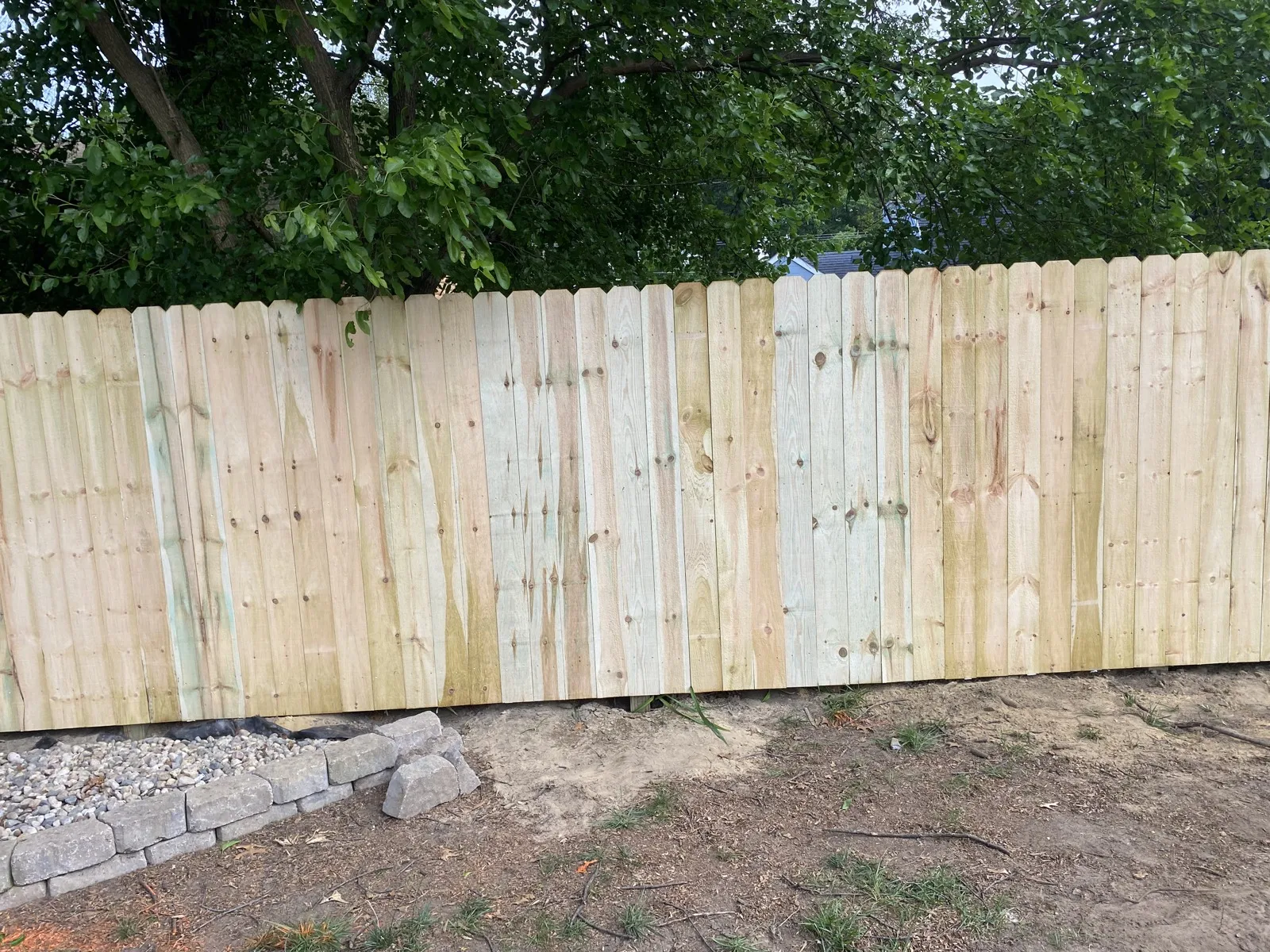
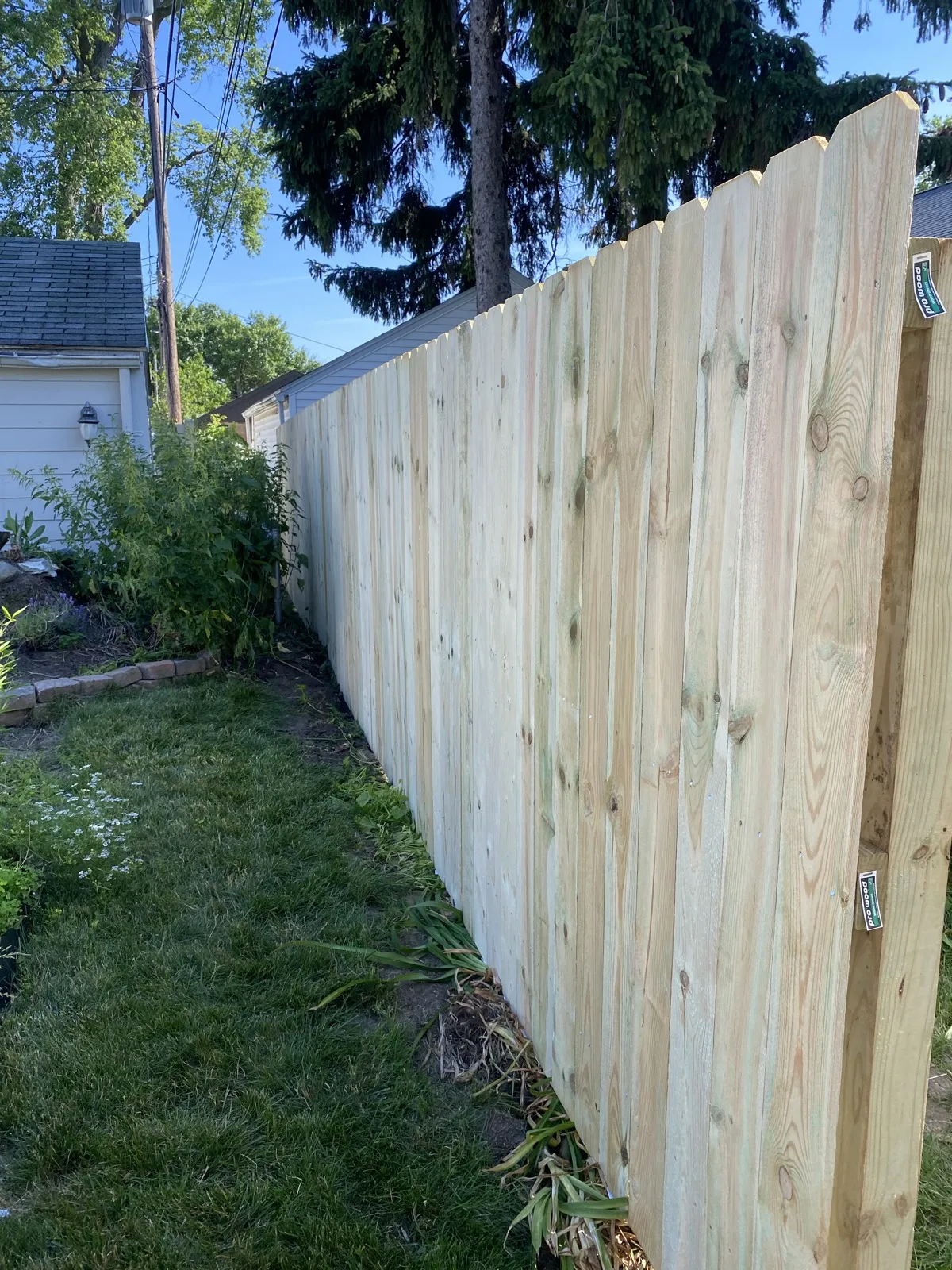
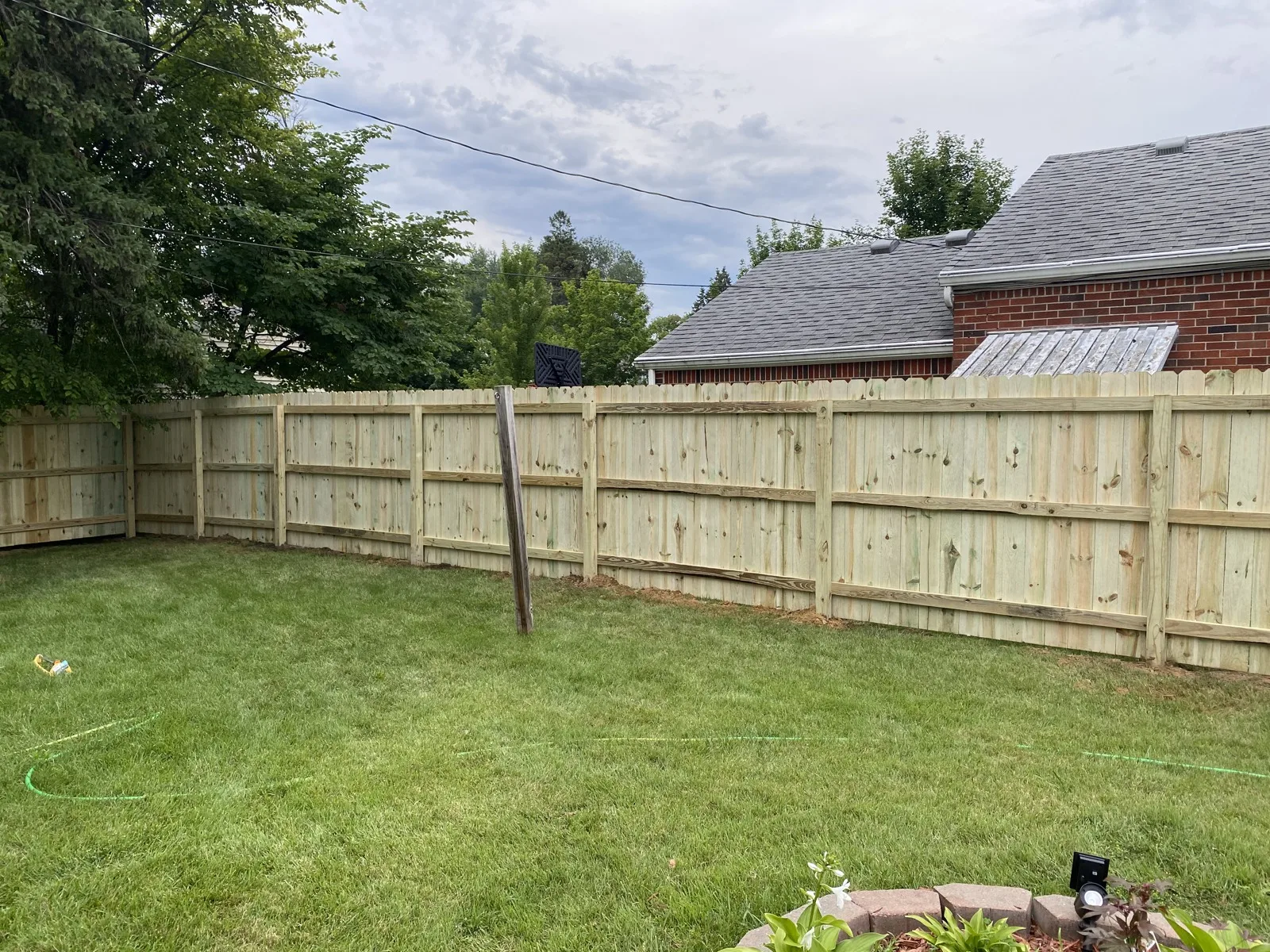
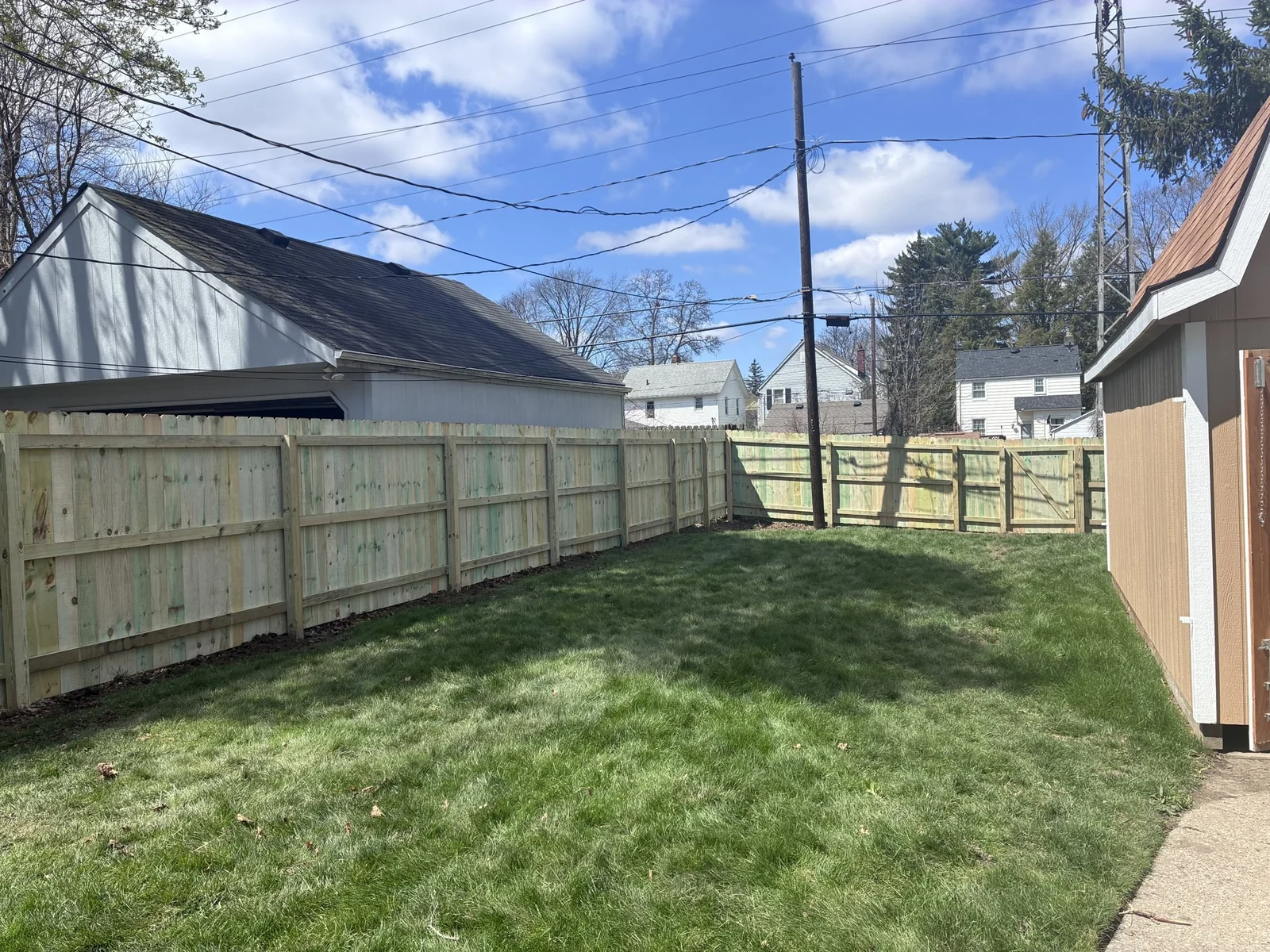
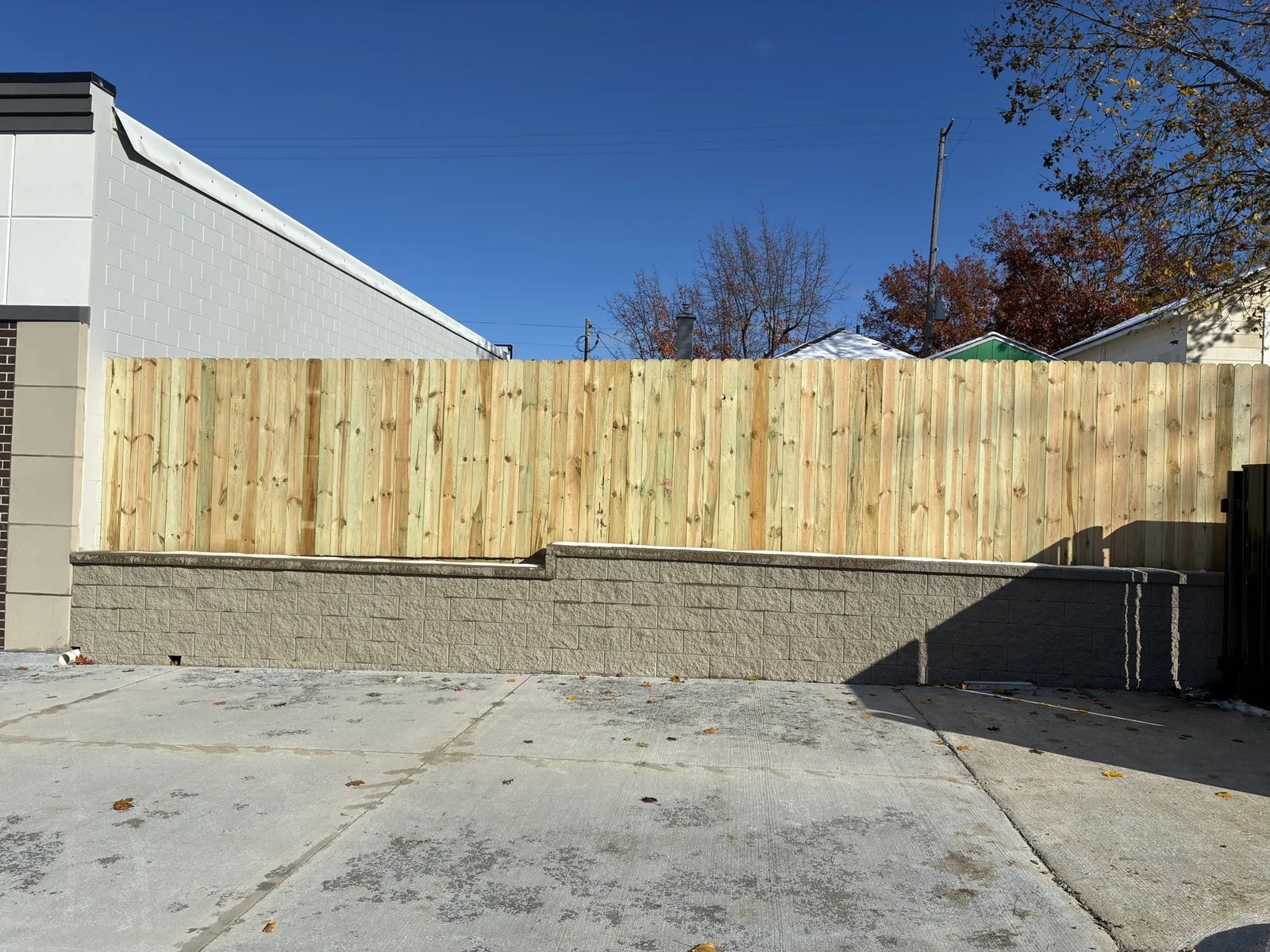
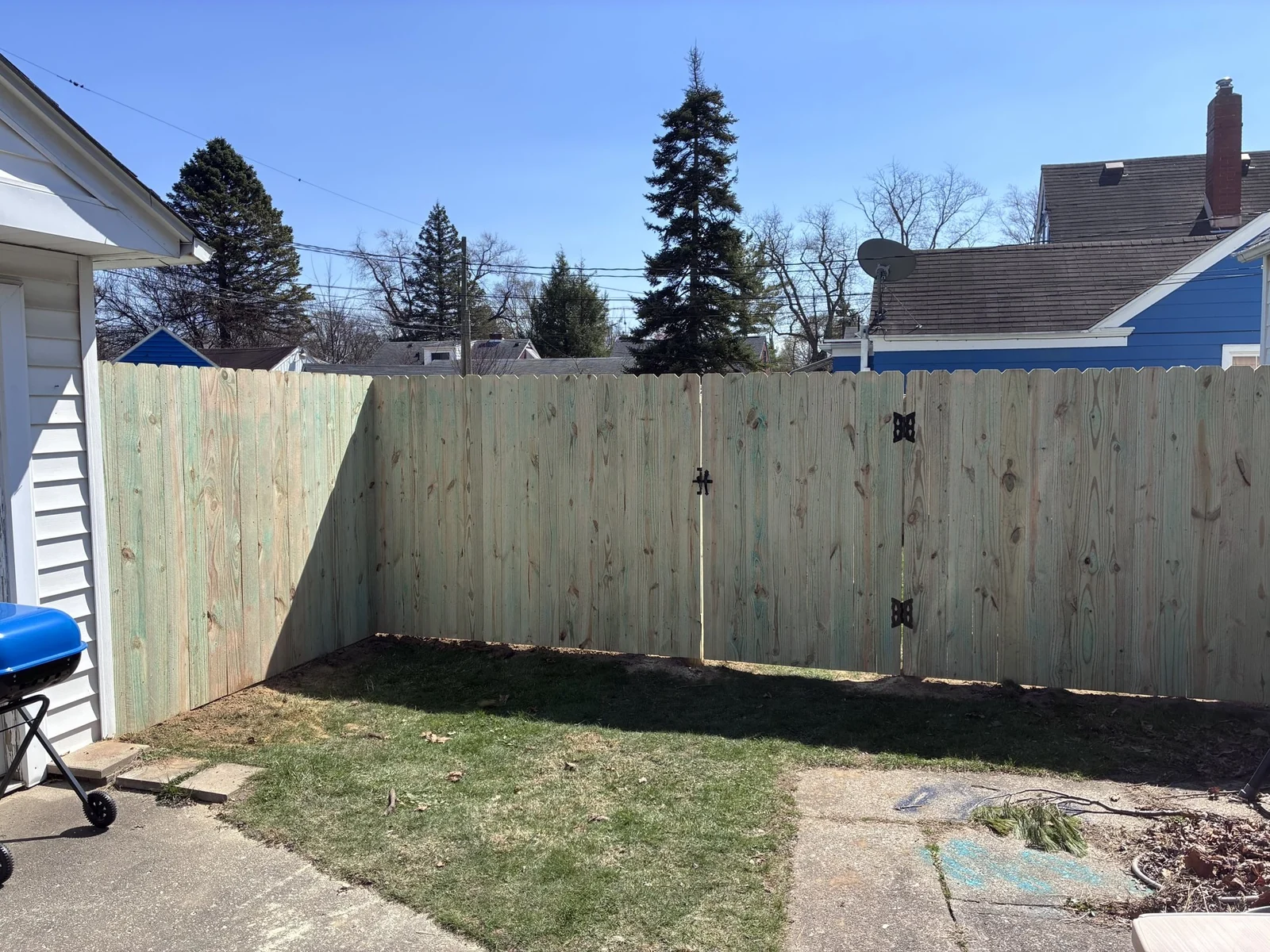
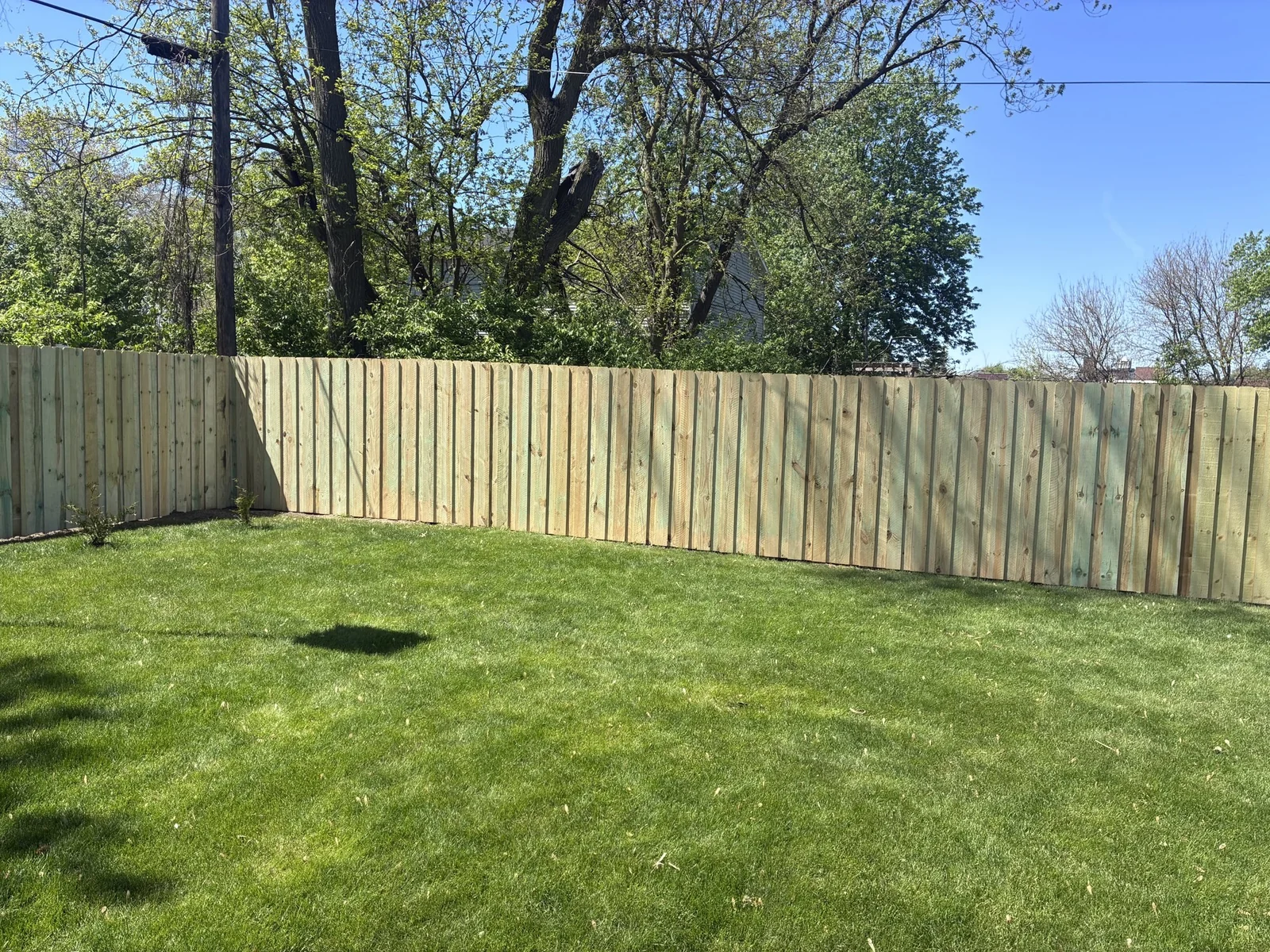
All fence installation photos in this collection show our own work.
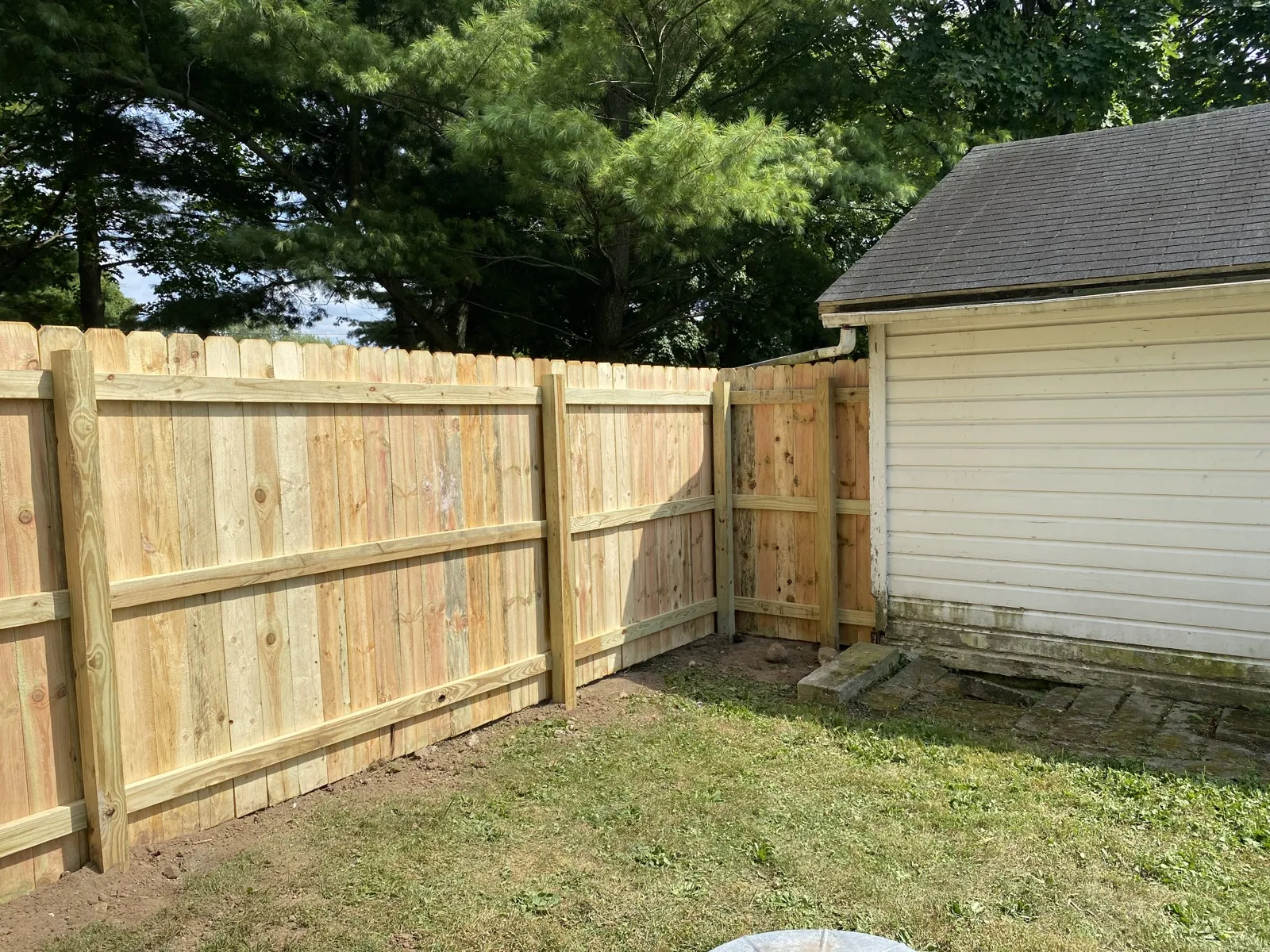
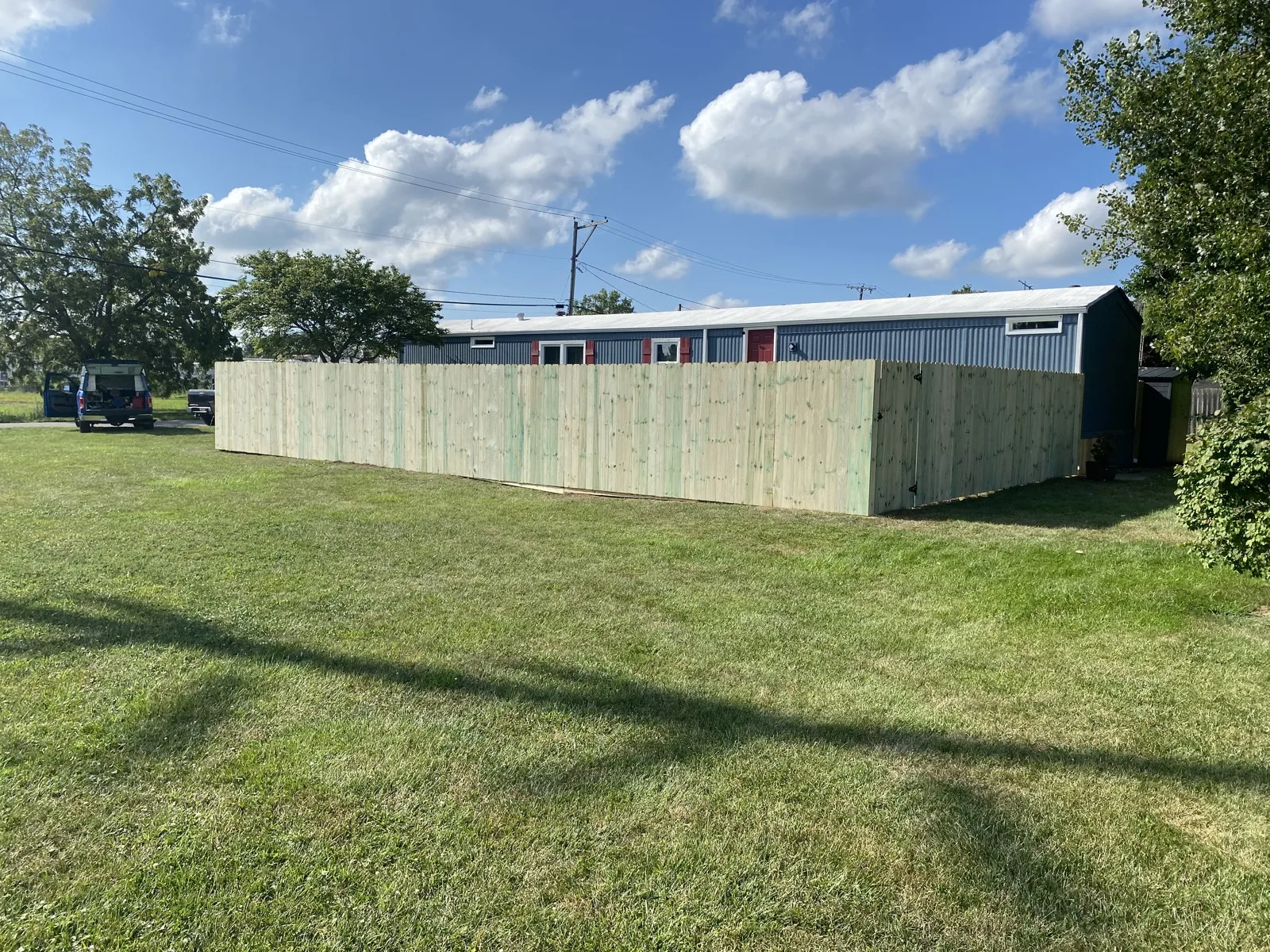
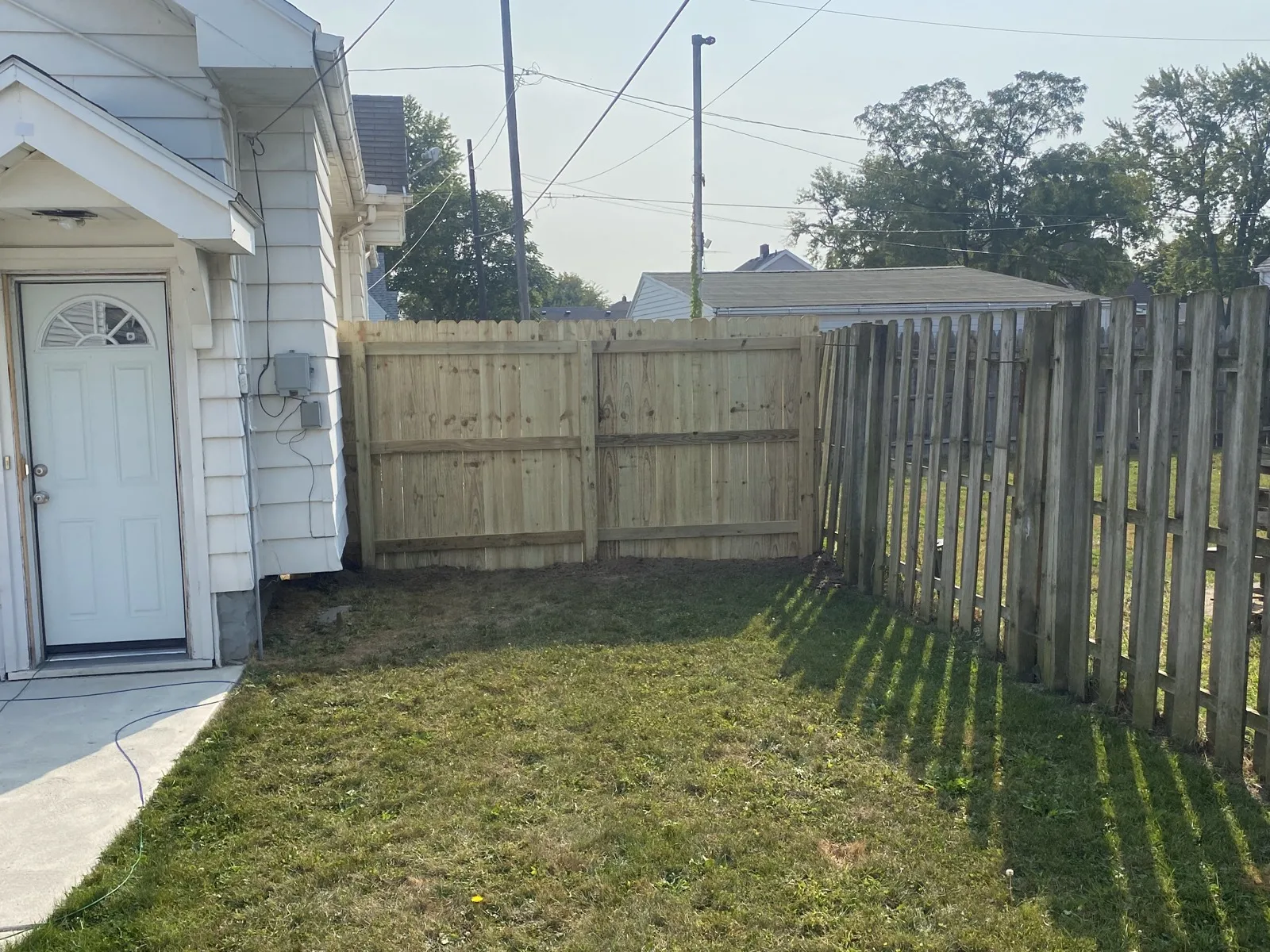
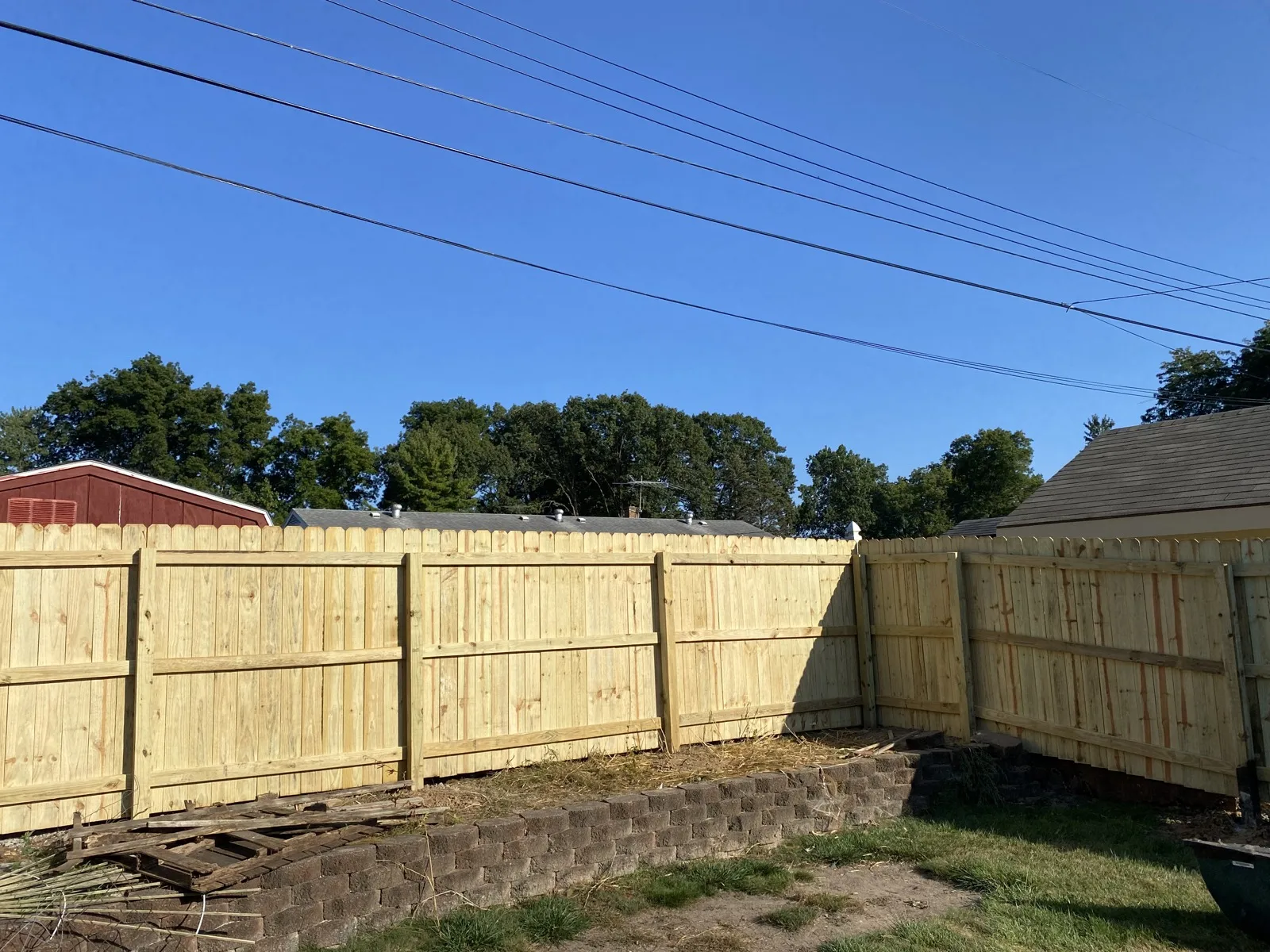
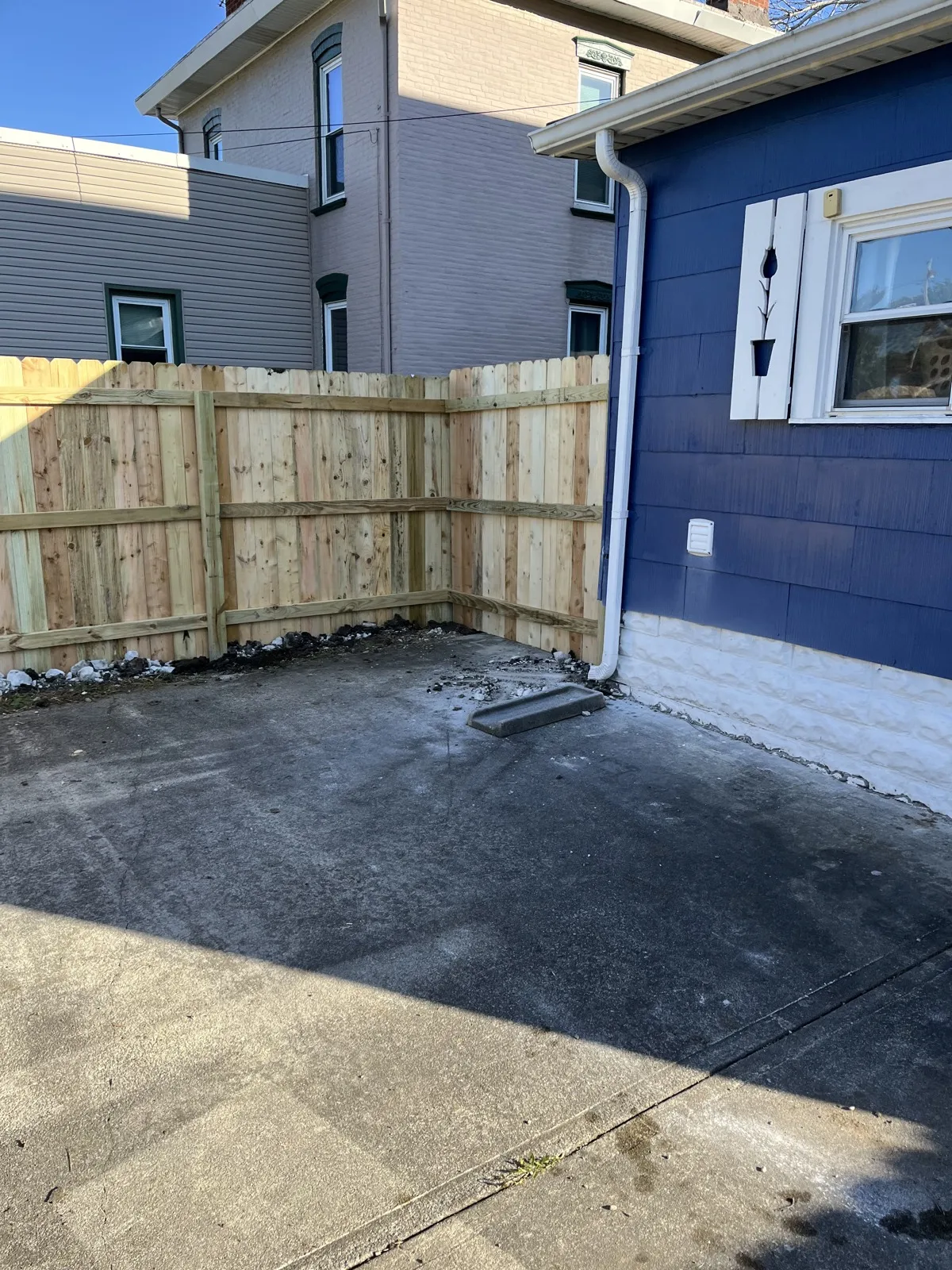
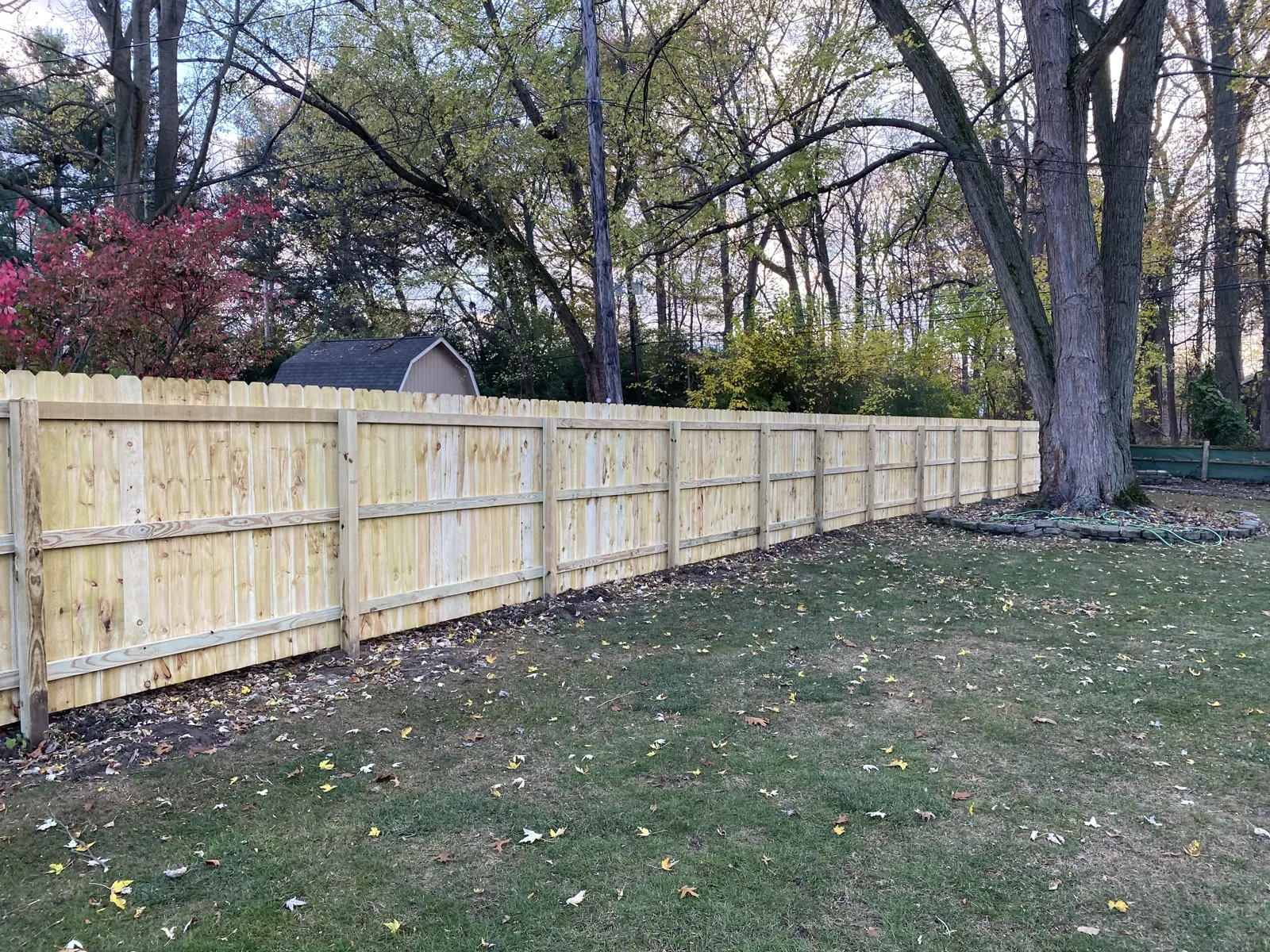
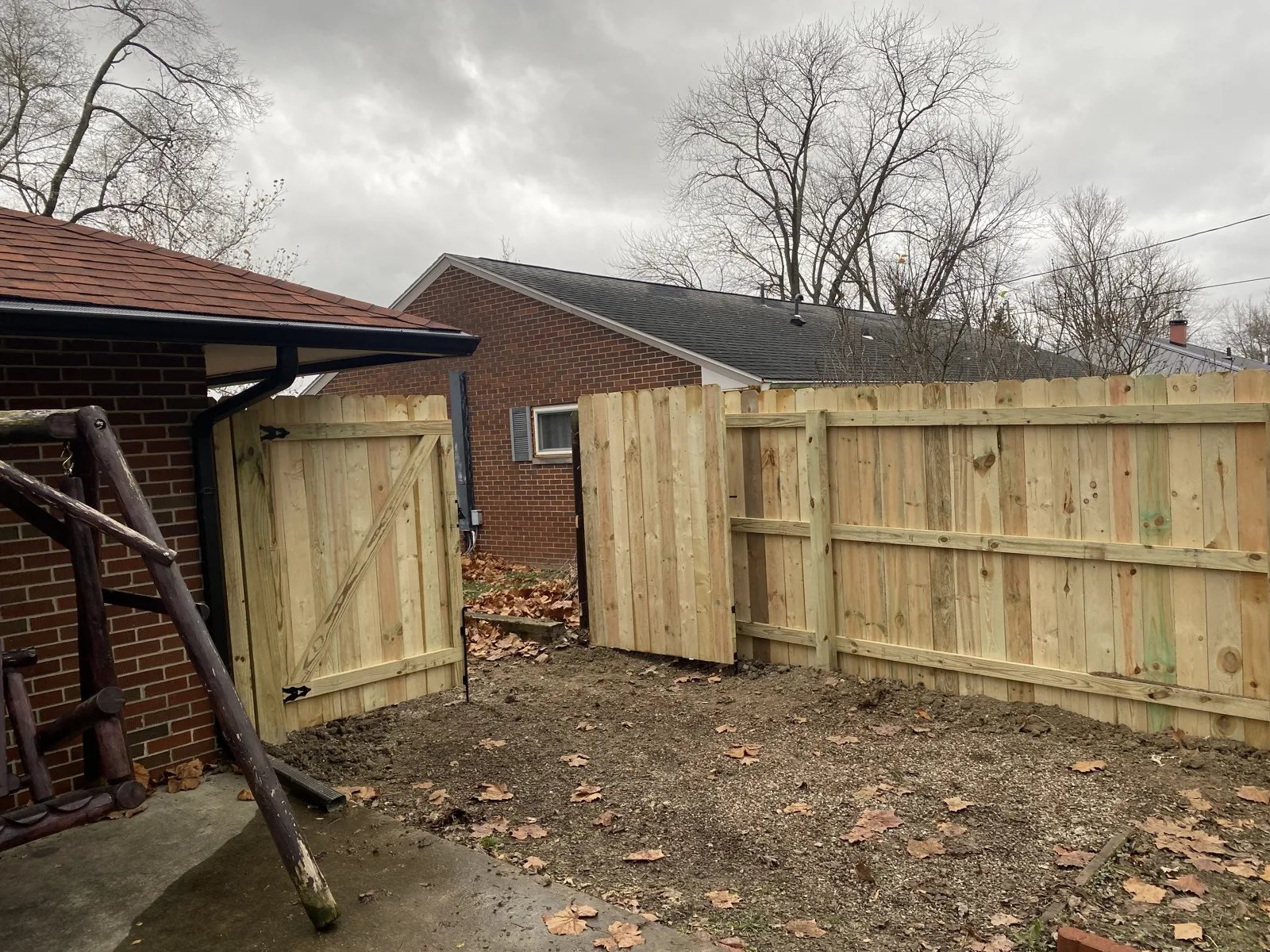
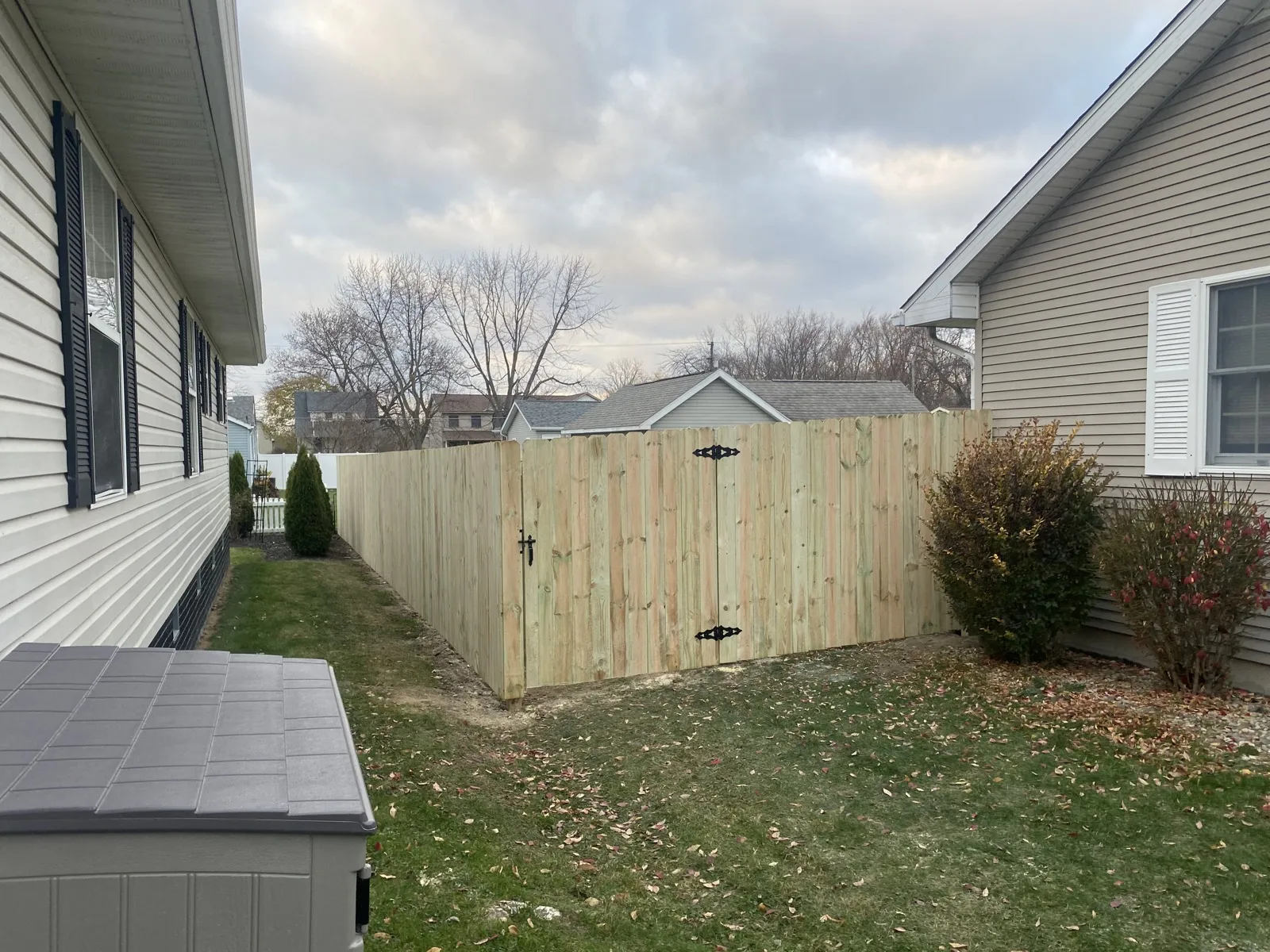
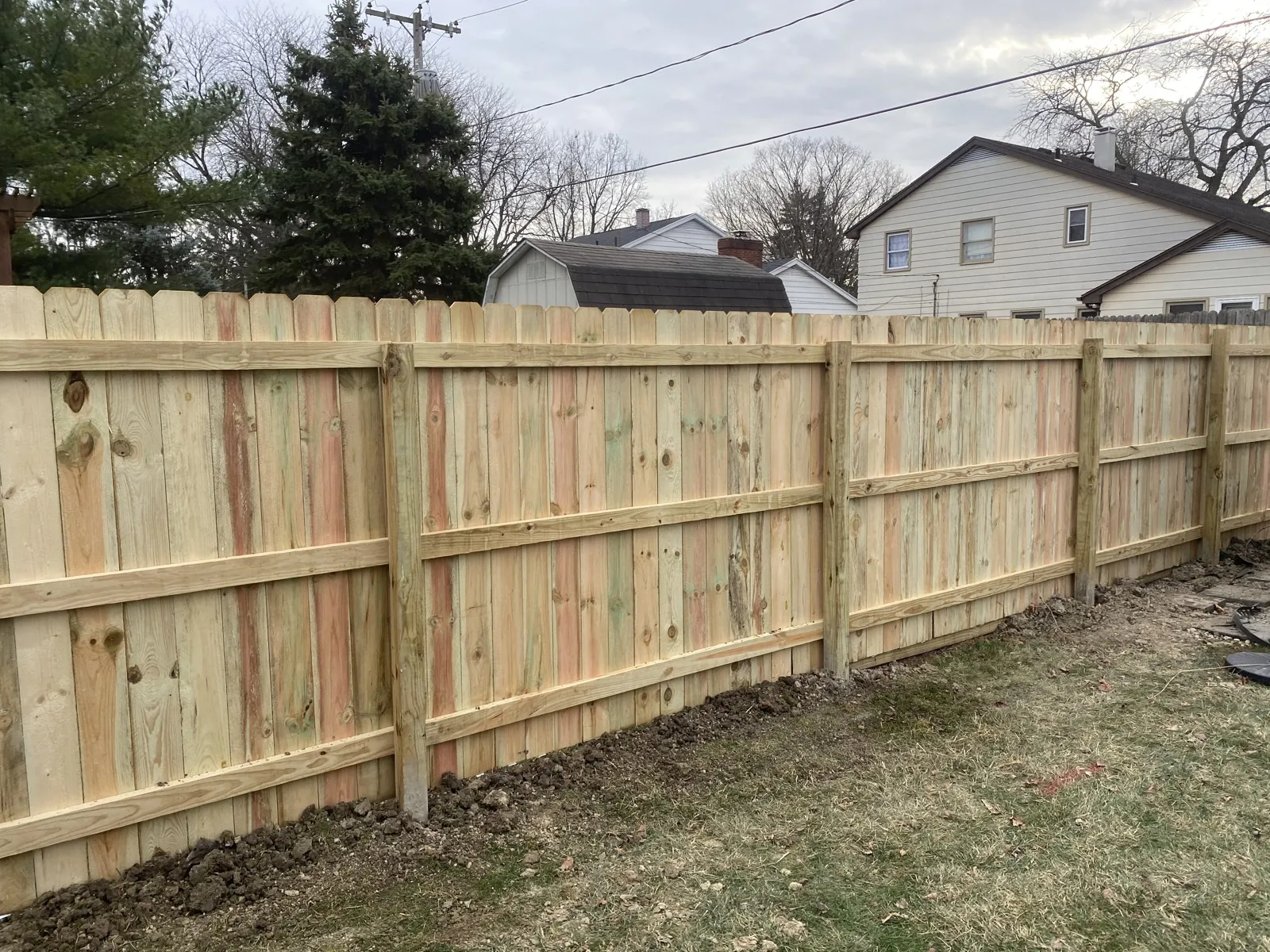
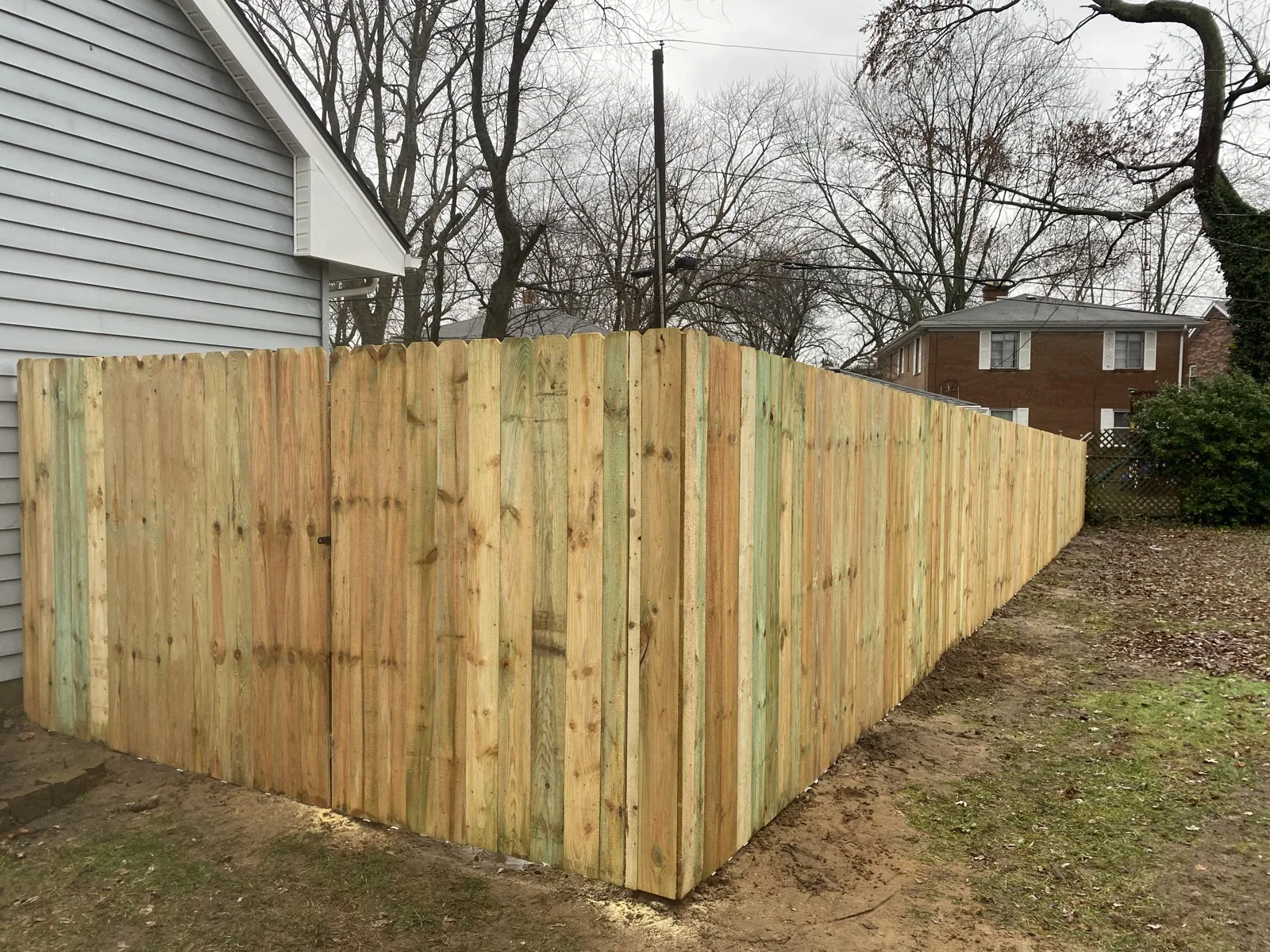
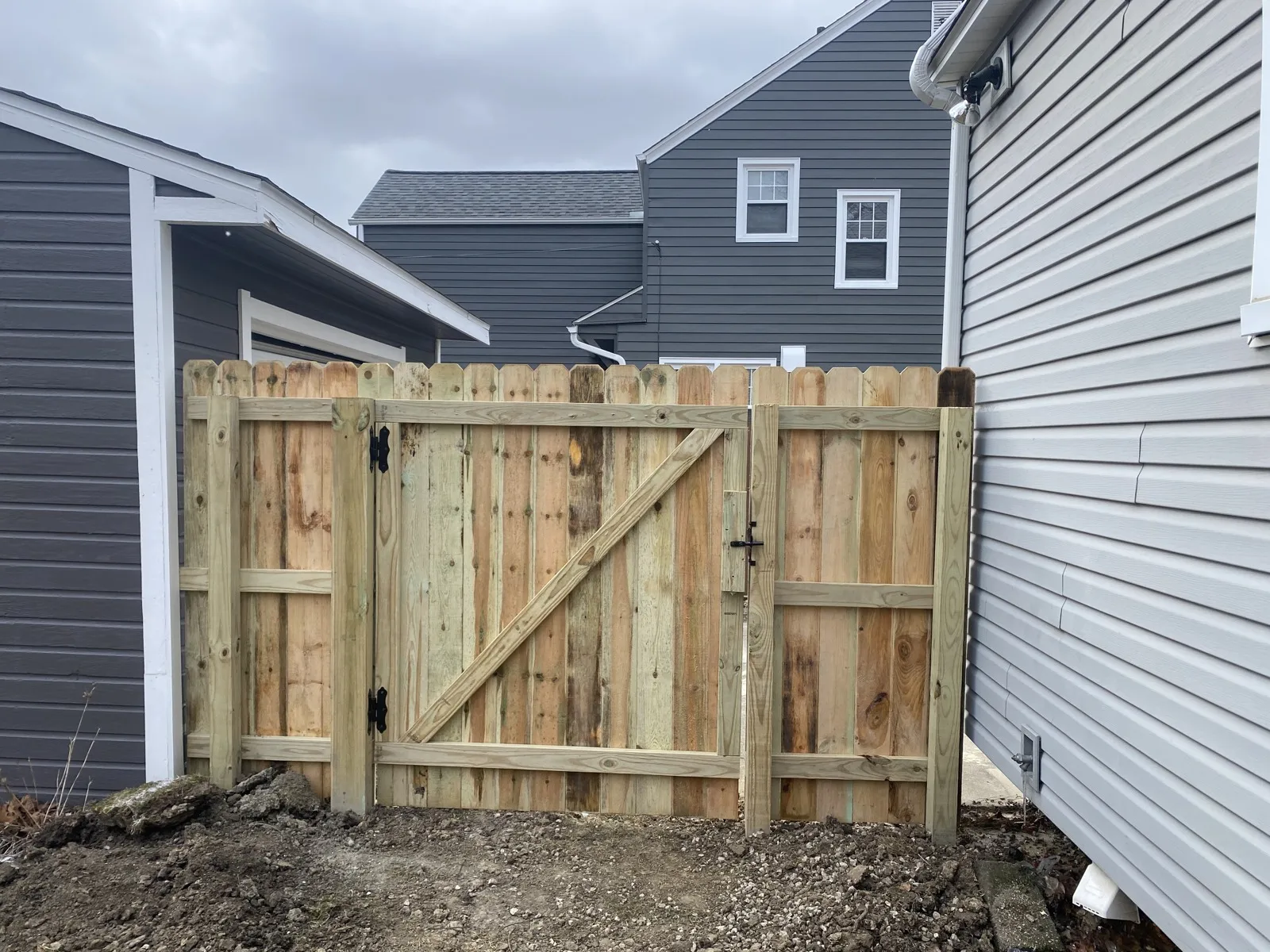
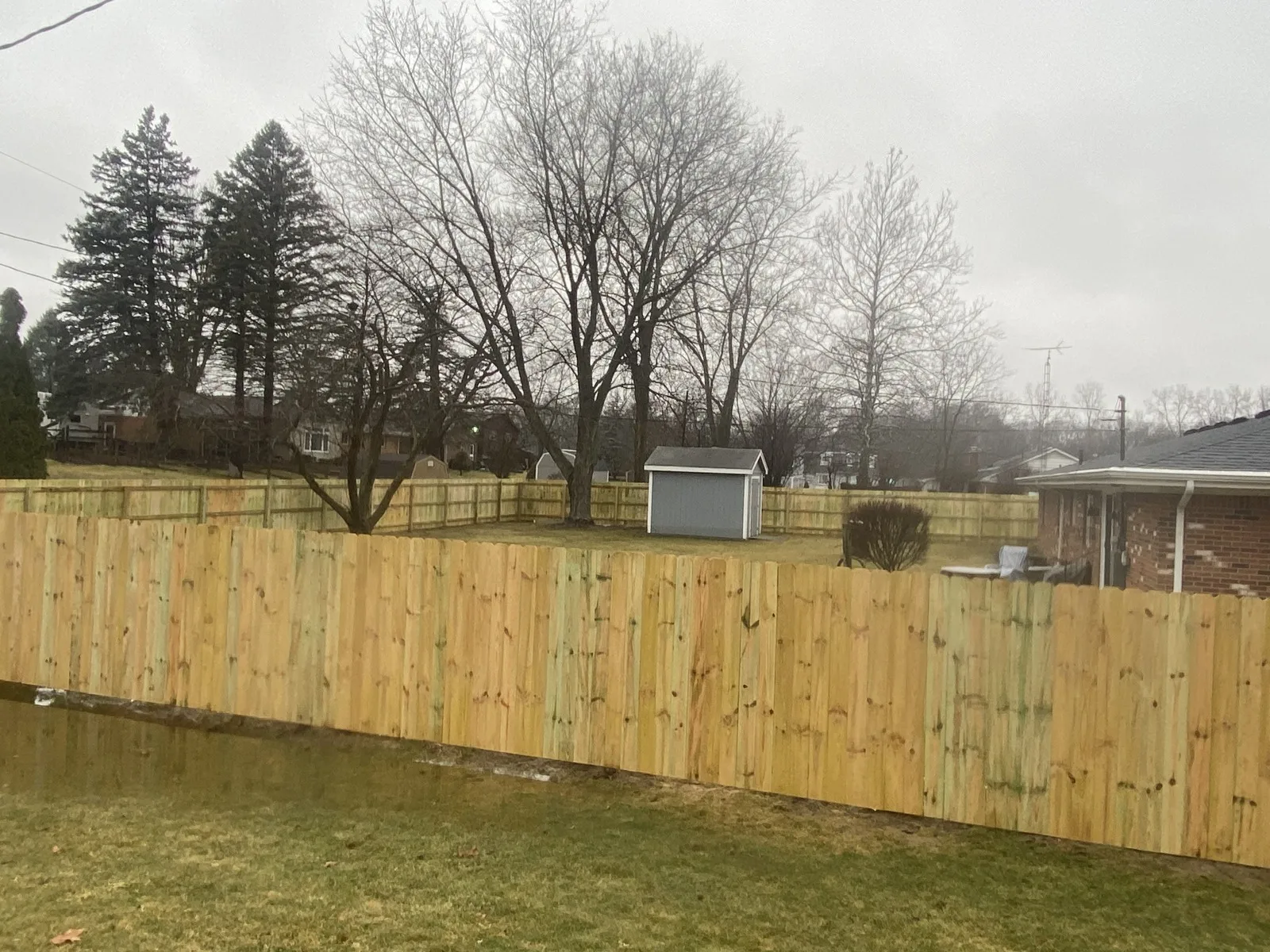
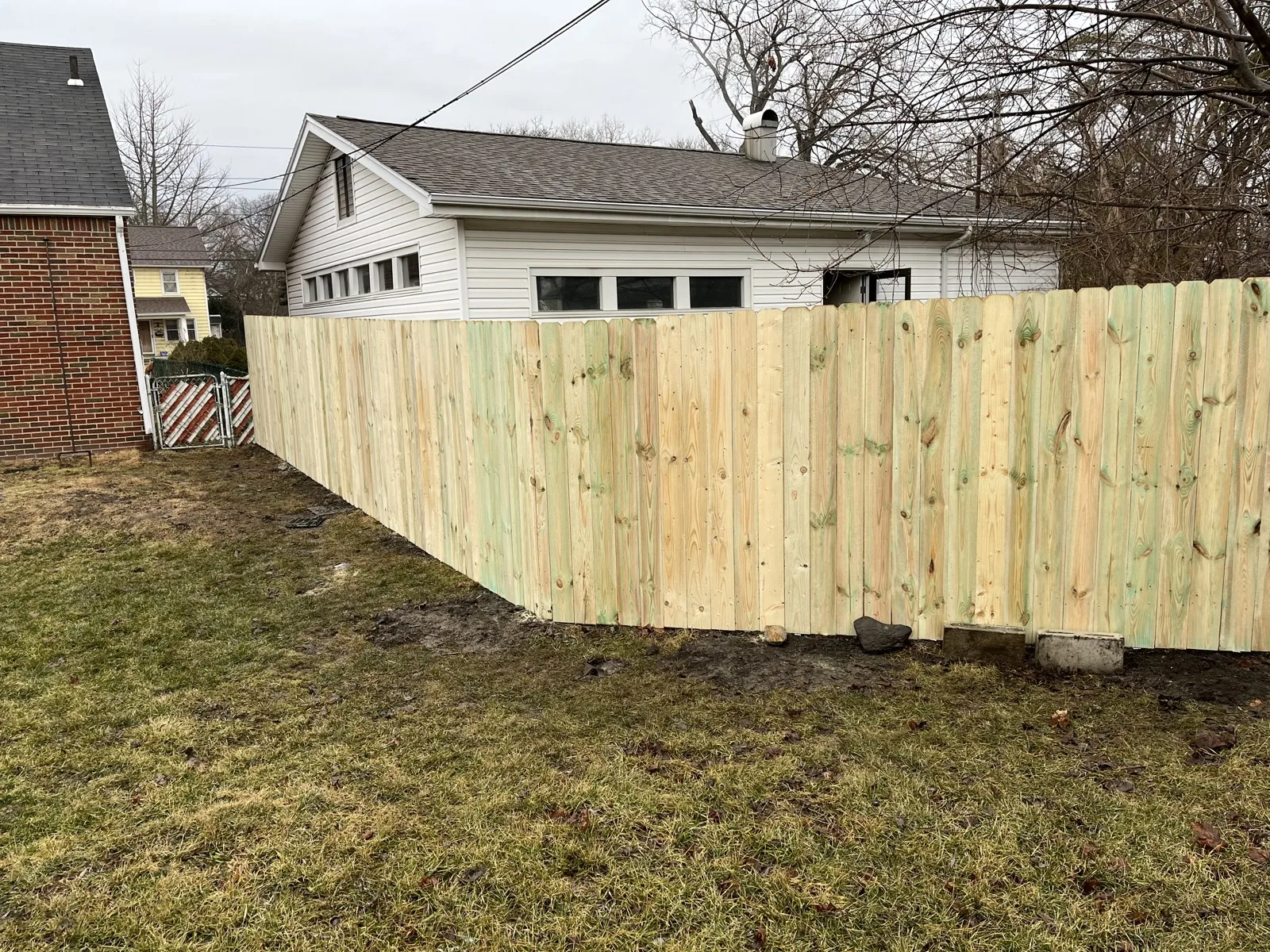
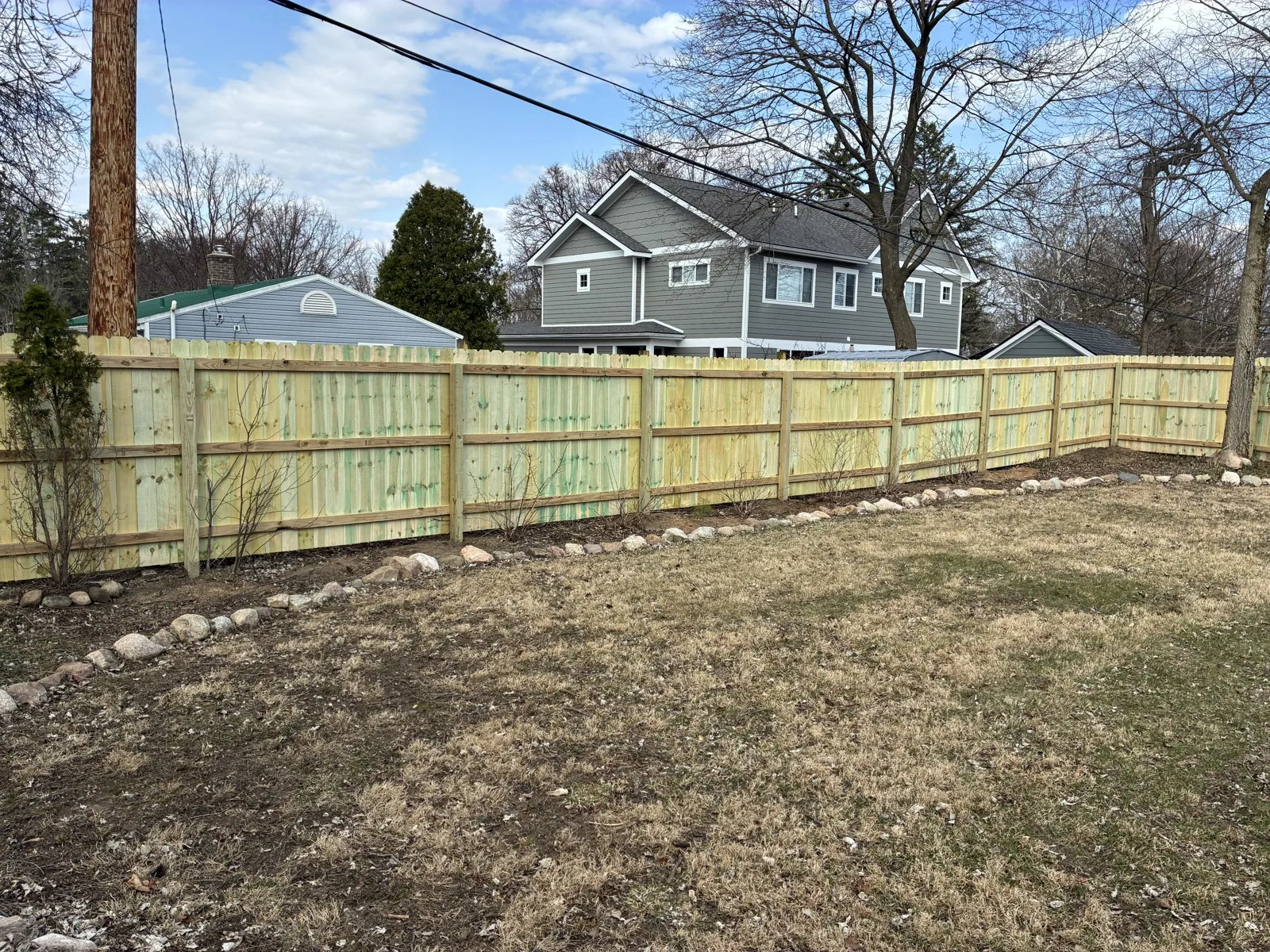
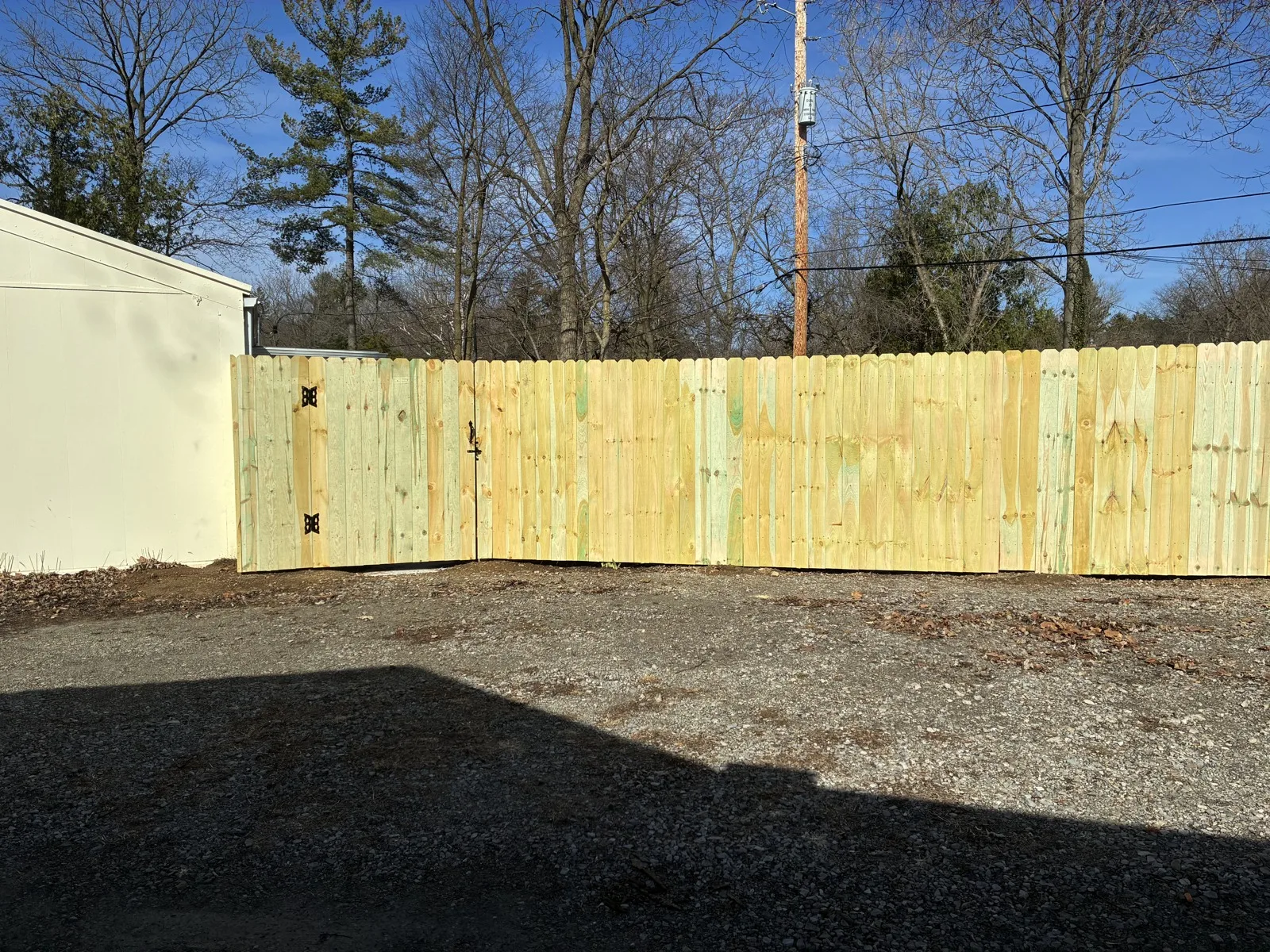
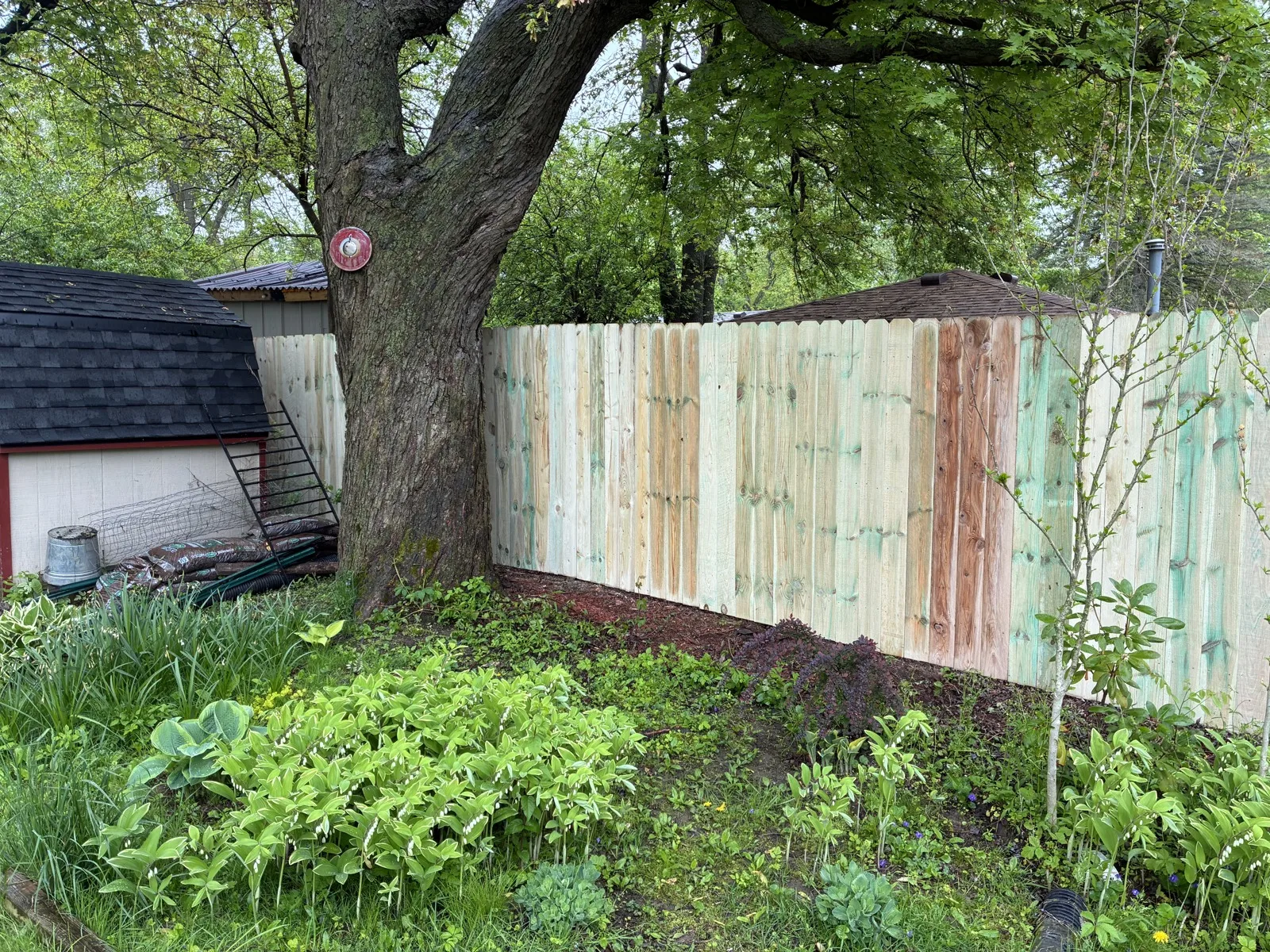
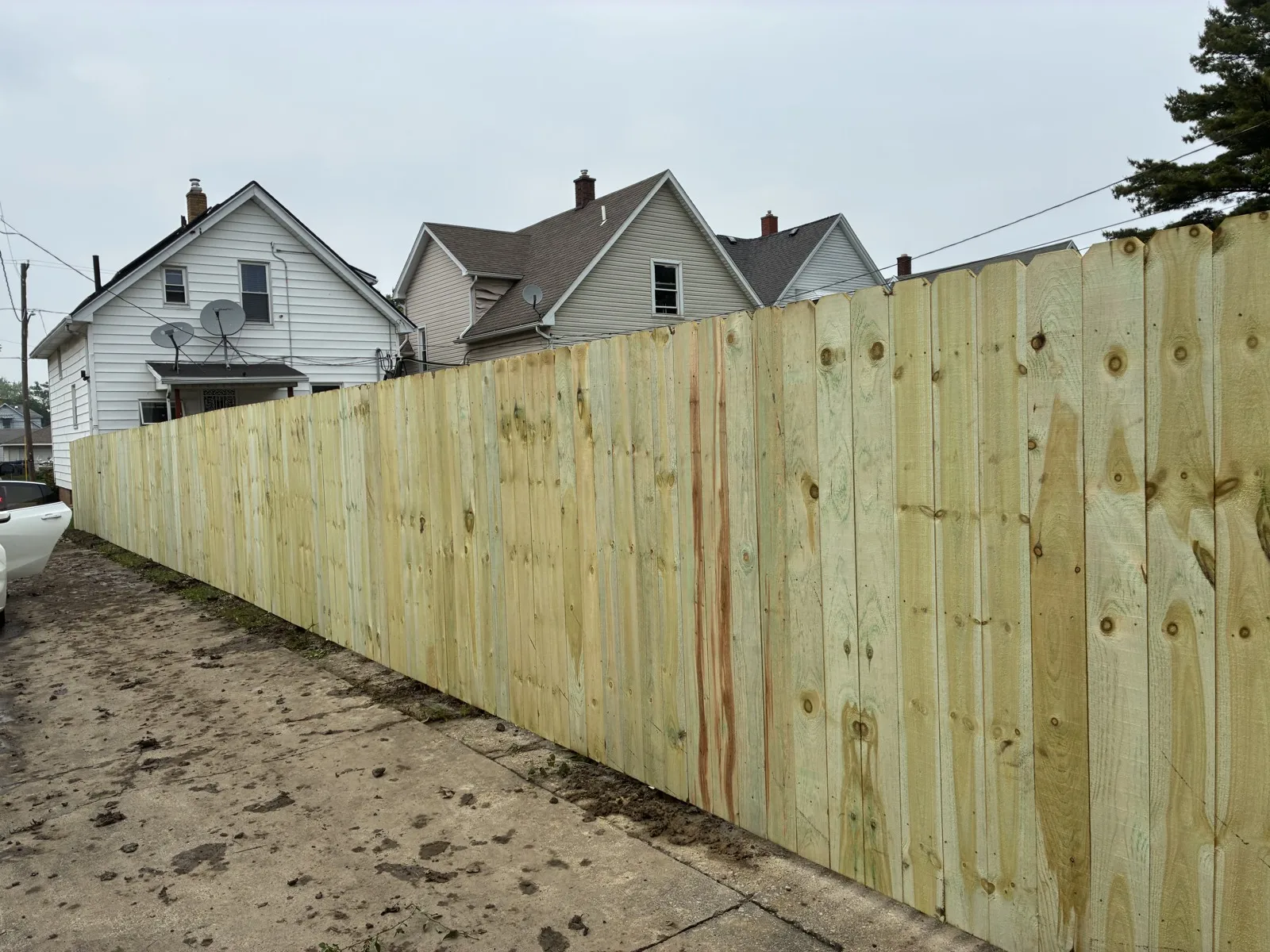
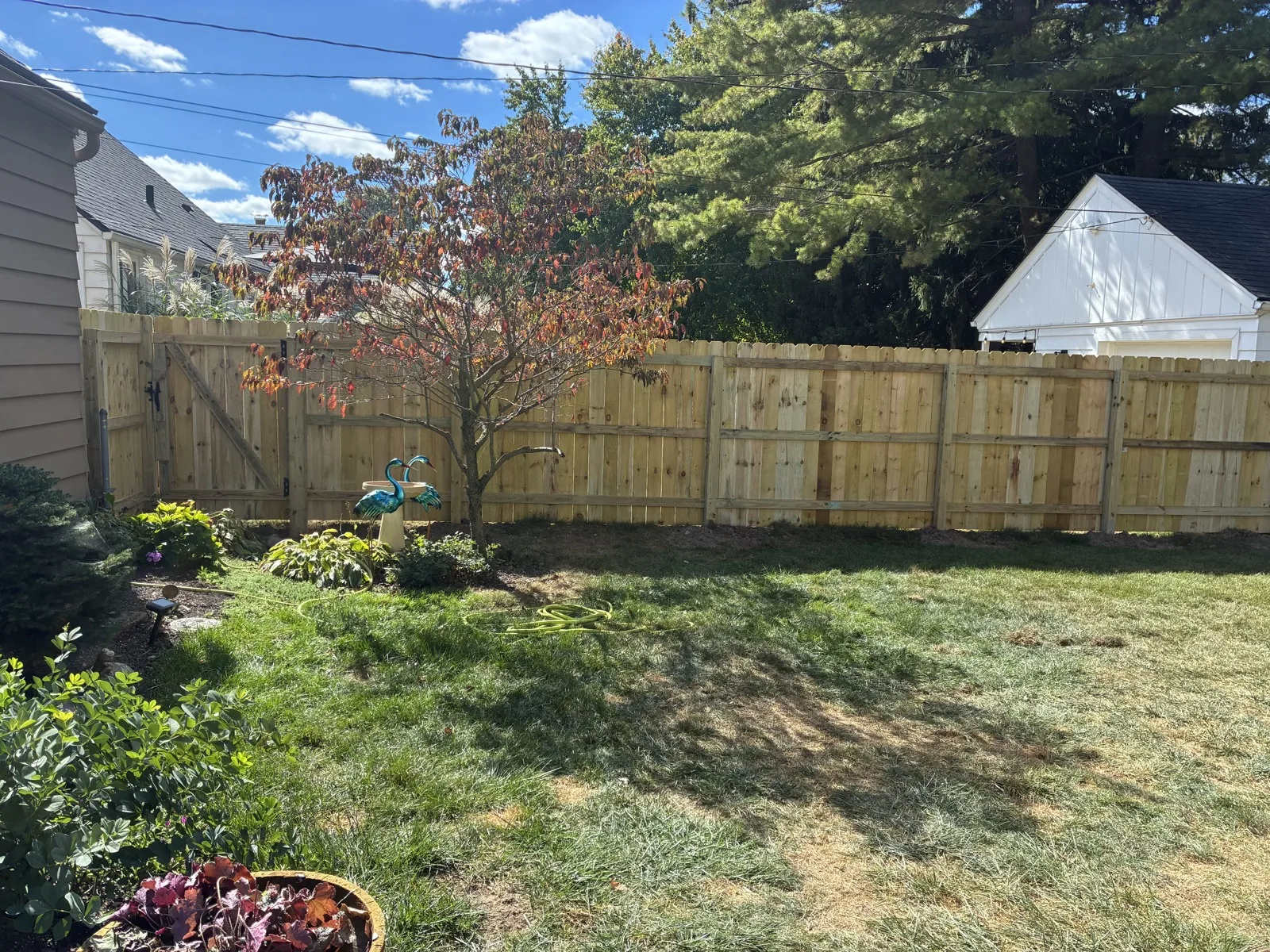
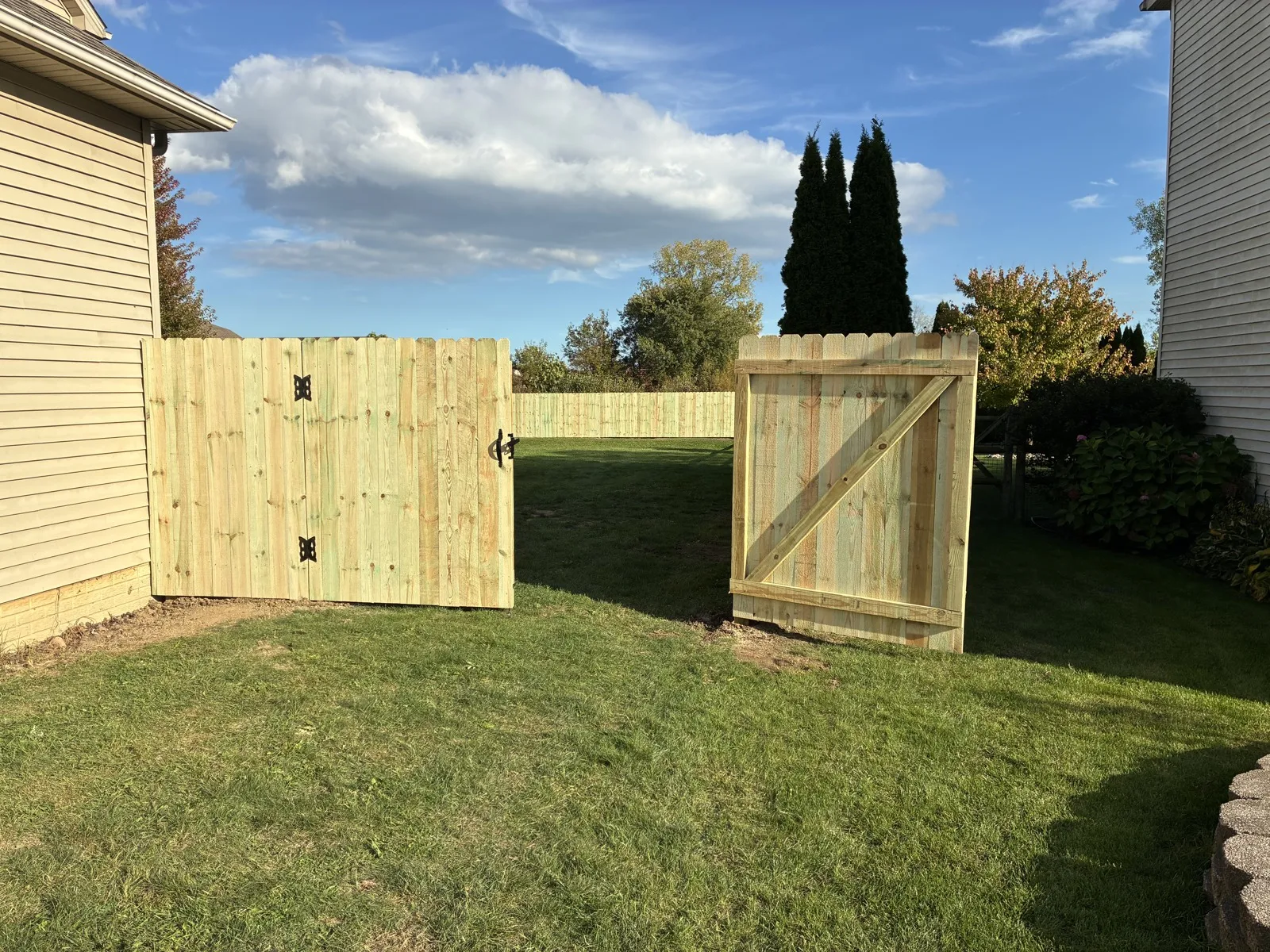
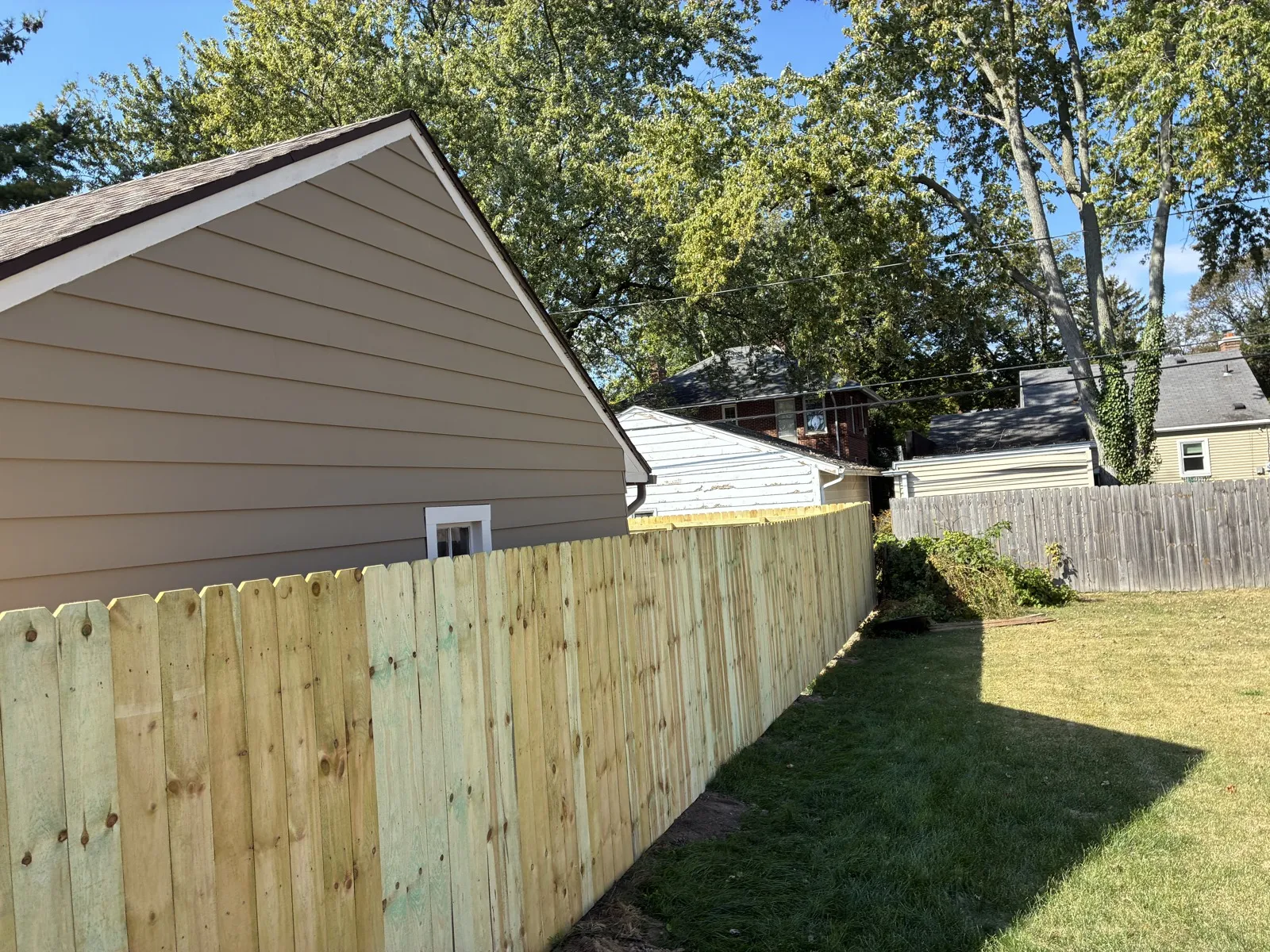
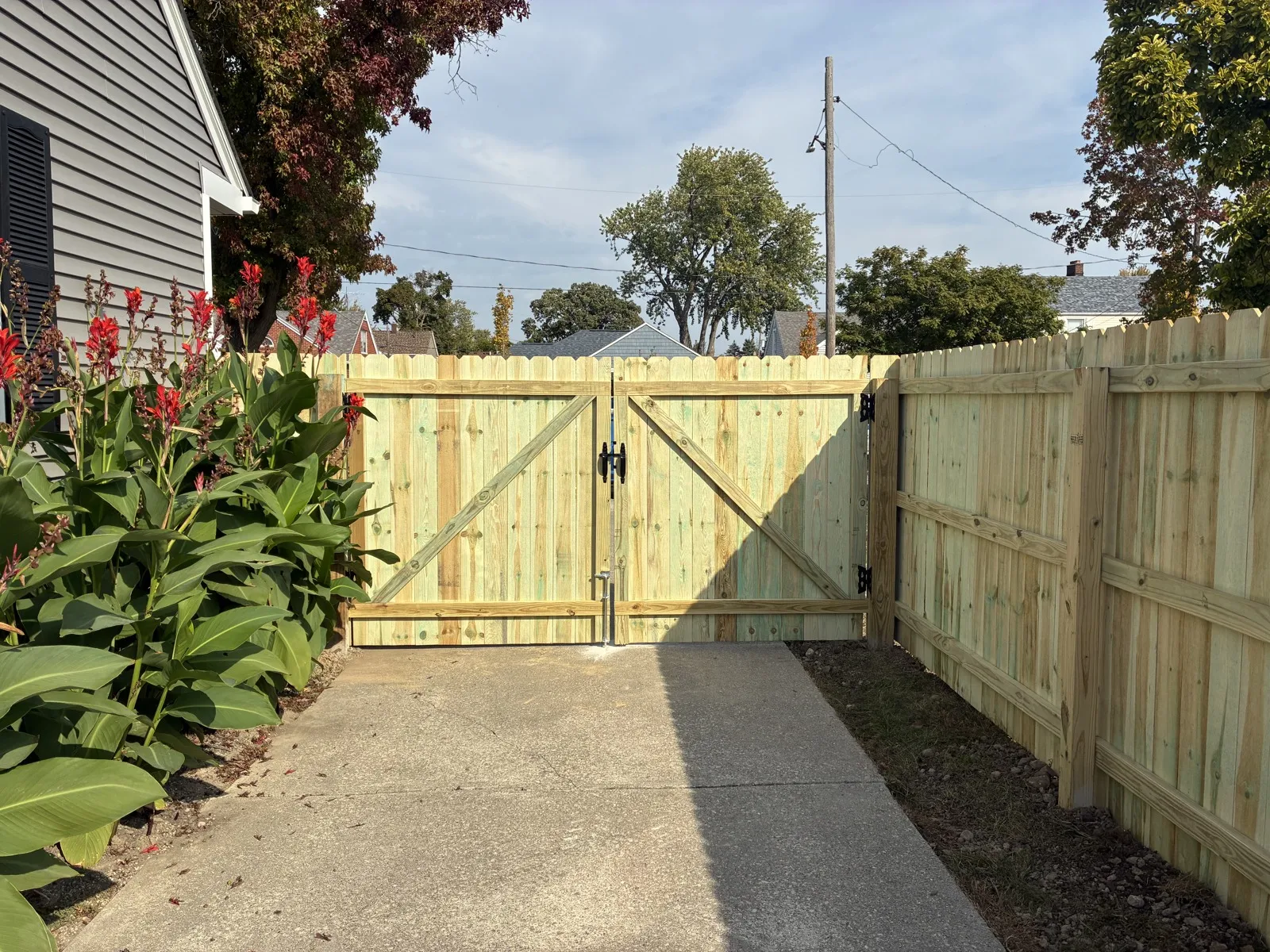
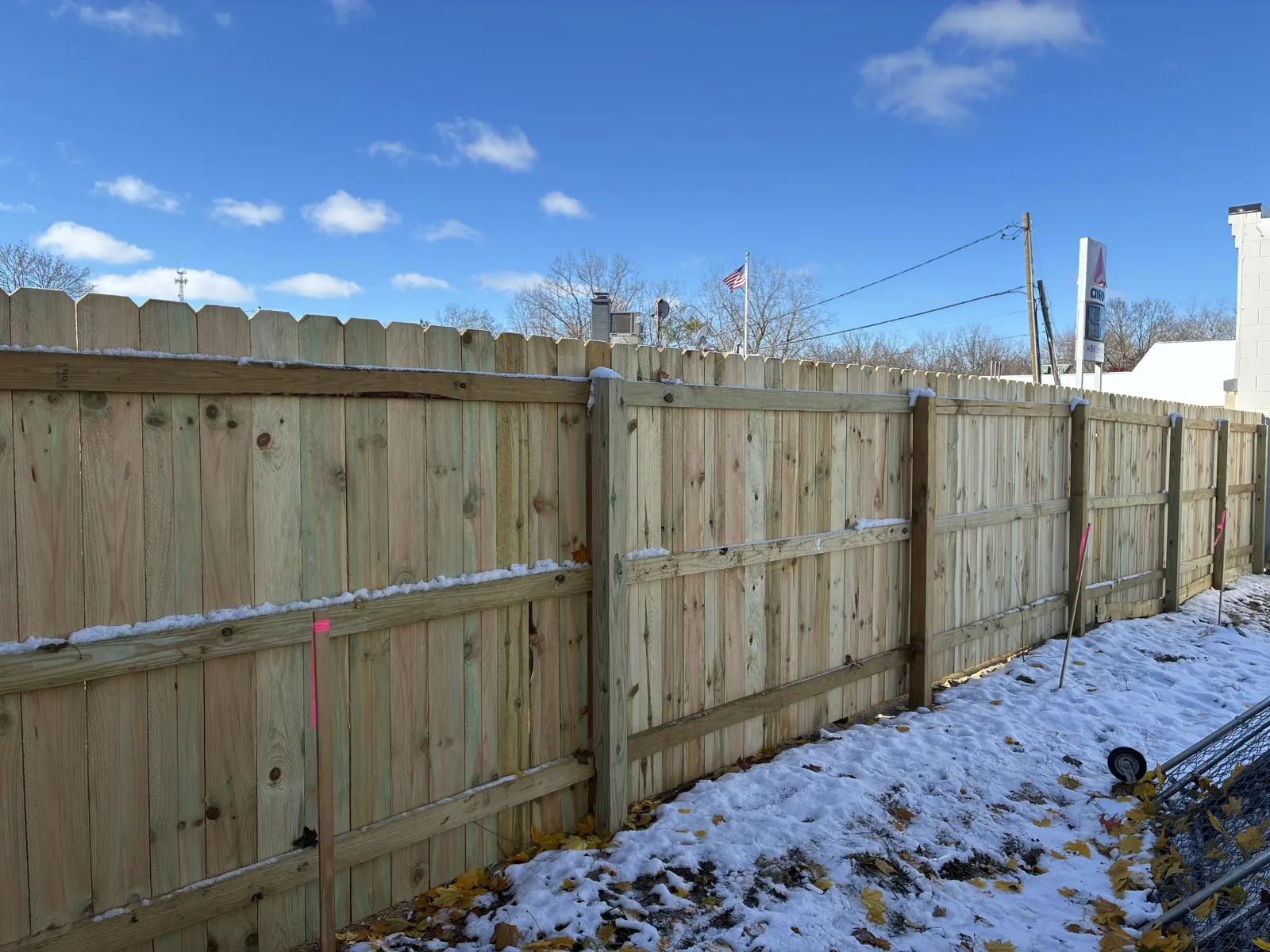
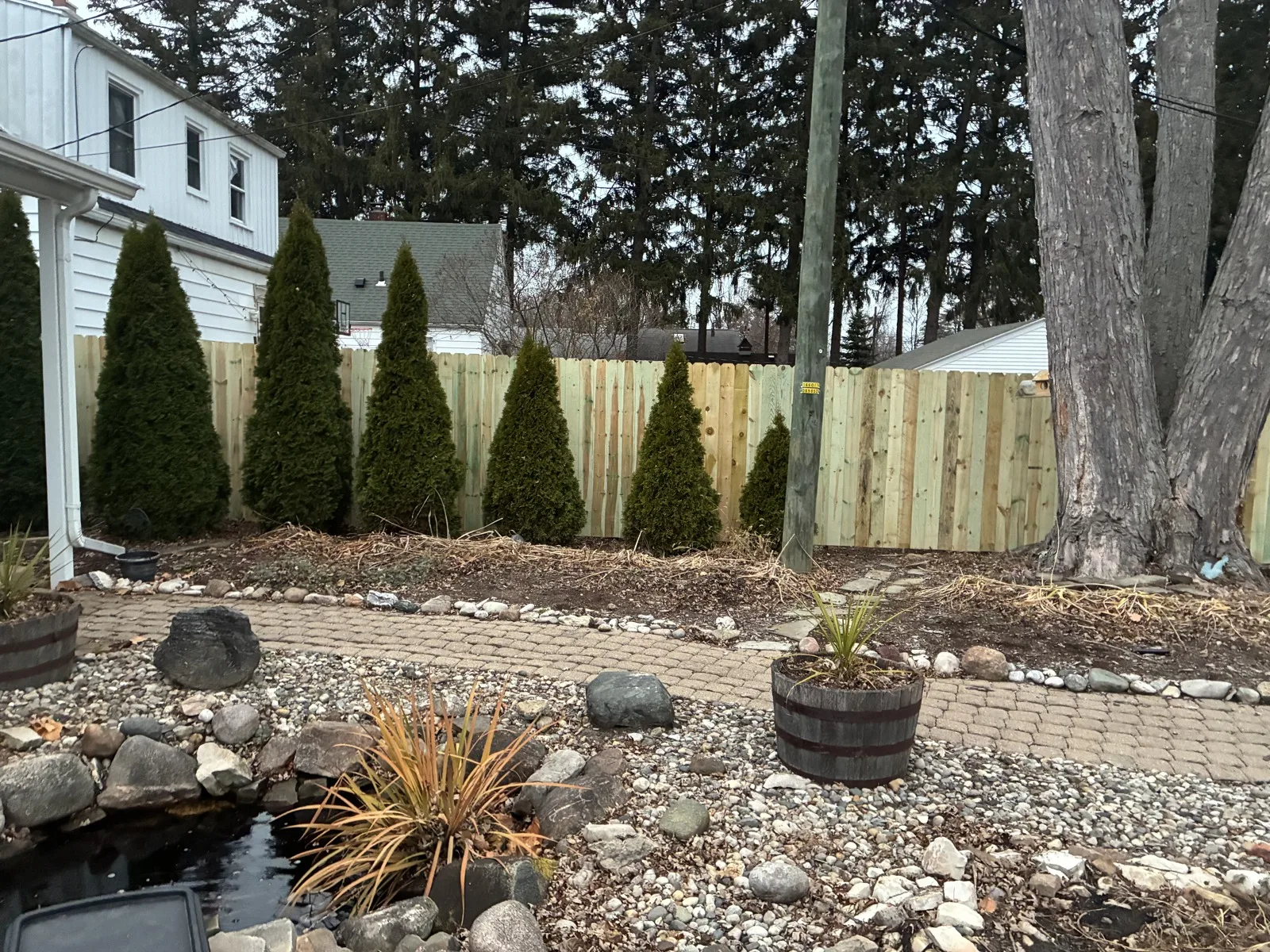
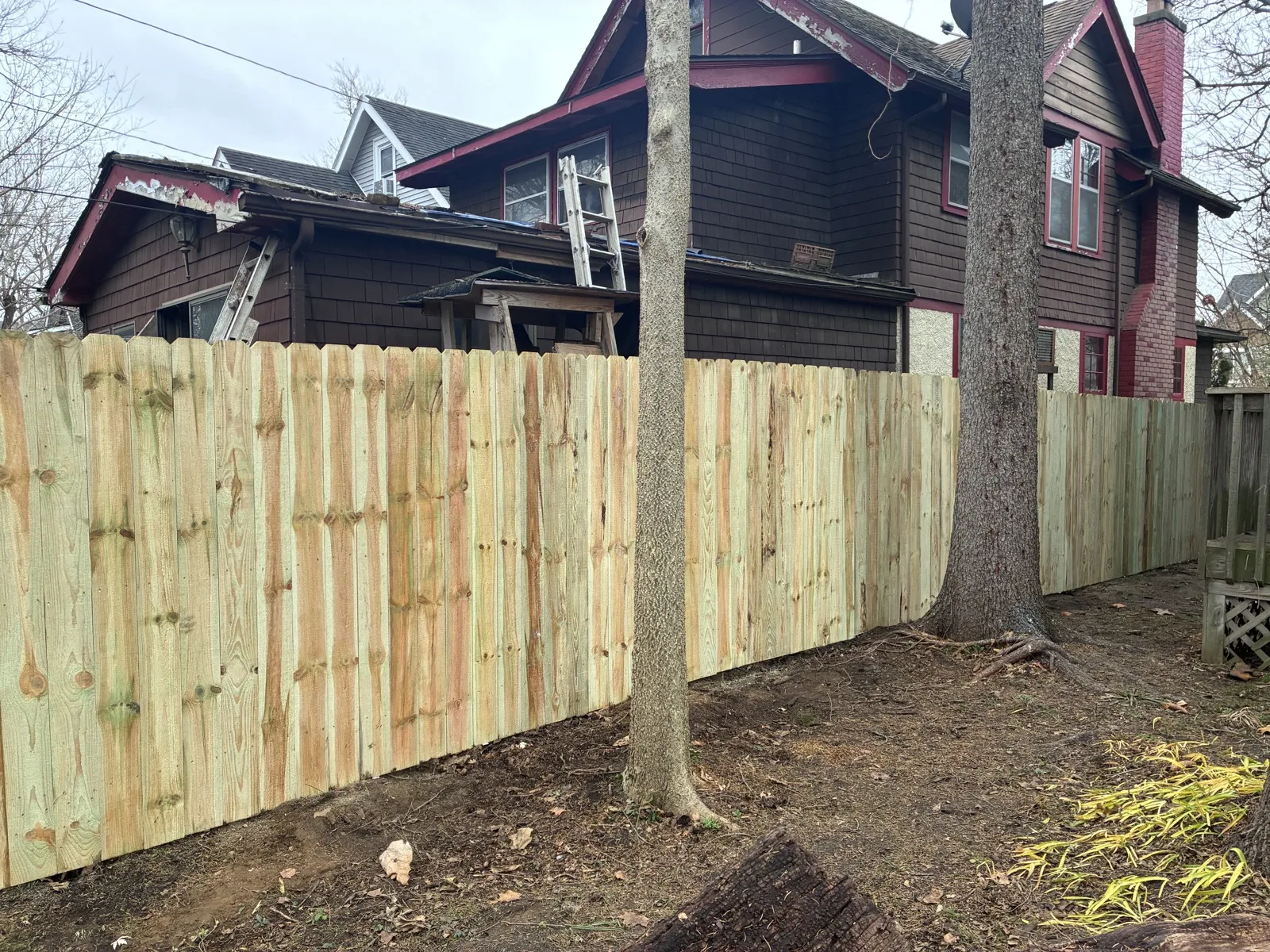
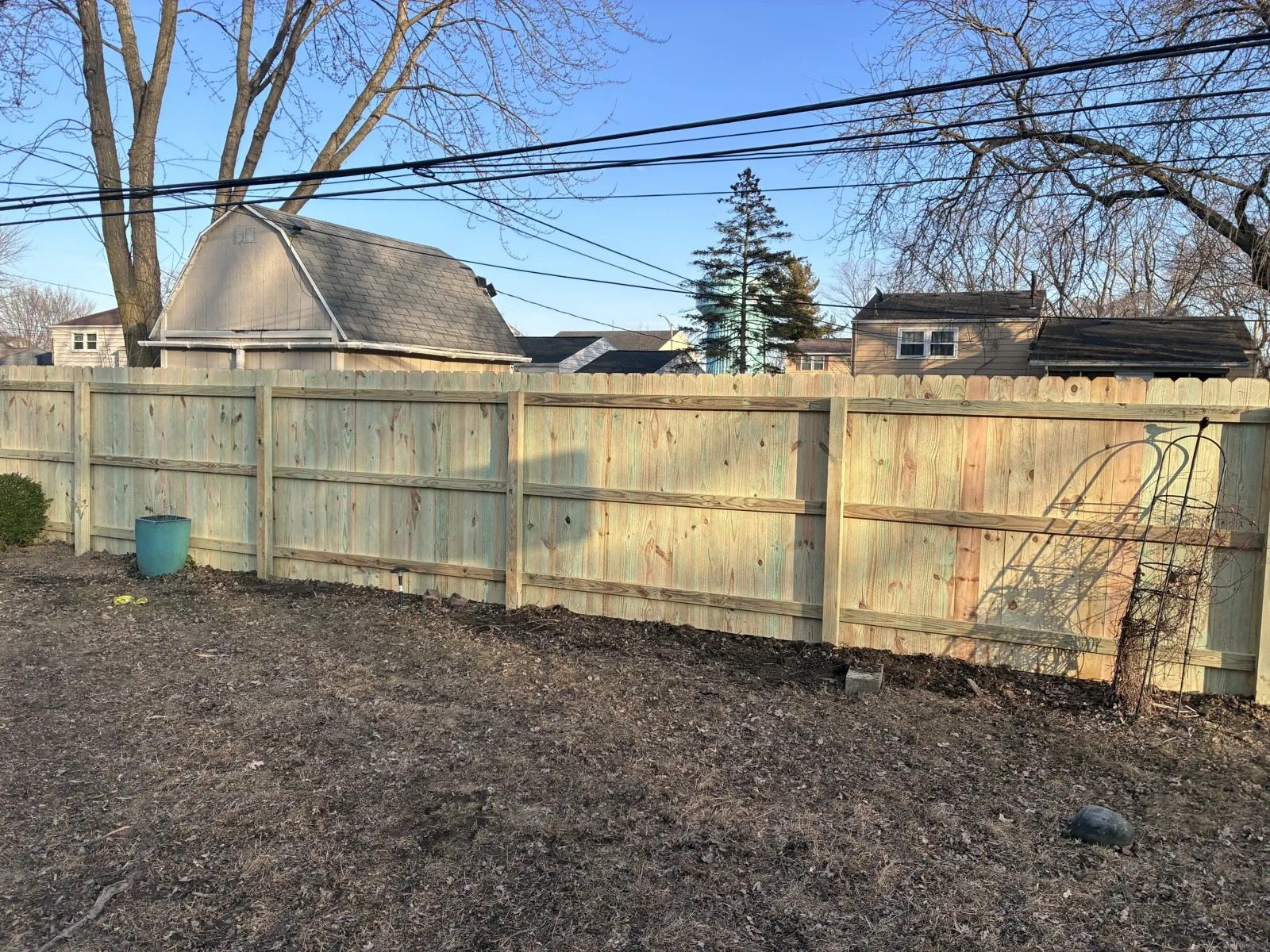
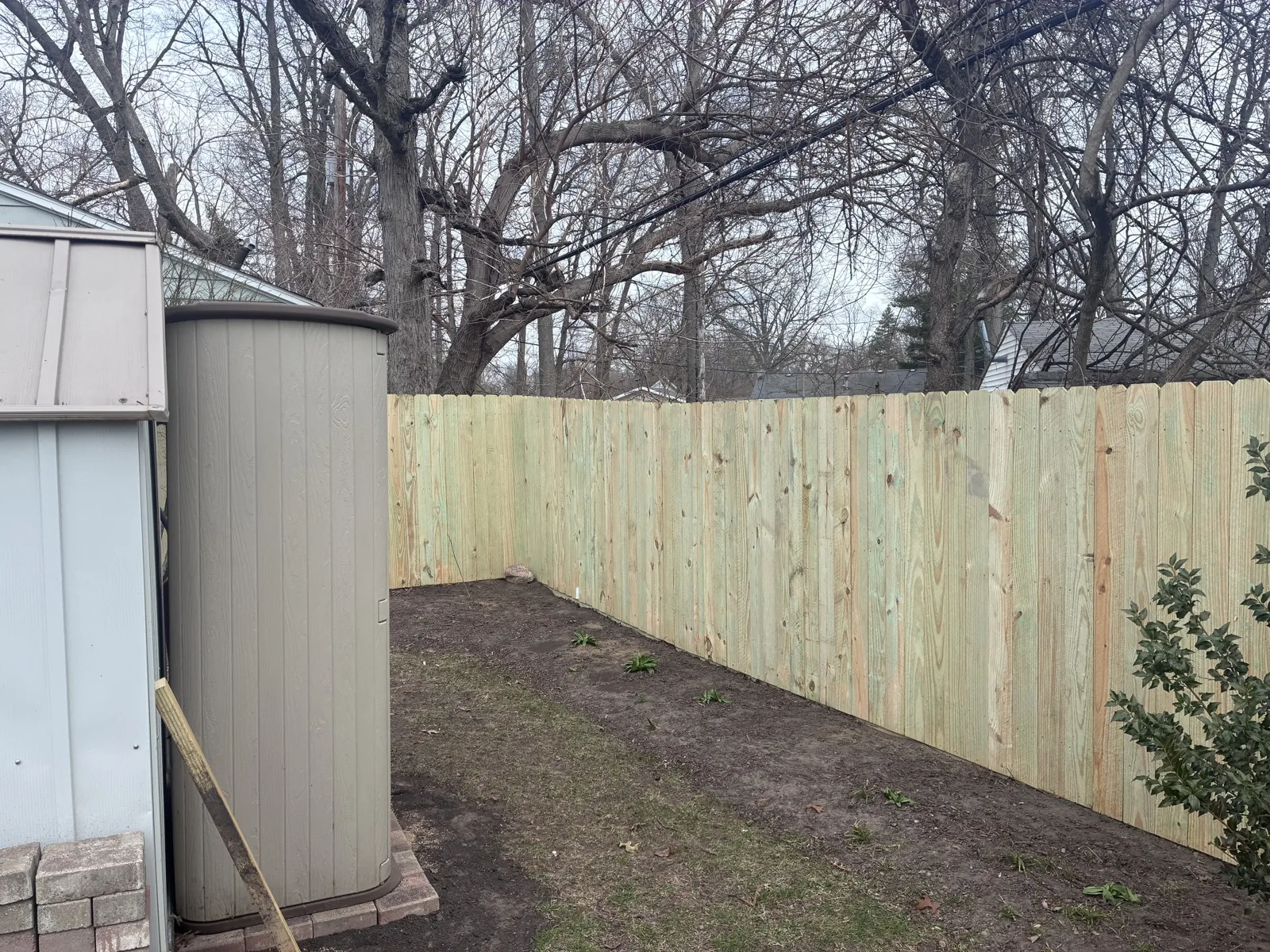
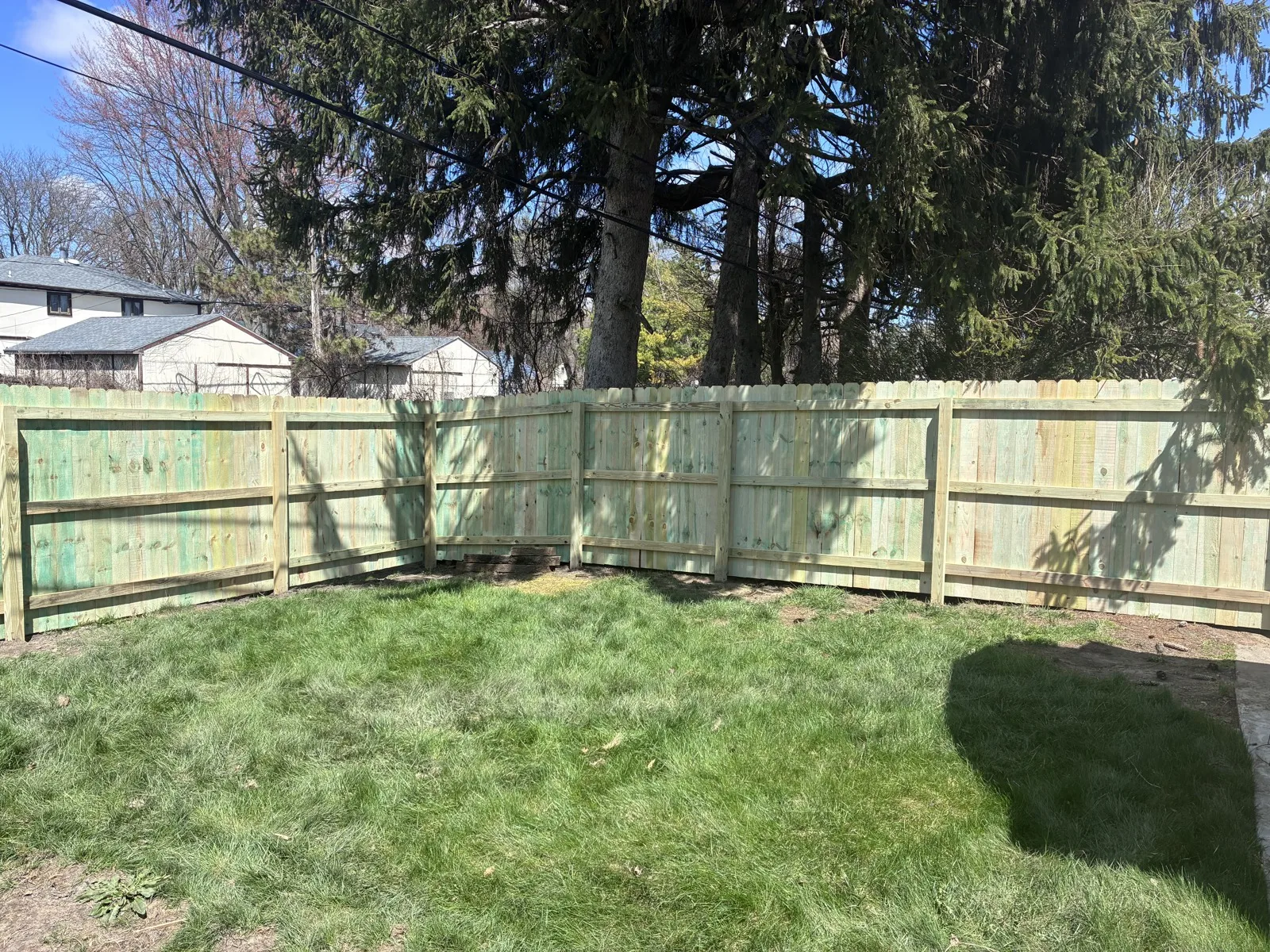
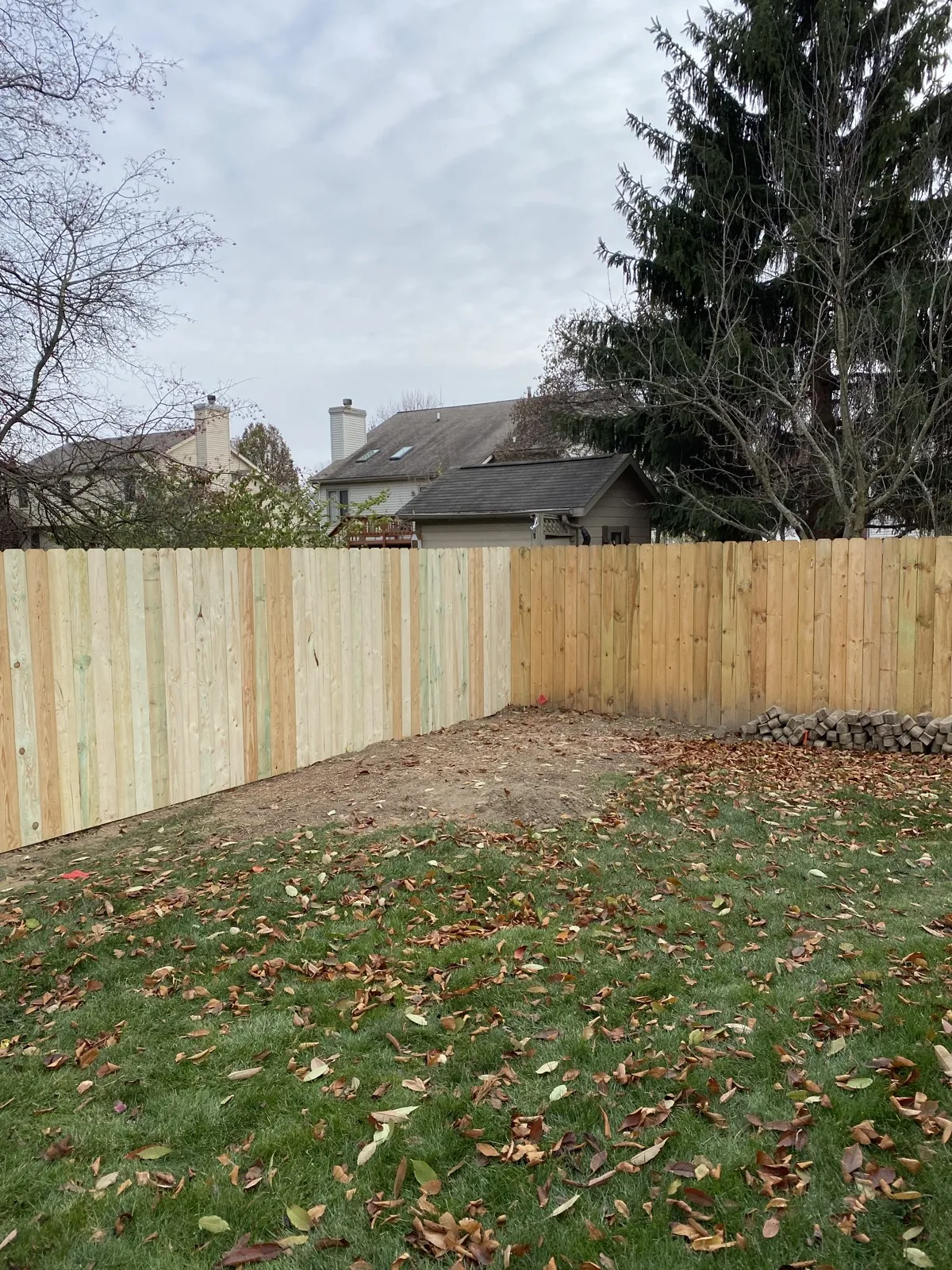
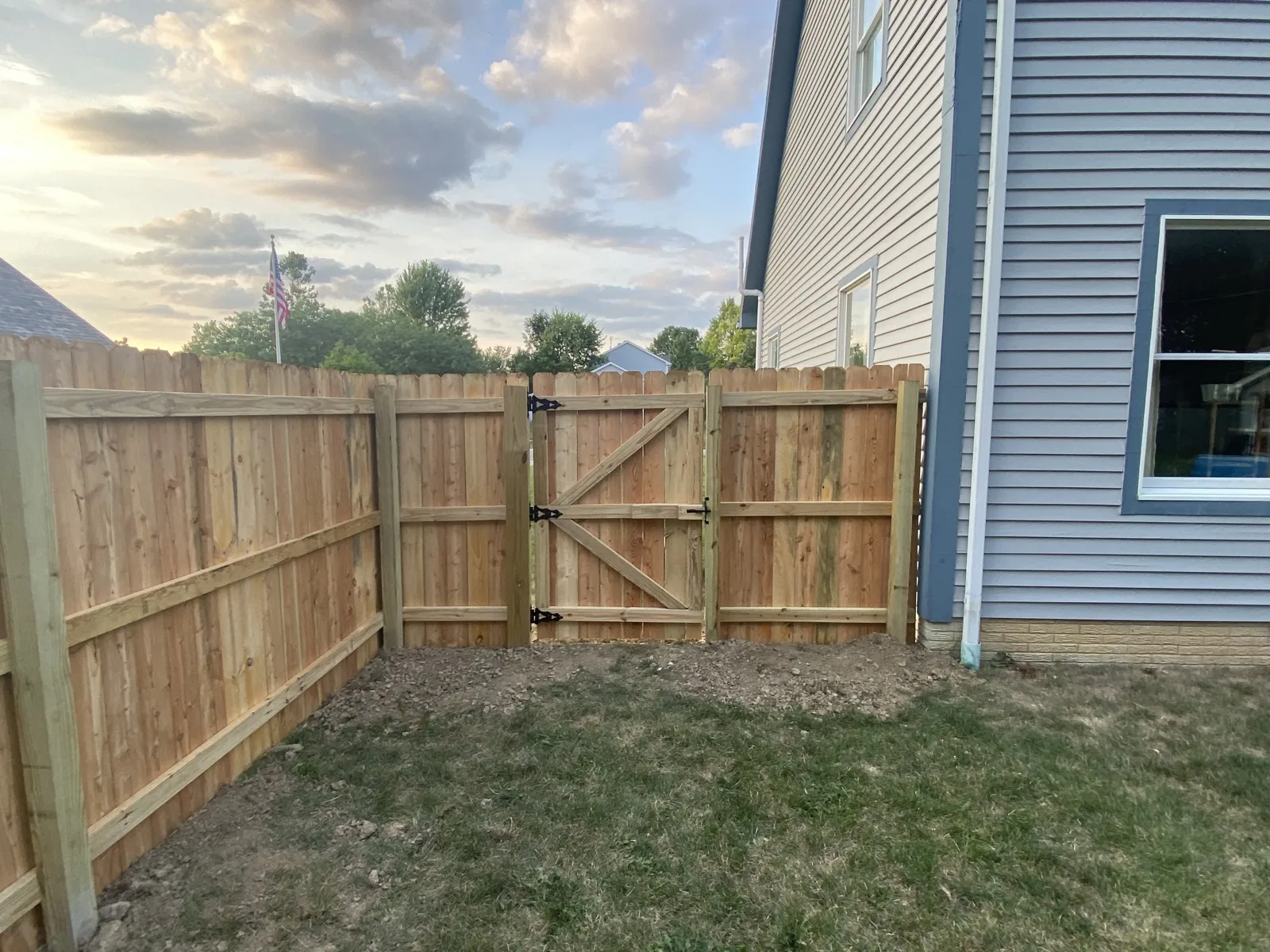
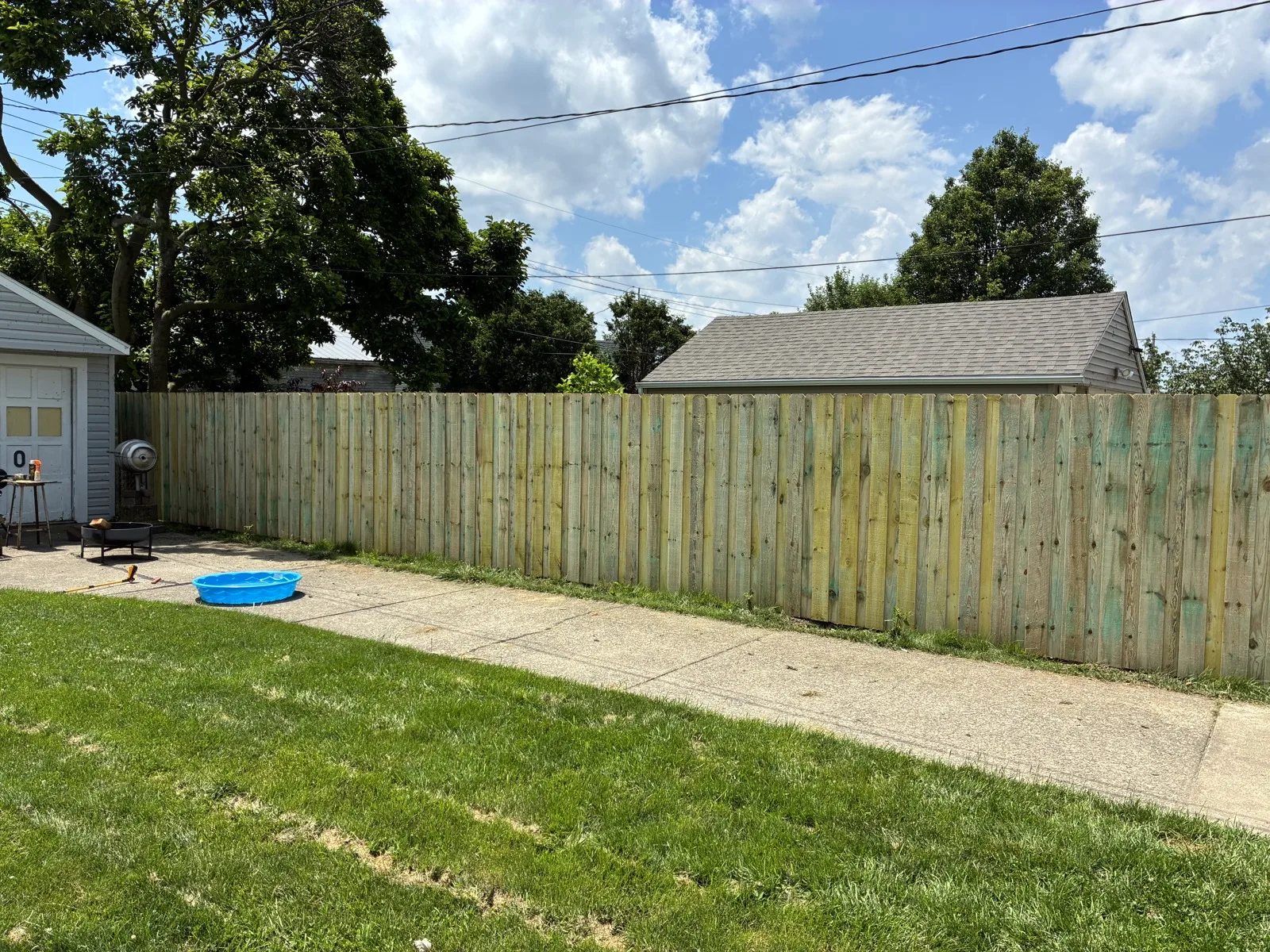
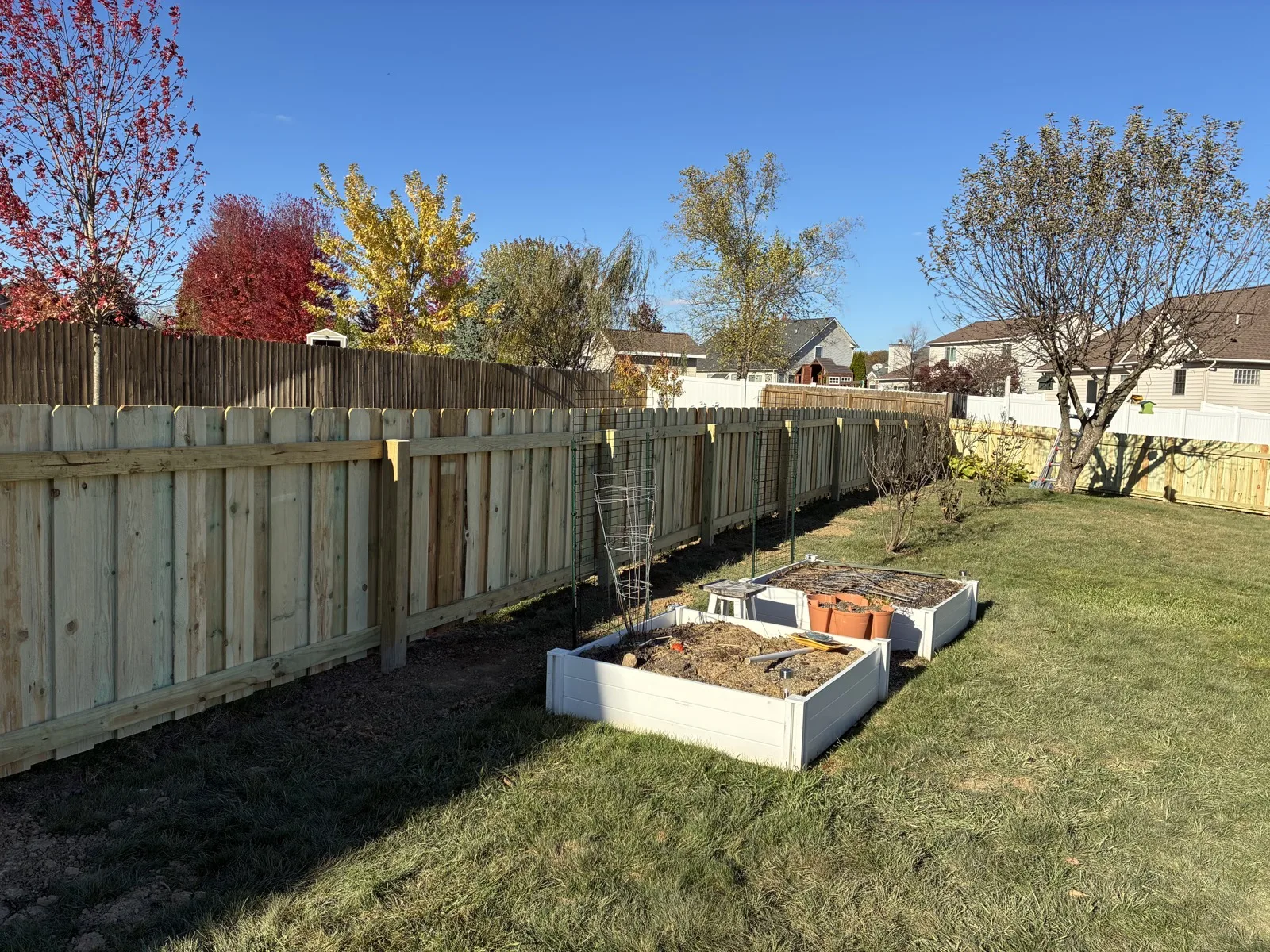
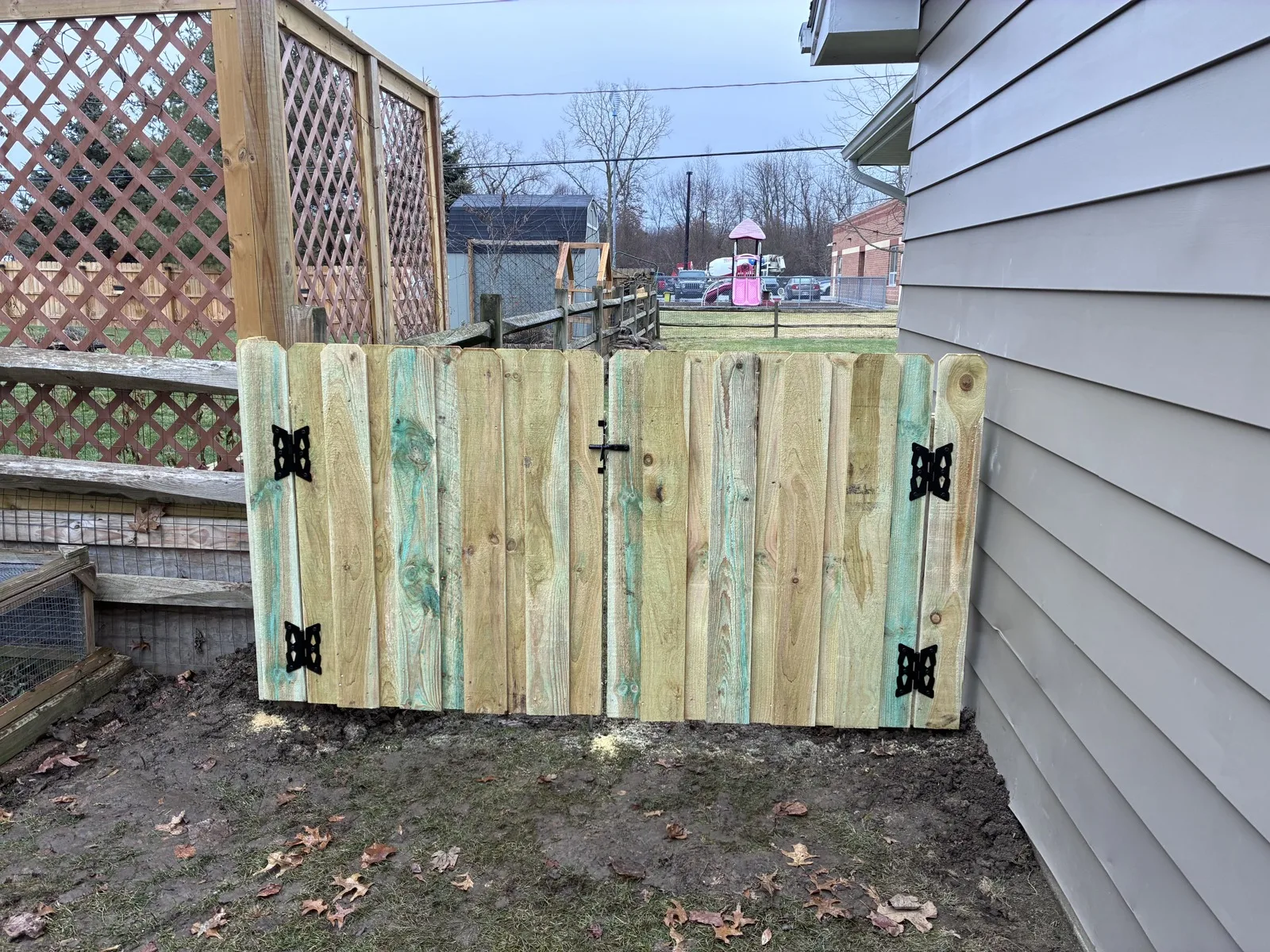
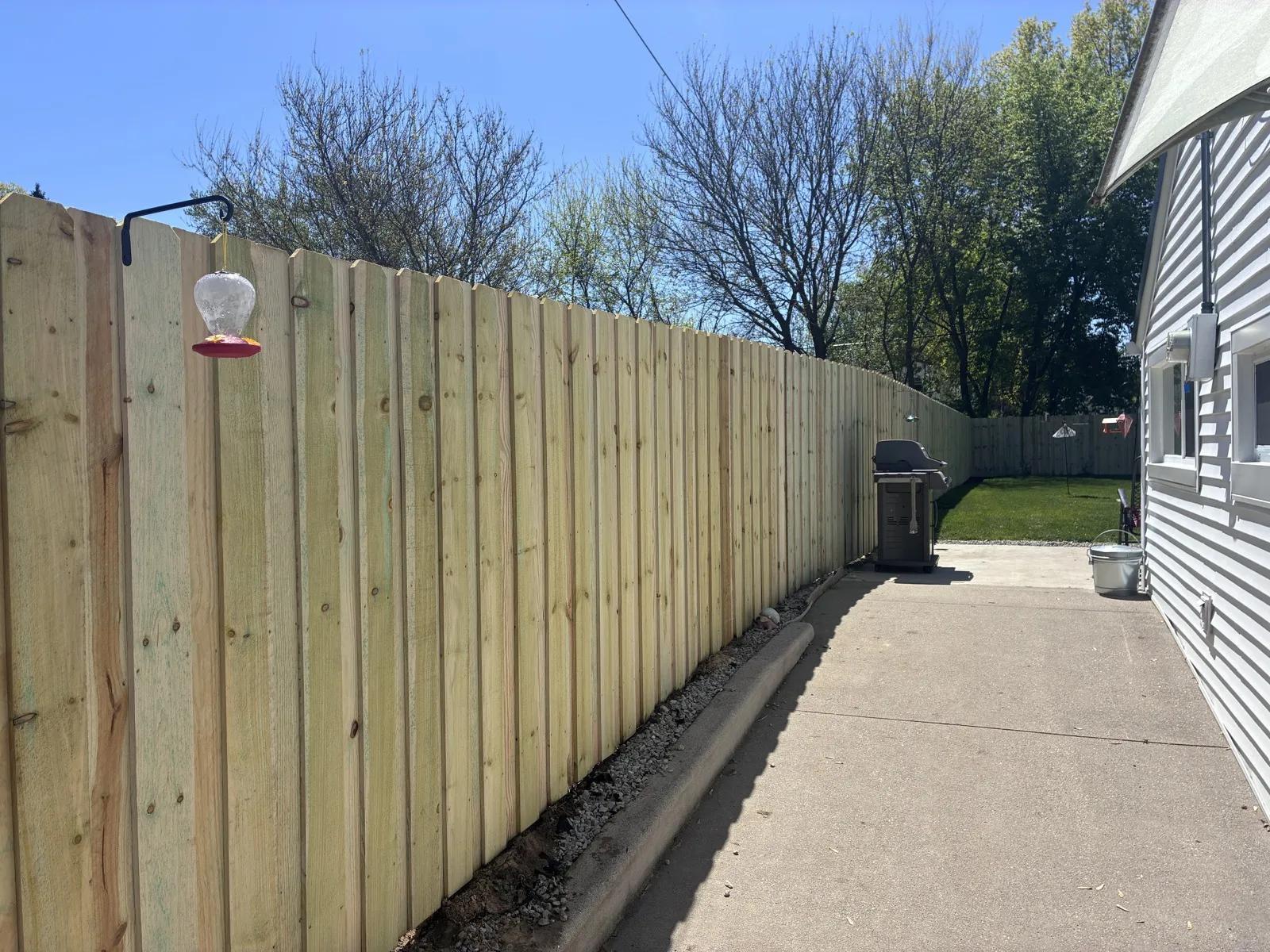
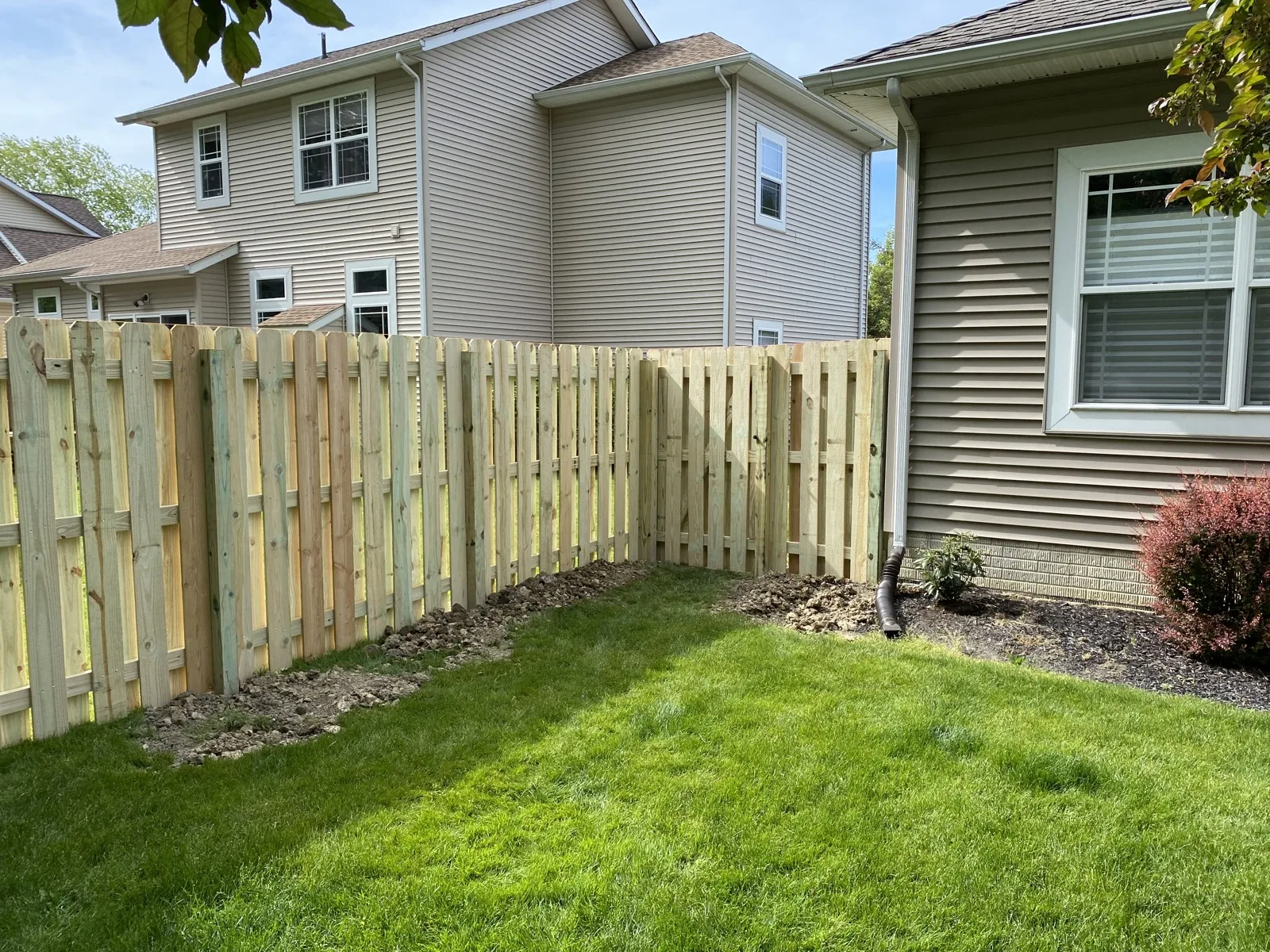
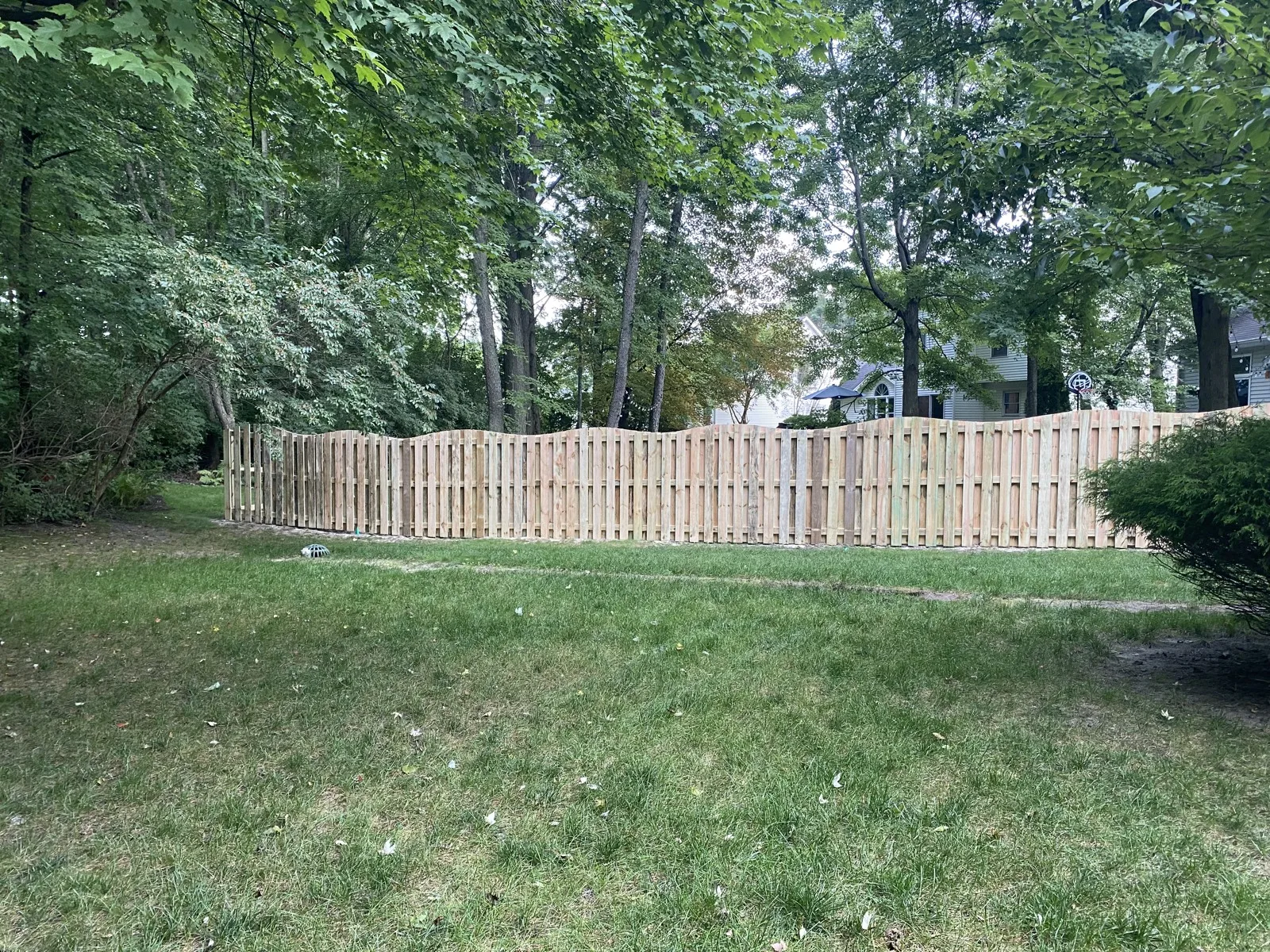
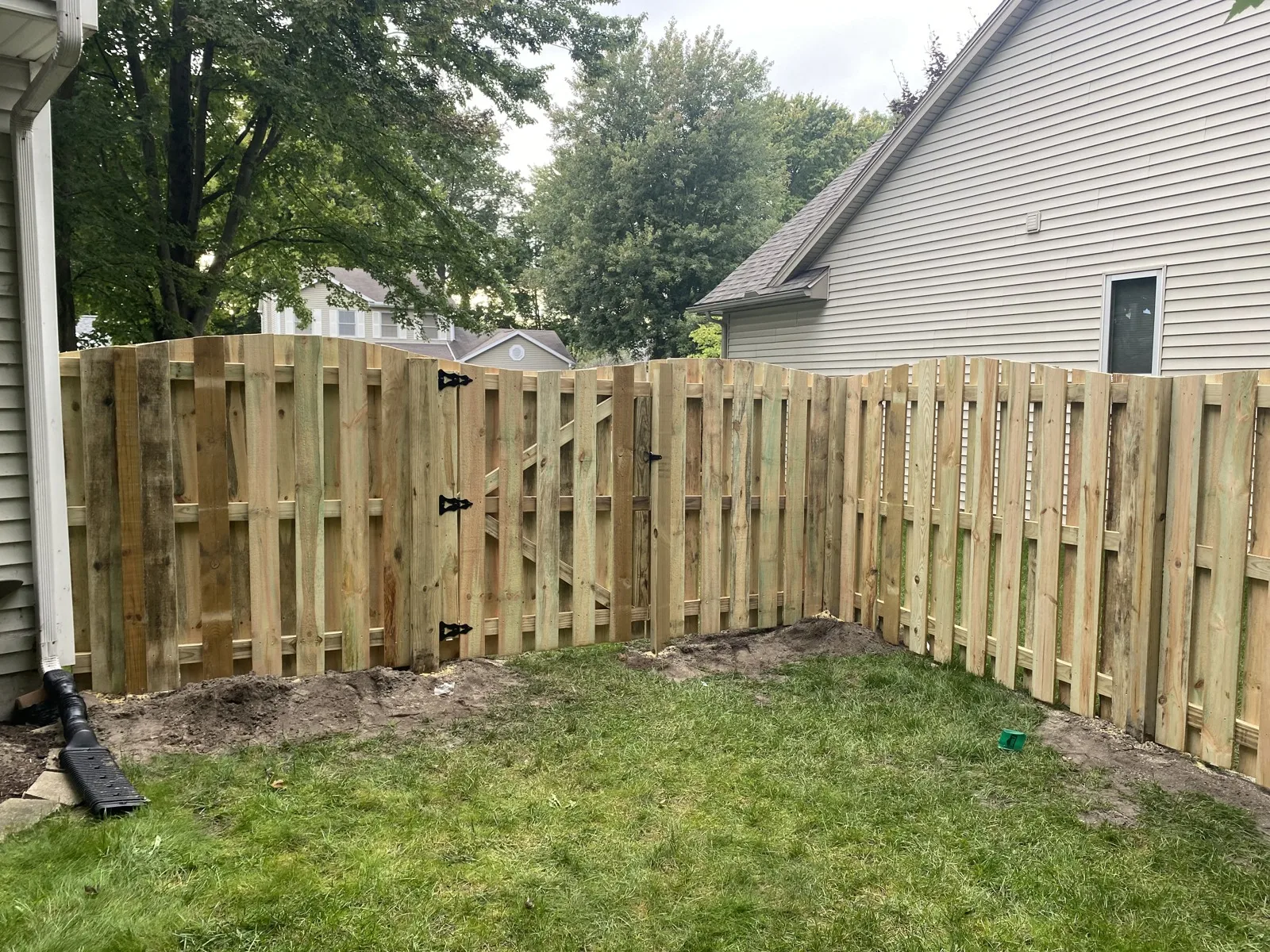
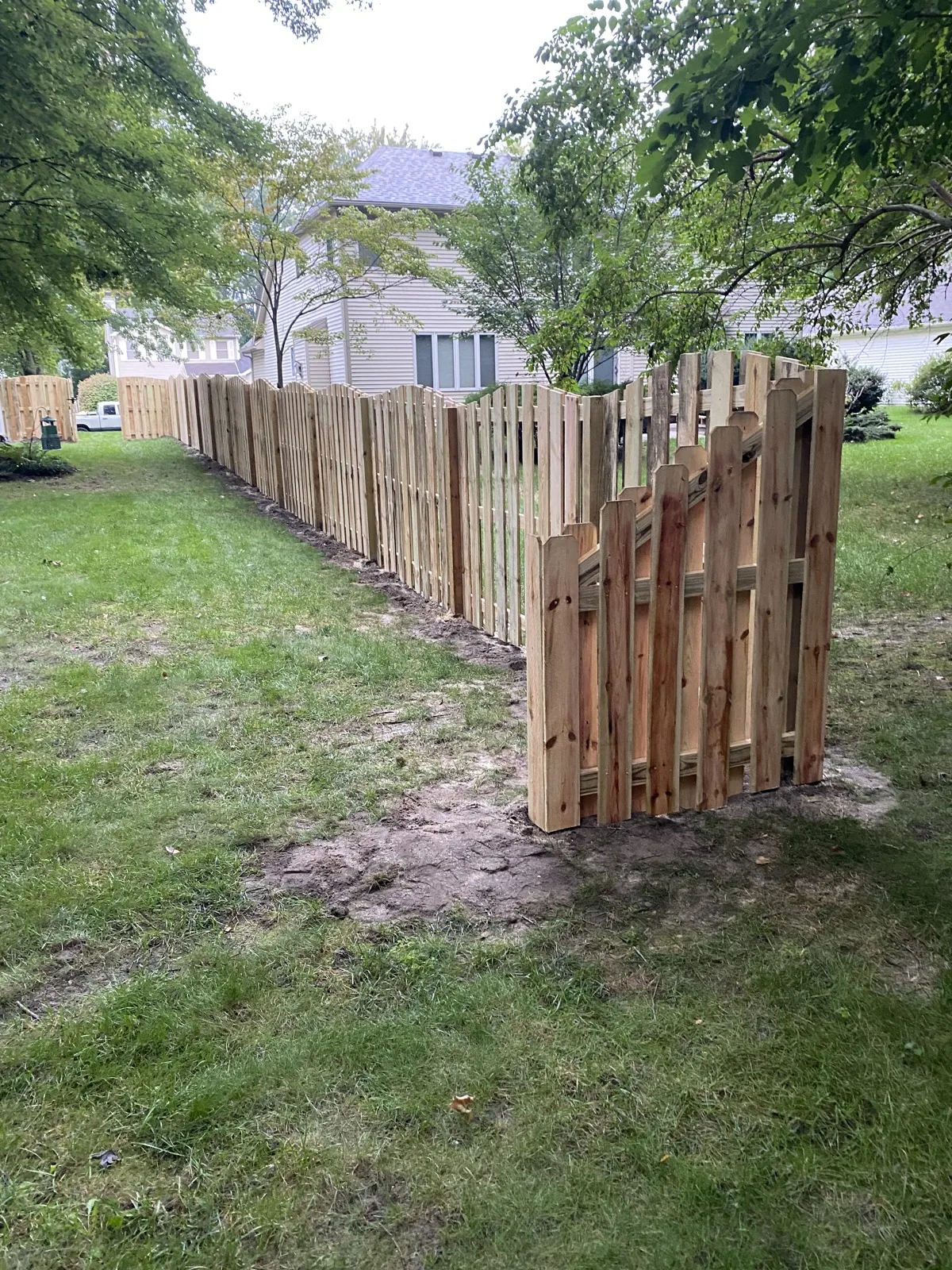
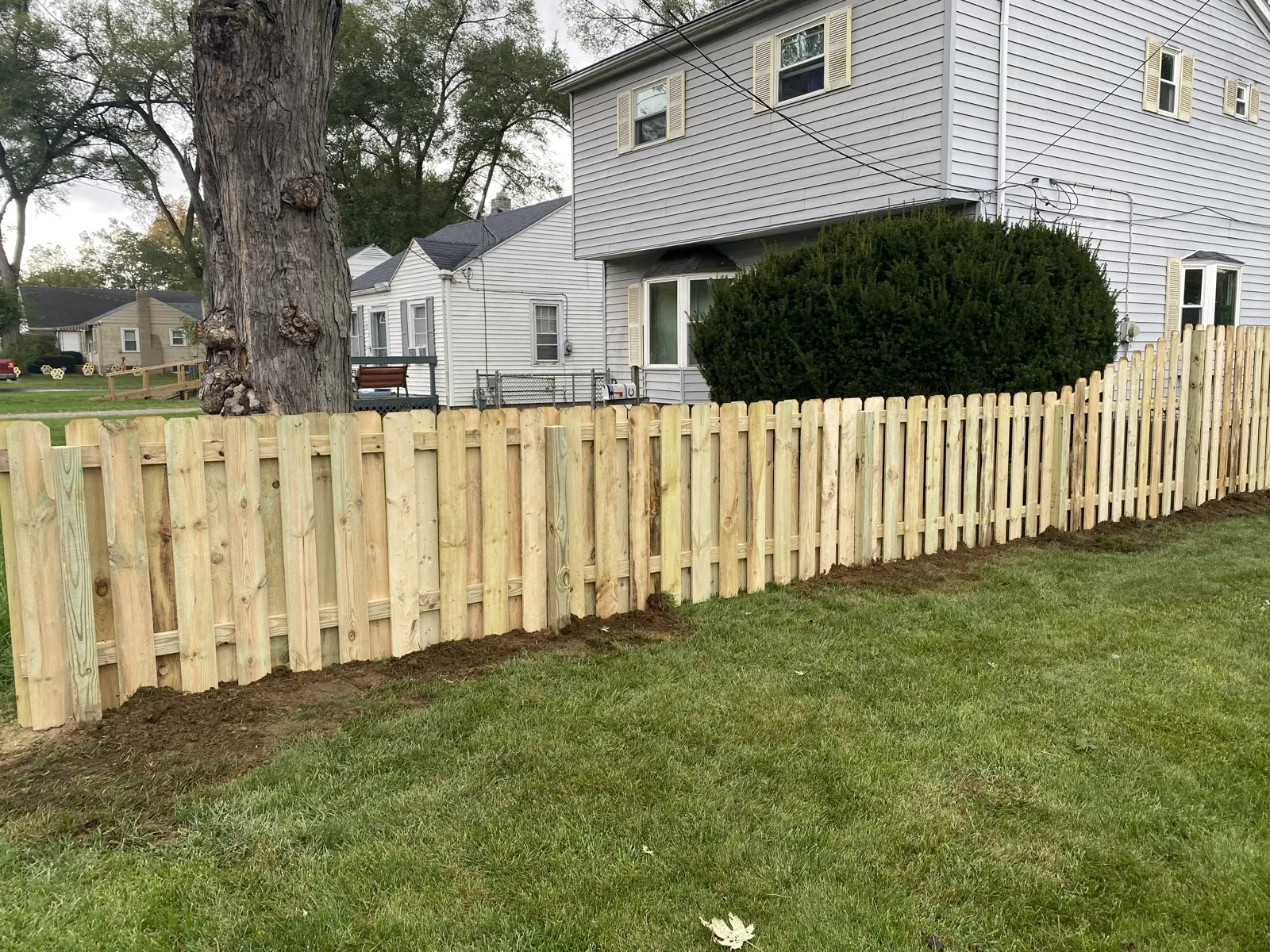
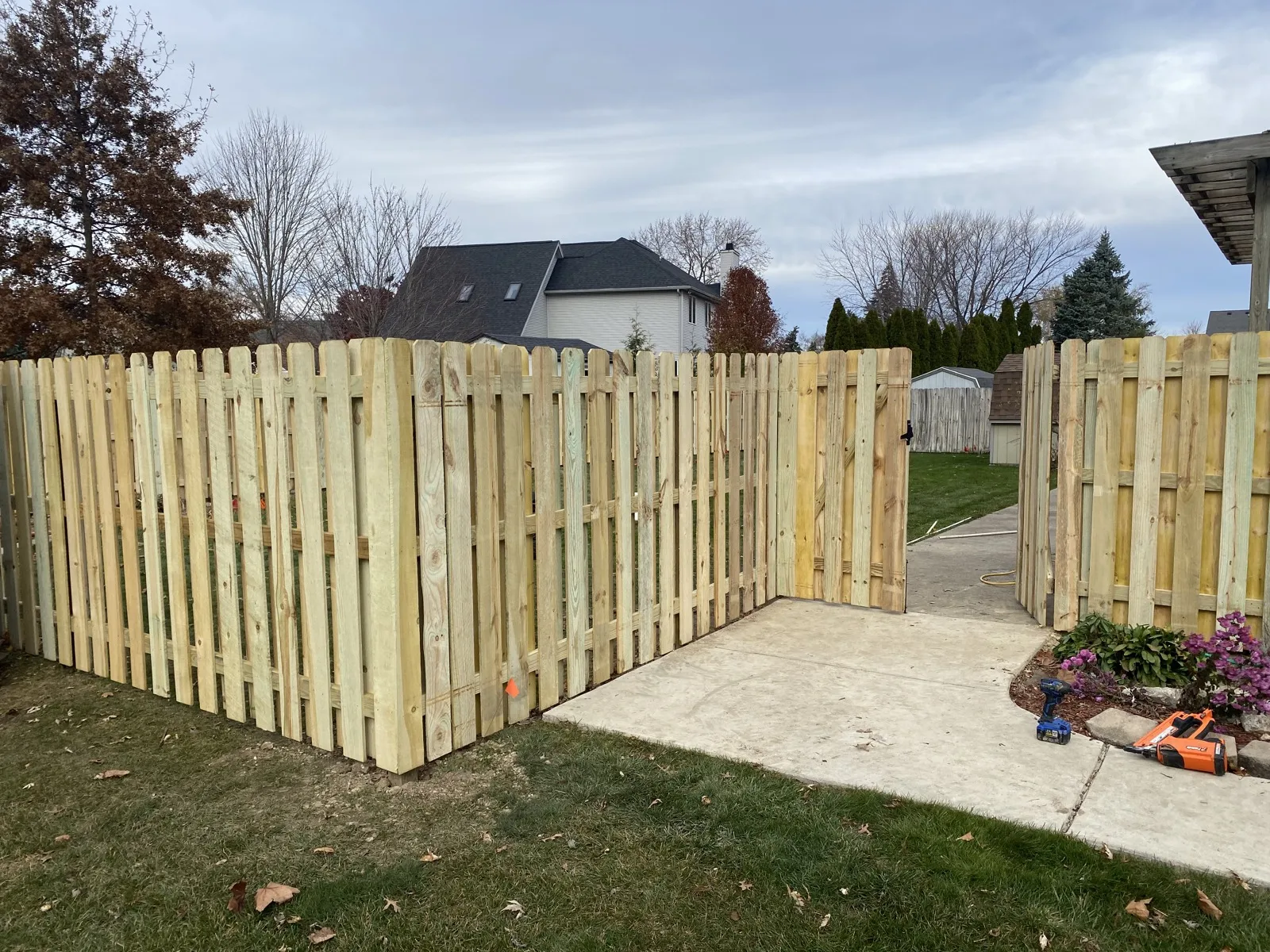
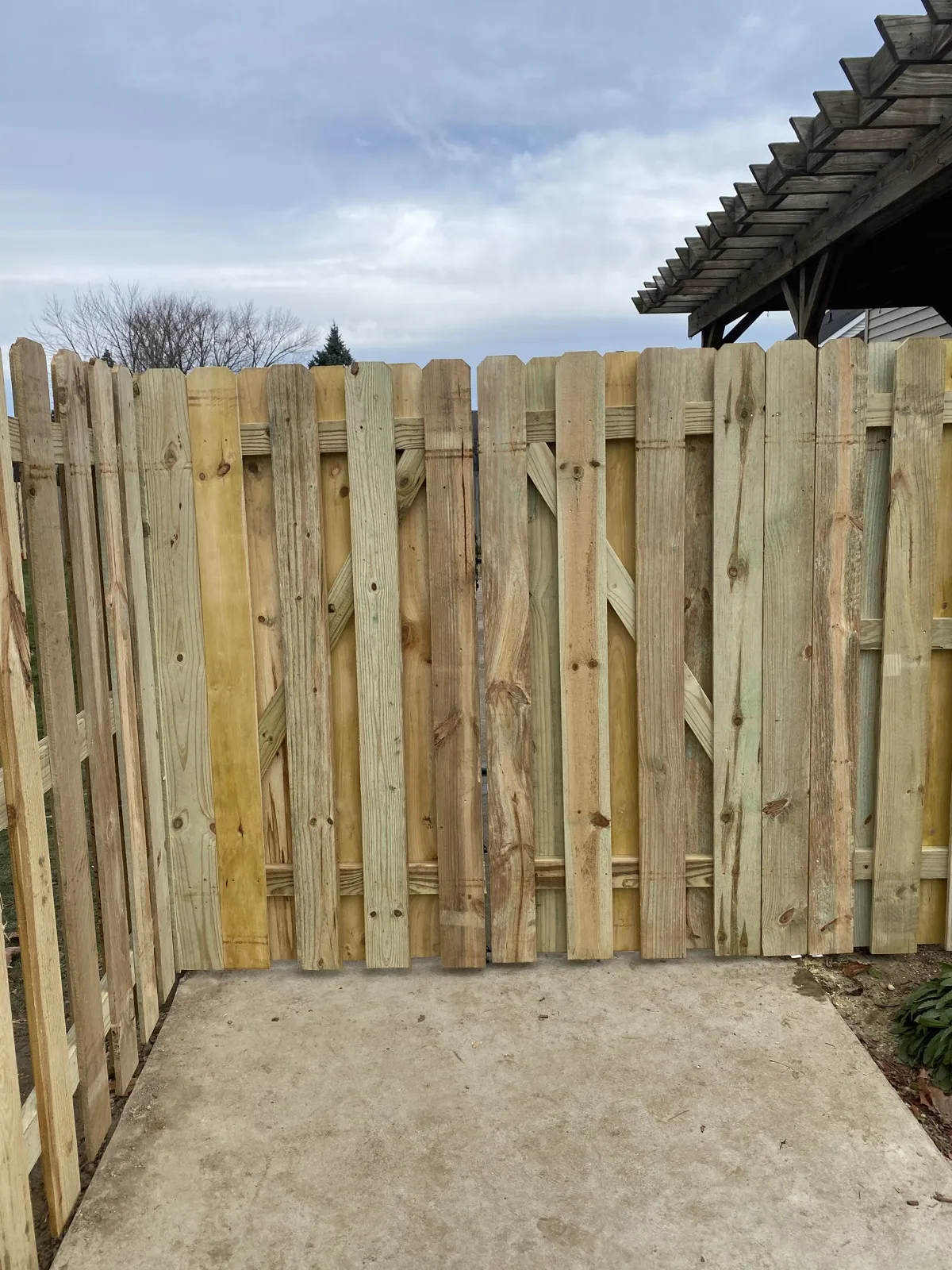
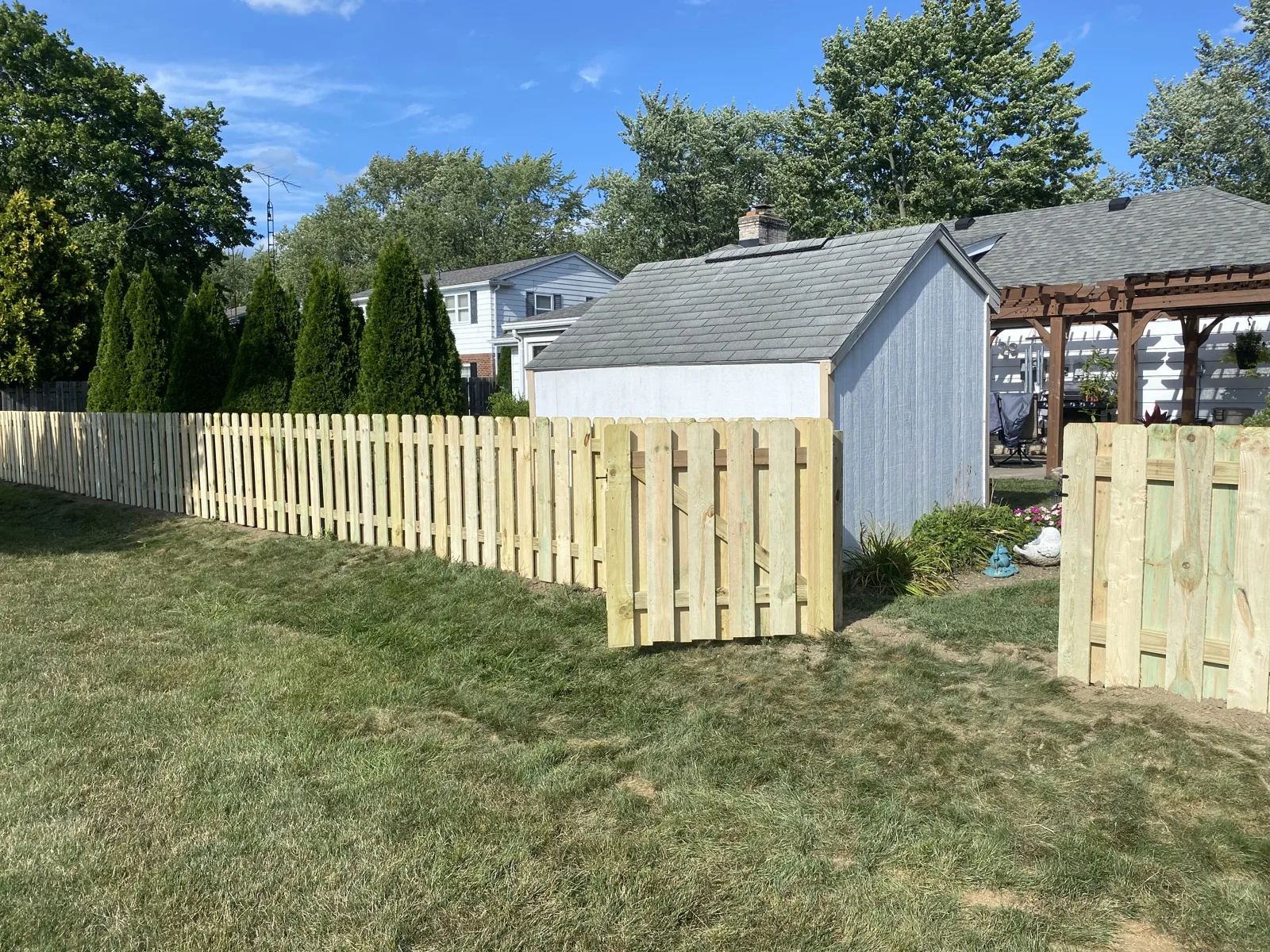
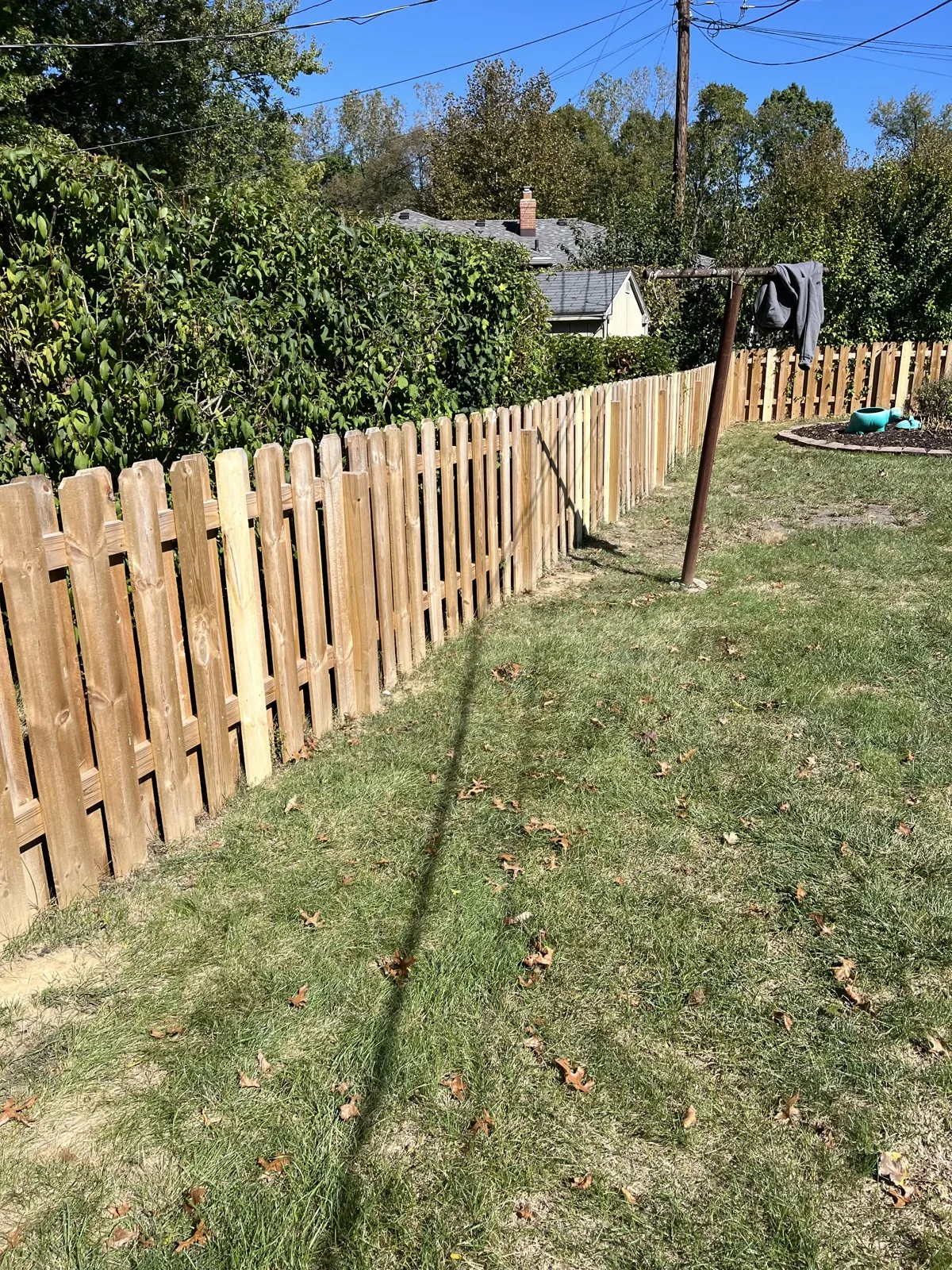
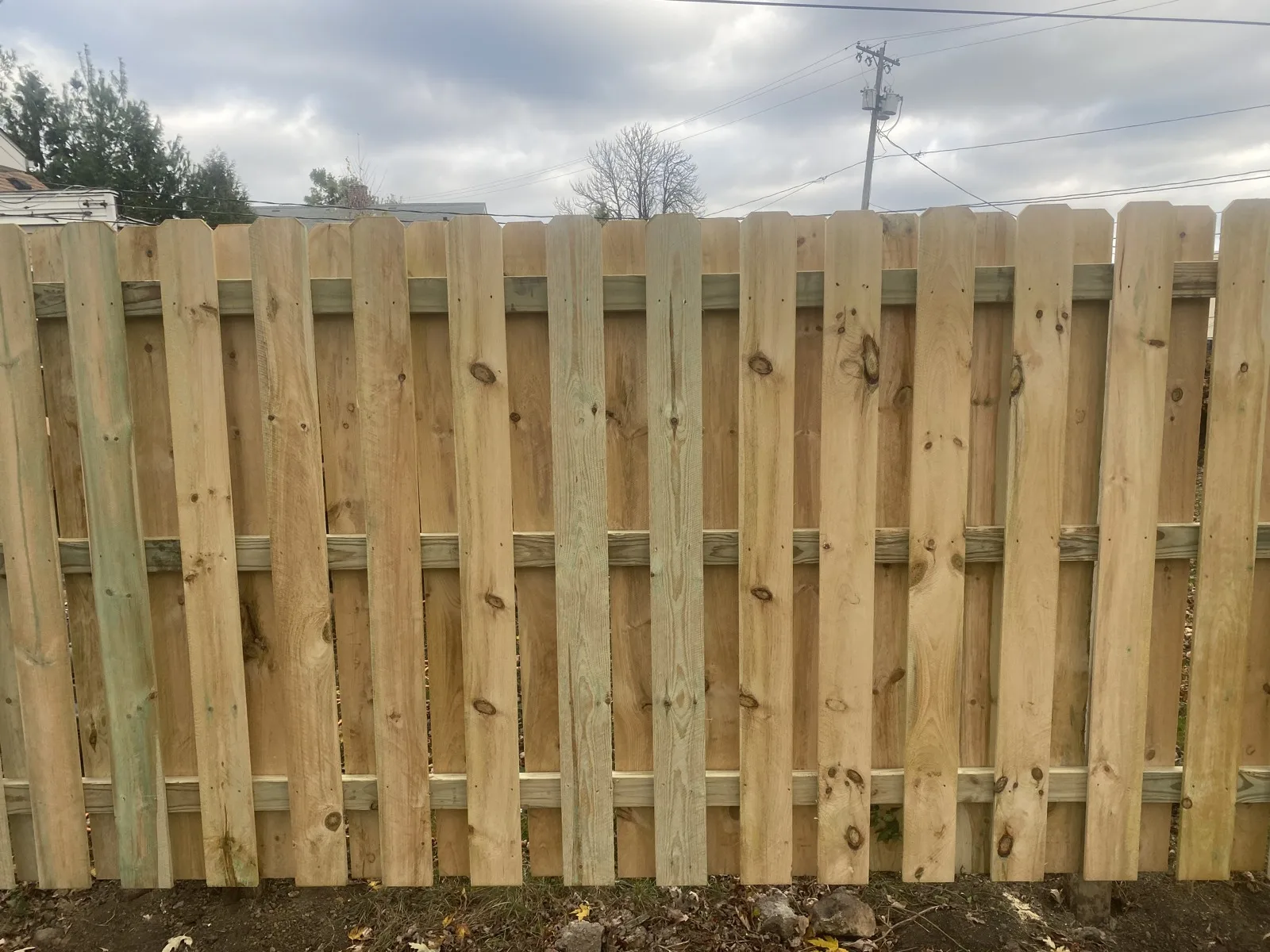
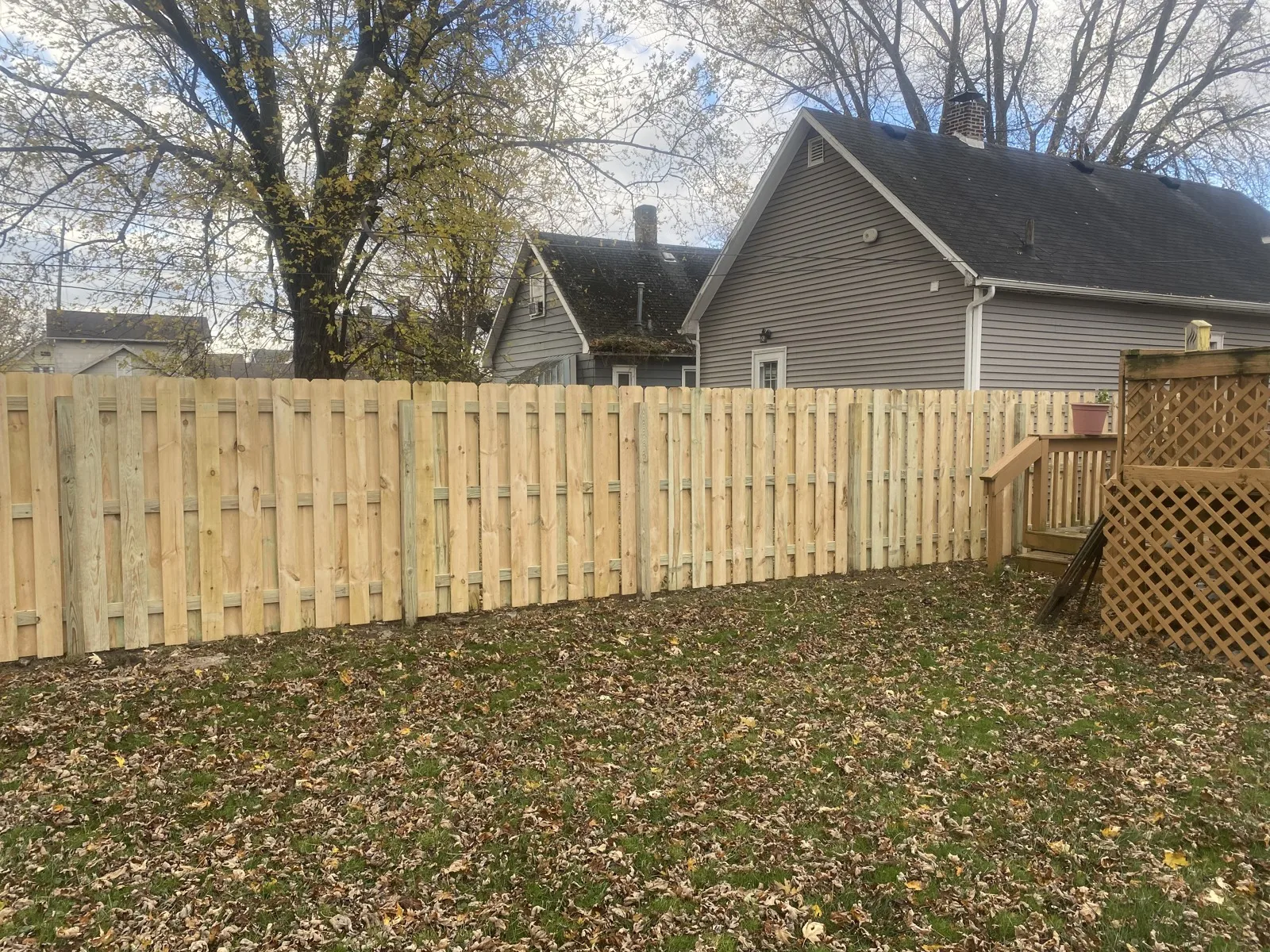
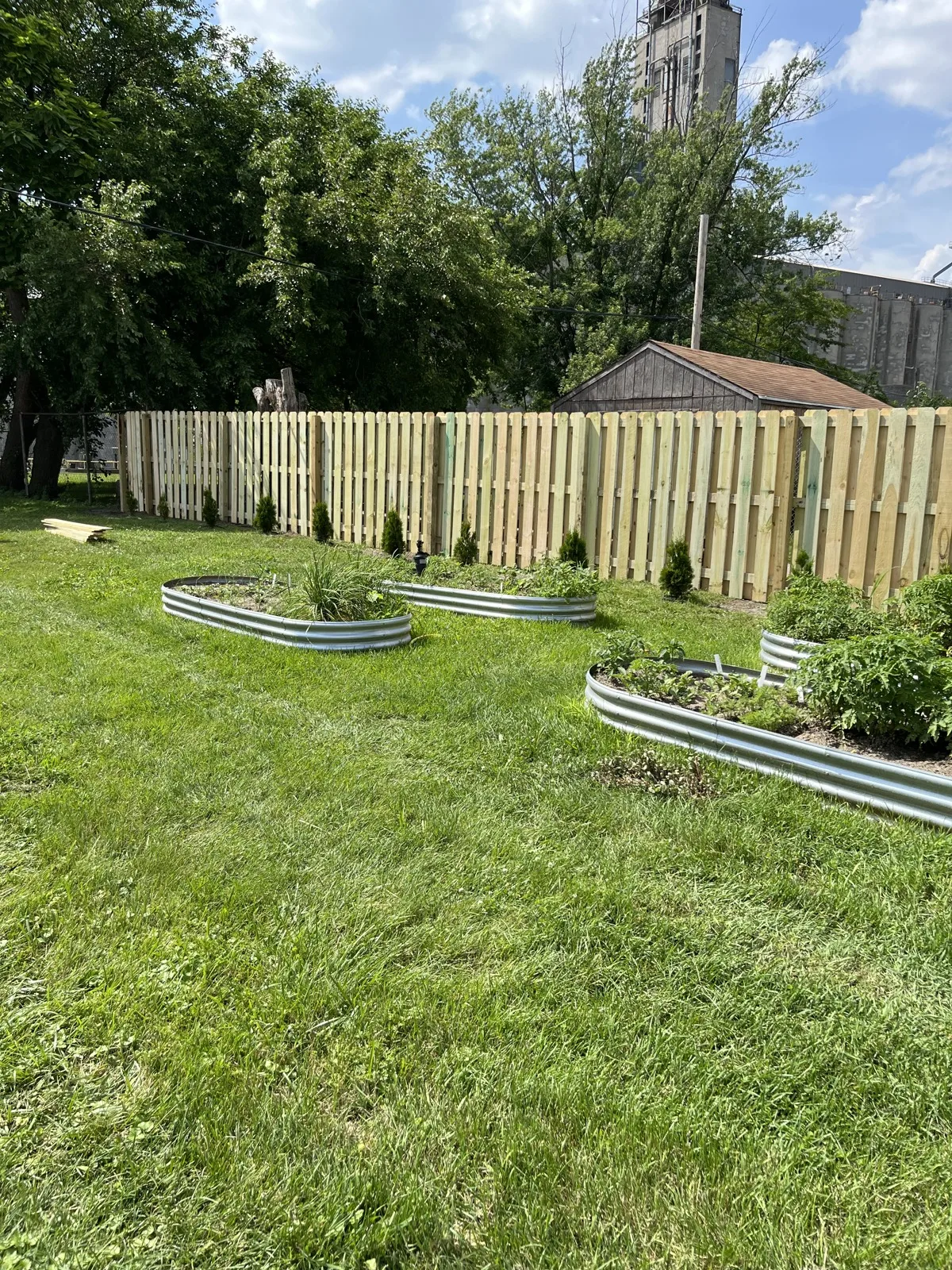
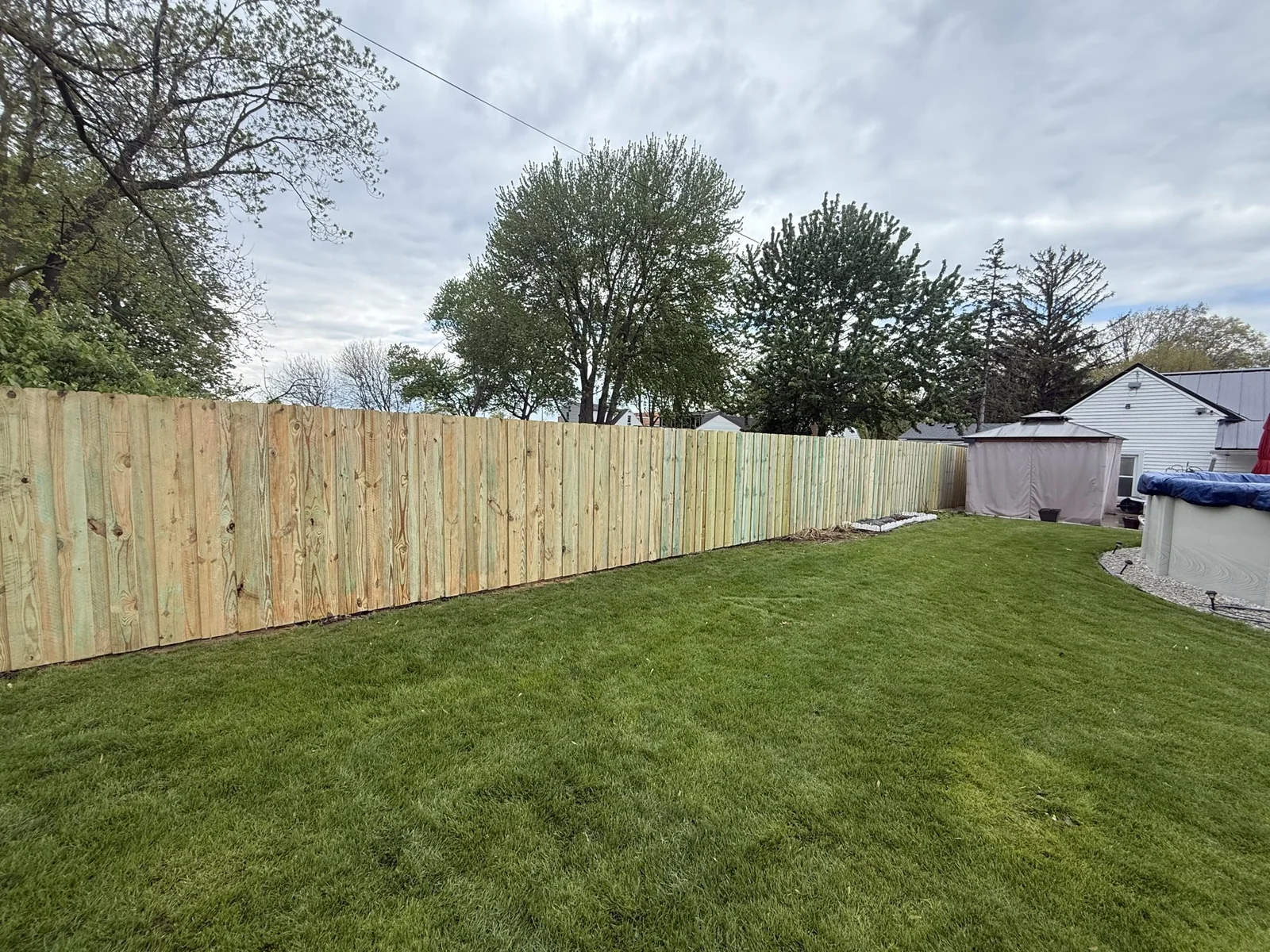
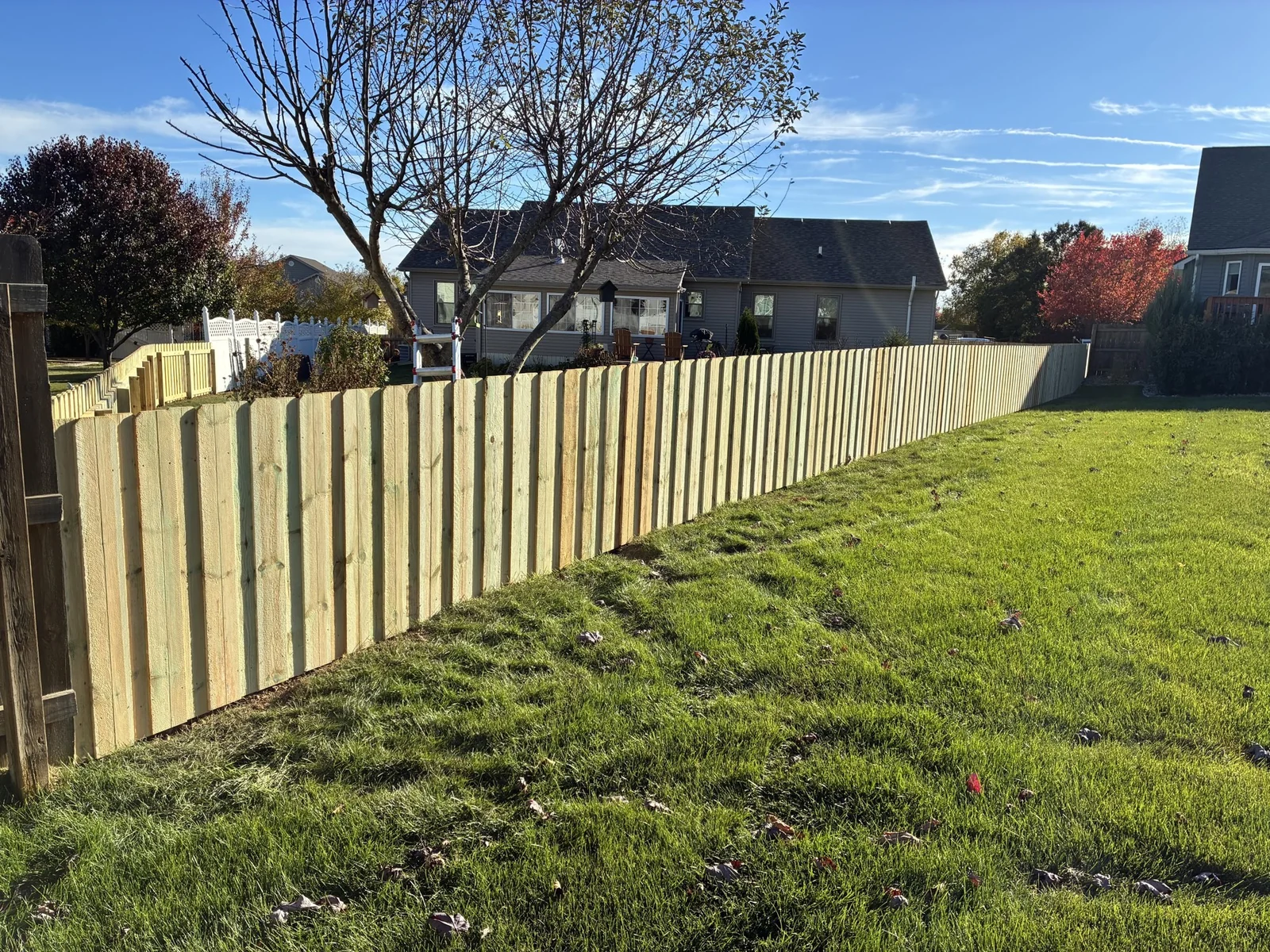
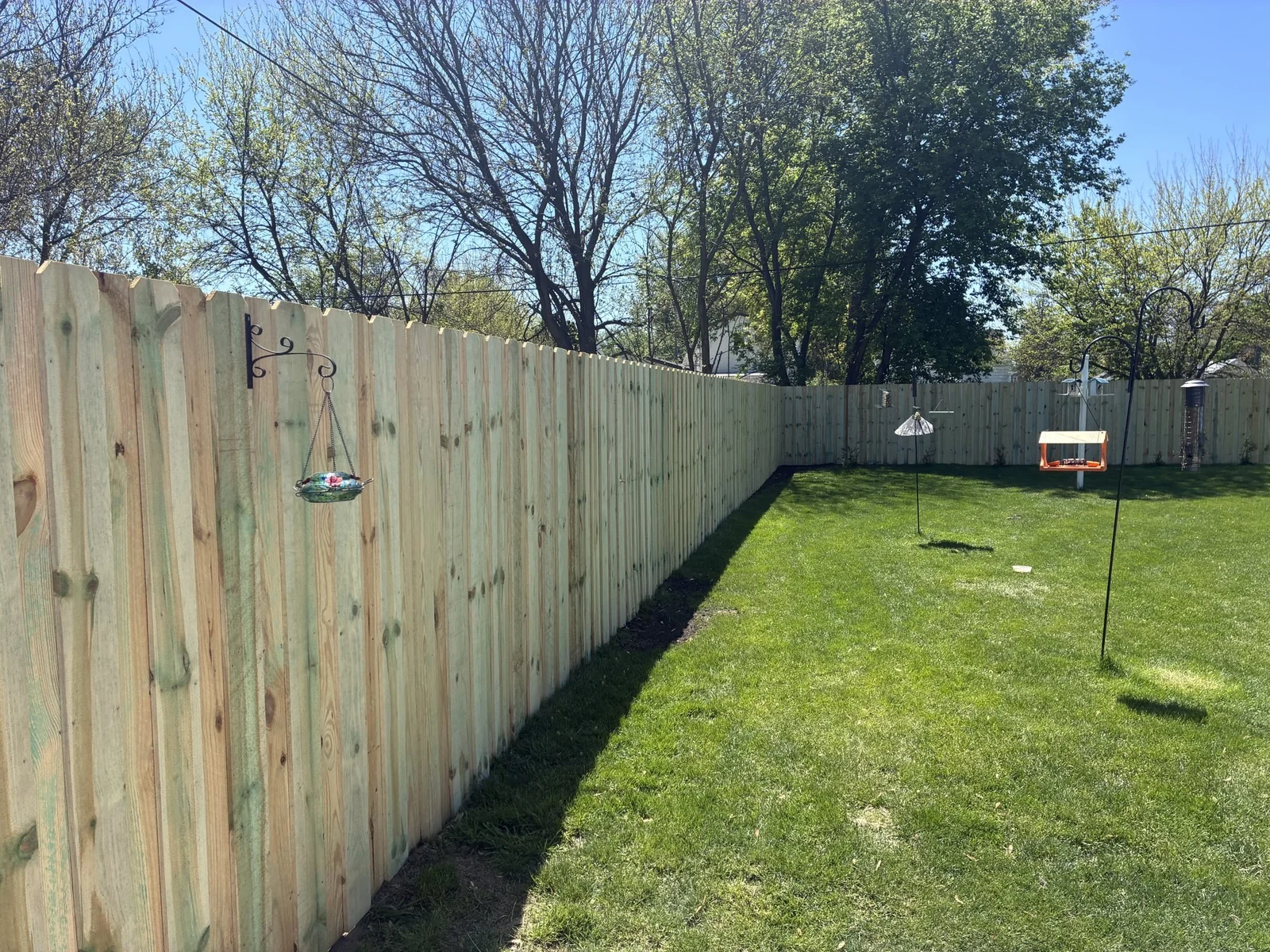
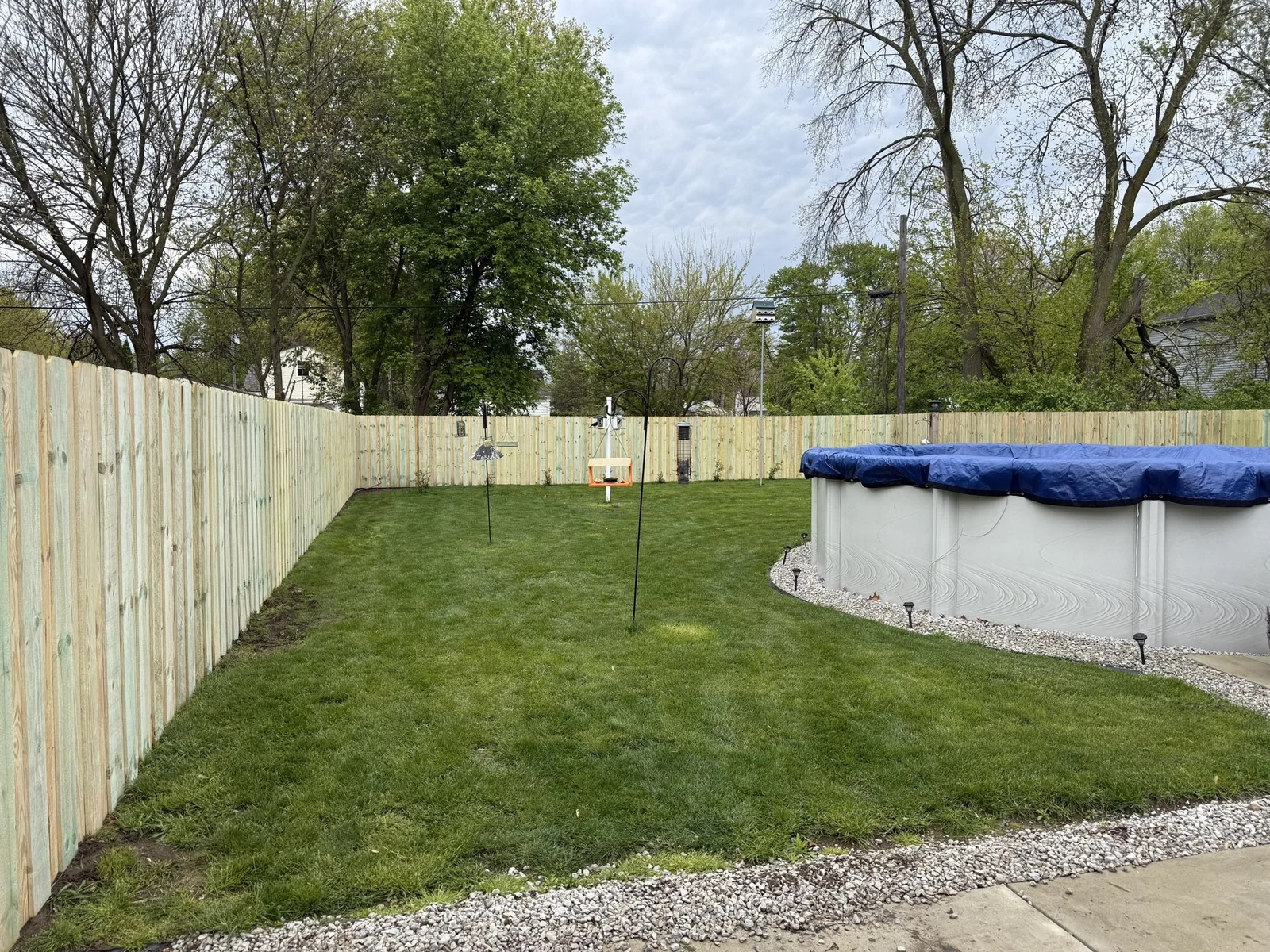
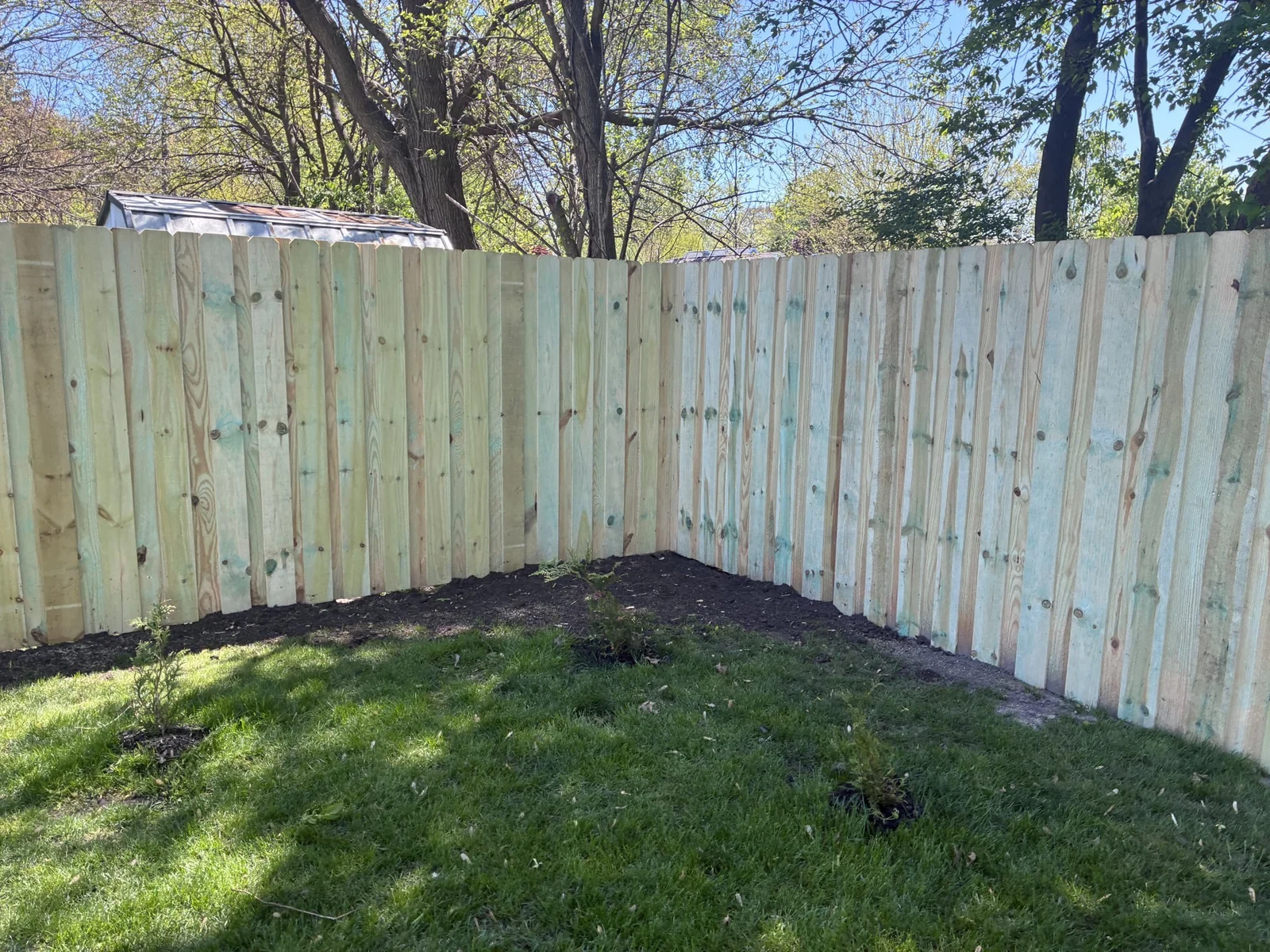
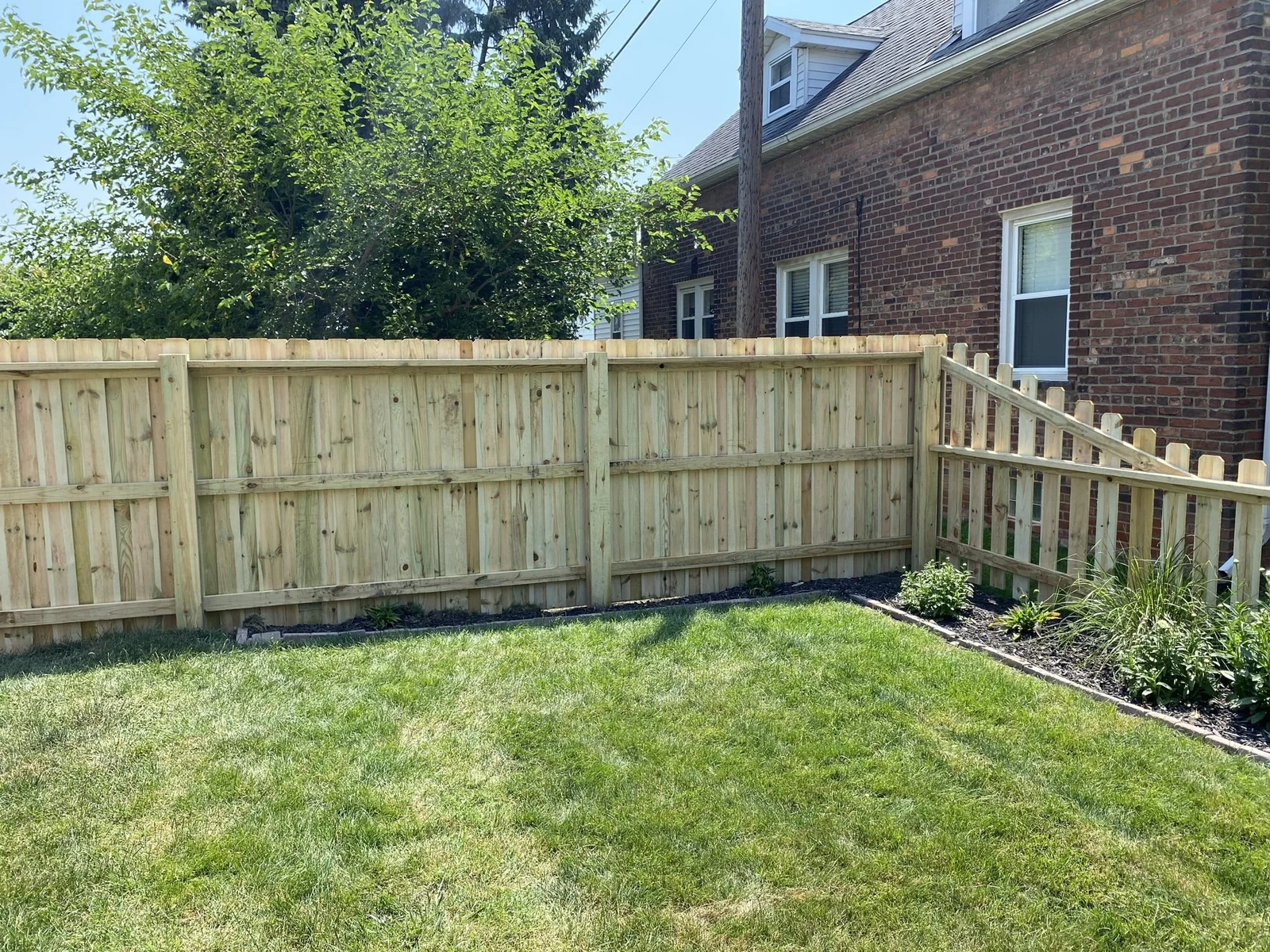
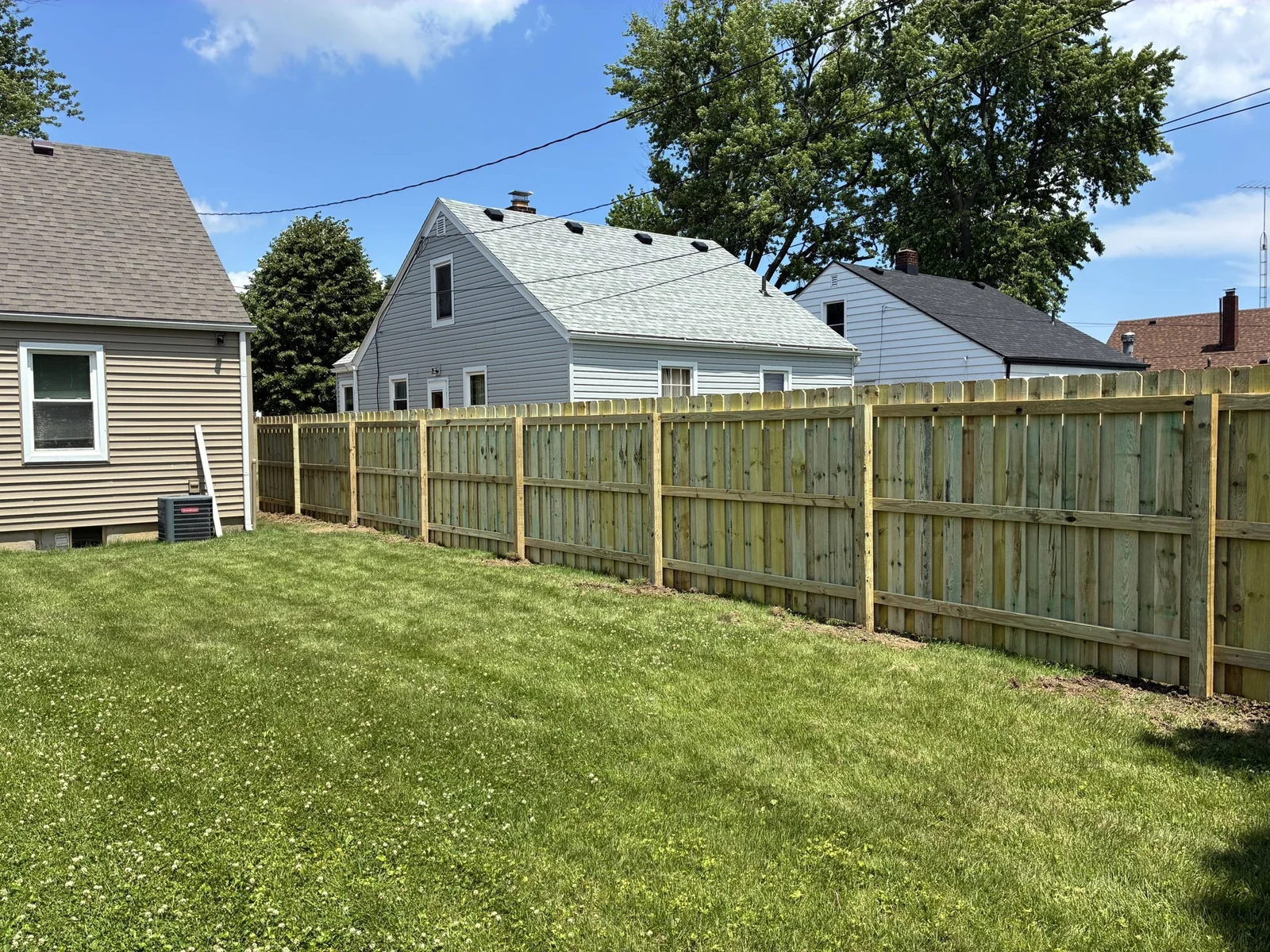
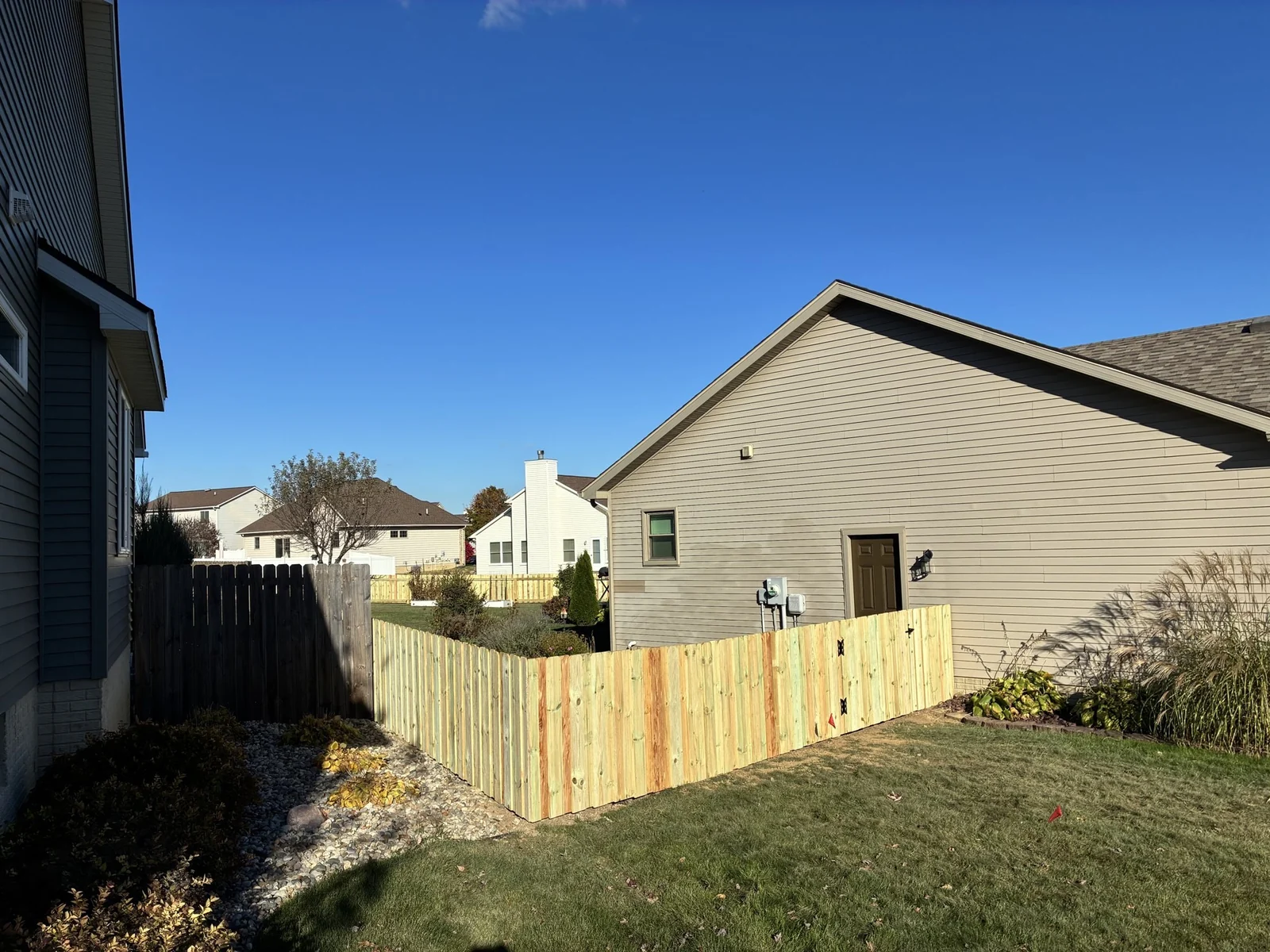
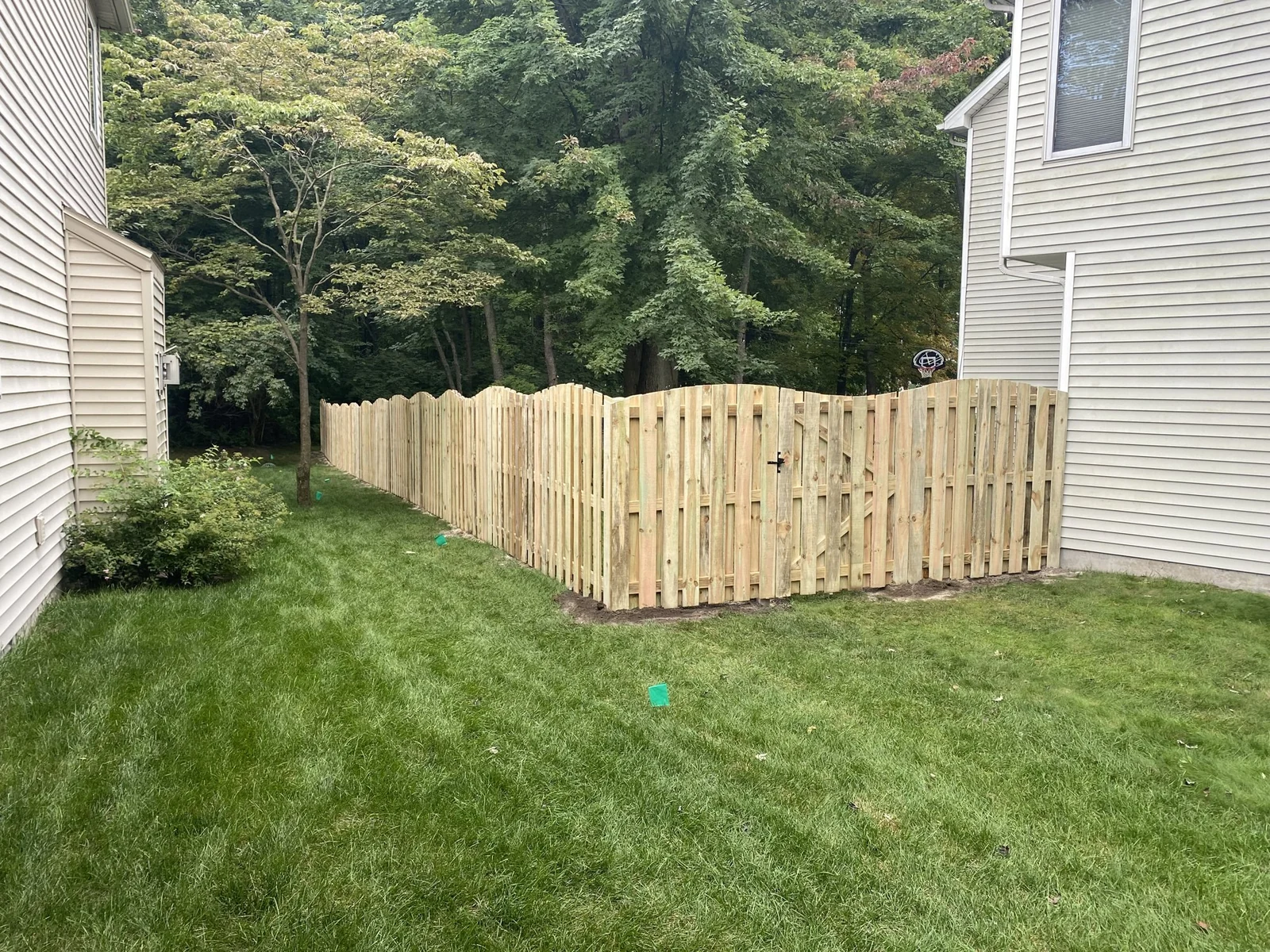
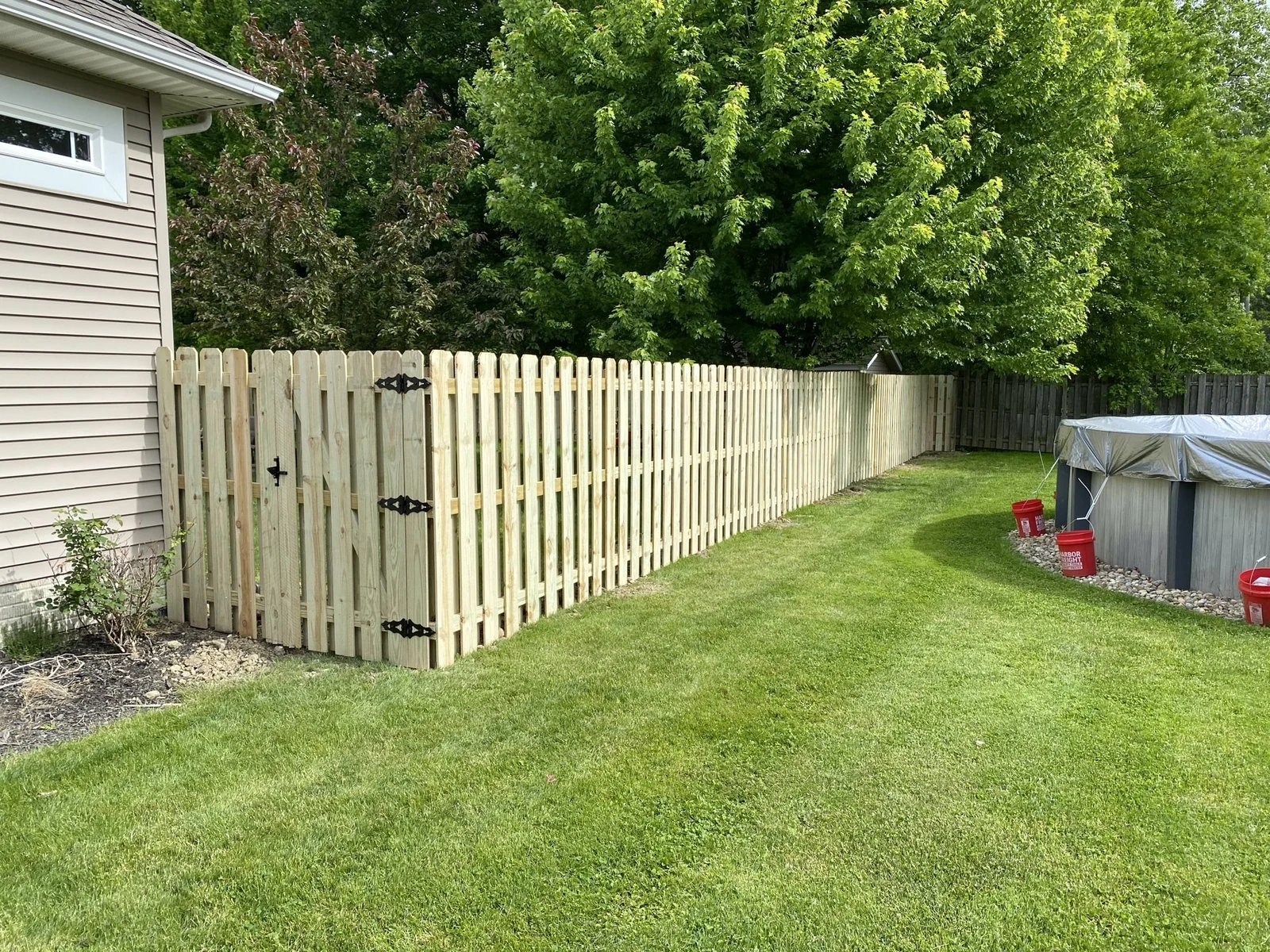
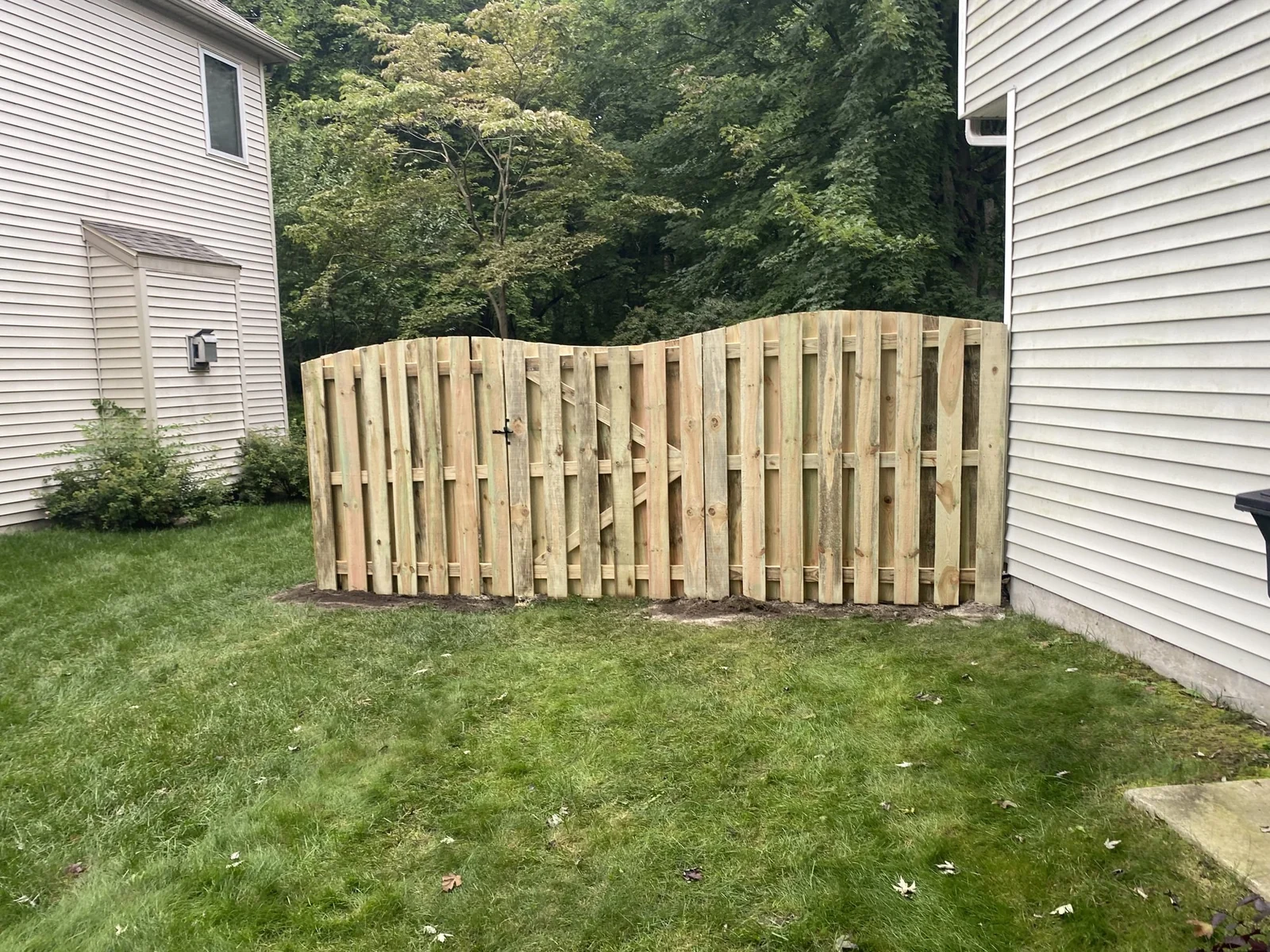
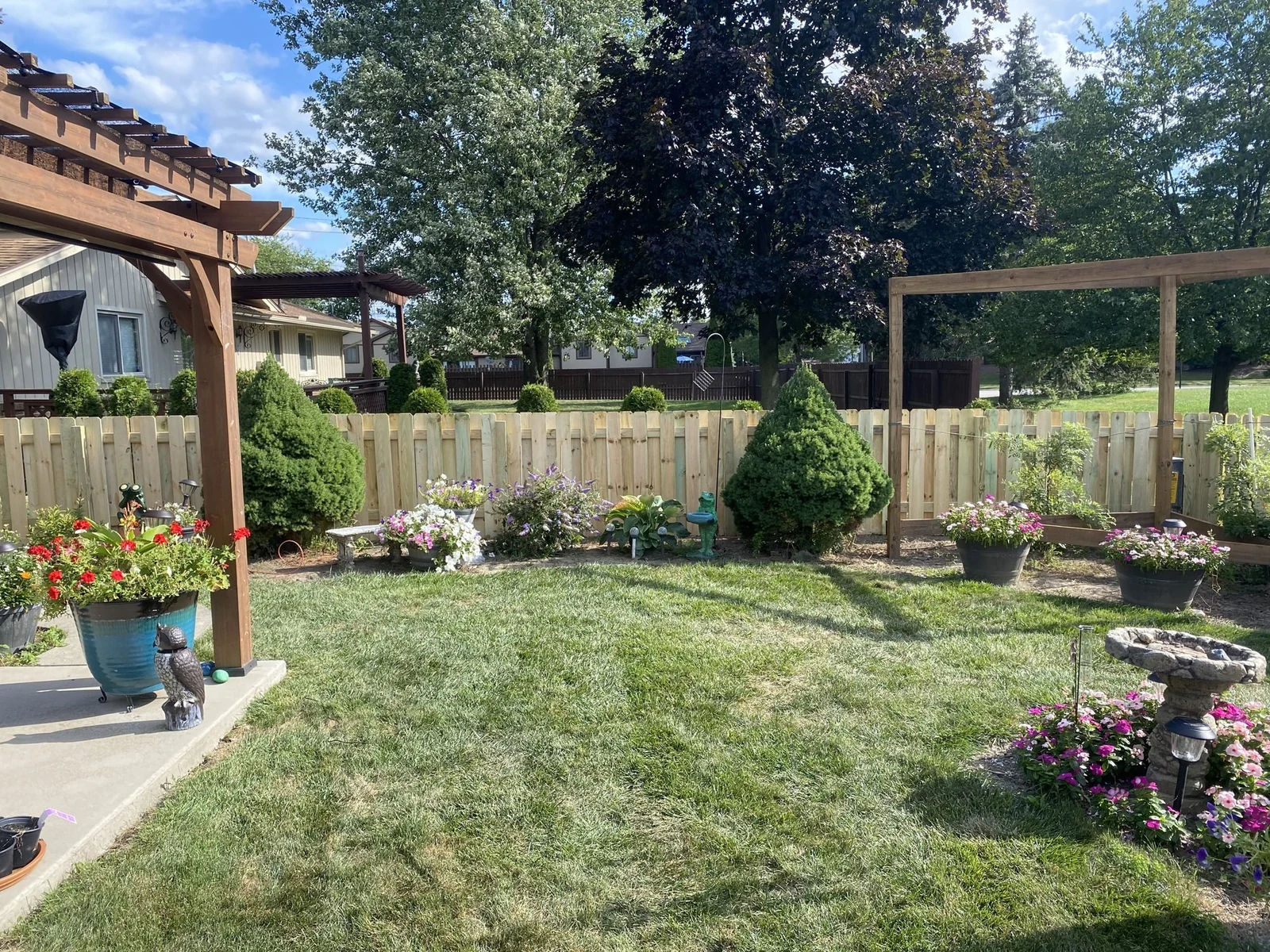
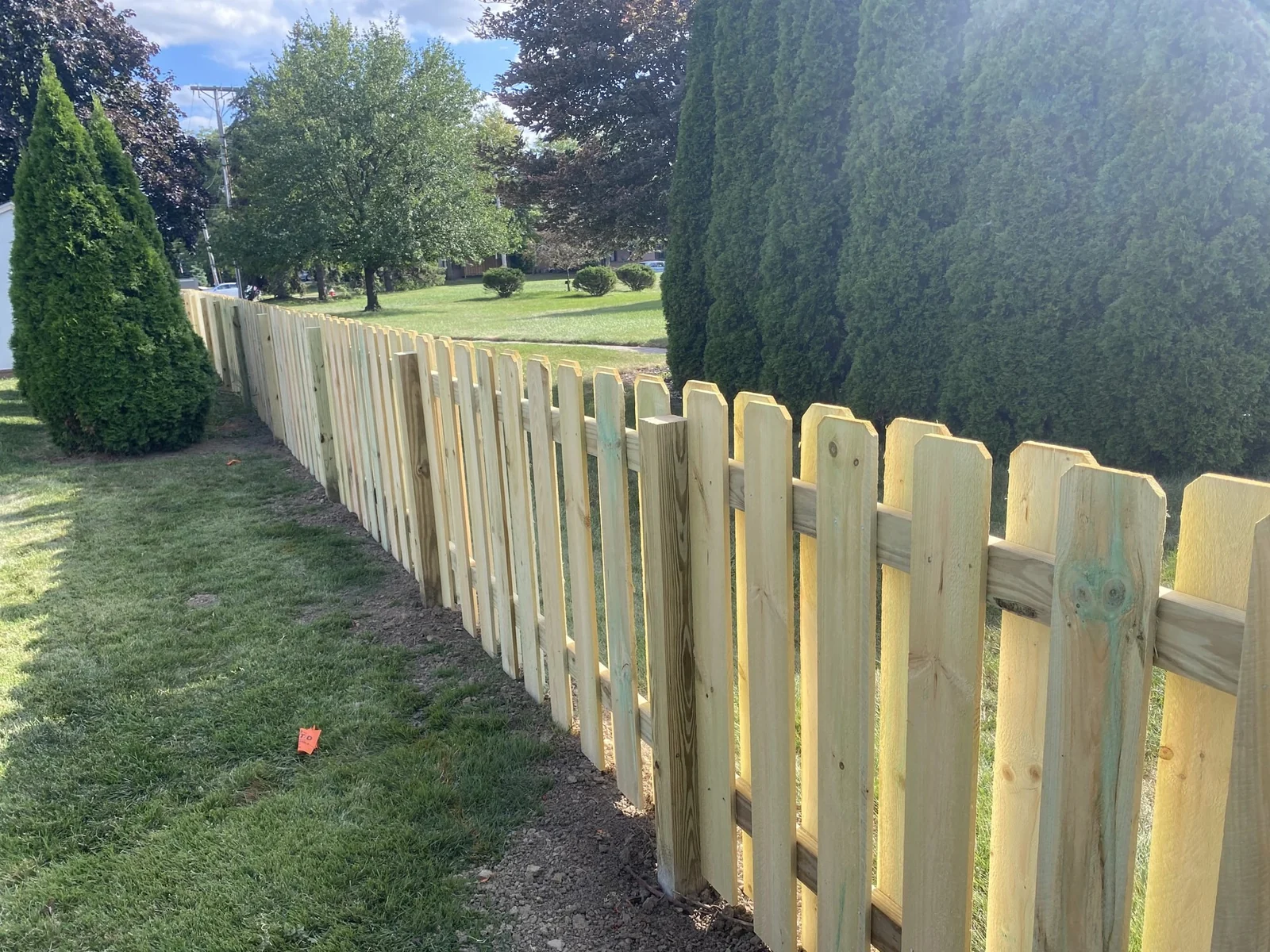
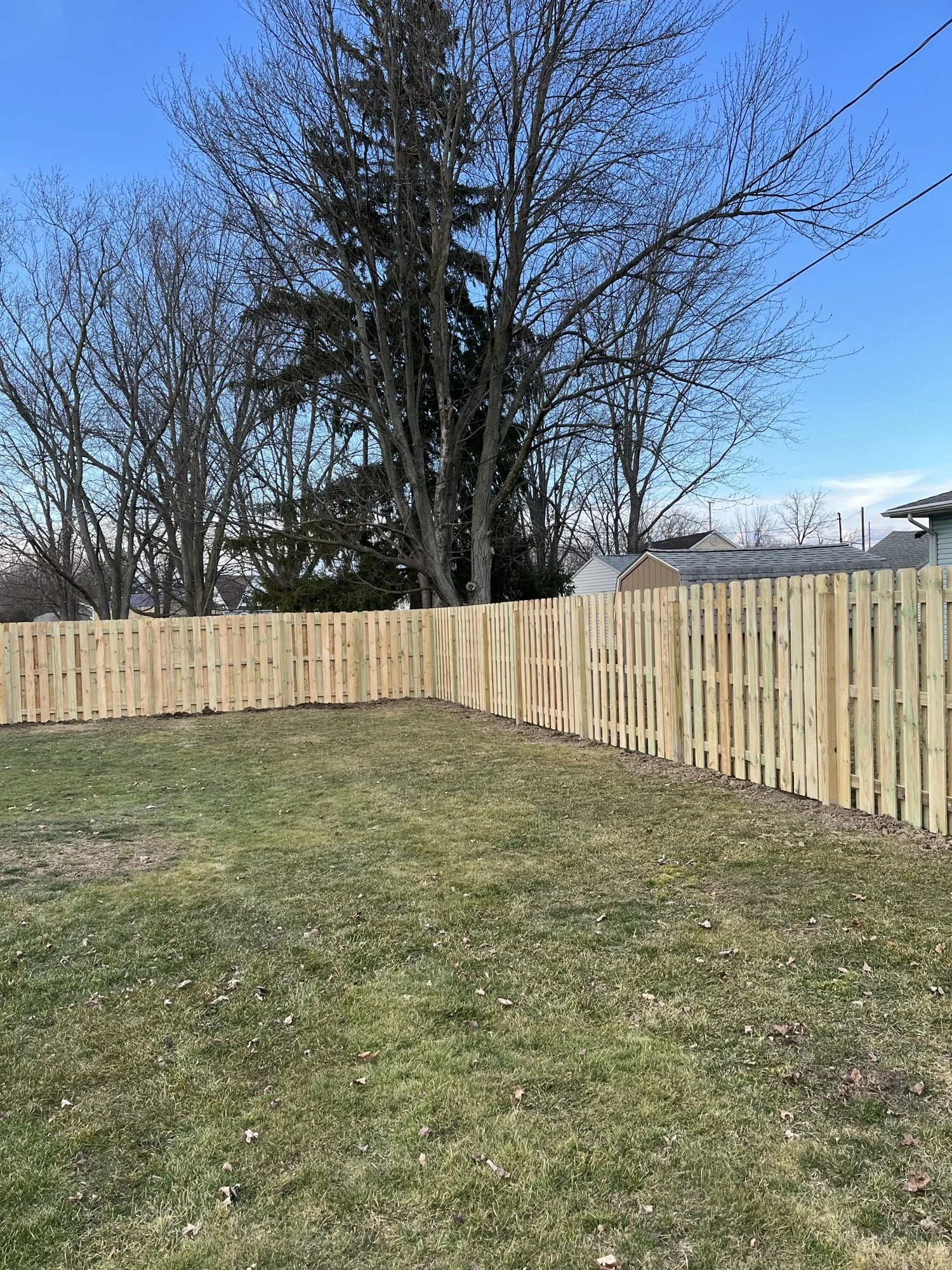
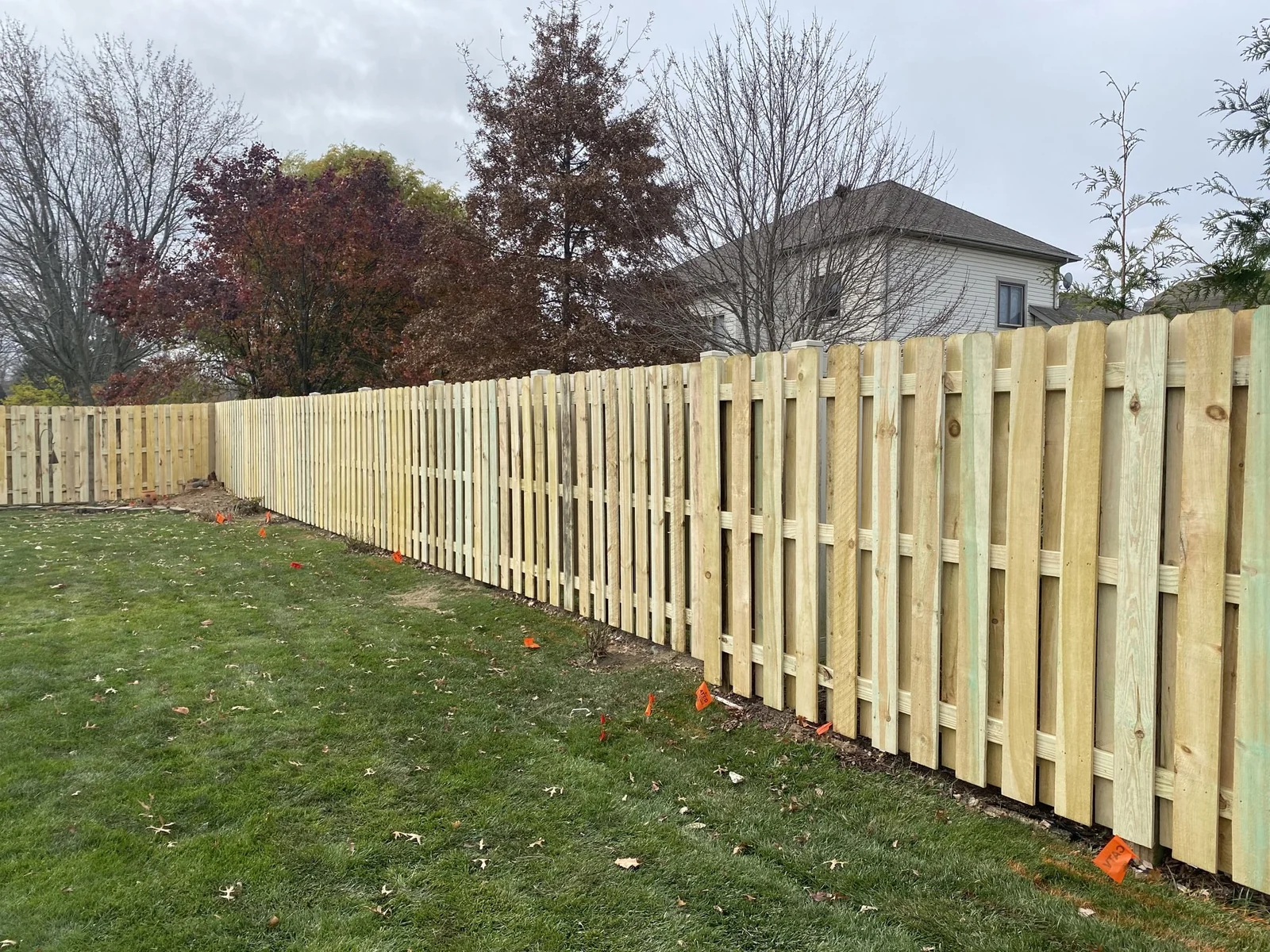
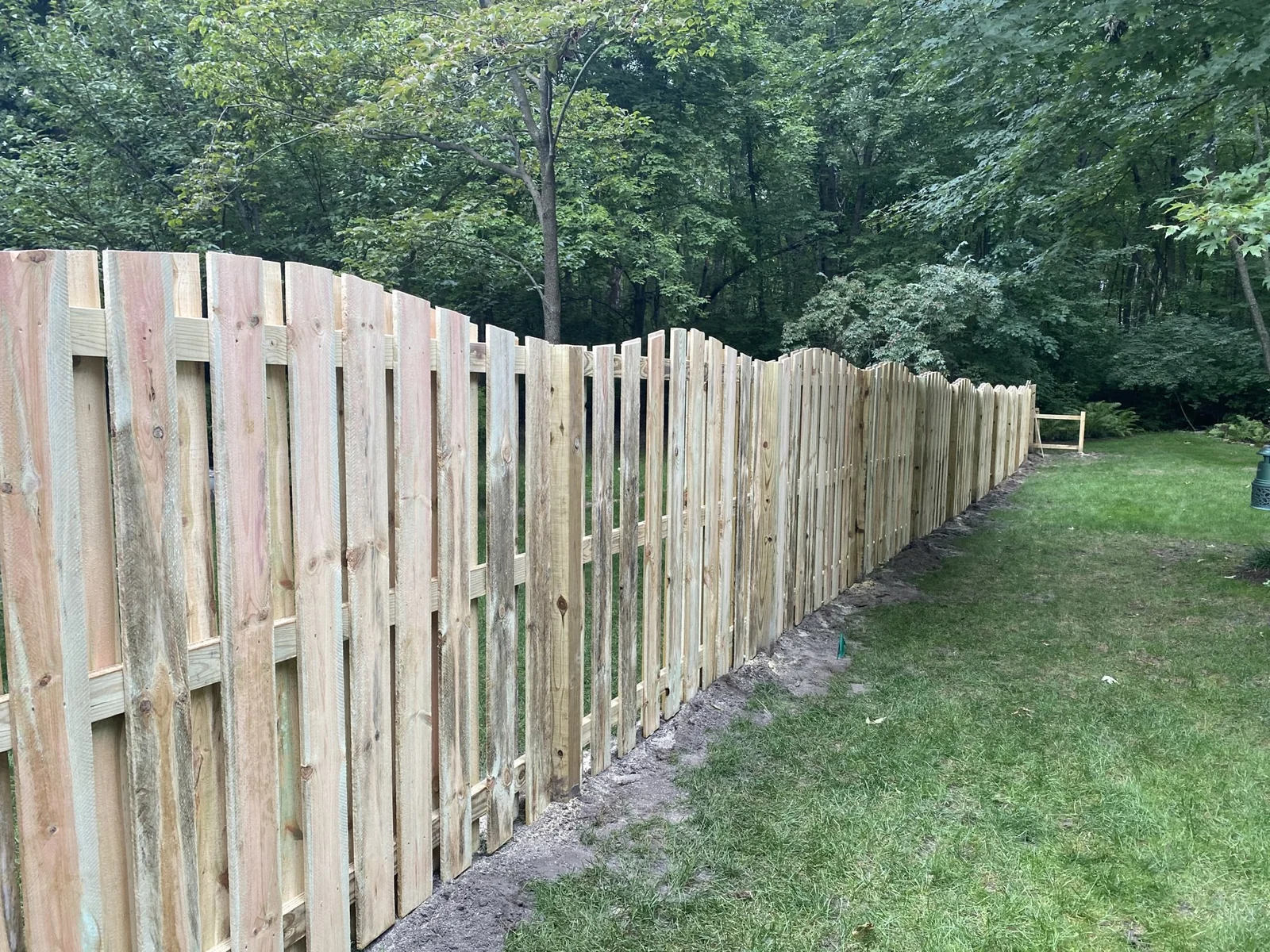
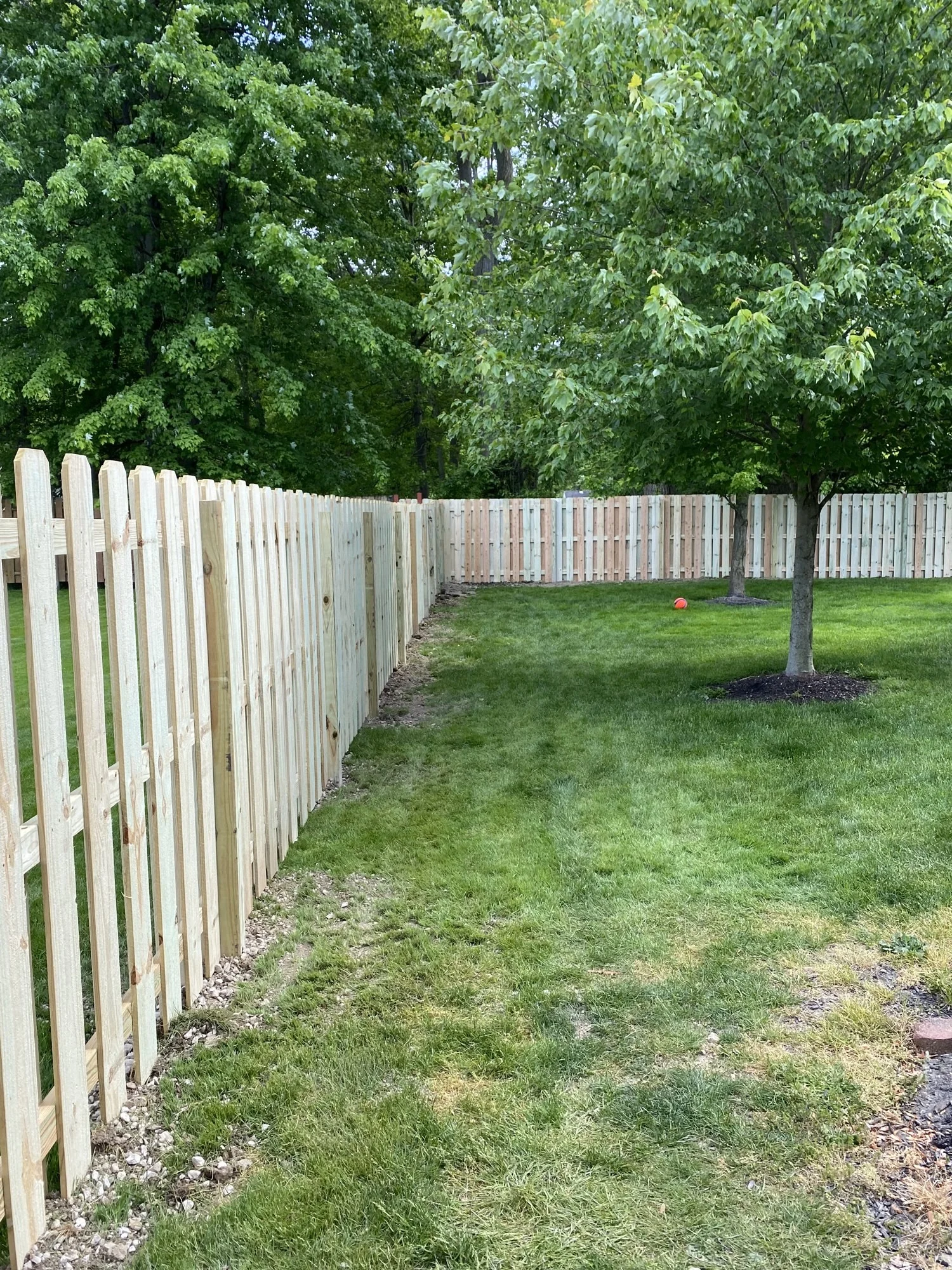
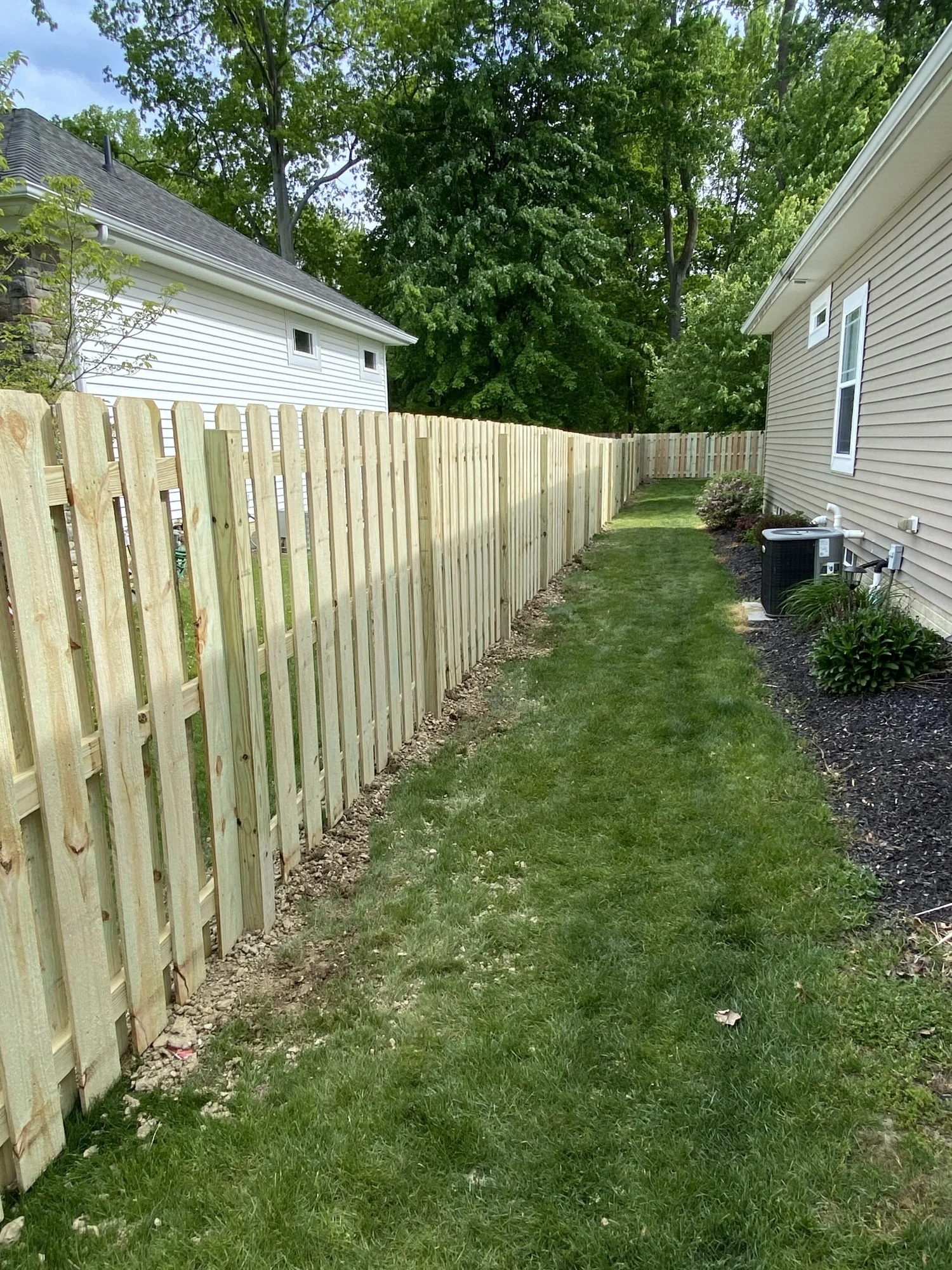
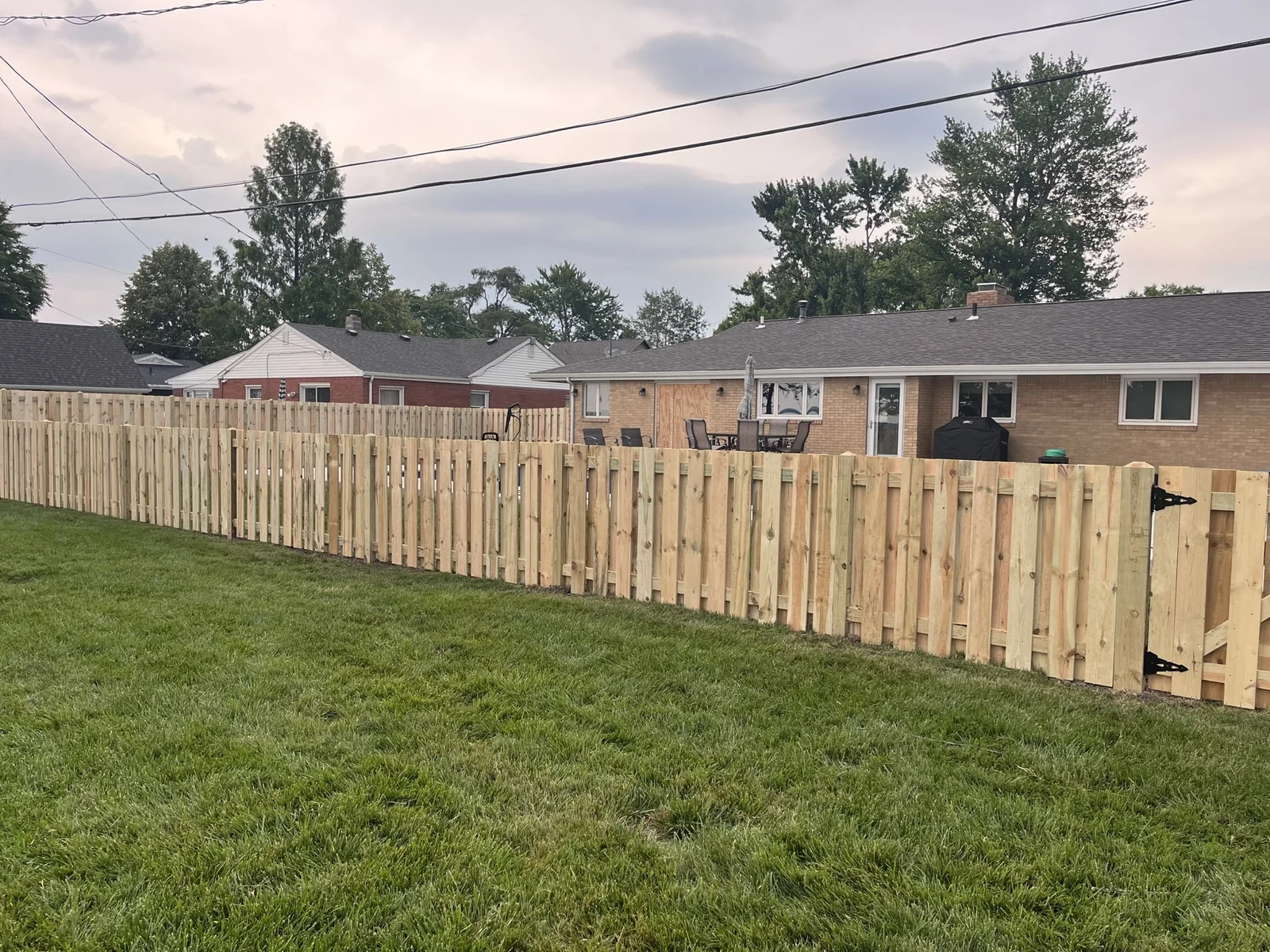
Material treatment is supplied project information. The visible board arrangement, tops, rails and gates are described in each photograph.
112 project photographs. Select a photo to explore the details.
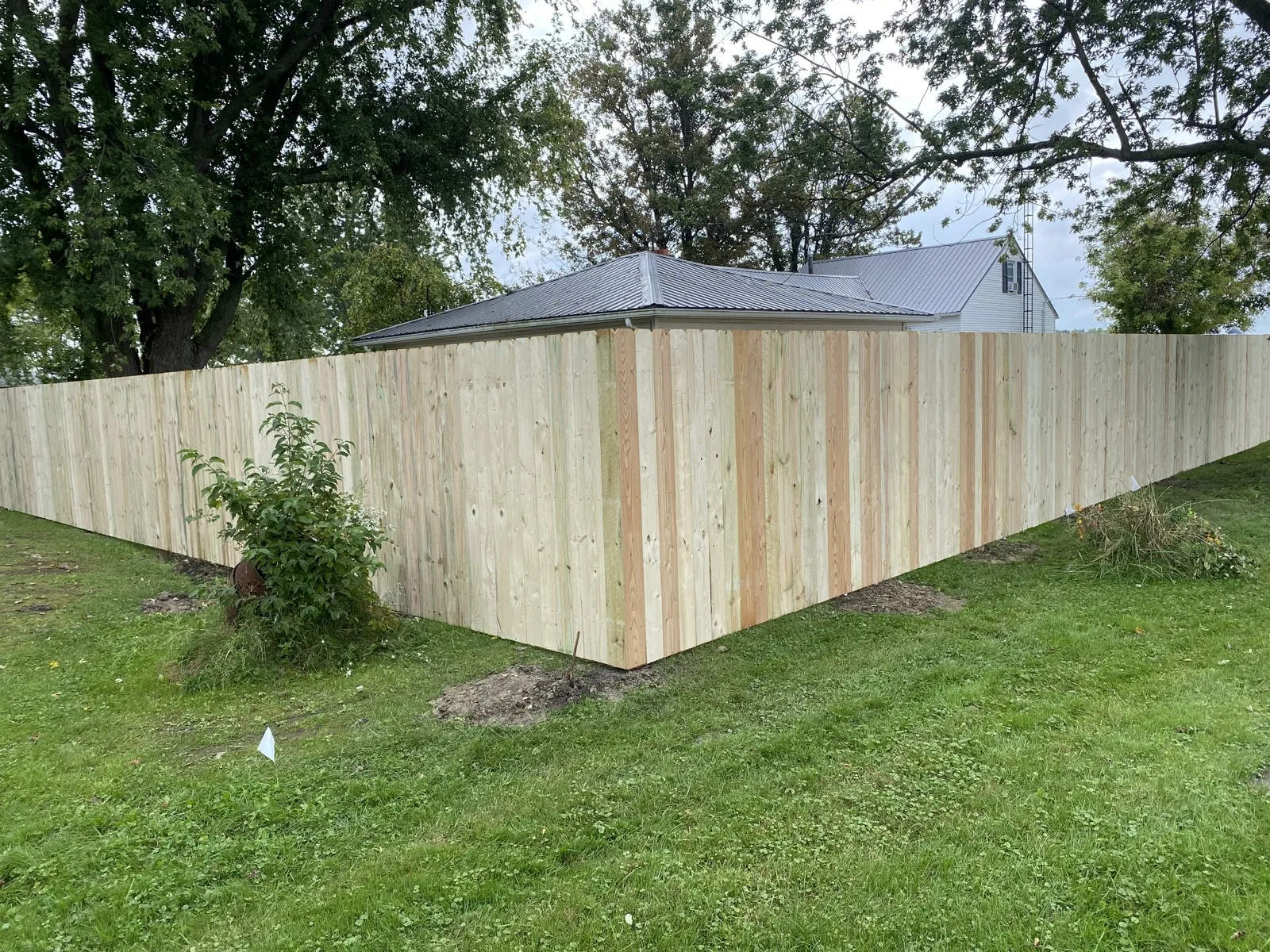
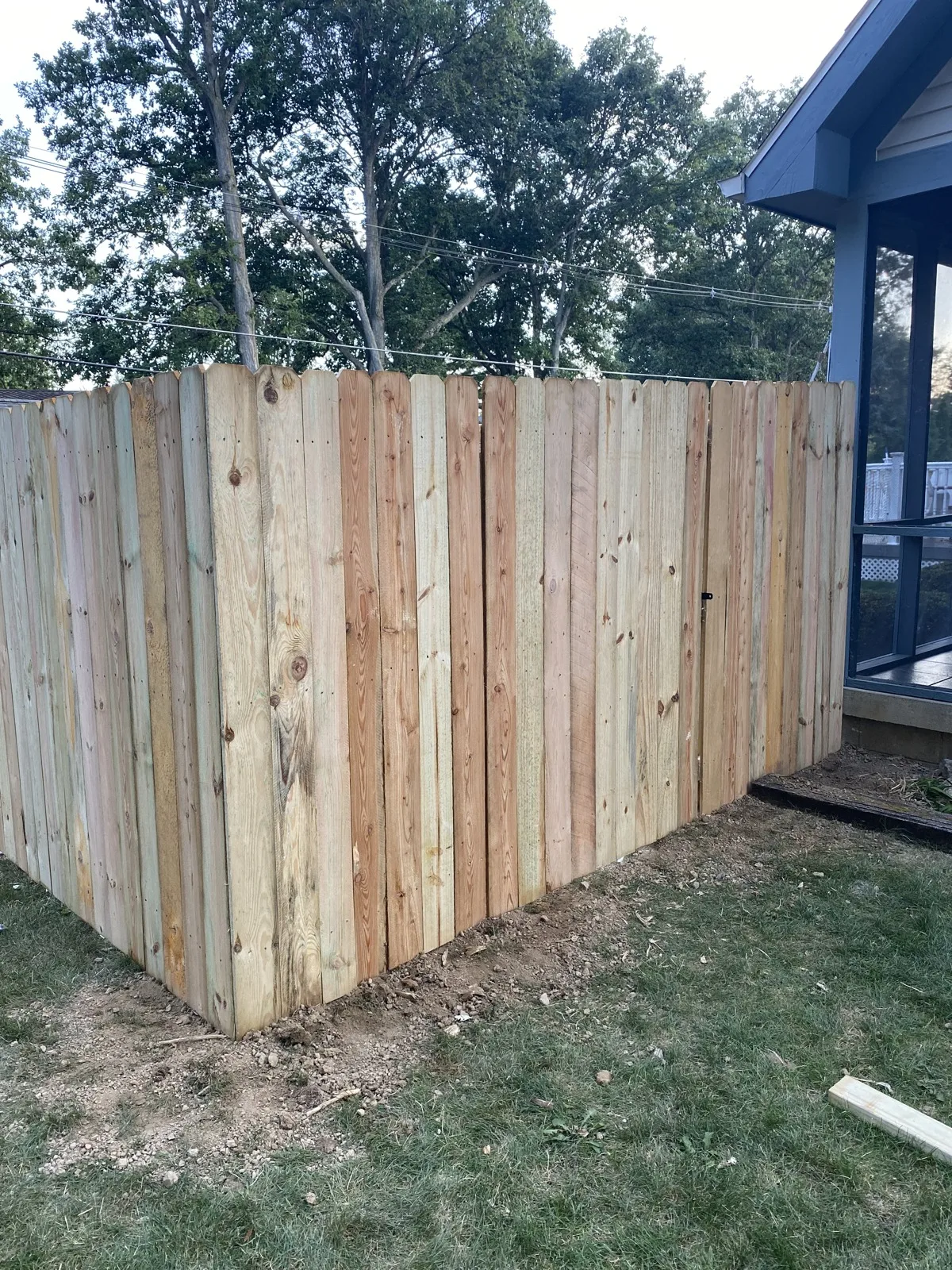
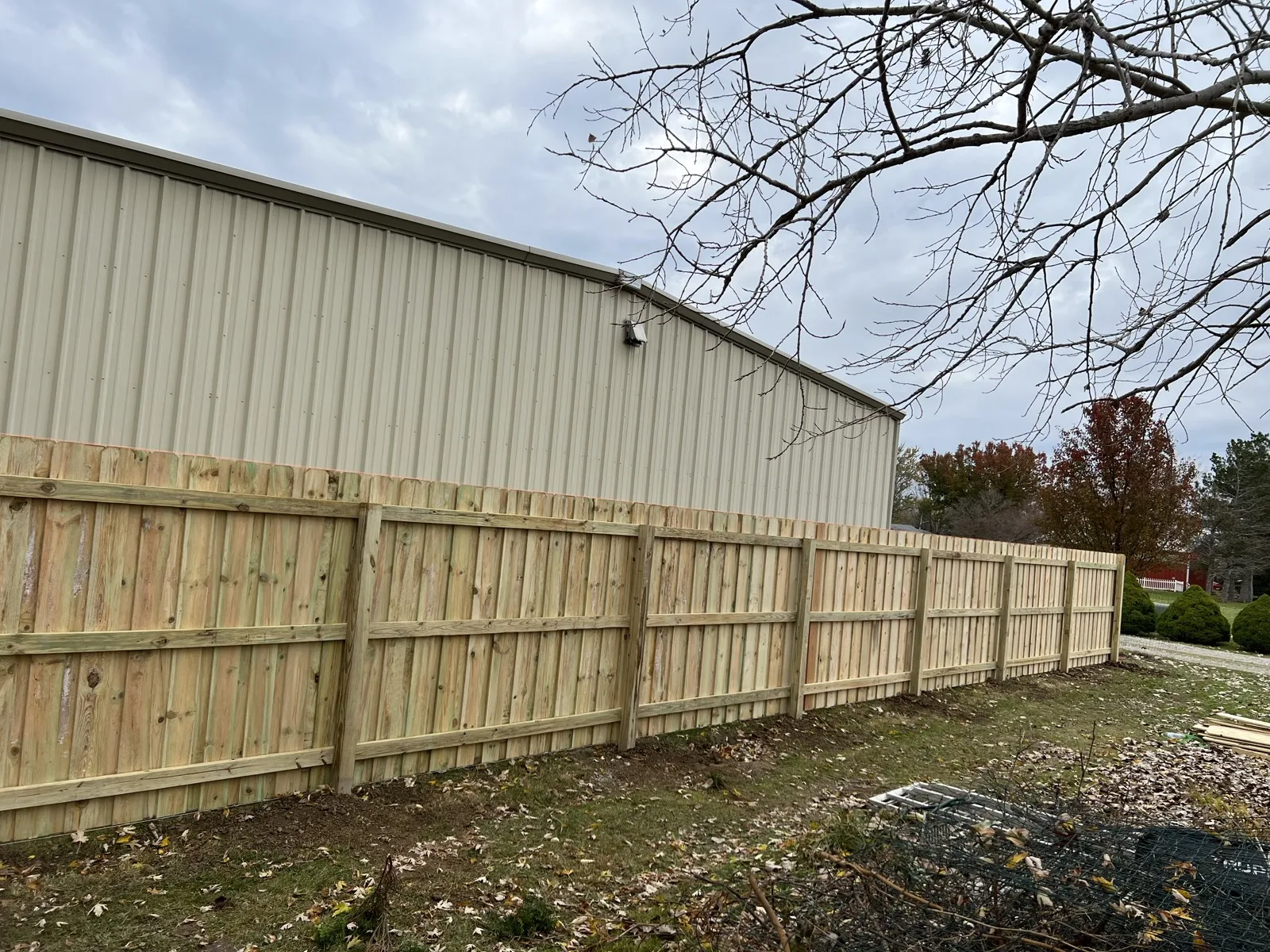
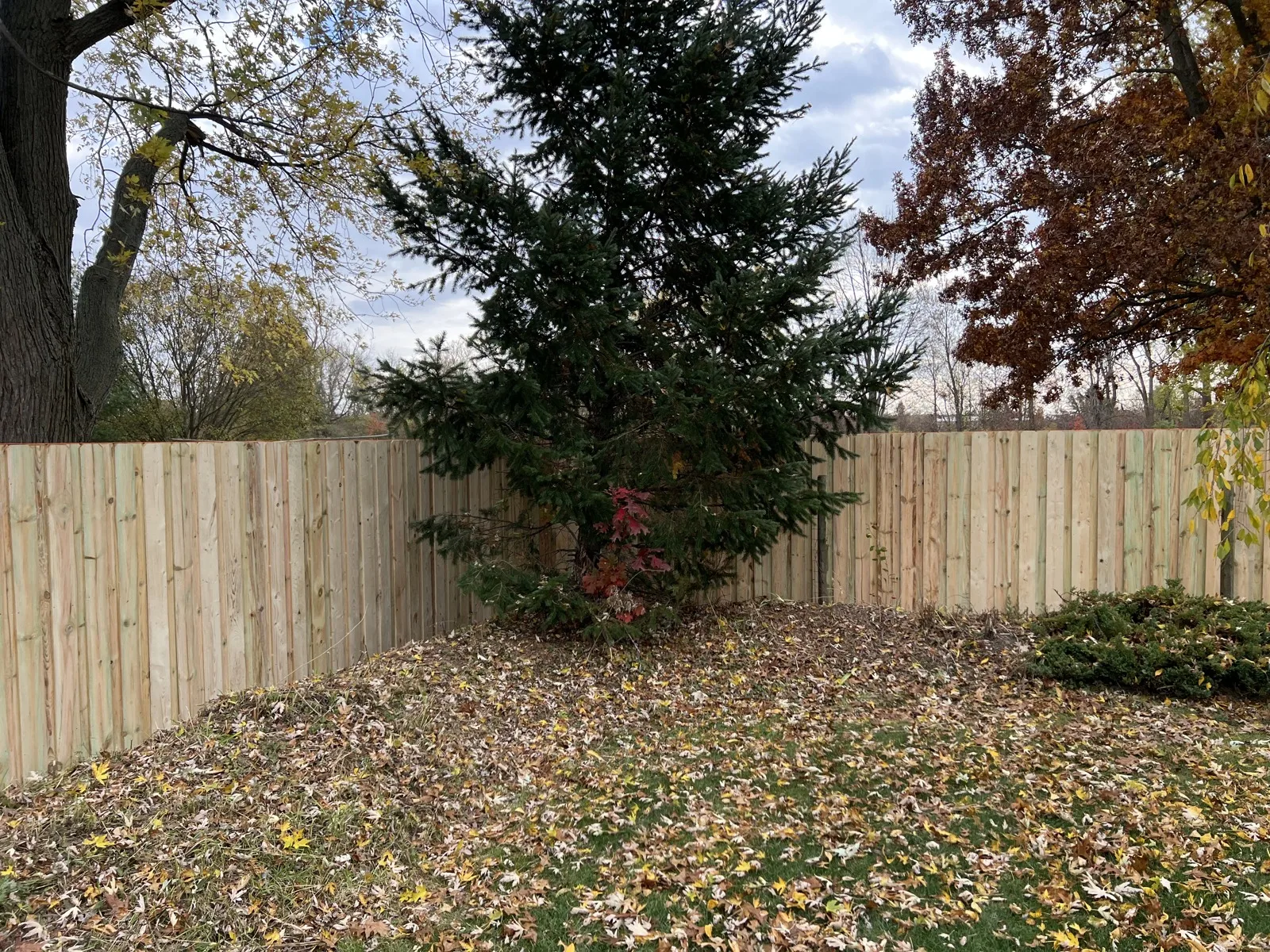
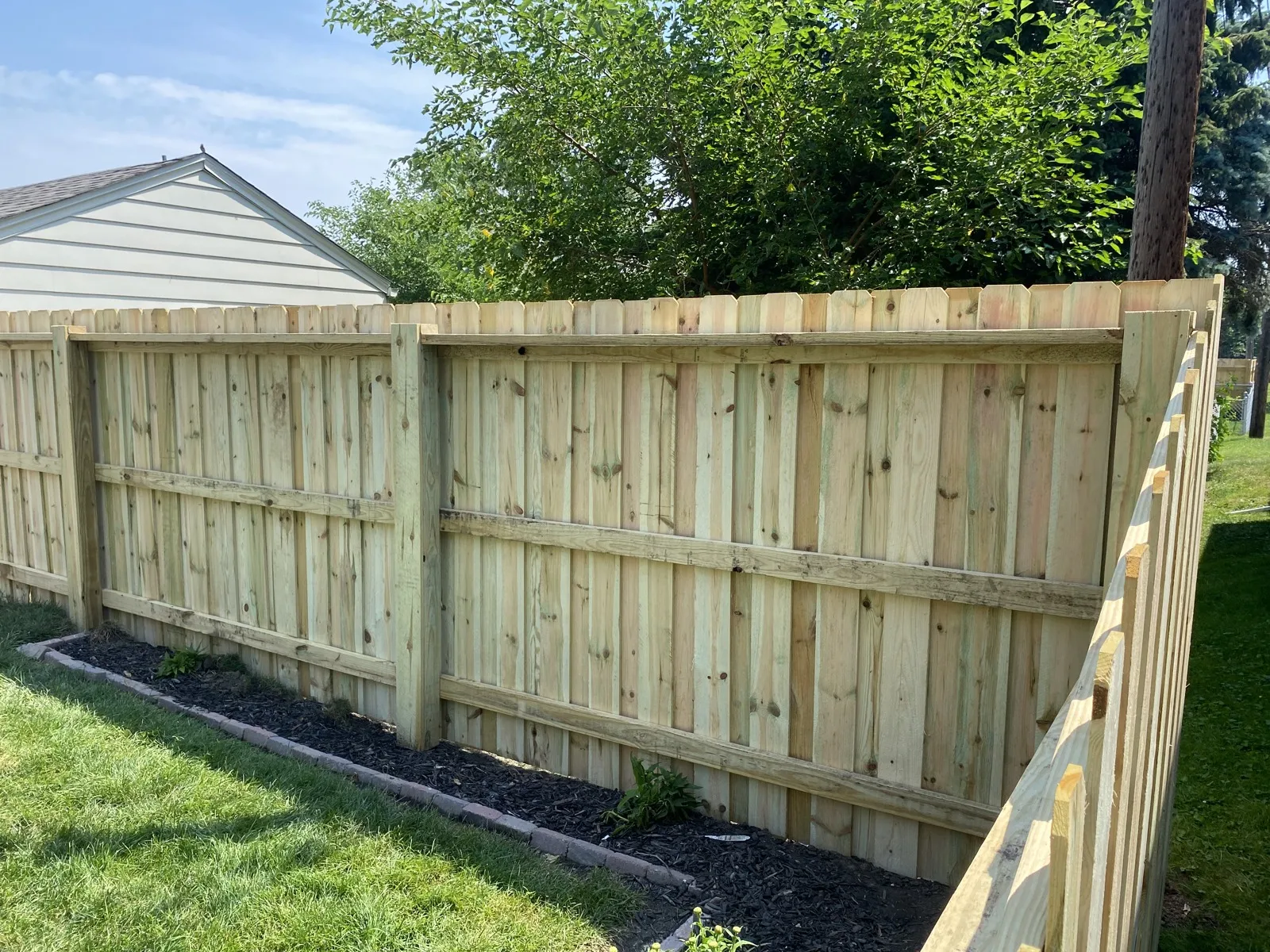
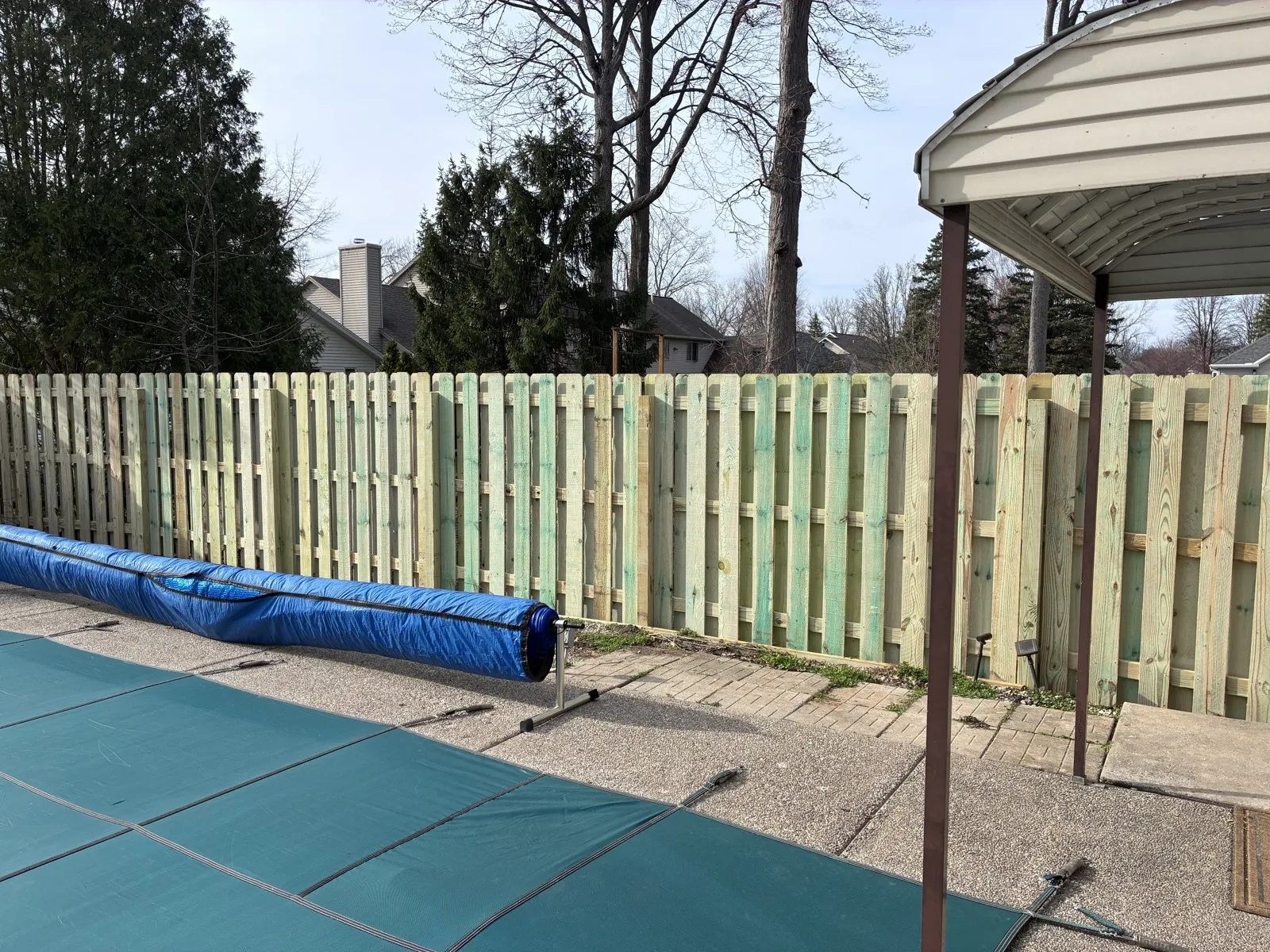
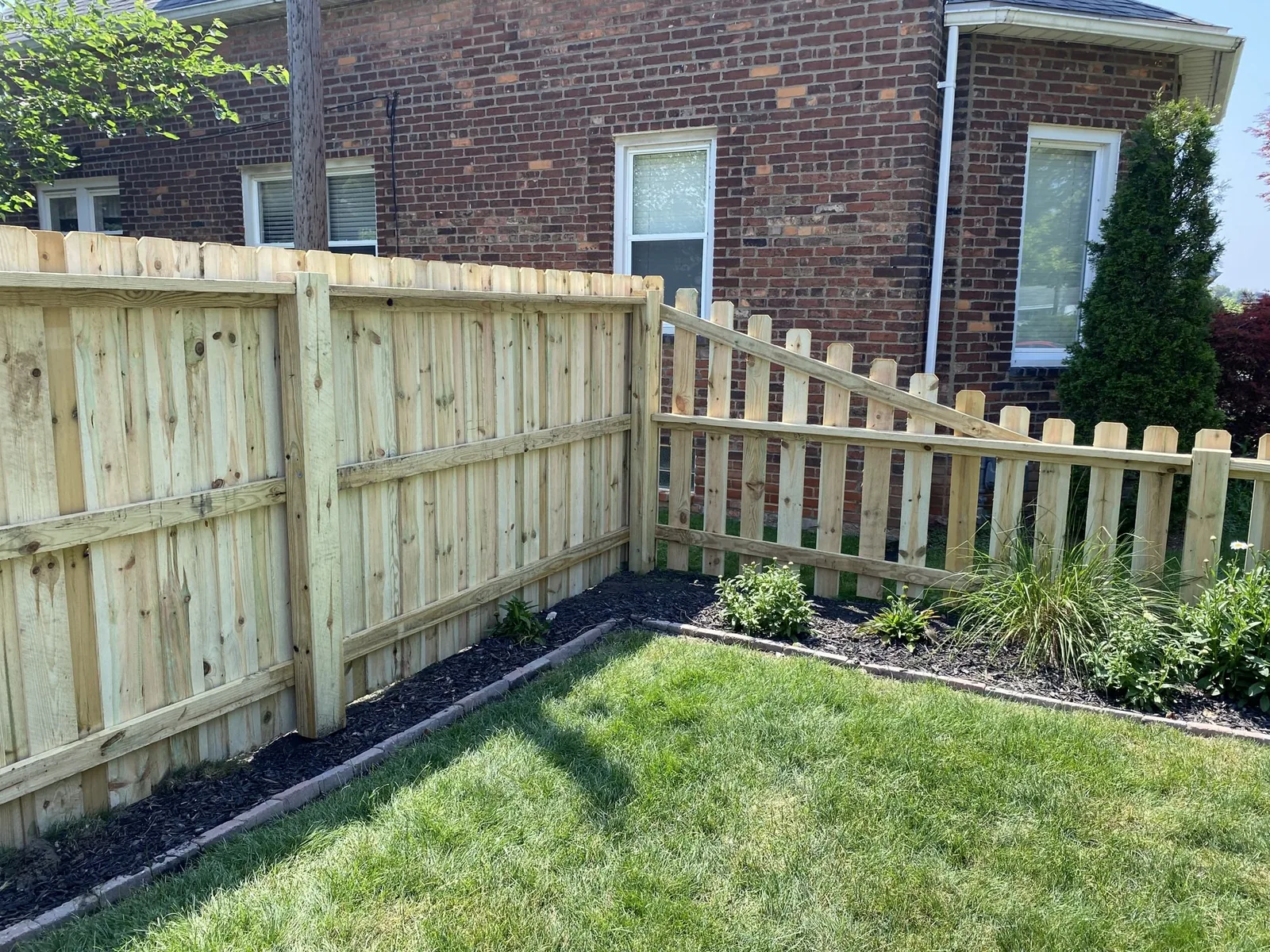
Overlapping vertical boards form this board-on-board privacy fence.Alternating pickets on both sides of the rails create a shadowbox fence and gate.
Make a more informed choice
Pressure-treated wood: the details that matter
Read the treatment label, not just the color
AWPA categories identify intended exposure. UC3B describes exterior above-ground use; UC4A describes general ground contact. A fence post and an above-ground picket may need different specifications. Site conditions determine the appropriate selection.
Treatment does not stop drying movement
Wet pressure-treated pickets can shrink as they dry. A close fit on installation day may become a visible gap. Compare the intended board spacing or overlap with your privacy expectations rather than expecting the original fit never to change.
Finish when the wood is ready
Stain or sealer needs a suitably dry, prepared surface. There is no single waiting period that fits every treated board and exposure. Confirm the lumber condition and the coating manufacturer's instructions before scheduling a finish.
The pattern should match the viewing angle
Standard privacy uses boards on one face. Board-on-board uses overlap. Shadowbox alternates boards and allows angled views through the fence. Compare these at the places where you sit or walk, not only straight-on in a photograph.
Compare the support system separately
A quote for wood boards does not tell you the post material, rail layout, fasteners or gate support. Put those components beside the chosen board pattern so two estimates describe the same complete fence.
Bring these questions to your estimate
Which treatment/use category is specified for the posts and other exposed components?
How much angled visibility is acceptable from my patio?
Is finishing included, excluded or quoted as a later step?
What post, rail and gate construction accompanies each board-pattern option?
A ballpark is a planning range. The final quote depends on measurements, gates, removal, site conditions and the written installation scope.
Good questions. Clearer answers.
Why can gaps appear in a new treated-wood fence?
Pressure-treated pickets installed while moist can narrow as they dry. The material condition, board layout and overlap influence the visible result. Ask how the proposed design accounts for movement before selecting the privacy pattern.
Is ground-contact treatment the same as a wood grade?
No. A treatment Use Category describes the exposure the preserved wood is intended for. It does not by itself identify lumber grade, appearance or dimensions. Ask for both the lumber and treatment details in the proposal.
Can staining be included without promising an exact date?
Yes. The scope can name the finish, surfaces and preparation while making application depend on suitable wood and weather conditions. That is more useful than assuming every newly installed treated board will be ready on the same day.
Material guidance & planning references
These references explain material behavior and planning considerations. Product examples do not identify the brand in our photos or promise a particular specification. Your proposal and applicable local requirements determine the project details.
Keep the fence, gates and next steps on the same page.
Review the proposed fence line and gates with our team, then use your project portal to keep the saved plan, project details and communication together. Site-plan property-line references help with planning; they do not replace a boundary survey.