Google
Working with Nick
“Nick was AWESOME! Very professional. He did a great job and takes great pride in his work.”
Twenty minutes a season is the difference between a fence that lasts 15 years and one that lasts 30. Here's the short, honest maintenance list per material.
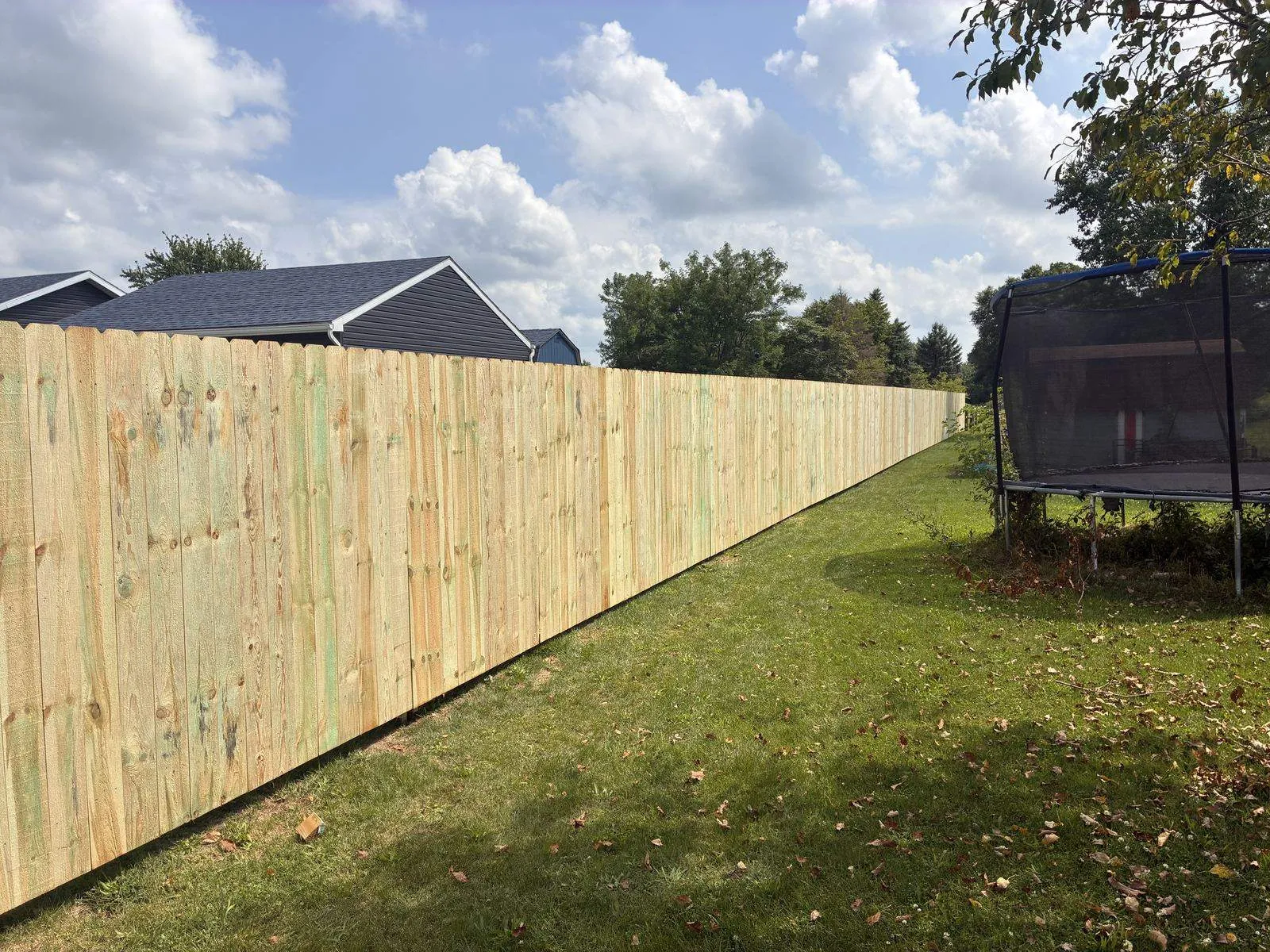
Seal or stain every 2–3 years — that's the whole secret. A quality penetrating sealer keeps cedar's color and blocks the moisture cycle that splits boards. Spring is the best window: dry wood, mild temps. Between sealings, knock vegetation off the fence line (trapped moisture is wood's real enemy) and snug any popped nail or screw the freeze-thaw pushed out. Left unsealed, cedar goes silvery-gray — some people love the look, and structurally it's fine for years, but the color never comes all the way back.
A garden hose and, once a year, a bucket of soapy water for the green algae film on the shady side. That's it. Skip pressure washers up close — they can scar the surface. In deep-freeze weeks, don't slam gates; cold vinyl is brittle vinyl.
Essentially maintenance-free — the powder coat and galvanizing do the work. Once a year, check gate hinges and latches, tighten what's loose, and hit any hardware squeak with silicone spray. If a mower ever chips aluminum's coating, touch-up paint stops corrosion before it starts.
Walk the line once the ground thaws. Push gently on each post — anything that moves got heaved or has a footing issue, and catching it early is a cheap fix. Test every gate: sagging is the most common (and most fixable) fence problem in Ohio. And keep sprinkler heads aimed away from wood — daily watering ages a cedar fence faster than any winter.
Working with Nick
“Nick was AWESOME! Very professional. He did a great job and takes great pride in his work.”