Google
The installation experience
“Great guy to work with, Great price, on time with project. I highly recommend using this company.”
Toledo has a rule about this that most homeowners have never heard, and it decides what your fence looks like from your own yard. Here is the whole picture — the line, the code, the money, and the conversation.
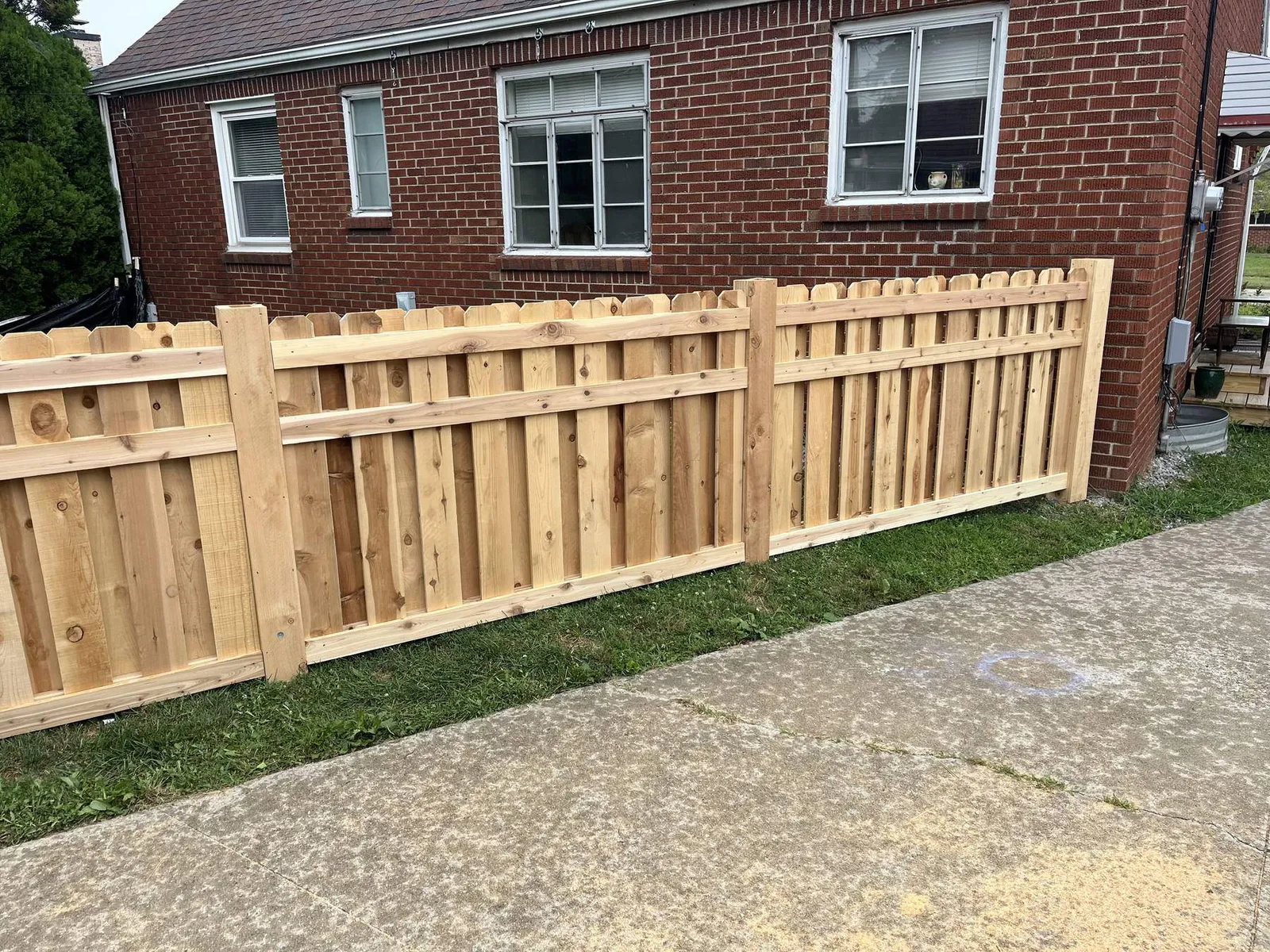
The City of Toledo requires that the finished side of the fence must face the adjacent property, street, or place. Your neighbour gets the good side. You get the posts and rails.
That is not a courtesy or an industry custom. It is in the city's own fence requirements, and it is the single most common surprise we deal with on an estimate. People picture the smooth face from their patio and it is going the other way.
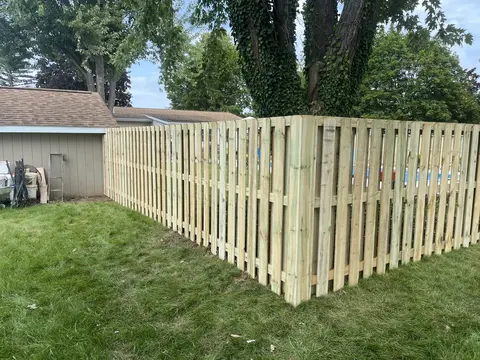
There is a way to have it both ways, and it is why we build so much shadowbox and board-on-board. Alternate the boards from side to side and there is no bad side — both faces are finished, the code is satisfied, and neither of you is looking at framing. It costs more than a standard privacy panel because it uses more cedar. It is usually worth it, and on a line you share with someone you will still be living beside in ten years, it is almost always worth it.
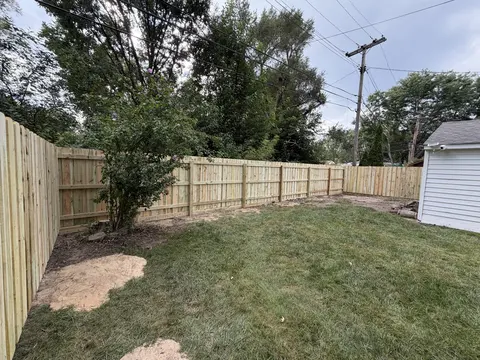
Toledo does not require a setback for a fence — you may build right on the property line at the permitted height. That is a freedom most cities do not give you, and it is also where the trouble starts, because “the property line” is rarely where people think it is.
The old fence is not the line. The mow strip is not the line. The line your neighbour's landscaper has been edging to for six years is definitely not the line. A pin survey settles it, and on a contested line it is money well spent before we build rather than after.
Where a line is uncertain and nobody wants to pay for a survey, the practical answer is to build a few inches inside your own side. You lose a hand's width of yard and you own the fence outright — no shared maintenance argument, no permission needed, nothing to unwind if a survey later moves the line.
In Toledo: you do, if it is your fence. Ohio has no law obliging your neighbour to split the cost of a residential boundary fence. You will find plenty of articles about Ohio's line fence law and a county “partition fence record” — that is agricultural land outside municipalities, and it does not apply to a city or suburban lot. If someone quotes it at you over a backyard fence in West Toledo, they have read the wrong statute.
Which does not mean you should not ask. Plenty of neighbours split a line fence gladly, especially if they get a say in the style and they are getting a finished face anyway. Ask before you order material, not after the posts are in.
Six feet in the side and rear yard. Lower in the front. No part of a fence may extend into the public right-of-way, which is usually further into your lawn than the sidewalk suggests.
The one that catches people is corner lots. A corner lot has two front yards, and the city defines the rear yard as the one opposite the side of the house your address is on. So the long stretch along the side street is a front yard as far as the code is concerned, whatever it feels like from your kitchen window. There are also sight-line limits near an intersection, so a solid six-foot run to the corner is not going to pass.
We check this at the estimate, on your parcel, before anything is ordered. It is the difference between a fence and a fence you have to move.
Knock on the door before you call me. Not for permission — on your own land you do not need it — but because a neighbour who hears it from you is a neighbour who is not standing in the yard on install day asking what is going on. I have spent afternoons mediating fence-line disagreements that a two-minute conversation the week before would have prevented entirely. I will happily be there for that conversation if it helps.
Nick Ghareeb, ownerKnow where your line is? Trace it and see the number.
Measure my fence →The installation experience
“Great guy to work with, Great price, on time with project. I highly recommend using this company.”